
NEWS
XTEINK X4 CLASSIC Returns a Thinner Pocket Reader
XTEINK’s X4 CLASSIC returns the button-only pocket e-reader at 4.9 mm and 68 g after the original X4 was pulled.

XTEINK is bringing back its button-only pocket reader as the X4 CLASSIC, a 4.3-inch E Ink slab now listed at 4.9 mm and about 68 g. The company frames it as X4 Version 2, with a 920 mAh cell, a stronger magnetic back, and USB book transfer added to the old file paths.
That is a thinner, lighter take on the $69 original that went viral, then sold out, while XTEINK pushed the $99 X4 Pro with a front light and a touchscreen. The CLASSIC launch never lists a light, a touch panel, or a price.
The Button-Only X4 Gets a Second Life
XTEINK, a Hong Kong firm that sells credit-card-scale e-readers, unveiled the first X4 on December 5, 2025. It was a 4.3-inch, 220 PPI panel on an ESP32-C3 chip, with physical page-turn buttons, no touchscreen, no front light, and a magnetic back meant to ride on MagSafe and Qi2 phones.
Reviewers called the stock menus clumsy and the magnets fiddly on several iPhones. They also kept carrying it, because it disappeared in a pocket in a way a 6-inch Kindle does not. Amazon still lists overseas official units at $69 and says those units do not block third-party firmware.
On July 21, 2026 the company put the X4 Pro on sale. Three weeks later it told buyers the original X4 was gone.
THE X4 TIMELINE
- December 5, 2025: XTEINK unveils the original 4.3-inch X4 at $69, with a 650 mAh cell and USB-C charging.
- July 21, 2026: The X4 Pro goes on sale at $99 with a front light, a touchscreen, a 1100 mAh cell, and pogo-pin charging.
- August 12, 2026: XTEINK confirms the original X4 is sold out, with no further production planned, and points shoppers to the X3 or X4 Pro.
- August 18, 2026: The company says 1,000 X4 Pro units in Space Black are in stock.
- September 3, 2026: It introduces the X4 CLASSIC as a thinner, lighter X4 Version 2 and points buyers to a dedicated landing page.
Twenty-two days after the goodbye note, the button-only 4.3-inch body is back under a new name. The public shop compare page has not caught up. It still shows the current X3, X4, and X4 Pro specs, with the old X4 at 77 g and 650 mAh.
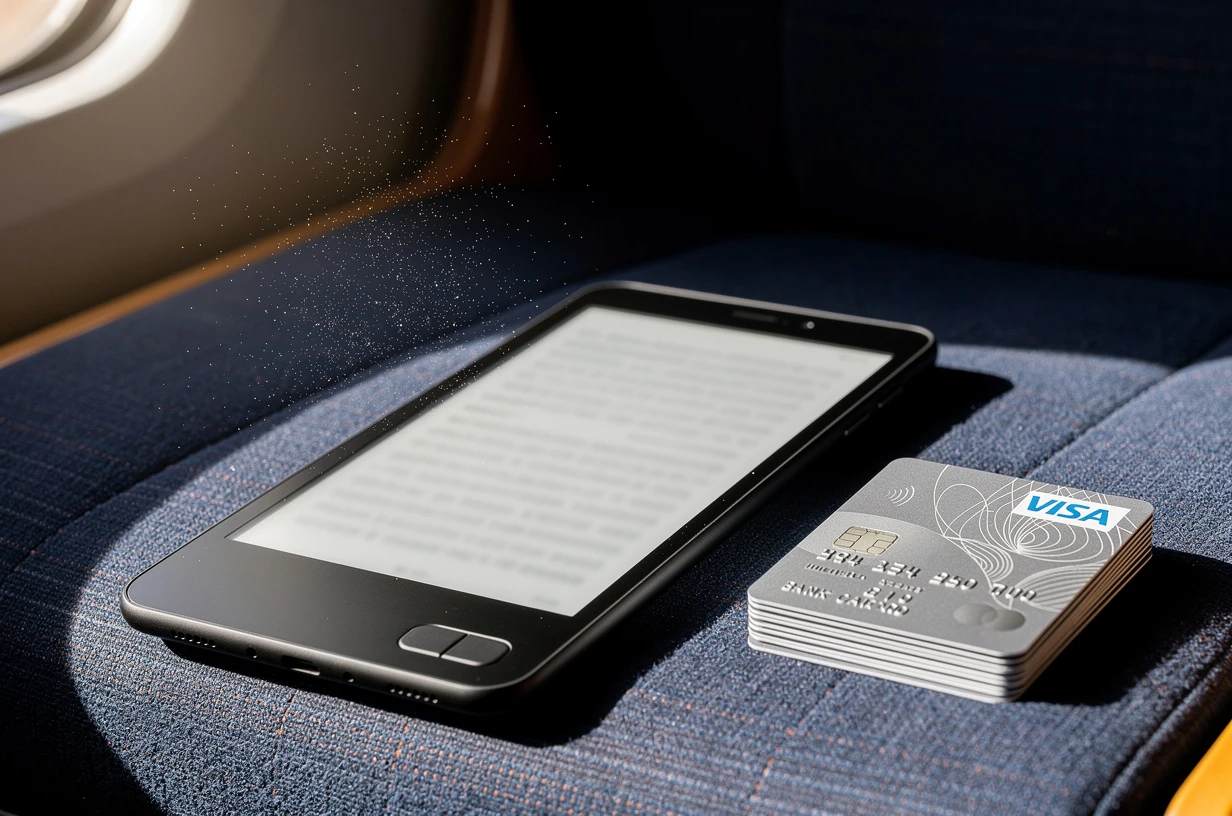
How Thin the X4 CLASSIC Got
The launch note keeps the 4.3-inch E Ink screen and trims the chassis. Thickness falls from 5.98 mm to 4.9 mm. Weight falls from 77 g to about 68 g. The cell grows from 650 mAh to 920 mAh, and XTEINK now estimates two to three weeks of typical use against about one week of on-and-off reading on the first X4.
It also claims a faster processor without naming the chip. The original ran an ESP32-C3 with 128 MB of RAM, which is why the device felt cheap in hardware and interesting to people who flash custom code.
THE POCKET SPECS THAT CHANGED
| Model | Thickness | Weight | Battery | Front light |
|---|---|---|---|---|
| X4 CLASSIC | 4.9 mm | about 68 g | 920 mAh | Not listed |
| Original X4 | 5.98 mm | 77 g | 650 mAh | No |
| X4 Pro | 5.95 mm | 72 g | 1100 mAh | Yes, warm and cool |
CLASSIC is 1.08 mm thinner and 9 g lighter than the machine it replaces, and it is also thinner than the Pro. The Pro still holds the bigger cell and the only listed lamp in the 4.3-inch line. CLASSIC’s 270 mAh gain is real, and it is not the largest pack XTEINK already ships.
The first X4 measured 114 x 69 mm. The Pro shrank the height to 111 x 69 mm at 5.95 mm thick. CLASSIC’s length and width are unpublished, so the thinness claim is the one number the company wants you to feel in a pocket.
X4 Pro Already Split the Line
The Pro was sold as the grown-up X4. It added an adjustable warm and cool front light, a touchscreen beside the page-turn buttons, and USB file transfer. It also dropped the USB-C port for a pogo-pin pad and a magnetic adapter, the same charge trick used on the smaller X3.
That adapter is easy to lose. People who bought the original X4 for a plain cable said so in public threads, and some said they would rather keep a slightly thicker body than carry a puck. XTEINK still used the Pro as the replacement when the first X4 sold out.
The X3 stays in the catalog as the 3.7-inch, 58 g ultra-light. The Pro stays the night-reading model. CLASSIC is the third 4.3-inch bet: keep the buttons, skip the light, cut the grams. Readers can already open the X4 CLASSIC on XTEINK’s site from the launch note, even while the compare grid still names the old X4.
A late-July hardware preview of an X4C unit said USB-C would give way to pogo pins. XTEINK’s September note never names the connector. It does boast that the slab is 4.9 mm thick, which is easier if the side port goes away, and it still refuses to say so in print.
Book Files Can Move Over USB
Getting books onto the first X4 was the daily tax. The live compare page still lists only app transfer and scan codes for that model. CLASSIC adds USB book transfer to the mix the company already used on the Pro.
WAYS TO LOAD THE CLASSIC
- USB transfer: New on this button-only body, and already listed for the Pro even though that model charges on pogo pins.
- Companion app: The path XTEINK pushed on the original X4.
- TF card: A microSD slot, which on the old X4 was the real storage, with 16 GB included and expansion listed to 256 GB.
- QR code: The scan-code route from the first model’s shop copy.
- Desktop web: A browser upload option the launch note says remains in place.
Supported types on the shop grid for the current line are TXT, EPUB, MOBI, PDF, JPG, and PNG. The CLASSIC note does not republish a format list, so those extensions should not be assumed until a spec sheet lands. There is still no Kindle Store, and DRM-heavy library apps were never the point of this hardware.
The magnetic story is the other half of the carry pitch. XTEINK says CLASSIC’s magnets are stronger. Early testers of the first X4 found the built-in ring hard to line up on some phones and often used the stick-on rings in the box, or just carried the reader loose. A stronger magnet does not fix a ring that sits in the wrong place on a tall phone.
CrossPoint Firmware Still Does the Real Work
The original X4’s stock software was the thing people endured to get the size. Custom firmware is what they actually read on. CrossPoint, built around the ESP32-C3, adds proper EPUB layout, bookmarks, dictionaries, and wireless book push, and the project’s site says the code has been forked over 1,000 times.
CrossPoint is open-source e-reader firmware – community-built, fully hackable, free forever.
CrossPoint Reader project, GitHub README
Installers want a data-capable cable. That is why the USB-C port on the first X4 mattered more than the charge brick. A September 2, 2026 release candidate of CrossPoint already lists X4 Pro support, which means the pogo model is not a dead end for that code, but recovery and first flashes are still uglier without a normal port.
People who live with these slabs treat flashing as day-one setup. They push articles from a laptop over Wi-Fi, dump a library on the microSD card, and ignore XTEINK’s menus. If CLASSIC keeps an unlockable chip and a way to talk to a computer, that aftermarket life continues. If it does not, the thinner shell is a different product.
XTEINK’s Amazon listing for official overseas units says those devices have not blocked third-party firmware and that there is no plan to start. The useful next spec for CLASSIC is whether that pledge still holds on Version 2. The CrossPoint open-source reader firmware is already the interface most of this audience will look for, and the code is public in CrossPoint’s ESP32-C3 firmware repo.
68 Grams Against a Phone-Shaped Reader
The other pocket option people actually name is Onyx’s Boox Palma 2, a 6.13-inch, 170 g Android reader with a 300 ppi panel, a front light, and a $299.99 list price. It runs Kindle and Kobo apps. It is a phone that cannot call anyone.
CLASSIC is less than half that weight and a fraction of that price if it stays near $69, which it has not confirmed. It also cannot install those apps. The 220 PPI screen on the first X4 already looked softer than a Paperwhite. CLASSIC never claims a sharper panel, so the bet is still “always in the pocket,” not “as crisp as a Kindle.”
Amazon killed the Kindle Oasis, the last Kindle with real page-turn buttons, in October 2024. XTEINK has been selling into that hole: buttons, a tiny body, local files, no store lock-in. Palma answers the same itch with a full computer. CLASSIC answers it with a thinner dumb slab.
XTEINK’s own copy still talks about 15 minutes between train stops. That is the honest use. This is not a sofa reader and not a notes tablet. It is the thing you pull out instead of the phone you already glued it to.
What the CLASSIC Still Leaves Out
The launch note is as interesting for the features it never adds as for the millimeters it cuts. The Pro already ships the missing night lamp. CLASSIC does not claim one.
WHAT STAYS OFF THE DEVICE
- Front light: Unlisted, after the Pro made a warm and cool lamp the headline.
- Touchscreen: Unlisted, so the three physical buttons remain the likely controls.
- A price: The original was $69 and the Pro is $99; CLASSIC’s tag is unpublished.
- A named connector: USB book transfer is a software path, not proof of a USB-C jack.
- A sharper screen: No PPI figure, after the first X4 sat at 220.
Until the compare grid swaps the old X4 row for CLASSIC, the only hard numbers are the ones in the September 3 note: 4.9 mm, about 68 g, 920 mAh, and a promise of two to three weeks. The lamp on the nightstand is still doing the dark-room job the Pro already took on.


British Business Bank’s Zinc Fund Will Mint 80 Startups

Philips Hue IFA Gear Opens TVs and Gates the Hub

Souk Raises $1.6 Million for Its AI Partner Manager

Anthropic Bets on Cheaper Cache for Claude Fable 5.1

Food Processors Back Backbone’s €4 Million Quality Round

Scosche Bets IFA Shoppers Will Buy Fewer Charging Bricks

ELO Bets Sentinel XR Gaming Glasses at IFA Berlin

ShiftCam SuperZoom Lenses Bet on a 350mm Phone Gap

Clooney Defends Ruffalo’s Speech While Collecting Venice’s Lion

Jungheinrich Is the Sole Backer of Uplift’s €100M Fund

30-Year Yield Hits 5.32% Highest Since 2007 as Debt Supply Locks In Costs

Walter’s TWG Insists No Fraud as Insurer Probes Force Cleanup

Astute’s $1.2M bet makes B2B creator deals feed AI discovery

Strategy Parks $1.59B Cash While Bitcoin Stack Stays Flat

PCE Stays at 3.7% as Gas and Tariffs Outrun Coming Revisions

The 20% Savings Ideal Meets a 2.7% Reality Check

SpaceX Stock Rebound Tests Real Demand Before Huge Unlock

Amber’s €7M locks Mittelstand knowledge inside Europe

Monzo chair Gary Hoffman exits after board revolt fallout

Nvidia’s $16,000 RTX Pro 6000 Turns Local AI Into a Luxury
-
 FINANCE3 months ago
Zcash Patched a Double-Spend Bug as ZEC Climbed 5%
-
 ENTERTAINMENT3 months ago
Steam Summer Sale 2026 Locks In June 25 to July 9 Dates
-

 FINANCE2 months ago
CLARITY Act Final Text Expected This Weekend as 60-Vote Hurdle Looms
-
 NEWS4 months ago
Meta Adds AI Replies to Threads, But Users Can’t Block It
-

 NEWS3 months ago
YouTube Shorts is testing a heart in place of the thumbs-up
-

 NEWS1 month ago
Senators Force Apple Off Chinese Memory as Big Three Cash In
-

 NEWS3 months ago
NEURA Robotics’ $1.4B Series C Redraws Europe’s Physical AI Bet
-
 ENTERTAINMENT5 months ago
Extraction 3 Is Officially Coming to Netflix in 2027