
NEWS
The Pixel 10a Ships More Phone for $100 Less
Google’s $499 Pixel 10a adds 120Hz and a second camera the $599 iPhone 16e still skips, while Apple’s chip and thinner body remain the extra-money case.

Google put the Pixel 10a on sale March 5, 2026 at $499 for 128GB. Apple’s iPhone 16e launched a year earlier at $599 for the same storage, with a 60Hz screen and one rear camera.
The cheaper phone is the more complete one. The extra $100 buys Apple’s A18 chip, a thinner glass body, and iOS, not a fuller set of cameras or a smoother panel.
A $499 Phone Against a $599 Cut-Price iPhone
Google announced the Pixel 10a on February 18, 2026. The 256GB model is $599, which matches the iPhone 16e’s 128GB launch price. Apple announced the 16e on February 19, 2025, sold it from February 28, and pulled it on March 2, 2026, the same week the Pixel reached stores.
Apple replaced it with the iPhone 17e at $599 for 256GB. Anyone still lining these two up is comparing Google’s current A-series phone with an iPhone that had already left the new-in-box lineup.
THE LAUNCH CALENDAR
- February 19, 2025: Apple announces the iPhone 16e at $599 for 128GB, $699 for 256GB, and $899 for 512GB.
- February 28, 2025: The 16e goes on sale with a 60Hz 6.1-inch OLED, one 48MP rear camera, and no MagSafe.
- February 18, 2026: Google announces the Pixel 10a at $499 for 128GB and $599 for 256GB.
- March 2, 2026: Apple discontinues the 16e and announces the iPhone 17e.
- March 5, 2026: Pixel 10a retail sales start in the US.
By September 2026 some carriers were already discounting leftover 16e units next to the 10a. Last year’s Tensor G4 inside a 2026 A-phone is why those tables look alike.
LAUNCH SPECS AT A GLANCE
| Feature | Pixel 10a | iPhone 16e |
|---|---|---|
| Launch price (128GB) | $499 | $599 |
| Display | 6.3-inch 120Hz pOLED | 6.1-inch 60Hz OLED |
| Rear cameras | 48MP + 13MP ultrawide | 48MP only |
| Chip | Tensor G4 (4 nm) | A18 (3 nm), 4-core GPU |
| Battery | 5,100 mAh | 4,005 mAh |
| Weight | 183 g | 167 g |
| OS at launch | Android 16 | iOS 18.3.1 |
The Pixel is 16 g heavier and 1.2 mm thicker, which tracks with the larger pack and the 120Hz panel. The iPhone is the pocketable one. It is also the one missing hardware Google put in a $499 phone.
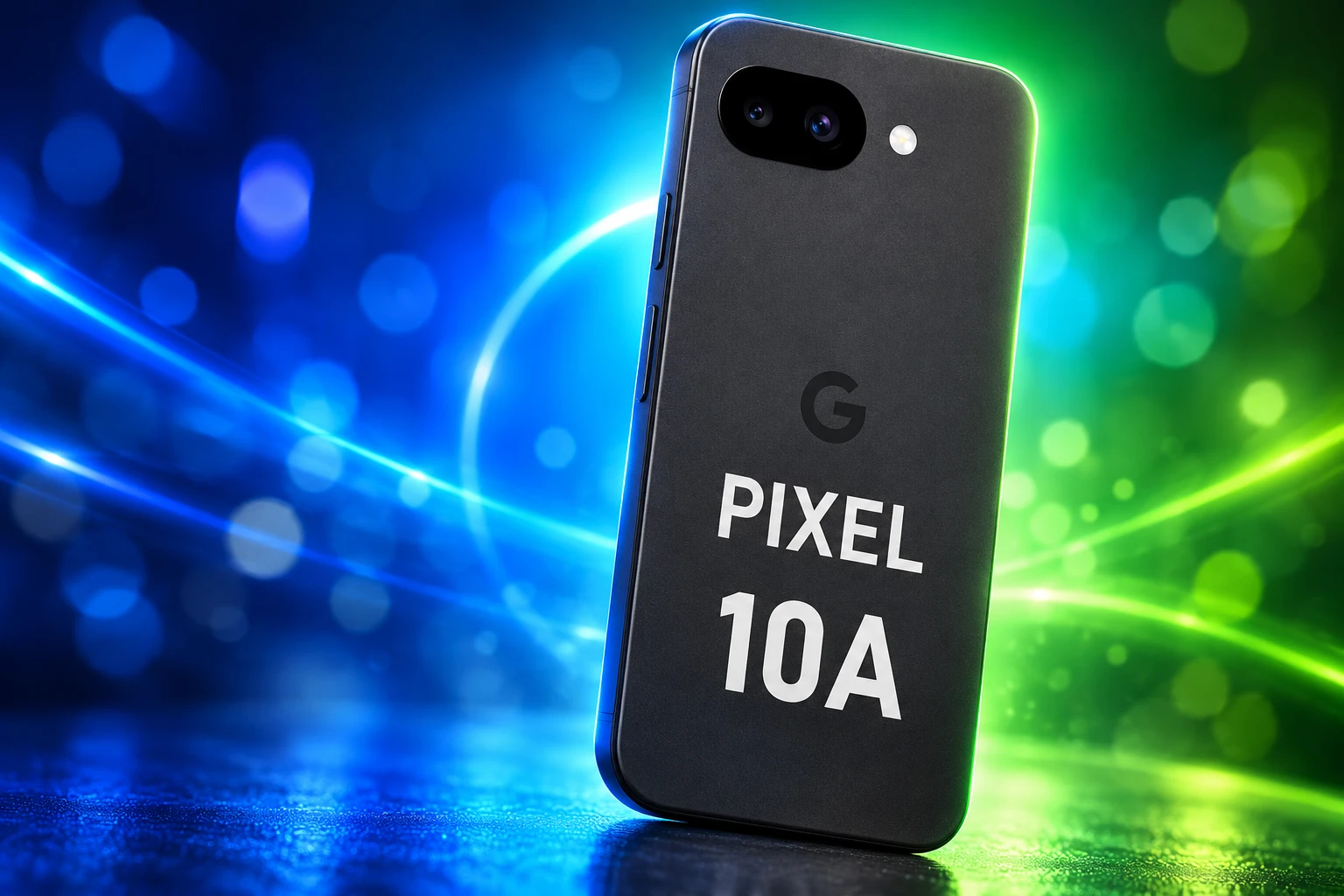
Apple Sold a 60Hz Screen at This Price
Google’s 6.3-inch Actua display at 120Hz is a 1080 x 2424 pOLED at 422 ppi, with up to 2,000 nits in HDR and 3,000 nits peak. Gorilla Glass 7i sits on top. Smooth Display can sit at 60Hz if you switch it off.
The iPhone 16e uses a 6.1-inch Super Retina XDR OLED at 2532 x 1170 (460 ppi). Apple rates it at 800 nits typical and 1,200 nits peak HDR, with Ceramic Shield on the front. The panel is 60Hz. Apple still does not print that number on the marketing page.
BRIGHTNESS IN THE LAB
- Pixel auto: 2,169 nits on a 75% white field, with 2,894 nits at a small highlight.
- Pixel manual: 1,308 nits, and a 1.7-nit floor on a full white screen.
- iPhone 16e max: 799 nits measured, in line with Apple’s 800-nit typical rating.
- Pixel HDR claim: 2,000 nits HDR and 3,000 nits peak on the spec sheet.
The iPhone is sharper per inch and has the tighter body. The Pixel is brighter outdoors and scrolls at twice the iPhone’s refresh. For maps, feeds, and games, that gap is the one you feel with a thumb, not a spec PDF.
What the Extra $100 Buys on iPhone 16e
Apple’s A18 chip and 48MP Fusion camera are the 16e’s defense. The chip is 3 nm with a 6-core CPU, a 4-core GPU (one fewer than iPhone 16), and a 16-core Neural Engine. The phone is 146.7 x 71.5 x 7.8 mm, with a glass back, an aluminum frame, Face ID in a notch, and an Action button. USB-C is 2.0. Wireless charging is 7.5W Qi. MagSafe is absent.
The redesigned 48MP Fusion camera has the capabilities of two cameras in one.
Apple, iPhone 16e product page
That line is doing a lot of work. The 16e has a single 48MP Fusion main at f/1.6 on a 1/2.55-inch sensor with OIS, plus a 12MP crop that Apple sells as 2x telephoto. There is no ultrawide. The front camera is 12MP at f/1.9 on a 1/3.6-inch sensor. Video can do 4K at 60 fps with Dolby Vision.
The Pixel 10a puts a 48MP Quad PD Dual Pixel main at f/1.7 on a 1/2.0-inch sensor, the same main Google used on the $799 Pixel 10, next to a 13MP ultrawide at f/2.2 with a 120-degree field of view. Super Res Zoom goes to 8x. The selfie camera is 13MP. Night Sight, Best Take, Add Me, and Magic Eraser ride on top of that pair.
Google already has a larger main sensor planned for Pixel 11, so the 10a is the last A-phone on this 48MP module. Even so, two lenses and the larger sensor beat a crop zoom in low light and in rooms where you need the wide shot.
CUTS ON THE $599 IPHONE
- Second rear camera: No ultrawide; Apple substitutes a 12MP 2x crop from the main sensor.
- Refresh rate: 60Hz on a phone that launched against 120Hz Androids at this price.
- MagSafe: Qi at 7.5W only; magnetic accessories need a case.
- Radio extras: Bluetooth 5.3 and Wi-Fi 6, against Bluetooth 6.0 and Wi-Fi 6E on the Pixel.
- Colors: Black and white, against Obsidian, Fog, Lavender, and Berry.
People who live in iMessage, Face ID, and Apple’s glass sandwich will pay for that stack. People who want a wide lens and a 120Hz panel are paying $100 more for a phone that still does not have them.
Tensor G4 Trails the A18 in Every Lab Test
The Pixel 10a uses Tensor G4, the same 4 nm Samsung-made chip as the Pixel 9a, with 8GB of LPDDR5X and UFS 3.1. Google kept G5 for the Pixel 10 family. The 10a is, in silicon terms, a faster-charging 9a with Bluetooth 6.0, Satellite SOS, Gorilla Glass 7i, and a flush camera deck.
Geekbench 6 on the 10a landed at 1,753 single-core and 4,545 multi-core. The iPhone 16e has posted 3,166 and 7,763 in the same test. That is about 1.8 times the single-core score and 1.7 times the multi-core score. AnTuTu v10 is closer: 1,269,880 for the Pixel against 1,401,105 for the iPhone, a 10% gap.
Daily apps do not feel 1.8 times apart. Games do. The A18 still has headroom the Mali-G715 does not, and the iPhone stays the better console in a pocket. The Pixel is fine for maps, mail, Gemini Live, and mid-range titles if you drop settings. It will not keep up in a side-by-side of heavy 3D.
Google’s software still carries the phone. Magic Cue pulls flight details into a call. Circle to Search and Gemini Live sit on the G4’s TPU. The 10a also picks up desktop windows on Pixel 8 and newer, so a USB-C dock can spread apps on a monitor. That is a feature the 16e never grew.
Lab Tests Give the Pixel 15 Hours 13 Minutes
Google rates the 5,100 mAh pack at more than 30 hours of mixed use and up to 120 hours with Extreme Battery Saver. The iPhone 16e uses a 4,005 mAh cell. Apple quotes up to 26 hours of video playback and calls out the C1 modem as part of that efficiency story.
In the same active-use lab loop, the Pixel 10a lasted 15 hours 13 minutes. The iPhone 16e lasted 11 hours 53 minutes. That is 3 hours 20 minutes extra screen time on the Pixel, from a pack that is 1,095 mAh larger and a panel that can run at 120Hz.
Charging is closer than the capacities suggest. The Pixel hit 29% in 15 minutes and 52% in 30 minutes on a high-watt USB-C PPS brick, and filled in 1 hour 29 minutes. Google’s sheet says 50% in about 30 minutes with a 45W PPS charger sold separately. The 16e also claims 50% in 30 minutes. Wireless is 10W Qi on the Pixel and 7.5W on the iPhone. Neither box includes a charger. The Pixel adds bypass charging if you play while plugged in.
Power users who drain a compact phone by dinner will still want something with a bigger cell or silicon-carbon chemistry. Among these two, the Pixel is the one that makes it to late evening without a hunt for a cable.
Seven Years of Android After Apple Moved On
Google lists the Pixel 10a among Pixel 8 and later phones that get seven years of OS and security updates from US store availability, plus Pixel Drops. It launched on Android 16. That clock starts in March 2026.
Apple does not publish a matching year-count on the 16e page. UK rules pushed a five-year security floor. iPhones often keep getting new iOS builds for six or seven years. The 16e shipped on iOS 18.3.1 and has already reached iOS 26.6, so the software train is still moving. The hardware SKU is not. Apple stopped selling it on March 2, 2026.
Build quality splits the usual way. The Pixel uses a composite matte back with at least 81% recycled plastic and a 100% recycled aluminum frame. The iPhone uses glass front and back. IP68 on the Pixel is 1.5 meters for 30 minutes; on the iPhone it is 6 meters. Stereo speakers on both; the 16e is the louder of the two. The Pixel has an under-display fingerprint reader and face unlock. The iPhone is Face ID only.
Satellite SOS lands on the 10a, the first A-series Pixel with it. The 16e has Emergency SOS, Messages, and Find My via satellite. Both will call for help off the grid. Only one of them is still the current cheap phone from its maker.
For iOS Holdouts, the Chip Still Wins
If you want 120Hz, an ultrawide, a brighter panel, and the lab battery win, the Pixel 10a is the phone that actually ships those things at $499. You live with last year’s Tensor, UFS 3.1, a plastic back, and a body that is thicker in the hand.
If you want iOS, Face ID, the A18, a 167 g glass slab, Dolby Vision video, and a 512GB option, the 16e still does that job. You live with 60Hz, one rear camera, USB 2.0, and a model Apple already replaced. The 17e later added MagSafe and 256GB at the old $599 point, which is the cleanest read of what the 16e was missing.
The odd pairing only exists because Google held the A-series at $499 and Apple held the e-phone at $599 with a year-old cut list. Pay less, get the modern screen and the second lens. Pay more, get the faster chip and the software you already bought into.
Frequently Asked Questions
Does the iPhone 16e support MagSafe charging?
No. The iPhone 16e charges wirelessly at 7.5W over Qi and has no MagSafe magnets, so snap-on wallets and chargers need a third-party case. Apple added MagSafe when it replaced the 16e with the iPhone 17e in March 2026.
What is the difference in USB speed between Pixel 10a and iPhone 16e?
The Pixel 10a uses USB Type-C 3.2. The iPhone 16e uses USB Type-C 2.0, so photo dumps and desktop-style video out are slower on the Apple side even though both phones dropped the headphone jack and need the same cable for wired headphones.
How deep can each phone go under water?
Both carry an IP68 rating, but the test depths differ. Google rates the Pixel 10a for 1.5 meters for 30 minutes. Apple rates the iPhone 16e for 6 meters for 30 minutes. Neither rating is a swimming licence, and liquid damage is still outside warranty on both.
Can you buy a 512GB Pixel 10a?
No. The Pixel 10a stops at 128GB and 256GB. The iPhone 16e is the one with a 512GB SKU, at $899 when it launched, which is the storage escape hatch if you shoot a lot of 4K and refuse iCloud or Google Photos compression.
What does Extreme Battery Saver do on the Pixel 10a?
Google quotes up to 120 hours of runtime with Extreme Battery Saver on the 5,100 mAh cell, next to a 30-plus-hour mixed-use claim. The mode strips background work and limits apps. It is a stranded-weekend setting, not the way the 15 hours 13 minutes lab score was measured.

UPI MDR Delay Hands Traders the Calendar After Paytm Falls

Google Messages Builds Nine In-Chat Games After Samsung’s Exit

Anthropic’s $100 Million Academy Trains the Firms That Bill Both Sides

Toyota’s Electric C-HR Leaves the Cheap Twin to Subaru

Markets Bet the Fed Skips October After Hawkish Minutes

The Orchard Bug Forced Zcash to Open an Empty Pool

The $5.99 Game That Won Steam’s 2026 Summer Sale

Don Lee Joins Hemsworth as Extraction 3 Starts Shooting

YouTube Shorts Retires Dislikes and Swaps Likes for Hearts

Atlantic City Turned WWE’s Return Into a Civic Night
-
 NEWS5 months ago
The Orchard Bug Forced Zcash to Open an Empty Pool
-
 GAMING5 months ago
The $5.99 Game That Won Steam’s 2026 Summer Sale
-
 ENTERTAINMENT7 months ago
Don Lee Joins Hemsworth as Extraction 3 Starts Shooting
-
 NEWS5 months ago
YouTube Shorts Retires Dislikes and Swaps Likes for Hearts
-
 NEWS5 months ago
Atlantic City Turned WWE’s Return Into a Civic Night
-

 NEWS5 months ago
NEURA Robotics Is Spending Its $1.4B on a Machine Stack
-

 BUSINESS6 months ago
Norway’s Export Bank Backs Nscale’s $790 Million Narvik Loan
-

 GAMING5 months ago
Game of Thrones Dragonfire Follows Boston’s Conquest Playbook