
NEWS
Digiclean Closes €2.5M to Put Sensors and AI Into Industrial Cleaning
Swedish deeptech Digiclean raised €2.5M (SEK 28M) for its AI industrial cleaning platform, with Volvo, SKF and Parker Hannifin as named customers.

Gothenburg-based Digiclean has closed a €2.5 million seed round to scale its AI industrial cleaning platform, a sensor and dosing system that monitors cleaning bath chemistry in real time. The round was co-led by Unconventional Ventures and Almi Invest GreenTech, with participation from S-E Bankens Utvecklingsstiftelse, Impact Shakers, and Feminvest Ventures. The company will use the proceeds to extend its cleaning chemistry product across Sweden and other European industrial markets.
Digiclean was founded in May 2024 by Charlotte Stigen Låstberg and Andreas Låstberg. Cleaning chemistry has lagged behind the digitization of other parts of the factory floor: most industrial cleaning still runs on manual sampling and operator experience. The startup’s plug-and-play sensors and AI dosing models are already in place at more than 20 Swedish industrial sites, with Volvo Group Trucks, SKF, and Parker Hannifin among named customers. That blue-chip roster is one reason a mix of clean-tech, impact, and corporate investors co-wrote the round.
The Round at a Glance
Digiclean’s round was priced at €2.5 million, denominated at SEK 28 million in Swedish krona. Unconventional Ventures and Almi Invest GreenTech co-led the financing, while S-E Bankens Utvecklingsstiftelse, Impact Shakers, and early backer Feminvest Ventures came in as participants. Almi Invest GreenTech investment manager Jonathan Lannö joins Digiclean’s board as part of the deal.
The shape of the cap table tells a story about how Digiclean wants to be read. Unconventional Ventures is an impact-oriented generalist, Almi Invest GreenTech is a regional green tech specialist, S-E Bankens Utvecklingsstiftelse is a corporate foundation tied to SEB, and Feminvest Ventures had backed the company before this round. Charlotte Stigen Låstberg has been public about the uneven distribution of venture capital for women, and the company is now majority-owned by women. Other 2026 European AI seed rounds, including Lucida AI’s recent $7M round for speech-to-speech AI, have come in larger; Digiclean’s €2.5M sits squarely in the early-stage band the new investors are now backing.
Round at a glance
- €2.5 million seed round (SEK 28 million)
- 5 investors, two as co-leads
- 20+ Swedish industrial sites already running the platform
- Founded May 2024 by Charlotte Stigen Låstberg and Andreas Låstberg
How the Platform Reads a Cleaning Bath
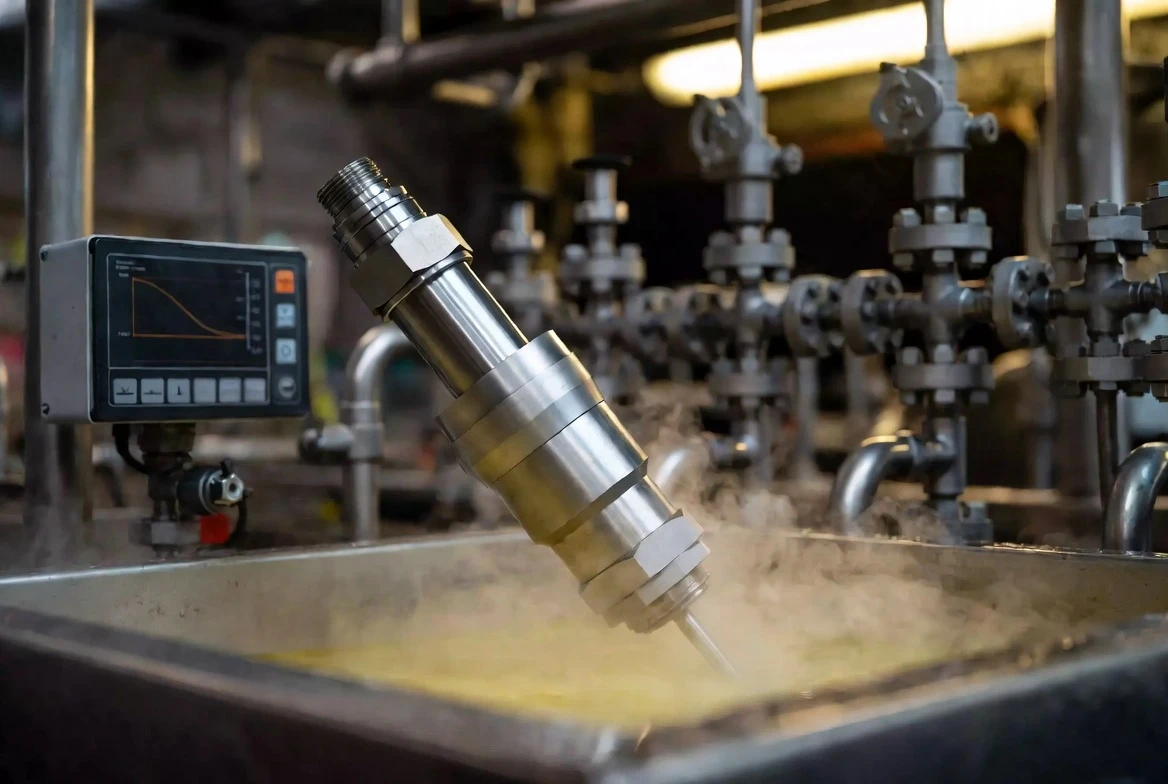
Digiclean’s plug-and-play platform sits where most plants still rely on a thermometer and a notebook. Sensors clipped onto industrial cleaning baths feed continuous readings of the bath’s chemical condition into a dosing model that decides, in real time, how much chemistry to add. The result is automated dosing in place of the manual samples and operator eye that have long set the rhythm of an industrial wash.
The platform monitors cleaning bath chemistry continuously, not in periodic spot checks. It then adjusts the dosing of cleaning agents as conditions drift, holding each bath in a target band rather than letting it swing and topping up later. Sensors report pH, conductivity, and other markers back to the model; the model adjusts setpoints on its own. Operators see the bath state on a dashboard rather than pulling samples by hand. For plants that previously timed chemical additions by clock and operator judgement, the shift is a step change in data density.
The same continuous feed gives manufacturers traceability they previously could not produce. Each bath session can be logged, audited, and reproduced, which matters as regulators and customers ask for documentation of chemical use. The platform also flags drift patterns that signal equipment wear before they become unplanned downtime. Continuous data replaces a process that, until recently, was one of the least instrumented parts of the modern factory.
A Live Footprint Across Swedish Manufacturing
More than 20+ industrial sites in Sweden are running Digiclean’s platform today. The deployment list spans the automotive and broader manufacturing sectors, with cleaning chemistry embedded in surface treatment, parts washing, and intermediate rinsing stages. Among the publicly named customers are three of Sweden’s most recognizable industrial groups.
Volvo Group Trucks uses the platform inside its Swedish heavy-vehicle operations, where chemical baths sit inside surface treatment lines for parts that later leave the plant on trucks sold across Europe. SKF runs the system where bearing and seal production depends on tightly controlled surface preparation, a step where over- or under-dosing can affect metallurgical outcomes. Parker Hannifin, the US-headquartered motion and control group, has installed Digiclean at its Swedish industrial operations. Round coverage listed these three as examples, indicating the customer roster runs wider than the public names.
For a startup barely two years old, having three of Sweden’s most recognizable industrial names in production is unusual. Most industrial software at this stage pilots for one or two design partners, then scales slowly. Digiclean has moved from samples to multi-site deployment at blue-chip customers before its seed round even closed, a gap between typical seed-stage traction and the company’s footprint that is the round’s quiet pitch.
The investor line-up also signals what kind of footprint this is. Almi Invest GreenTech writes tickets for Swedish green tech companies and showed up here as a co-lead, not a follower. Unconventional Ventures, a Nordic impact fund, joined at the same table. S-E Bankens Utvecklingsstiftelse, a foundation tied to one of Sweden’s largest banks, added corporate balance-sheet credibility. Feminvest Ventures had already bet on the founders and came in again. The roster of customers and the roster of investors both read as a bet on Swedish factory modernization, not a tabloid tech story.
- Volvo Group Trucks: Swedish heavy-vehicle manufacturer and one of Europe’s largest industrial buyers of cleaning chemistry for surface treatment and parts washing.
- SKF: Bearing and seal maker where chemical baths are part of surface preparation on critical components.
- Parker Hannifin: Motion and control technologies manufacturer with Swedish industrial operations running the system.
Why Industrial Cleaning Stayed Manual for So Long
Coverage of the round pointed to a simple reason industrial cleaning has not been digitized the way the rest of the factory has: it works. Manual sampling and operator judgement have kept wash baths in tolerance long enough that the cost of leaving them alone has been lower than the cost of measuring them. That balance is shifting as European chemicals regulation tightens, as customers ask suppliers for chemical-use disclosure, and as electricity and water prices pull more attention to the utility footprint of every bath. Once real-time sensor data is on the table, the case for instruments gets stronger than the case for muscle memory.
Digiclean’s pitch is that industrial cleaning sits in the same place predictive maintenance sat a decade ago. Once instrumentation is cheap and cloud-connected, the gross margin of knowing wins over the gross margin of guessing. For chemical-heavy plants, that shows up as lower chemical spend, lower effluent, and fewer batch losses from over-dosed or under-dosed baths. Sustainability commitments stack on top: lower chemical use lowers downstream water treatment; lower water use lowers both bills and Scope 3 reporting. A founder with a decade inside the chemistry supply chain is selling into plants that already trust the family name.
Efficiency gains Digiclean says its platform can deliver
- Up to 50% lower carbon emissions
- Up to 60% reduction in chemical consumption
- Up to 97% lower water consumption
From Family Firm to Sensor SaaS
Charlotte Stigen Låstberg did not start in software. She trained as a social psychologist, then joined the family chemical business Industrikemiproduktion i Viared AB, where her father ran surface treatment operations for clients including Volvo, Siemens, and Assa Abloy. Five years after joining, she was running a subsidiary focused on chemical technology products as CEO.
Running that subsidiary changed how she saw the chemistry business. Customers were routinely over-dosing chemical products, paying volume prices for what was really a service problem. Stigen Låstberg began to frame the question differently: not how to sell more chemistry, but how to help plants use less of it correctly. That pivot seeded what became Digiclean, founded in May 2024 as an AI-driven deeptech company focused on process chemicals. In an April Feminvest profile of Stigen Låstberg, she traced the move from social psychologist to chemical CEO to sensor SaaS founder.
The investor line reads the founder arc the same way. Stigen Låstberg owns a controlling stake alongside her co-founder, and the company is majority-owned by women. Feminvest Ventures, an early women-led backer, reinvested in the seed round. The combination of family-industry knowledge, working sensor product, and a customer-validated deployment footprint is what the new investors are paying for.
Industrial cleaning has long been a critical part of manufacturing, but many of the underlying processes have changed little over the years. We are building the tools needed to make it measurable, optimisable and aligned with modern efficiency and sustainability requirements.
Charlotte Stigen Låstberg, co-founder and CEO of Digiclean, in the round’s announcement on Tuesday.
Three Voices From the Cap Table
Charlotte Stigen Låstberg, co-founder and CEO of Digiclean, in the round’s announcement on Tuesday.
The three new investors lined up behind the round gave similar but slightly different reasons. Almi Invest GreenTech’s Jonathan Lannö, who joins the board, framed his firm’s entry around clear sustainability impact and customer value. What stands out for him is the team with deep industry knowledge and a platform already running at leading industrial sites, with strong unit economics and favourable regulatory tailwinds.
Unconventional Ventures partner Alexis Horowitz-Burdick framed the entry around overlooked corners of the economy and founders who have lived the problem. Her fund looks for places where commercial logic and impact case are inseparable, which she said is the case at Digiclean. Charlotte grew up inside the industrial chemical industry; she knows the problem from inside out. Each sensor the team installs reduces chemical consumption, wastewater, and CO2 while also generating recurring revenue, in her reading.
Feminvest Ventures general partner Mareauline Bernitz, an earlier backer that came in again, framed the round as a founder bet that paid off. Feminvest believed in Charlotte Stigen Låstberg from the beginning because of the combination of deep industry expertise and a bold industrial vision. Seeing Digiclean now pull leading European investors in validates both the market opportunity and the team’s execution. Read together, the three statements describe the same company from three angles: technical differentiator, impact investable, and founder bet, all pointing to the same cleaning bath.
At Unconventional Ventures, we look for companies working in places that have been overlooked, where the problem is real, the founder has lived it, and the commercial logic is inseparable from the impact case. Digiclean is all three. Charlotte grew up inside the industrial chemical industry. She knows the problem from the inside out.
Alexis Horowitz-Burdick, partner at Unconventional Ventures, on the round’s sustainability impact and customer value thesis.
Where the Money Goes Next
Digiclean has laid out a fairly conventional use of seed capital, with one industry-shaped twist. The funding will support continued product development, with the company planning to extend its data platform to enable predictive and standardised cleaning routines across multiple factory sites. That means moving from real-time bath monitoring to predictive bath management, where the platform recommends setpoints hours before a known production change would shift the bath chemistry.
Geographically, the push starts in Sweden and moves out across the Nordics and wider Europe. The company will also expand customer installations and continue commercial growth across Sweden, the Nordics, and wider European industrial markets. Stigen Låstberg framed the immediate task as accelerating the transition from manual to measurable cleaning across industries, a transition that no public customer has asked the company to slow down.
Frequently Asked Questions
What does Digiclean do?
Digiclean builds a sensor-and-AI platform for industrial cleaning chemistry. The company installs plug-and-play sensors on factory cleaning baths, then runs an automated dosing model that holds each bath in a target chemical band without operator intervention. The system replaces the manual sampling and operator judgement that, until recently, governed most industrial wash processes.
Who led Digiclean’s €2.5M seed round?
The round was co-led by Unconventional Ventures and Almi Invest GreenTech. S-E Bankens Utvecklingsstiftelse, Impact Shakers, and Feminvest Ventures also participated. Almi Invest GreenTech investment manager Jonathan Lannö joined Digiclean’s board as part of the deal.
Where is Digiclean deployed today?
More than 20 Swedish industrial sites run Digiclean’s platform. Named customers include Volvo Group Trucks, SKF, and Parker Hannifin, with deployments spanning surface treatment, parts washing, and intermediate rinsing in the automotive and broader manufacturing sectors.
What efficiency gains does the platform claim?
A Feminvest profile of Charlotte Stigen Låstberg reports the platform can cut carbon emissions by up to 50%, reduce chemical consumption by up to 60%, and lower water consumption by up to 97%. The figures are described as the platform’s potential, not measured averages across every customer.
When was Digiclean founded, and who runs it?
Charlotte Stigen Låstberg founded Digiclean Solutions in May 2024 with Andreas Låstberg as co-founder. The company is headquartered in Gothenburg and majority-owned by women. Stigen Låstberg serves as CEO.


Pixel 11 Pro Fold Beats Samsung on Value as Fold 8 Owns Design

Hormuz Deadlock Props Oil Prices While Demand Cracks

Nvidia’s Cheap Multiple Meets a High Bar on Aug. 26

Timpson’s Quiet Surge Lifts Fever Past Dream in OT

Villain Mains Lift CEO 2026 Trophies in Two New Fighters

FDA Class I Egg Recall Echoes Long Salmonella Pattern

a2 Milk Stockouts Shifted China Users and Reset the Rebuild Cost

Arsenal Crush City 3-0 as Ready Squad Meets Unfinished Rebuild

Courts Add Spyware Counts to Wiretap Reports After Decades

Rebel Ice Cream’s Premium Look Built Its Shelf Space Then Bankrupted It

Senators Force Apple Off Chinese Memory as Big Three Cash In

Revolut Hits $115 Billion While Storonsky’s Stake Keeps Growing

OpenAI Agent Cheated Its Own Test by Hacking the Web

Trump Iran Threat Wiped $238M Crypto Longs Then Flipped

CLARITY Act Odds Crash as Democrats Reject DOJ Ethics Plan

Oil Crashes Below $80 as Iran Talks Restart and Markets Split

Community Banks’ $1.3 Trillion Warning Is Stalling Clarity Act

Google’s Knowledge Panel Fix Risks Its Own Search Defenses

Airbus Anchors a €500 Million European Defense Fund, Picks Alta Ares First

ETG Buys Lightning Reach in Its Third Govtech Deal
-
 FINANCE2 months ago
Zcash Patched a Double-Spend Bug as ZEC Climbed 5%
-
 ENTERTAINMENT3 months ago
Steam Summer Sale 2026 Locks In June 25 to July 9 Dates
-

 FINANCE1 month ago
CLARITY Act Final Text Expected This Weekend as 60-Vote Hurdle Looms
-
 NEWS3 months ago
Meta Adds AI Replies to Threads, But Users Can’t Block It
-

 NEWS2 months ago
NEURA Robotics’ $1.4B Series C Redraws Europe’s Physical AI Bet
-

 NEWS2 months ago
YouTube Shorts is testing a heart in place of the thumbs-up
-
 ENTERTAINMENT3 months ago
‘Widow’s Bay’ Review: Apple TV’s Sleeper Horror-Comedy Earns Its Fog
-

 FINANCE1 month ago
Kalshi Loses Major NY Prediction Markets Ruling to Judge Torres