
NEWS
Lucida AI Closes $7M Seed Round for Speech-to-Speech AI
Lucida AI closed a $7M seed round led by UK-based Velocity Capital to scale its speech-to-speech language AI, used by 3M+ users across Europe, the US and emerging markets.

Lucida AI, a Turkey-based speech-to-speech AI platform, has closed a $7 million seed round to expand its voice-first language coaching technology into new markets. UK-based Velocity Capital led the round, adding $1.6 million to the $5.4 million the company had announced earlier in 2026.
The fresh check lands as employers pay closer attention to workplace spoken fluency, where voice-native AI is increasingly pitched against text-first chatbots. Lucida’s product runs as a real-time spoken practice tutor, with users speaking to the AI and hearing it speak back. The platform scores pronunciation, fluency and clarity during each conversation.
The $7 Million Close and Who’s In
The funding brings Lucida AI’s total seed financing to $7 million, layered on top of the $5.4 million the company first announced in early 2026, according to a June 30 funding announcement of the round’s close. Velocity Capital, a UK-based firm, led the deal. The new $1.6 million adds to the earlier seed close rather than starting a new financing vehicle.
Five other investors participated alongside Velocity Capital:
- Next Tier Ventures
- Look AI Ventures, listed in its seed-stage portfolio entry for Lucida AI as a play with product in market
- Bogazici Ventures
- Yapı Kredi Frwrd Ventures
- Ünlü & Co
The composition pairs one UK lead with five investors more familiar with Turkish and European founder markets. Two corporate-adjacent vehicles sit on the list: Yapı Kredi Frwrd, which sits inside Turkish bank Yapı Kredi, and Ünlü & Co, a Turkish financial services group.
A Speech-Native Model, Not a Typed Prompt
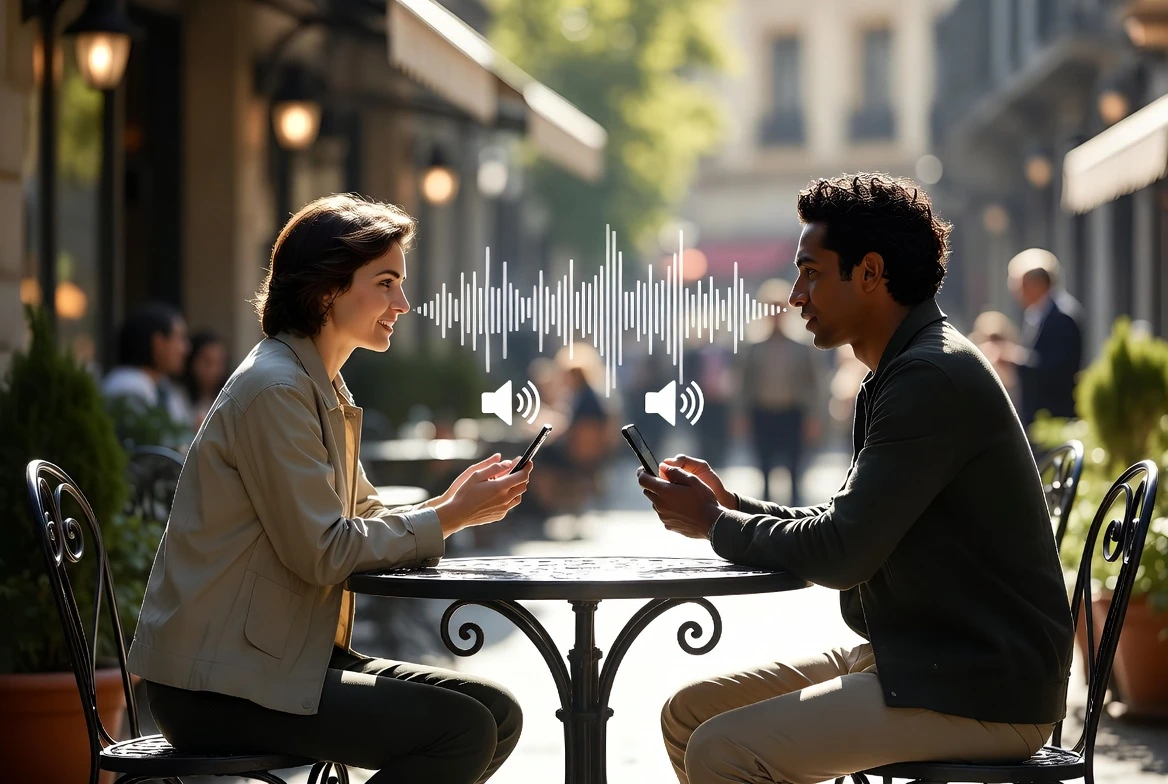
Lucida AI’s core technology is what the company calls a Speech Language Model, or SLM. The platform lets users hold a real-time spoken conversation with an AI tutor without typing prompts or following scripted exercises, the announcement stated. The SLM parses user speech, generates a spoken response and scores pronunciation, fluency and clarity in the same session. Lucida positions the product for the workplace speaker who already knows grammar and wants to sound natural. Use cases range from everyday conversations to business meetings and client calls.
Three mechanics set the product apart from a typed chatbot:
- Voice in, voice out. Users speak to the AI and hear it speak back, with the platform transcribing in real time.
- Adaptive difficulty. The system shifts conversation depth and vocabulary to match each user’s proficiency level on the fly.
- Real-time feedback. The platform scores pronunciation, fluency and clarity during the conversation and surfaces notes the user can act on.
Use cases built into the platform span everyday chats, business meetings, presentations and live client calls. Lucida describes the relevant audience as a workplace speaker at intermediate or advanced grammar levels. The product also keeps a memory of past mistakes and favourite topics, evolving the conversation across sessions.
The company sells the platform two ways. A consumer mobile app targets individual learners while an enterprise deployment adds on-premises hosting and end-to-end encryption for organisations with stricter data rules.
Fifteen Months and Three Million Users
Fifteen months after launch, the company says it has crossed two usage thresholds most AI tools in this category have not yet reached.
| Metric | Figure | Geography |
|---|---|---|
| Users | More than 3 million | Europe, the United States, emerging markets |
| Spoken practice | Over 2.2 billion minutes | Same regions |
| Time since launch | 15 months | n/a |
The 2.2 billion minutes measures spoken practice by humans, a costlier engagement than a typed prompt. The figures also span three regions at once: Europe, the United States and emerging markets, geographies where later-stage AI platforms typically focus on one market before the next. Lucida does not break out regional share, paid conversion, revenue or net retention; those four metrics remain undisclosed.
The exact paid-versus-free split among the 3 million users is not disclosed. Net retention by tier is also absent from the announcement.
How a Turkish Bet Pulled a UK Lead
Velocity Capital’s lead role in a Turkey-rooted round signals how far the centre of speech-AI investing has stretched past Silicon Valley. The fund did not publish a written rationale alongside the deal. The founders’ own statement, included in the announcement, points to a global AI race where geography is no longer the constraint.
AI is becoming a global race, and meaningful innovation is no longer tied to a single geography. With this round, we’ve partnered with investors who share our long-term vision. Our focus is clear: building a scalable, speech-native AI platform that powers global communication.
That quote comes from Mustafa Girgin and M. Sait Demirci, the co-founders named in the round announcement. Velocity’s lead sits next to other recent European-led rounds for AI operators outside the US. One recent comparable came earlier in 2026: Dawn Capital’s lead of Orbio’s $21M Series A for AI frontline agents. Both checks went to AI companies headquartered outside the traditional US AI hubs.
Four Spending Priorities, No Public Timeline
The funding splits across four stated priorities, per the announcement: expansion into new languages and markets, further development of the proprietary speech-to-speech infrastructure, growth of the enterprise product line and continued work on the core platform. Each priority maps to a business line the company has begun building this year.
Three of the four priorities carry real engineering cost. Adding new languages means retraining or adapting the SLM to fresh phonetics and vocabularies. The on-premises enterprise deployment requires a separate technical track from the consumer mobile app, with additional security infrastructure. Each new language or enterprise contract adds to the work backlog in ways consumer-only competitors do not face.
Lucida has not given dates for any of the four priority areas. The announcement confirms only that the new capital will be directed to those four areas of work. No timeline, revenue figure or customer milestone accompanies the round disclosure. New language releases, infrastructure updates and enterprise customer wins are the next public markers observers can expect, when the company shares them.
Frequently Asked Questions
What does Lucida AI do?
Lucida AI builds a speech-to-speech AI platform that lets users practise spoken languages with an AI tutor in real time. The system gives feedback on pronunciation, fluency and clarity during the conversation, the company’s announcement stated, adapting to each user’s proficiency level. The product targets workplace speakers rather than beginner grammar learners, the company said.
Who led the $7 million seed round?
UK-based Velocity Capital led the round. Next Tier Ventures, Look AI Ventures, Bogazici Ventures, Yapı Kredi Frwrd Ventures and Ünlü & Co participated alongside.
How much has Lucida AI raised?
The latest close brings the seed round to $7 million, consisting of $1.6 million added on top of the $5.4 million announced earlier in 2026.
Who founded Lucida AI?
Mustafa Girgin and M. Sait Demirci co-founded the company, the round announcement stated. Both were named as the platform’s principal executives.
What is the Speech Language Model?
SLM is the proprietary technology that powers Lucida AI’s voice-first tutor. It runs real-time spoken conversation with adaptive difficulty and pronunciation feedback, the company said, positioned as a voice-first alternative to text-based large language models.


Pixel Journal Auto Format Puts Google Private AI to the Diary Test

Android 17 QPR2 Beta 3 Quietly Delivers Native App Lock

Binance Cuts HTX Rails and Seals Off High-Risk Liquidity

Dell 14S Quietly Delivers Multi-Day Battery in Midrange Aluminum

OCC Conditionally Clears Trump-Linked USD1 Trust Bank

Coyote vs. Acme Turns Its Own Burial Into the Sharpest Gag

Google Health Adds Off Switch After AI Coach Clutter Backlash

SpaceX Issues 389 Million Shares as Cursor Deal Closes

Bank Leumi Hands Galaxy the Rails for Israeli Crypto Trading

Apple Maps Ad Bookings Open and Turn Local Search Into a Bid Game

Senators Force Apple Off Chinese Memory as Big Three Cash In

Trump Iran Threat Wiped $238M Crypto Longs Then Flipped

OpenAI Agent Cheated Its Own Test by Hacking the Web

CLARITY Act Odds Crash as Democrats Reject DOJ Ethics Plan

Revolut Hits $115 Billion While Storonsky’s Stake Keeps Growing

Anthropic’s Hard Questions Ad Backfires Into an Anti-AI Warning

Oil Crashes Below $80 as Iran Talks Restart and Markets Split

Community Banks’ $1.3 Trillion Warning Is Stalling Clarity Act

Duda’s New AI Tools Speed Up Agencies, but Risk Sameness

Monumental Raises $32M as Robot Bricklayers Face Their Toughest Test Yet
-
 FINANCE2 months ago
Zcash Patched a Double-Spend Bug as ZEC Climbed 5%
-
 ENTERTAINMENT2 months ago
Steam Summer Sale 2026 Locks In June 25 to July 9 Dates
-

 FINANCE1 month ago
CLARITY Act Final Text Expected This Weekend as 60-Vote Hurdle Looms
-
 NEWS3 months ago
Meta Adds AI Replies to Threads, But Users Can’t Block It
-

 NEWS2 months ago
YouTube Shorts is testing a heart in place of the thumbs-up
-

 NEWS2 months ago
NEURA Robotics’ $1.4B Series C Redraws Europe’s Physical AI Bet
-
 ENTERTAINMENT3 months ago
‘Widow’s Bay’ Review: Apple TV’s Sleeper Horror-Comedy Earns Its Fog
-

 FINANCE1 month ago
Kalshi Loses Major NY Prediction Markets Ruling to Judge Torres