
FINANCE
CFTC Stays CME Group’s Self-Certified 24/7 Crude Oil Contract
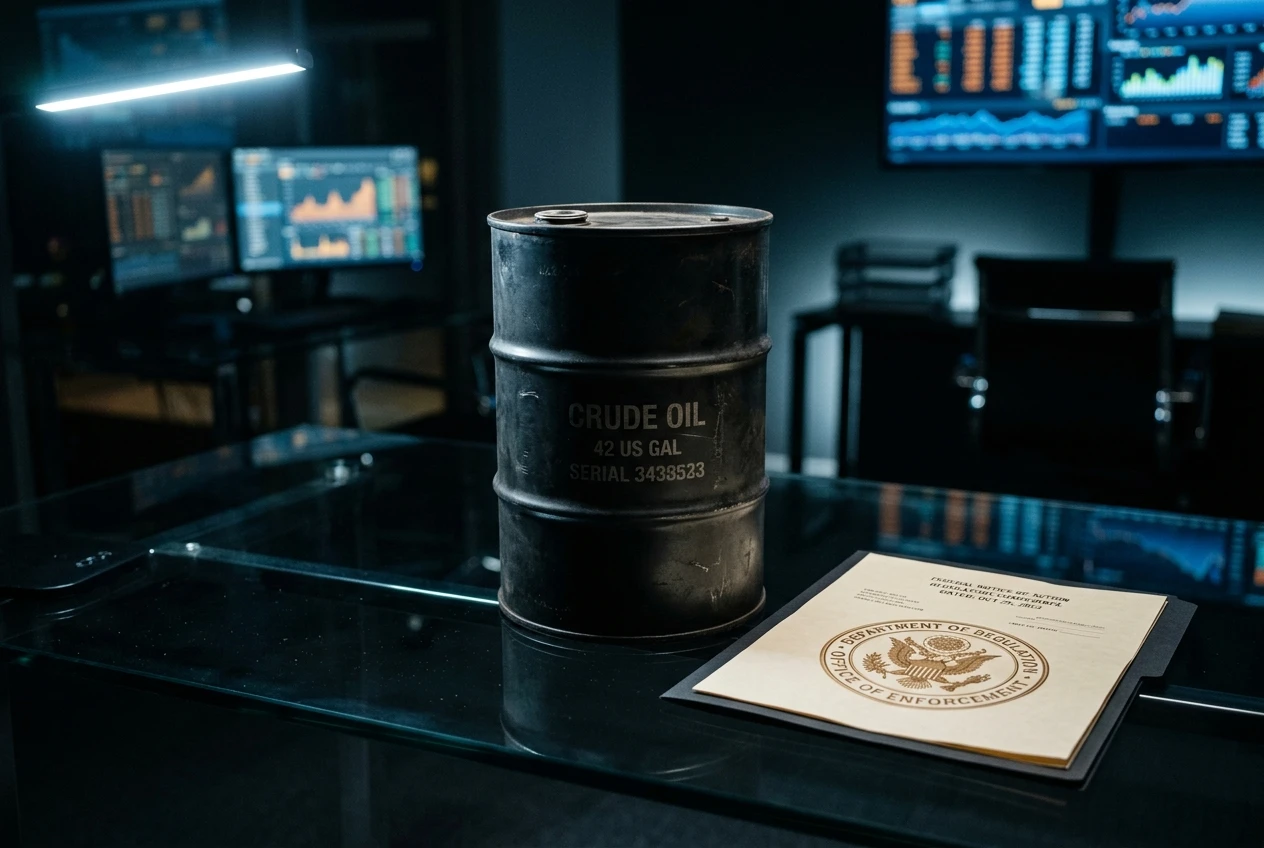
The CFTC stayed CME Group’s self-certification of a 10-Barrel WTI crude oil futures contract on July 9, 2026, a day before planned launch, while CME prepares Treasury Link.

The US Commodity Futures Trading Commission used a stay authority it rarely invokes to halt CME Group’s 24/7 crude oil futures contract, one day after the exchange self-certified the new product and one day before trading was set to begin. The action lands as CME and the CFTC are already locked in litigation over a different product.
On July 9, 2026, the regulator announced it would exercise its authority under 17 C.F.R. 40.2(c) to stay the listing of the 10-Barrel WTI Crude Oil Futures contract that CME had filed to self-certify on July 8. CFTC Chairman Michael S. Selig called CME’s decision to self-certify while a public comment period on 24/7 derivatives trading remained open “wholly inappropriate” and said it “necessitates Commission action.” The same regulator that CME Group is suing over bitcoin perpetual futures has now used a precedent-setting tool against CME on a separate launch, putting both the planned August 30 oil debut and a Q4 2026 launch of Treasury Link in the same regulatory crosswinds.
The Stay, the Self-Certification, and a 10-Barrel Contract
The stay came on what would have been the eve of trading. CME had planned to begin offering the new 10-Barrel WTI Crude Oil Futures as soon as July 10. The contract, ticker symbol TCL, would have been the first 24/7 energy futures contract available in the US. At 10 barrels, the TCL contract is roughly 1/100th the size of CME’s standard CL crude oil futures, a deliberately smaller contract for traders who want more precise hedging or faster scaling into positions when news breaks.
CME filed to self-certify the contract under Section 40.2 of CFTC regulations on Wednesday, July 8. That path lets an exchange list a product within one business day unless the regulator acts to block it. The regulator did act, using its authority under 17 C.F.R. 40.2(c) to stay the certification the next day. The earlier CME expansion plan for oil and gold had laid out the August 30 launch and the smaller 1/10th sizing as the answer to weekend and overnight demand for crude exposure.
CME also filed a parallel request for voluntary Commission review and approval under Rule 40.3, the CFTC said in its press release staying the contract listing. Under that path, the regulator can take up to 45 days, extendable by another 45 days. CME’s statement to Argus Media was that “we work with the commission on their review of any new product.”
The CFTC framed its July 9 action as enforcement of its own process. Exchanges, the agency wrote, must engage with staff “before seeking to list novel contracts.” By staying the 40.2 filing, the Commission said it would bar CME from listing the contracts until it has determined whether they comply with the Commodity Exchange Act and Commission regulations.
| Contract | Size | 24/7 Status |
|---|---|---|
| 10-Barrel WTI Crude Oil Futures (TCL) | 10 barrels | Stay issued July 9, 2026 |
| 1-Ounce Gold Futures | 1 ounce | 24/7 from July 26, 2026 |
| U.S. Treasury futures plus BrokerTec cash (Treasury Link) | Spread between CBOT futures and cash Treasuries | Q4 2026 launch, pending regulatory review |
Why Crude Oil Ran Into Trouble: Off-Hours Volatility
The CFTC has framed its action as a precaution against thin-hours volatility, particularly in crude oil. In its June 22, 2026 request for public input on 24/7 derivatives trading, the Commission asked whether allowing 24/7 oil trading “could result in higher volatility during thinly traded off hours, potentially triggering collateral demands or forced liquidation.” The comment period runs through July 27, 2026, and the stay means the 10-Barrel WTI contract sits inside that window.
The risk has looked more concrete since late February 2026, when a US-Iran war began. Attacks on infrastructure and shipping in the Middle East Gulf have frequently taken place over weekends, when US futures markets close. CME has positioned its 24/7 product as the answer to that gap, letting traders manage exposure whenever news breaks, including nights and weekends.
Selig’s argument is that there is no one answer. The CFTC does not view all asset classes through the same lens, he said when announcing the stay. A 24/7 crude contract is structurally different from a 24/7 equity index contract, and each deserves an individual look. The July 9 release repeated that framing verbatim.
A 10-barrel contract, rather than the standard 1,000-barrel CL contract, also widens the universe of participants who could face margin calls in the middle of the night. CME had pitched the smaller size as an entry point for traders who want to scale positions as soon as news hits. The CFTC, in its stay notice, called the contract one raising “possible legal and market risks” the Commission had not yet had time to assess.
CME Group Senior Managing Director Derek Sammann had framed the broader 24/7 push, including gold, as a regulated answer to that overnight demand. “Traders are increasingly looking to diversify their portfolios across commodity markets in the face of geopolitical uncertainty,” Sammann said when the expansion was first announced. “Our new WTI and Gold futures provide regulated products that are right-sized and available 24/7.”
Oil Industry and Trading Firms Pressed the CFTC Before the Stay
The stay did not arrive out of nowhere. Oil industry executives and commodity trading firms held at least nine meetings with Selig over the two weeks before the regulator acted, according to meeting records made public this week. The discussions focused on concerns about 24/7 energy trading, Argus Media reported.
Those meetings landed while the CFTC’s June 22 request for public input was still open. Critics of around-the-clock crude trading had argued that overnight price swings in a thinly traded venue could trigger forced liquidations and unsettle the broader energy complex. CME had argued the opposite. Continuous access would let traders hedge as soon as news breaks, rather than waiting for Sunday evening opens in a world where wars and sanctions move prices in real time across multiple time zones.
The Other Lawsuit: CME Sues CFTC Over Perpetual Futures
The crude oil stay is the second open dispute between CME and the CFTC in 2026. The first took shape on May 29, when the regulator approved Kalshi to begin offering bitcoin perpetual futures, the first perpetual contract ever listed on a US-licensed exchange. Outgoing CME CEO Terry Duffy said on CNBC’s Fast Money on June 17 that CME would sue the Commission over that approval.
CME’s decision to disregard the Commission’s effort to undertake a reasoned analysis of the critical issues at stake is wholly inappropriate and necessitates Commission action to stay the certification.
CME filed its complaint on June 18 against the CFTC and Selig personally, alleging the regulator greenlit Kalshi’s product on “an unfair and unlawful basis.” Duffy’s central argument is that perpetual futures are legally swaps under the Dodd-Frank Act, not futures products, and that CME holds exclusive benchmark licenses that any such product would have to clear regardless. He has said he will step down as CEO in March 2027.
Selig has defended the perpetual futures approval publicly and signaled that crypto perps regulated in the US are coming. The dispute now bleeds directly into the 24/7 oil matter, because CME’s regulator and its chief executive are already on opposing sides of an active federal case, which can change how each side handles the next filing.
Treasury Link and What CME Is Still Trying to Ship
Even as its 24/7 crude oil contract sits in regulatory limbo, CME is preparing a separate launch on the fixed income side. Treasury Link, a service that lets market participants trade the spread between CBOT US Treasury futures and BrokerTec cash Treasuries in a single transaction on CME Globex, is expected to launch in Q4 2026 pending regulatory review, per the company’s 2026 Treasury Link launch announcement.
The new functionality uses the same technology CME built for FX Link, which already lets traders cross currency pairs and FX futures in one submission. CME built Treasury Link for the same reason, to eliminate legging risk when traders enter the cash and futures legs of a Treasury trade separately. Mike Dennis, Global Head of Fixed Income at CME Group, called it a way of connecting the cash and futures markets “in a way that wasn’t possible before.”
CME’s fixed income complex has been one of its brightest performers in the first half of 2026, and the Treasury Link plan lands on top of that strength:
- Interest Rate futures and options ADV of 16.6 million contracts in H1 2026, up 9% year on year.
- U.S. Treasury futures and options ADV of 9.7 million contracts, up 8% year on year, with $923 billion in notional ADV for U.S. Treasury futures.
- BrokerTec overall ADV of $1.067 trillion in H1, up 13% year on year.
- Single-day Treasury futures volume record of 37.6 million contracts on May 26.
Citi, JPMorgan, and Morgan Stanley all issued statements supporting the planned launch. Citi’s Jamie Mortimore called Treasury Link a way to “manage risk more effectively and improve the liquidity we can extend to our global client base.” Morgan Stanley’s Reed Staub said the functionality “represents a major leap forward in market structure efficiency.” Whether the regulatory friction that just hit 24/7 crude oil will follow Treasury Link through its approval window is the open question for the second half of 2026.
A New Tool at the CFTC and What Comes Next
The 40.2(c) stay is rarely used. Argus Media noted that the CFTC rarely stays self-certification, a tool the Commission generally prefers to keep in reserve. Bringing it out on a marquee product from the largest US derivatives exchange sets a precedent visible to every other designated contract market now planning 24/7 rollouts, and reshapes how exchanges will weigh the 40.2 fast-track against the longer 40.3 review.
For CME, the path forward has two branches. Under the separate 40.3 voluntary review process, the CFTC now has up to 45 days, extendable to 90, to weigh whether the 10-Barrel WTI Crude Oil Futures complies with the Commodity Exchange Act and Commission regulations. CME can also continue its 24/7 launch for 1-Ounce Gold Futures, scheduled to begin 24/7 trading on July 26. The contract that was supposed to start on July 10 will not start on July 10, and the open Kalshi perpetual futures question, detailed in the site’s coverage of the first US bitcoin perpetual futures approval, remains pending in federal court.
Frequently Asked Questions
What did the CFTC actually do on July 9, 2026?
The CFTC stayed CME Group’s self-certification of a 10-Barrel WTI Crude Oil Futures contract that would have begun trading on a 24/7 basis as soon as July 10, 2026. The Commission invoked its rarely used authority under 17 C.F.R. 40.2(c), the rule that lets the CFTC hold up an exchange’s self-certified product.
Why is 24/7 crude oil futures trading controversial?
The CFTC’s June 22, 2026 request for public input asked whether around-the-clock crude trading could trigger higher volatility during thinly traded off-hours, leading to forced liquidations. CME’s smaller-sized 10-barrel contract would have given a wider range of participants exposure to those conditions.
What is Treasury Link and when does it launch?
Treasury Link is a CME Group functionality that lets traders execute the spread between CBOT US Treasury futures and BrokerTec cash Treasuries in a single submission on CME Globex. CME announced in 2026 that the service is expected to launch in Q4 2026 pending regulatory review.
Is CME Group also suing the CFTC?
Yes. On June 18, 2026, CME filed a federal lawsuit against the CFTC and Chairman Michael S. Selig over the agency’s decision to allow Kalshi to offer bitcoin perpetual futures. Outgoing CEO Terry Duffy announced the legal action one day earlier on CNBC.
Who is Michael S. Selig?
Michael S. Selig is the Chairman of the US Commodity Futures Trading Commission. He has led the agency’s approach of treating 24/7 trading on a case-by-case basis across asset classes rather than approving it broadly.


Immersive Maps Upgrade Erases Traffic Colors on Android Auto

XRPL 3.3.0 Nodes Hit 62 Percent as FixCleanup Nears 80 Percent Bar

L’Atitude 52°N Camera Beats Meta but Exact a Real Price

Strategy Parks $1.59B Cash While Bitcoin Stack Stays Flat

Pixel Watch 5 Battery Unlock Makes Health Guardian Trends Real

JCB Hydromax Hits 406 mph and Proves Digger Hydrogen Engines

Pixel 11 Pro Modem Swap Finally Cools the Daily Drive

OpenAI ChatGPT for Teens Locks In Study Mode After Safety Suits

Bessent’s Bond Buybacks Lift Bitcoin Past 80K More Than Yields

Pixel Camera 11 Dials Bring Convenient Control With a Catch

Senators Force Apple Off Chinese Memory as Big Three Cash In

OpenAI Agent Cheated Its Own Test by Hacking the Web

Trump Iran Threat Wiped $238M Crypto Longs Then Flipped

Fed Holds Rates Again as Three Dissents Force Markets to Tighten

30-Year Yield Hits 5.32% Highest Since 2007 as Debt Supply Locks In Costs

Oil Crashes Below $80 as Iran Talks Restart and Markets Split

Google’s Knowledge Panel Fix Risks Its Own Search Defenses

Legora Buys Wexler Fact Engine as Fifth 2026 Deal

Agon Raises $30M to Build Europe’s AI Weapon Training Arenas

Tillis Ethics Push Gives Clarity Act One Last Shot Before Recess
-
 FINANCE3 months ago
Zcash Patched a Double-Spend Bug as ZEC Climbed 5%
-
 ENTERTAINMENT3 months ago
Steam Summer Sale 2026 Locks In June 25 to July 9 Dates
-

 FINANCE2 months ago
CLARITY Act Final Text Expected This Weekend as 60-Vote Hurdle Looms
-
 NEWS3 months ago
Meta Adds AI Replies to Threads, But Users Can’t Block It
-

 NEWS3 months ago
YouTube Shorts is testing a heart in place of the thumbs-up
-
 NEWS4 weeks ago
Senators Force Apple Off Chinese Memory as Big Three Cash In
-

 NEWS3 months ago
NEURA Robotics’ $1.4B Series C Redraws Europe’s Physical AI Bet
-
 ENTERTAINMENT5 months ago
Extraction 3 Is Officially Coming to Netflix in 2027