
NEWS
Pixel 11 Pro Modem Swap Finally Cools the Daily Drive
Pixel 11 Pro review data shows an 11-degree thermal drop and better battery than last year’s XL after Google ditched the Samsung modem for MediaTek.

The Google Pixel 11 Pro ships with a smaller battery, less RAM on the base model, and a Tensor chip that still trails flagship rivals in raw benchmarks. After a week and a half of daily use it still feels like the most complete Pixel in years, largely because Google finally swapped the modem.
Android Headlines’ hands-on review and independent tests put hard numbers on the change: an 11-degree drop in peak stress temperatures, battery life that beats last year’s larger Pro XL, and roughly 10 percent faster cellular speeds with cleaner signal. Those second-order gains from the MediaTek modem and efficiency work turn the familiar Tensor experience into something you can actually carry all day.
What Arrived on August 20
Google announced the Pixel 11, Pixel 11 Pro and Pixel 11 Pro XL on August 12 and put them on shelves August 20. The Pro starts at Pixel 11 Pro starting at $1,099 for 256 GB with 12 GB of RAM. Higher storage tiers jump to 16 GB RAM and top out at 1 TB for $1,449. The larger Pro XL opens at $1,299.
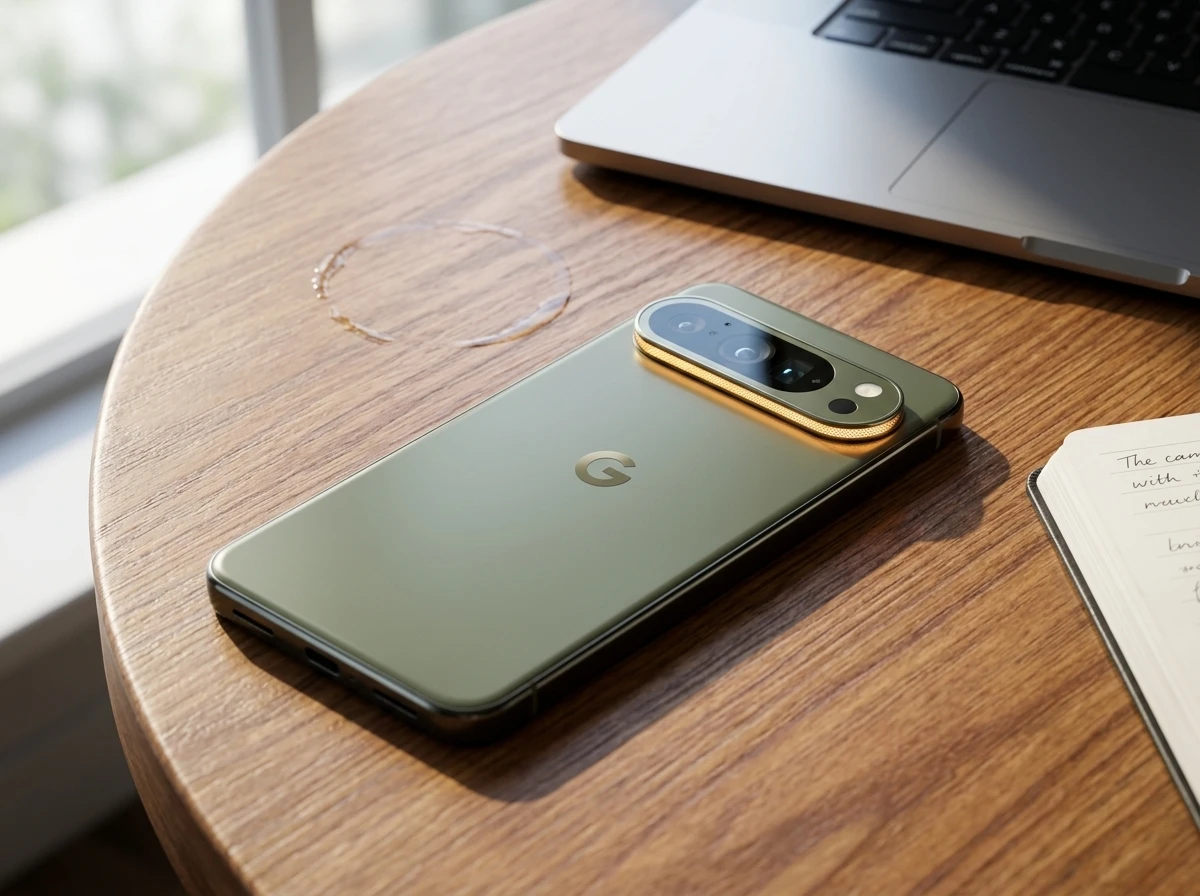
The official Pixel 11 series announcement lists a 6.3-inch Super Actua LTPO display peaking at 3,600 nits, Tensor G6 on TSMC’s 3 nm process, Android 17 with seven years of OS and security updates, IP68, and dual eSIM support in the US. Colors are Canyon, Olive, Fog and fully matte Obsidian. The camera bar is now all glass and houses the new HiLight LED cluster.
On paper the upgrades look modest. The real shift sits under the radio.
The Modem Change That Unlocked the Rest
Every Tensor phone since the Pixel 6 carried a Samsung Exynos modem. Users reported weak signal, aggressive 5G hunting that burned battery, and excess heat. Google switched the Pixel 11 series to a MediaTek M90 modem. Early testers and the Android Headlines side-by-side on AT&T via US Mobile measured about 10 percent faster speeds and more consistent signal than the Pixel 10 Pro XL.
- Prior Exynos generations drew power while clinging to weak 5G instead of dropping to stable LTE.
- MediaTek’s Rel-17 Paging Early Indication and UltraSave features cut idle wake-ups; the company claims up to 15-18 percent lower average power in some scenarios.
- Better signal efficiency reduces both radio heat and the CPU work needed to recover dropped connections.
YouTuber Geeky Ranjit wrote after early testing that “the network issues have been solved with the new modem” and that heating “is sort of solved now with Tensor G6.” Not every report is perfect. Cellular enthusiast CurtisNetworks posted photos showing the Pixel 11 Pro lagging in low-service areas and delaying tower handoffs while driving. The bulk of everyday use appears cleaner, and that cleanliness feeds everything else.
Eleven Degrees Cooler and a Full Day of Battery
Android Headlines ran identical thermal loops on separate days at matched ambient temperatures. Peak surface temperature on the 3DMark Wildlife Extreme stress test fell from 113.9 °F on the Pixel 10 Pro to 102.2 °F on the Pixel 11 Pro. That reading undercut even the larger Galaxy S26 Ultra. Genshin Impact and 4K60 recording stayed in the same ballpark as last year, but the stress-test win matters most because it is the hottest the phone normally gets.
| Device | Stress Test °F | Battery (YouTube loop) | Charge to 100 % |
|---|---|---|---|
| Pixel 11 Pro | 102.2 | 23 h 20 min | 1 h 18 min |
| Pixel 10 Pro | 113.9 | 19 h 43 min | 1 h 20 min |
| Galaxy S26 Ultra | 102.9 | 23 h 45 min | 58 min |
| OPPO Find X9 Pro | 112.4 | 24 h 28 min | 1 h 6 min |
Google shrunk the battery slightly to 4,850 mAh yet the review unit still outlasted the larger Pixel 10 Pro XL in real mixed use. The controlled YouTube loop at ~200 lux lasted 23 hours 20 minutes, a jump of nearly four hours over the previous Pro. Days still end tight for heavy users; the phone cannot match an iPhone 17 Pro Max for all-day reliability. The improvement is real and it is the first time in several generations that a standard Pro can finish a normal day without a late top-up.
Wired charging remains 30 W (55 percent in about 30 minutes). Qi2.2 magnetic wireless charging at 25 W, previously XL-only, now comes on the regular Pro. Google’s own 67 W charger and the included cable produced a full charge in 1 hour 18 minutes in the test.
Benchmarks Still Trail, Software Still Snaps
Google blocks benchmark apps from the Play Store for weeks after launch, so testers sideload. Geekbench 7 on the Pixel 11 Pro scored 2,748 single-core and 7,557 multi-core, up roughly 17-21 percent from the Pixel 10 Pro. GPU rose about 55 percent to 3,123. AnTuTu climbed 60 percent to just under 2 million. Those are healthy year-over-year gains.
| Device | Geekbench 7 Single | Geekbench 7 Multi | AnTuTu |
|---|---|---|---|
| Pixel 11 Pro | 2,748 | 7,557 | 1,992,456 |
| Pixel 10 Pro | 2,331 | 6,195 | 1,240,243 |
| Galaxy S26 Ultra | – | – | 3,824,993 |
| OPPO Find X9 Pro | – | – | 3,403,119 |
Android Authority’s deeper Tensor G6 dive found the same pattern: CPU up mid-teens to low-twenties percent, still 18-50 percent behind current Snapdragon, Exynos and Apple silicon depending on the test. The PowerVR CXTP-48-1536 GPU improves peak scores modestly but throttles hard under sustained load; one stress report showed a 90 percent drop from peak. Genshin Impact remains a struggle because the title no longer supports the PowerVR architecture well. Google has never chased peak charts. The software still feels snappy on Android 17 with no lag reported in the review period, a first for some long-time Pixel users.
Base storage ships with only 12 GB of RAM, down from 16 GB on last year’s Pro. Higher tiers restore 16 GB. That decision, plus the modest GPU, leaves future-proofing questions for heavy multitaskers and on-device AI workloads that spill beyond the TPU.
Design, HiLight and the Camera Bar That Stays Put
The flat-sided Pro design with glossy rails (matte on Obsidian) remains one of the best-feeling Android phones. The camera bar still prevents table wobble and enables PixelSnap magnetic accessories. Google thinned the bar 40 percent on the base model and made the Pro bar fully glass. Olive and Canyon colorways stand out; the review unit in Olive drew consistent compliments.
HiLight is the new LED ring around the flash. It glows in patterns when Gemini is listening, thinking or responding, and you can assign custom colors to favorite contacts for incoming calls. Google’s HiLight color patterns for Gemini page keeps the pitch simple: stay informed while the phone sits face-down. Third-party app support is not planned. Early reaction is mixed; many users rarely leave the phone face-down, so the feature stays mostly decorative for them.
Display PWM sits at a low 540 Hz, a known eye-strain risk for sensitive users. Brightness and color remain strong outdoors until thermal throttling dims the panel in heat. Bezels are thicker than OPPO’s latest, yet the overall look still ranks among the cleanest Android designs. For comparison on the foldable side of the family, the Pixel 11 Pro Fold build trade-offs show how Google is balancing thinness against durability across the lineup.
Camera Gains That Matter Day to Day
Google calls this its best camera yet. Hardware changes include a new main sensor better at handling reflections, a larger 1/1.95-inch 48 MP telephoto (up from 1/2.55-inch) with 5x optical and 120x Pro Zoom, and a 42 MP ultrawide selfie. Night Sight now finishes nearly instantly, up to 4.5 times faster than before, and light smears are largely gone.
- Magic Capture records video then auto-extracts high-res stills and reframes moments with AI.
- Live Translate for Media can dub foreign-language TikToks and similar clips into English audio, not just captions.
- Pro Zoom at 120x sharpens distant subjects but still hallucinates text; useful for recognition, not documents.
- Colors stay natural and punchy, competitive with vivo’s ZEISS processing for many scenes.
The ISP tuned for Pixel continues to carry more weight than raw sensor size. Chinese flagships still lead some computational categories, yet the Pixel 11 Pro closes enough ground that most buyers will be satisfied with the results straight out of the camera app.
Who the Pixel 11 Pro Suits Right Now
If you are on a Pixel 9 Pro or older, the thermal, battery and modem gains justify the jump. The software stack, seven-year update promise, and camera speed make the daily experience smoother than the modest spec sheet suggests. Coming from a Pixel 10 Pro is harder to justify: you pay $100 more at the entry tier, lose 4 GB of RAM on the 256 GB model, and the core interface feels familiar. Waiting for the planned redesign on the Pixel 12 cycle may make more sense for annual upgraders.
Google bundles six months of Google AI Pro (higher Gemini limits, 5 TB storage, Health Premium) with the Pro models. Features such as proactive Gemini suggestions and shopping-list automation still feel slow or inconsistent in early use. Pixel Journal private AI formatting shows how on-device AI continues to expand across the Pixel line; the 11 Pro’s TPU gains feed that direction even when general CPU and GPU lag.
For the full hardware sheet see the full Pixel 11 Pro specifications. Residual gaps remain clear: gaming performance, base RAM, PWM, and absolute battery endurance versus the best iPhones and Chinese flagships. The modem-driven cooling and efficiency leap is the change that finally makes those gaps easier to live with.
The reviewer who started the piece by asking whether this phone could pull them off an iPhone 17 Pro Max ended closer than in any prior year. That is the practical score that matters for most people shopping the $1,099 tier this month.


Immersive Maps Upgrade Erases Traffic Colors on Android Auto

XRPL 3.3.0 Nodes Hit 62 Percent as FixCleanup Nears 80 Percent Bar

L’Atitude 52°N Camera Beats Meta but Exact a Real Price

Strategy Parks $1.59B Cash While Bitcoin Stack Stays Flat

Pixel Watch 5 Battery Unlock Makes Health Guardian Trends Real

JCB Hydromax Hits 406 mph and Proves Digger Hydrogen Engines

Pixel 11 Pro Modem Swap Finally Cools the Daily Drive

OpenAI ChatGPT for Teens Locks In Study Mode After Safety Suits

Bessent’s Bond Buybacks Lift Bitcoin Past 80K More Than Yields

Pixel Camera 11 Dials Bring Convenient Control With a Catch

Senators Force Apple Off Chinese Memory as Big Three Cash In

OpenAI Agent Cheated Its Own Test by Hacking the Web

Trump Iran Threat Wiped $238M Crypto Longs Then Flipped

Fed Holds Rates Again as Three Dissents Force Markets to Tighten

30-Year Yield Hits 5.32% Highest Since 2007 as Debt Supply Locks In Costs

Oil Crashes Below $80 as Iran Talks Restart and Markets Split

Google’s Knowledge Panel Fix Risks Its Own Search Defenses

Legora Buys Wexler Fact Engine as Fifth 2026 Deal

Agon Raises $30M to Build Europe’s AI Weapon Training Arenas

Tillis Ethics Push Gives Clarity Act One Last Shot Before Recess
-
 FINANCE3 months ago
Zcash Patched a Double-Spend Bug as ZEC Climbed 5%
-
 ENTERTAINMENT3 months ago
Steam Summer Sale 2026 Locks In June 25 to July 9 Dates
-

 FINANCE2 months ago
CLARITY Act Final Text Expected This Weekend as 60-Vote Hurdle Looms
-
 NEWS3 months ago
Meta Adds AI Replies to Threads, But Users Can’t Block It
-

 NEWS3 months ago
YouTube Shorts is testing a heart in place of the thumbs-up
-
 NEWS4 weeks ago
Senators Force Apple Off Chinese Memory as Big Three Cash In
-

 NEWS2 months ago
NEURA Robotics’ $1.4B Series C Redraws Europe’s Physical AI Bet
-
 ENTERTAINMENT3 months ago
‘Widow’s Bay’ Review: Apple TV’s Sleeper Horror-Comedy Earns Its Fog