
BUSINESS
Europe’s July Tech Funding Hits €8.6B on Fewer Deals
Fewer deals but more capital in July as Helsing’s $1.8B defence AI round and AI sector lead concentrate European VC into strategic bets while exits rise.

European startups raised €8.6 billion across 267 deals in July 2026, a slight rise from June’s €8.3 billion even as the number of transactions fell 9 percent from 293. Fourteen companies each took more than €100 million, and the month’s standout was Germany’s Helsing.
The pattern is clear from the Tech.eu July report: capital is holding up through larger tickets while deal volume cools. That concentration, led by defence AI, is the second-order shift reshaping who gets funded and how Europe’s tech market is tilting toward strategic security plays.
July’s Tally Shows Capital Holding Steady
Deal count dropped, yet total money edged higher. Out of the 267 rounds, the value of 35 remained undisclosed. AI took the top sector share by volume.
Germany led countries with €3.5 billion across 48 transactions. Exit activity also strengthened, rising to 51 transactions from 39 in June, spanning software, AI, fintech, healthtech and HR tech.
| Metric | July 2026 | June 2026 |
|---|---|---|
| Total funding | €8.6 billion | €8.3 billion |
| Number of deals | 267 | 293 |
| Deals over €100M | 14 | n/a |
| Exits | 51 | 39 |
| Top country | Germany (€3.5B) | n/a |
These figures sit inside a broader H1 pattern of bigger checks to fewer companies, visible in earlier Europe Q2 2026 venture pulse data that already showed strong quarterly totals on selective deal flow.
The gap between headline capital and deal count is the month’s clearest signal. Money moved. It simply moved through fewer doors. That leaves the 35 undisclosed rounds as a quiet reminder that the public ledger still understates part of the flow.
Helsing’s Record Round Anchors the Month
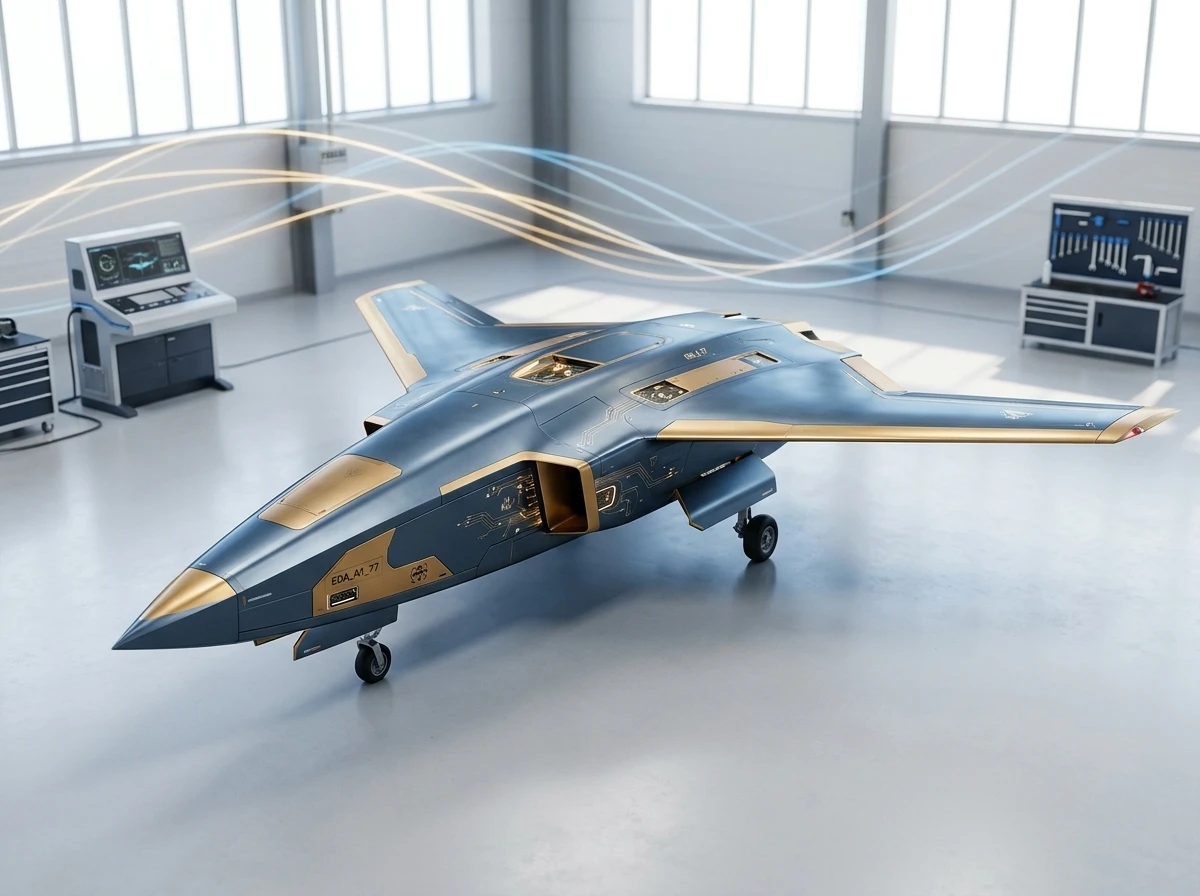
Munich-based Helsing, Europe’s leading defence AI company, closed the largest deal. On 13 July it raised $1.8bn in a Series E that values the firm at $18 billion.
Investor demand significantly exceeded the available allocation, reflecting strong and growing confidence in AI-driven and software-defined defence technology. The company remains predominantly European-owned, underscoring its deep roots in Europe.
The statement from Helsing named new and existing backers including Dragoneer Investment Group, Lightspeed Venture Partners, Disruptive, Iconiq, Growth Equity at Goldman Sachs Alternatives, JPMorganChase, Canada Pension Plan Investment Board, General Catalyst, Plural and Stepstone. Existing investors include Prima Materia, Accel and Greenoaks. The board stayed unchanged, with co-chairmen Daniel Ek and Tom Enders.
The round is Europe’s biggest ever for a defence-technology startup. It follows other large European defence and AI moves earlier in the year and in June, including Quantum Systems’ $1.2 billion round at an $8 billion valuation.
Board continuity and predominantly European ownership mattered as much as the cheque size. Global growth funds and pension capital joined without forcing a change at the top. That mix is becoming a template for security-critical European scale-ups that want depth of capital and local control at the same time.
AI Claims the Volume Lead
Artificial intelligence was the leading sector by investment volume, capturing 21.2 percent of July’s total funding. Helsing itself sits at the intersection of AI and defence, so the category numbers are heavily influenced by that single transaction and related software-defined systems.
Other July activity tracked by Vestbee included mid-sized AI and deeptech rounds: microagi’s $55 million seed in Munich for embodied AI robotics, Valarian Technologies’ $50 million Series A in London for sovereign AI infrastructure, and smaller seeds in inference platforms and industrial autonomy. Defence-adjacent names also appeared in the broader European flow.
Early August brought another AI-hardware signal when London-based OLIX announced a $312m Series B financing round at a $3.3 billion valuation for its photonic interconnect inference systems. That deal sits just outside the July window but underscores the same appetite for specialised AI infrastructure.
Strip Helsing out of the sector math and AI still leads on breadth of activity, not only on a single mega ticket. Embodied robotics, sovereign infrastructure and inference hardware all drew cheques in a short window. The stack now runs from seed robotics to multi-billion defence platforms.
- Helsing: defence AI, $1.8bn Series E, $18bn valuation
- microagi: embodied AI robotics, $55m seed, Munich
- Valarian Technologies: sovereign AI infrastructure, $50m Series A, London
- OLIX: photonic interconnect inference, $312m Series B, $3.3bn valuation
Germany Takes the Country Crown
Germany’s €3.5 billion haul over 48 deals made it the top market. Helsing alone accounts for a large share of that total once converted from dollars. Munich has emerged as a centre for defence and deeptech capital, overtaking some of Berlin’s earlier consumer-internet pull.
The UK remains a heavyweight in aggregate European rankings across the year, with multiple billion-dollar-plus rounds earlier in 2026. Yet July’s country leaderboard flipped toward Germany on the back of the defence AI concentration. An oversubscribed £90M raise for UK tech earlier in the cycle shows parallel vehicles still feeding British growth companies, but the mega-ticket spotlight in July landed in Germany.
- Germany: €3.5 billion, 48 deals, Helsing dominant
- AI / defence: volume leader via Helsing and related platforms
- Mega-round count: 14 companies above €100 million
- Undisclosed: 35 deals without public values
This geographic tilt matches the H1 story of capital shifting into deeptech and defence as governments rearm and procurement budgets rise.
Munich’s pull is no longer a single-company story. microagi’s seed in the same city shows follow-on density forming around the defence and robotics cluster. Capital is landing where technical talent, procurement proximity and earlier scale-ups already sit.
Fewer Deals, Larger Cheques
The 9 percent drop in deal count while totals rose is the clearest structural signal. Investors are writing bigger tickets to a narrower set of winners. Seed and early-stage volume has been under pressure across 2026 quarters; the July data continues that reset.
Crowd conversation on X picked up the same theme. Commentators noted Europe producing multiple billion-dollar rounds in a single year and observed that more money is chasing fewer companies, widening the gap between the top tier and everyone else. Defence tech has moved from niche or controversial to mainstream investable asset class on the back of rising military demand.
One sharp thread flagged Helsing’s valuation metrics as richer than some US peers on forward revenue multiples, underlining how hot the category has become. That heat pulls capital away from more ordinary SaaS or consumer plays that dominated earlier cycles.
Fourteen rounds above €100 million carried a large share of the month’s €8.6 billion. The remaining deals shared a thinner pool. That arithmetic is why totals can rise while the number of funded companies falls.
Exits Gather Momentum
Fifty-one exit transactions in July, up from 39, spread across software, AI, fintech, healthtech and HR tech. Liquidity is returning after quieter periods. The mix suggests both strategic acquisitions and some IPO or secondary activity are finding buyers again.
Stronger exits matter because they recycle capital and give limited partners proof that European holdings can deliver returns. Without that, the mega-round concentration risks becoming a closed loop that never funds the next generation of smaller companies.
The sector spread on the exit side is wider than the funding concentration at the top. Software, fintech, healthtech and HR tech all appeared alongside AI. That breadth on the way out is one of the healthier signals in the July set.
| Exit picture | July 2026 | June 2026 |
|---|---|---|
| Exit transactions | 51 | 39 |
| Direction | Up | Baseline |
| Sectors named | Software, AI, fintech, healthtech, HR tech | n/a |
What the Concentration Leaves Behind
The second-order effect is a two-tier market. At the top, defence AI and selected deeptech names attract sovereign-style capital, US growth funds and large European backers at double-digit billion valuations. Helsing’s predominantly European ownership and board continuity show the strategic preference for local control even as global money pours in.
Below that tier, deal volume is thinner. Founders outside AI, defence, robotics or specialised infrastructure face longer fundraising timelines and more selective terms. The same dynamic that produced July’s resilient headline total is also reducing the number of companies that receive any cheque at all.
Europe is building real scale in security-critical technology at a moment of geopolitical pressure. That is a genuine strength. The cost is reduced breadth across the rest of the startup landscape. Whether later 2026 months rebalance toward more mid-sized rounds or keep rewarding only the largest strategic bets will decide how wide the next European tech generation can grow.
Defence Rounds Stack Across the Calendar
July did not invent the defence and AI mega-round pattern. It extended a sequence already visible earlier in 2026 and into early August. The tickets differ in size, yet the direction of travel is consistent.
- Earlier in 2026 and June: Quantum Systems closes a $1.2 billion round at an $8 billion valuation.
- 13 July 2026: Helsing raises $1.8 billion in Series E at an $18 billion valuation, Europe’s largest defence-technology startup round.
- Early August 2026: OLIX announces a $312 million Series B at a $3.3 billion valuation for photonic interconnect inference systems.
Each step adds a different layer of the stack: air systems, software-defined defence AI, then specialised inference hardware. Investors are funding the full chain, not a single niche.
The investor lists reinforce that point. US growth funds, large bank alternatives, a major pension board and established European backers all appeared on Helsing’s cap table. Demand exceeded allocation. Category heat is no longer theoretical.
Valuation steps also tell a story. Quantum Systems at $8 billion, Helsing at $18 billion, OLIX at $3.3 billion on a later-stage infrastructure bet. Capital is willing to pay up where the technology maps to procurement and sovereign needs.
Selective Cheques Narrow Founder Odds
The July arithmetic leaves a practical question for founders outside the favoured set. When fourteen companies absorb tickets above €100 million and AI alone takes 21.2 percent of volume, the residual pool shrinks fast for everyone else.
Seed and early-stage pressure across 2026 quarters already pointed this way. July continues the reset rather than reversing it. Mid-sized rounds still exist, as microagi and Valarian show, yet they cluster inside AI, robotics and sovereign infrastructure.
Exits rising to 51 transactions offer a partial counterweight. Liquidity returning across software, fintech, healthtech and HR tech can recycle capital into new funds. That path takes time. It does not instantly reopen early-stage volume.
For limited partners, the trade-off is clearer than it was a cycle ago. Concentrated bets on defence AI and deeptech can deliver outsized outcomes and strategic relevance. The open risk is a thinner bench of follow-on companies if mid-market funding stays subdued through later 2026.
Europe’s headline strength in July was real: €8.6 billion, a record defence round, and exits moving higher. The shape of that strength, fewer doors and larger cheques, will define who reaches the next funding stage and who waits longer for terms that used to arrive sooner.
Frequently Asked Questions
How much did European startups raise in July 2026?
European startups raised €8.6 billion across 267 announced funding deals, a modest increase from €8.3 billion in June despite a 9 percent drop in deal count.
What was the largest funding round in Europe in July 2026?
Helsing’s $1.8 billion Series E at an $18 billion valuation was the largest, making it Europe’s biggest-ever defence-technology startup round and valuing the Munich AI defence company at $18 billion.
Which country raised the most startup funding in July 2026?
Germany led with €3.5 billion across 48 transactions, driven in large part by the Helsing round and other deeptech activity centred in Munich.
Did exit activity increase for European tech in July 2026?
Yes, exits rose to 51 transactions from 39 in June, with activity spread across software, AI, fintech, healthtech and HR tech sectors.


Majors Fights Campus Caliphate as Daily Wire Ambitions Fray

Uber Bets $10 Billion Cash on Robotaxi Platform Play

Ahbstra ARK Pulls 500 Litres Daily From Dry Mediterranean Air

Nest Thread 1.4 Quietly Unifies Multi-Brand Smart Home Meshes

Cable Gateways Push Wi-Fi 7 Past Early Adopters in the US

Pixel Quick Settings Finally Gets Full Layout Reorder in Canary 2608

WhiteBIT Spot Bots Fill UK Gap Left by Derivatives Ban

Motorola Edge 70 Neo Leak Doubles Down on Bold Pantone Colors

Platter Turns Food Spreadsheets Into Sticky Supply Infrastructure

Circle Puts Native USDC on OKX X Layer for AI Rails

Marker AI Writing Startup Lands $13M Seed Led by Index Ventures

Meta’s Muse Spark 1.1 Beats Rivals on Price, Trails on Coding

CS2 Premier Season 5 Lands With Cache and a C4 Damage Rework

Trump Iran Threat Wiped $238M Crypto Longs Then Flipped

Bessent’s No-CBDC Applause Line Can’t Save the CLARITY Act

CLARITY Act Odds Crash as Democrats Reject DOJ Ethics Plan

Nintendo’s Switch 2 Battery Fix for Europe Comes With a Catch

OpenAI Agent Cheated Its Own Test by Hacking the Web

Audi’s 2026 S5 Bets That Restraint Beats the Horsepower Wars

Quantum Systems’ $1.2 Billion Round Exposes Defense Tech’s Winner Gap
-
 FINANCE2 months ago
Zcash Patched a Double-Spend Bug as ZEC Climbed 5%
-
 ENTERTAINMENT2 months ago
Steam Summer Sale 2026 Locks In June 25 to July 9 Dates
-

 FINANCE1 month ago
CLARITY Act Final Text Expected This Weekend as 60-Vote Hurdle Looms
-
 NEWS3 months ago
Meta Adds AI Replies to Threads, But Users Can’t Block It
-
 NEWS5 months ago
U.S. Navy Deploys Solar-Powered Lightfish Drone to Patrol Oceans
-
 ENTERTAINMENT3 months ago
‘Widow’s Bay’ Review: Apple TV’s Sleeper Horror-Comedy Earns Its Fog
-
 FINANCE2 months ago
CLARITY Act Floor Vote Likely Shifts to August, Lummis Says
-

 FINANCE1 month ago
Kalshi Loses Major NY Prediction Markets Ruling to Judge Torres