
NEWS
Switch 2 Hits 23.68 Million as Tariff Cash Sparks a Fight
Nintendo Switch 2 sold 23.68 million units in its first year and booked a $300 million tariff refund, lifting profit even as a customer lawsuit and price hikes loom.

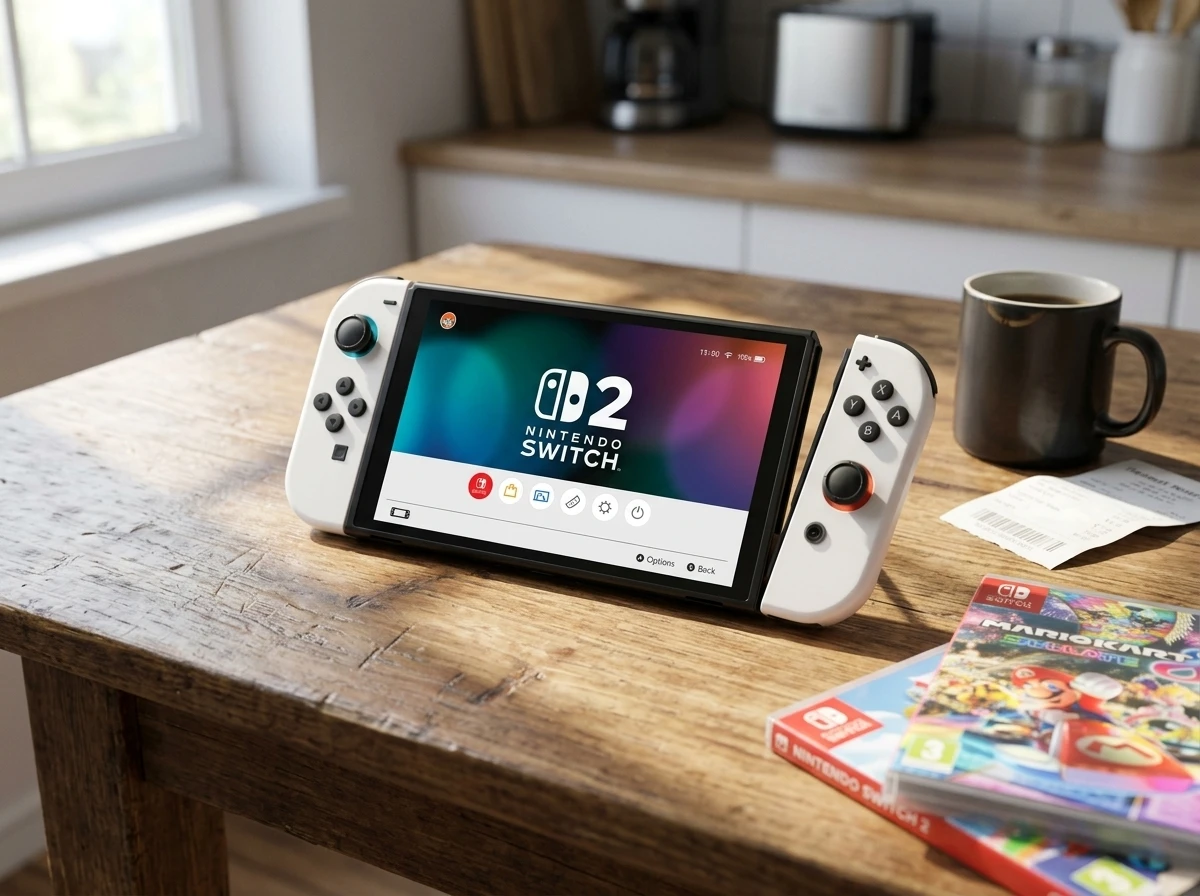
Nintendo Switch 2 hardware reached 23.68 million units sold worldwide by June 30 2026, clearing the original Switch’s first-year pace and the GameCube’s entire lifetime total in roughly thirteen months. The same quarter delivered a $300 million U.S. tariff refund that helped lift net profit 53.5 percent even as hardware volume fell from the launch peak.
That combination of volume, software attach and a sudden cost reduction now sits beside a consumer class action and fresh price increases already rolling out in Japan with more due in the West.
The quarter therefore mixed a predictable hardware cool-down with an unexpected legal windfall. Software kept both generations busy, IP income jumped on the back of a billion-dollar film, and the balance sheet absorbed a large one-time credit while consumers began to see higher shelf prices.
23.68 Million Units and the Expected Cool-Down
According to the Nintendo Q1 FY2027 financial results, Switch 2 sell-in hit 3.82 million units in the April-June quarter, down 34.4 percent from the year-ago launch window. Nintendo called the trajectory solid for a second-year system and noted that Japanese sell-through stayed firm after a May 25 price revision there.
Lifetime Switch added another 0.66 million units. Combined dedicated-platform hardware therefore slowed, yet the installed base for the new console already sits well ahead of several past Nintendo platforms.
| Platform | Q1 FY27 HW (M) | Lifetime HW (M) | Notes |
|---|---|---|---|
| Switch 2 | 3.82 | 23.68 | As of June 30 2026 |
| Original Switch | 0.66 | 156.59 | Still selling |
| GameCube | – | 21.74 | Full lifetime |
| Wii U | – | 13.56 | Full lifetime |
The official lifetime hardware and software totals also show Switch 2 software at 58.17 million units cumulative. Full-year hardware guidance for Switch 2 remains 16.5 million units, unchanged from May.
A second-year slowdown after a launch spike is normal. What matters is that the company left its 16.5 million full-year hardware target untouched, signaling that the April-June drop still fits the internal plan. The original Switch’s 0.66 million units in the same window show the prior generation has not exited the channel either.
Absolute scale still separates this run from earlier hardware. Clearing the GameCube’s full lifetime total and the Wii U’s 13.56 million mark inside roughly thirteen months leaves Switch 2 in a stronger early position than those predecessors, even before the remaining three quarters of the fiscal year are counted.
Software Sales Climbed on Both Platforms
Switch 2 software rose 9.2 percent year-on-year to 9.46 million units in the quarter. Original Switch software jumped 38.6 percent to 33.81 million units. Backward compatibility kept the older library relevant and turned one new title into a cross-platform engine.
- Tomodachi Life: Living the Dream, 7.94 million units in Q1 alone, more than 8 million by early August, with 2.55 million in Japan and 5.39 million outside.
- Pokémon Pokopia, 1.27 million units in the quarter.
- Digital sales for the dedicated platforms reached 132.7 billion yen, up 90 percent, and accounted for 61.5 percent of software revenue.
| Software line | Q1 units (M) | Change |
|---|---|---|
| Switch 2 software | 9.46 | +9.2% year-on-year |
| Original Switch software | 33.81 | +38.6% year-on-year |
| Tomodachi Life (Q1) | 7.94 | Cross-platform driver |
| Pokémon Pokopia (Q1) | 1.27 | New release |
Nintendo pointed to a steady cadence of new titles as the way to keep hardware adoption moving. The older platform’s software surge also shows owners are not abandoning the first Switch even as the sequel grows.
Digital’s 61.5 percent share of software revenue, paired with the 90 percent jump in digital sales to 132.7 billion yen, underscores how much of the attach now arrives without a physical disc or cartridge. That mix supports margin even when hardware volume cools from a launch peak.
The $300 Million Refund and the Lawsuit That Followed
Nintendo recorded approximately 300 million U.S. dollars as a reduction of cost of sales after the Supreme Court struck down the 2025 IEEPA tariffs. The company stated the tariffs tied to the refunds were primarily borne by Nintendo rather than passed through in full via product prices. Operating profit still more than doubled to 142.5 billion yen.
What We Know
- Refund booked in Q1 as lower cost of sales.
- Class action filed in U.S. District Court for the Western District of Washington by two named plaintiffs on behalf of buyers who paid tariff-era prices between February 2025 and February 2026.
- Nintendo moved to dismiss, arguing buyers “received exactly what they bargained and paid for” and are “not entitled to a rebate simply because of intervening legal developments.”
What’s Unconfirmed
- Whether any portion of the $300 million will ever reach consumers.
- How courts will treat similar claims against other importers that also received refunds.
In its Nintendo motion to dismiss the class action, the company said commercial transactions do not work by retroactive price adjustments. Other firms have taken different paths: Apple has pointed its larger refund toward U.S. manufacturing, while some retailers have signaled partial consumer returns.
Crowd reaction on X quickly focused on the optics. Posts noted the profit jump arrived alongside the refund and that “customers won’t see a cent,” even as hardware volume cooled from the launch quarter.
The legal theory on both sides is already clear from the filings. Plaintiffs want a path from the booked credit back to the buyers who paid during the tariff window. Nintendo’s motion treats the purchase as complete at the register and rejects any automatic rebate when later court action changes an importer’s cost base. Until a court rules, the $300 million stays on the company’s cost-of-sales line.
Movie Cash and the Wider Profit Picture
IP-related income more than doubled to 34.8 billion yen, helped by The Super Mario Galaxy Movie. The film, produced with Illumination and Universal, crossed $1 billion worldwide and became the first 2026 release to hit that mark. A live-action Legend of Zelda film is scheduled for 2027.
Net sales for the quarter fell 9.5 percent to 517.8 billion yen because of lower hardware volume, yet gross profit rose 52 percent and the gross margin expanded more than 20 points. Foreign-exchange gains and the tariff credit both contributed. Net profit attributable to owners reached 147.4 billion yen.
- Net sales: 517.8 billion yen, down 9.5 percent
- Gross profit: up 52 percent, margin up more than 20 points
- Operating profit: 142.5 billion yen, more than doubled
- IP-related income: 34.8 billion yen, more than doubled
- Net profit: 147.4 billion yen
First-quarter sales for Nintendo Switch 2 did not reach the level seen in the same quarter of last fiscal year, which was when the console launched. However, for a hardware system in its second year, sales compare favorably to the adoption trajectory of Nintendo Switch.
Nintendo said that in its results commentary. The company left full-year forecasts unchanged.
The split is instructive. Hardware units and top-line sales stepped down from the launch quarter, yet every major profit measure moved sharply higher. The tariff credit, currency gains, stronger software mix and the film’s contribution all landed in the same three-month window, which is why margin expansion outran the sales decline.
How the Original Switch’s First Year Looked
The original Switch, launched in March 2017, finished its first full fiscal year (ended March 2018) at roughly 17.8 million units. Switch 2 has already cleared that mark and then some while also passing the GameCube’s 21.74 million lifetime total. The comparison is imperfect because launch timing, pricing and the global market differ, yet the absolute volume still stands out.
Software attach has been healthy on both generations. The older Switch’s continued software strength in this quarter, driven in part by Tomodachi Life, shows the install base remains active and that Nintendo is still monetizing it heavily.
Passing 17.8 million and then 21.74 million inside the early window matters less as a pure race than as proof that demand absorbed a new price tier and a successor launch without stalling. The original Switch’s ongoing 156.59 million lifetime base still supplies a large software audience, which is why a single cross-generation title could post 7.94 million units in one quarter.
Price Moves Already Underway
Japan saw a hardware price revision on May 25 2026. A further increase is scheduled for Western markets on September 1 2026. Nintendo kept the original $450 U.S. launch price through the height of the tariff period even when Vietnam faced a proposed 46 percent rate, but the later adjustments are now arriving after the refund has been booked.
- February 2025 – February 2026: Tariff-era purchase window named in the U.S. class action.
- May 25 2026: Japan hardware price revision takes effect; local sell-through stays firm.
- Q1 FY2027 (April-June): $300 million tariff refund booked as lower cost of sales.
- September 1 2026: Western hardware price increase scheduled to land.
Hardware features continue to evolve as well. A 1080p boost for classic Switch games has already shipped, and a European replaceable battery revision is on the way with its own trade-offs. Both keep the installed base engaged while the company manages the transition.
The sequence puts the refund and the price steps on opposite sides of the ledger. Nintendo held the $450 U.S. launch price while the proposed Vietnam rate hung over the supply chain, absorbed the tariff cost internally by its own account, then booked the court-driven credit and moved ahead with regional increases. Buyers in Japan have already tested one revision; Western buyers meet theirs in September.
Backward Compatibility Keeps the Old Base Working
The software split in the quarter shows how the two hardware lines now reinforce each other rather than simply trading places. Switch 2 contributed 9.46 million software units, a 9.2 percent rise, while the original Switch delivered 33.81 million units, up 38.6 percent. The larger library and the larger install base still drive the bulk of unit volume.
Tomodachi Life: Living the Dream is the clearest mechanism example. Its 7.94 million Q1 copies, including 2.55 million in Japan and 5.39 million outside, moved across both platforms. Backward compatibility let one release serve the 23.68 million Switch 2 base and the far larger original Switch base at the same time.
That arrangement gives Nintendo two levers. New hardware adoption still depends on a steady cadence of titles, as the company itself noted. At the same time, the older platform’s software surge proves the first Switch remains a live commercial audience, not a runoff catalog. Digital’s climb to 61.5 percent of software revenue further lowers the friction of selling into both pools at once.
Pokémon Pokopia’s 1.27 million units add a smaller but clean first-party data point on the new hardware. Together the figures describe a transition that is additive on software even while hardware sell-in cools from the launch spike.
Western Prices Will Test Demand Next
The open variables the company and the market now share are narrow and concrete. Western reaction to the September 1 price step is the nearest demand test. Japan’s May 25 revision already offered one read, and Nintendo said sell-through there stayed firm, but the Western price point and competitive set differ.
First-party release cadence is the second variable. Hardware guidance of 16.5 million units for the full year assumes enough software to keep adoption moving after the 3.82 million Q1 print. The quarter’s 9.46 million Switch 2 software units and the cross-platform hit from Tomodachi Life support that path, yet the remaining three quarters must carry the rest of the target.
The tariff lawsuit is the third. The $300 million credit is already in cost of sales and already visible in the doubled operating profit and the 147.4 billion yen net profit. Whether any share ever moves to the buyers named in the Western District of Washington action remains unconfirmed, as does the treatment of similar claims against other importers.
For now the numbers show a console that has outrun its predecessor’s early pace, cleared the GameCube’s lifetime total, and a balance sheet that has already banked the tariff cash while price increases roll forward by region.
The remaining variables are straightforward: how Western buyers react to the September price step, whether big first-party releases arrive on the cadence Nintendo says it needs, and whether the tariff lawsuit produces any obligation to share the refund. For now the numbers show a console that has outrun its predecessor and a balance sheet that has already banked the tariff cash.
Frequently Asked Questions
How many Nintendo Switch 2 units have been sold so far?
As of June 30 2026 the lifetime total stood at 23.68 million hardware units and 58.17 million software units, according to Nintendo’s official sell-in figures.
Did the Switch 2 outsell the original Switch in its first year?
Yes. The original Switch reached approximately 17.8 million units by the end of its first full fiscal year; Switch 2 had already passed 23 million within a similar early window.
How does Switch 2 compare with the GameCube’s lifetime sales?
Switch 2’s 23.68 million units already exceed the GameCube’s entire lifetime total of 21.74 million units.
What drove the large software jump on the original Switch?
Tomodachi Life: Living the Dream alone accounted for 7.94 million of the 33.81 million original Switch software units sold in the April-June quarter and later passed 8 million overall.
How large was Nintendo’s tariff refund?
Nintendo recorded roughly 300 million U.S. dollars as a reduction of cost of sales related to IEEPA tariff refunds in the first quarter.


Majors Fights Campus Caliphate as Daily Wire Ambitions Fray

Uber Bets $10 Billion Cash on Robotaxi Platform Play

Ahbstra ARK Pulls 500 Litres Daily From Dry Mediterranean Air

Nest Thread 1.4 Quietly Unifies Multi-Brand Smart Home Meshes

Cable Gateways Push Wi-Fi 7 Past Early Adopters in the US

Pixel Quick Settings Finally Gets Full Layout Reorder in Canary 2608

WhiteBIT Spot Bots Fill UK Gap Left by Derivatives Ban

Motorola Edge 70 Neo Leak Doubles Down on Bold Pantone Colors

Platter Turns Food Spreadsheets Into Sticky Supply Infrastructure

Circle Puts Native USDC on OKX X Layer for AI Rails

Marker AI Writing Startup Lands $13M Seed Led by Index Ventures

Meta’s Muse Spark 1.1 Beats Rivals on Price, Trails on Coding

CS2 Premier Season 5 Lands With Cache and a C4 Damage Rework

Trump Iran Threat Wiped $238M Crypto Longs Then Flipped

Bessent’s No-CBDC Applause Line Can’t Save the CLARITY Act

CLARITY Act Odds Crash as Democrats Reject DOJ Ethics Plan

Nintendo’s Switch 2 Battery Fix for Europe Comes With a Catch

OpenAI Agent Cheated Its Own Test by Hacking the Web

Audi’s 2026 S5 Bets That Restraint Beats the Horsepower Wars

Quantum Systems’ $1.2 Billion Round Exposes Defense Tech’s Winner Gap
-
 FINANCE2 months ago
Zcash Patched a Double-Spend Bug as ZEC Climbed 5%
-
 ENTERTAINMENT2 months ago
Steam Summer Sale 2026 Locks In June 25 to July 9 Dates
-

 FINANCE1 month ago
CLARITY Act Final Text Expected This Weekend as 60-Vote Hurdle Looms
-
 NEWS3 months ago
Meta Adds AI Replies to Threads, But Users Can’t Block It
-
 NEWS5 months ago
U.S. Navy Deploys Solar-Powered Lightfish Drone to Patrol Oceans
-
 ENTERTAINMENT3 months ago
‘Widow’s Bay’ Review: Apple TV’s Sleeper Horror-Comedy Earns Its Fog
-
 FINANCE2 months ago
CLARITY Act Floor Vote Likely Shifts to August, Lummis Says
-

 FINANCE1 month ago
Kalshi Loses Major NY Prediction Markets Ruling to Judge Torres