
NEWS
SpaceX Tesla Terafab Turns to Gas Plants for Chip Power
SpaceX and Tesla will power the $16.8 billion Grimes County Terafab with natural gas plants and large battery arrays.

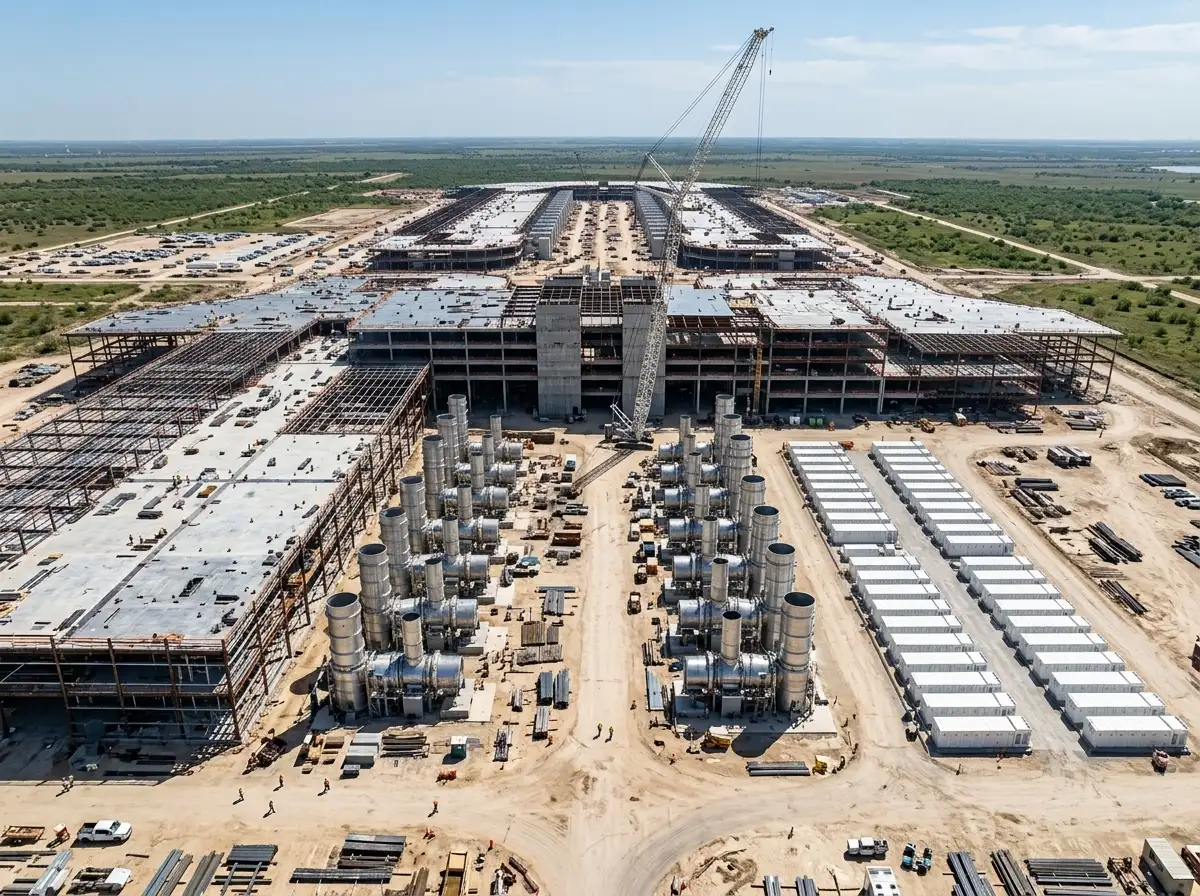
SpaceX will build natural gas-fired power plants and very large battery arrays to supply the $16.8 billion first phase of its Terafab chip factory with Tesla in Grimes County, Texas. Riley Trettel, head of energy and data center development at SpaceX, told a public meeting the companies are “bringing our own power.”
The choice locks a fossil backbone under the electric vehicles, humanoid robots and space data centers the chips will serve. It also sets a schedule the public grid cannot match.
The Power They Will Build Themselves
Trettel’s comments, reported by Bloomberg and confirmed across coverage of the Grimes County session, left little ambiguity.
We’re bringing our own power. We’re going to be building natural gas fired power plants, and we’re going to be building very large battery arrays in order to store energy.
Trettel made the statement as the companies move on civil work and foundations “nearly immediately.” Chip fabs need steady, high-volume electricity with almost no tolerance for interruption. A brief voltage dip can scrap wafers worth millions. Texas grid queues and interconnection delays have stretched for years. On-site generation sidesteps those bottlenecks.
SpaceX already controls more than 13,000 acres in the area. The factory itself will occupy roughly 3,000 acres and more than 100 million square feet across phases. That land bank leaves room for the plants, the batteries and later expansion. Tesla’s Megapack factory west of Houston sits close enough to supply the storage systems directly.
Exact megawatt ratings for the gas units and the battery arrays remain undisclosed. The pattern matches earlier SpaceX moves. The company disclosed a $2.8 billion gas turbine commitment tied to xAI data-center buildout, and Musk recently acquired a firm specializing in natural-gas plants.
Owning the turbines and the land means the power schedule tracks the factory schedule. Interconnection studies, utility capital plans and multi-year queue positions no longer gate the cleanroom timeline.
What Terafab Is Designed to Make
According to the SpaceX Terafab announcement details, the plant will combine logic, memory and advanced packaging under one roof. The goal is recursive speed: design, fabricate, package, test and improve without shipping wafers across oceans or time zones.
- Edge and inference chips for Tesla Optimus humanoid robots and self-driving Cybercabs
- High-power devices built for SpaceX space-based data centers
- Vertically integrated flow that also covers testing so finished silicon leaves the site ready for deployment
Intel joined in April to supply design, fabrication and packaging know-how. Musk has said the chip industry cannot keep pace with demand from his companies and the wider sector, and that geopolitical concentration of advanced nodes adds risk. Combined SpaceX and Tesla compute needs are projected to exceed 1 terawatt, well beyond current global supply.
Elon Musk posted that his rough split puts roughly 25 percent of Terafab output toward Optimus and 75 percent toward AI spacecraft. He also described the completed complex as about 50 times the size of the Pentagon.
Keeping logic, memory, packaging and test on one campus collapses the feedback loop. A design tweak can move from mask to packaged part without leaving Texas. That loop is the industrial point of Terafab, not only the square footage.
Texas Checks and Local Stakes
Governor Greg Abbott’s office formalized the state package on August 6. The first phase carries more than $16.8 billion in capital investment and at least 3,000 jobs. A $30 million Texas Enterprise Fund grant went to SpaceX. The project also qualifies under the Texas Jobs, Energy, Technology and Innovation program.
Grimes County granted a 100 percent tax abatement in exchange for at least $5 billion spent by 2030 and 1,800 full-time jobs by 2035. Local school districts signed separate incentive agreements after public input. SpaceX says 60 to 80 percent of hires at its other Texas sites have been local residents and expects a similar pattern here.
Project snapshot
- $16.8 billion initial phase capital from SpaceX and Tesla
- 3,000 jobs in the first phase
- $30 million TEF grant plus county tax abatement
- 100 million+ square feet planned manufacturing space
Nearly 900 residents signed a petition seeking tighter rules on large incentivized projects. Trettel told the meeting the on-site plants “will not increase the cost of power for ratepayers.” A county committee will review parts of the petition. SpaceX committed to draw industrial water from Gibbons Creek Reservoir rather than local groundwater, plus on-site wastewater treatment and reuse.
The local bargain is explicit. Tax relief and grants buy capital spending, job thresholds and a promise to keep ratepayers off the hook for the new load. Water and wastewater stay on site or on the reservoir, not on shallow wells.
Why Gas Plants Beat Waiting on the Grid
Data-center and advanced-factory demand has already pushed natural-gas plant costs up sharply across Texas. More than 70 gigawatts of new capacity has been mapped in “bring your own power” schemes. The same pressure hits chip fabs. Waiting for ERCOT interconnection can add years. Building turbines and batteries on controlled land compresses the schedule.
The irony is plain. Tesla sells solar and Megapacks as clean solutions. SpaceX and Tesla together are still choosing gas for the largest factory either has attempted. TechCrunch noted the absence of any terrestrial solar mention in the power plan. xAI’s Memphis campus already runs heavily on gas turbines, some of which drew lawsuits over permits. The practical constraint wins: fabs run 24/7 at high load factors. Gas turbines deliver firm power today. Batteries smooth peaks and provide backup.
Batteries Sit Beside the Turbines
The “very large battery arrays” fit Tesla’s existing product line. Megapacks are utility-scale systems already in production near Houston. Pairing them with gas lets the complex store excess generation, ride through short outages and potentially sell ancillary services later. Capacity figures stay secret, yet the architecture is clear: dispatchable gas for base load, batteries for flexibility.
This mirrors the rise of self-powered data centers facing grid delays. Large users no longer treat the utility as the default. They treat it as optional backup.
Firm power is the scarce input. Solar can offset fuel burn when the sun is up, but a fab cannot idle a line for cloud cover. Gas covers the base. Batteries cover the ramps. That split explains the plan more clearly than any single technology preference.
The One-Terawatt Compute Target
SpaceX states the combined demand “is expected to be in excess of 1 terawatt (TW) of compute, which is significantly larger than the current global supply.” Earlier internal estimates floated $55 billion for an initial slice and up to $119 billion for full multi-phase buildout. The $16.8 billion figure now on the table is the committed first phase.
| Metric | Figure |
|---|---|
| First-phase investment | $16.8 billion |
| Planned manufacturing floor | >100 million sq ft |
| Jobs (phase one) | 3,000 |
| Land controlled by SpaceX | >13,000 acres |
| Projected compute demand | >1 TW |
| Prior total buildout talk | up to $119 billion |
That scale places Terafab among the largest industrial projects in U.S. history. It also aligns with broader Texas plans for terawatt-scale compute factories. The state wants the manufacturing and the electricity load. Companies that can self-supply both move fastest.
The investment ladder already on the record shows how the first phase sits inside a larger ambition:
| Stage | Capital figure |
|---|---|
| Committed first phase | $16.8 billion |
| Earlier internal initial-slice talk | $55 billion |
| Full multi-phase buildout talk | up to $119 billion |
| Related xAI gas-turbine commitment | $2.8 billion |
Only the $16.8 billion line is a firm public commitment tied to Grimes County. The higher figures remain planning context. Even the first slice, though, is large enough to force the on-site power choice.
Who Gains When Factories Bring Their Own Power
Gas-turbine makers and pipeline operators see a new class of buyer willing to pay for speed and certainty. Battery manufacturers, led here by Tesla itself, lock in captive demand. Construction trades and local suppliers capture years of site work. Texas keeps the capital investment and the jobs inside its borders.
Traditional foundries face a customer that prefers to own the process. Utilities lose some future load growth but avoid the political heat of ratepayer-funded upgrades for one industrial user. Ratepayers, if Trettel’s claim holds, avoid direct cost increases from this project.
Environmental groups and nearby residents carry the air-quality and water concerns. Natural-gas generation still emits NOx, particulates and CO2. On-site treatment and reservoir water reduce some local impacts, yet the plants remain fossil assets with multi-decade lives.
- Turbine and pipeline suppliers gain a speed-focused industrial buyer
- Tesla Megapack lines gain a nearby, captive storage order book
- County and state ledgers gain capital spending and job thresholds
- Utilities avoid building rate-based assets for a single load
- Neighbors inherit long-lived gas emissions and construction traffic
The template is now public. A company that needs firm power at gigawatt scale can buy turbines, pair them with batteries, site them next to the load and start civil work while others wait in interconnection queues. SpaceX and Tesla just demonstrated it for a chip factory aimed at robots and orbital data centers. The same model will appear at the next data-center campus and the next advanced factory that refuses to wait.
Land Control Turns Power Into a Construction Task
Self-supply only works at this pace when the land, the load and the generation share one owner. SpaceX already holds more than 13,000 acres. The factory footprint of roughly 3,000 acres leaves contiguous ground for turbines, fuel interconnects, battery rows and later phases without new land fights.
That geometry matters as much as the turbine purchase. A fab that must negotiate off-site generation parcels, separate easements and third-party switchyards reintroduces the delays on-site power was meant to erase. Here the civil work for cleanrooms and the civil work for power can start on the same controlled acreage.
Proximity to Tesla’s Megapack factory west of Houston shortens another link. Storage hardware does not need a cross-country logistics chain. Units can move from production line to Grimes County pads on a regional trucking schedule that matches foundation pours.
The sequence the companies have already signaled is simple:
- April – Intel joins for design, fabrication and packaging know-how
- August 6 – Governor Abbott’s office formalizes the state incentive package
- Public meeting – Trettel confirms on-site gas plants and large battery arrays
- Nearly immediately – civil work and foundations begin on the controlled land
Each step assumes the power plan is internal. Grid-queue uncertainty never appears on the critical path.
Clean Machines Still Need a Firm Backbone
The chips leaving Terafab are meant for electric vehicles, humanoid robots and orbital compute. The electricity that fabricates them begins with natural gas. That tension is built into the project, not an accident of messaging.
Musk’s output split puts about 25 percent of production toward Optimus and 75 percent toward AI spacecraft. Both end uses market themselves as efficient or frontier systems. Neither changes the physics of a 24/7 fab. High load factor and zero tolerance for interruption still favor dispatchable gas plus batteries over intermittent supply alone.
TechCrunch’s note that terrestrial solar is absent from the stated power plan underscores the priority order. Fuel security and schedule certainty rank above a fully renewable first phase. Batteries add flexibility and may later open ancillary-service revenue, yet they do not replace the turbines as the backbone.
Multi-decade plant lives mean the carbon and air-quality profile of Terafab’s power will outlast several product cycles of the robots and spacecraft the chips enable. On-site treatment and reservoir water limit some local burdens. They do not convert gas combustion into a clean source. Neighbors and environmental groups will measure the project against that gap for as long as the stacks run.
Work starts with dirt and foundations in Grimes County. The gas plants and battery rows will rise alongside the cleanrooms. The chips that leave the site will power electric machines and space computers. The electricity that makes them will come, first, from natural gas.
Frequently Asked Questions
How much is the first phase of Terafab expected to cost?
SpaceX and Tesla put the initial phase at approximately $16.8 billion in capital investment. Earlier internal estimates had cited higher figures for broader buildouts, but $16.8 billion is the confirmed starting commitment announced with the Grimes County location.
What incentives did Texas and Grimes County provide?
The state extended a $30 million Texas Enterprise Fund grant and qualified the project under the JETI program. Grimes County approved a 100 percent tax abatement tied to $5 billion of spending by 2030 and 1,800 jobs by 2035; local school districts signed separate agreements.
What chips will Terafab produce?
The plant is designed for advanced logic and memory plus packaging and testing in one location. Output targets edge and inference chips for Tesla Optimus robots and Cybercabs plus high-power chips for SpaceX space-based data centers.
Where will the factory get its water?
SpaceX committed to industrial water from Gibbons Creek Reservoir rather than local groundwater, together with on-site wastewater treatment, reuse and conservation measures.
Has the generation capacity of the gas plants been disclosed?
No. Officials have described “natural gas-fired power plants” and “very large battery arrays” without releasing megawatt ratings or battery energy capacity figures.


Majors Fights Campus Caliphate as Daily Wire Ambitions Fray

Uber Bets $10 Billion Cash on Robotaxi Platform Play

Ahbstra ARK Pulls 500 Litres Daily From Dry Mediterranean Air

Nest Thread 1.4 Quietly Unifies Multi-Brand Smart Home Meshes

Cable Gateways Push Wi-Fi 7 Past Early Adopters in the US

Pixel Quick Settings Finally Gets Full Layout Reorder in Canary 2608

WhiteBIT Spot Bots Fill UK Gap Left by Derivatives Ban

Motorola Edge 70 Neo Leak Doubles Down on Bold Pantone Colors

Platter Turns Food Spreadsheets Into Sticky Supply Infrastructure

Circle Puts Native USDC on OKX X Layer for AI Rails

Marker AI Writing Startup Lands $13M Seed Led by Index Ventures

Meta’s Muse Spark 1.1 Beats Rivals on Price, Trails on Coding

CS2 Premier Season 5 Lands With Cache and a C4 Damage Rework

Trump Iran Threat Wiped $238M Crypto Longs Then Flipped

Bessent’s No-CBDC Applause Line Can’t Save the CLARITY Act

Nintendo’s Switch 2 Battery Fix for Europe Comes With a Catch

CLARITY Act Odds Crash as Democrats Reject DOJ Ethics Plan

Audi’s 2026 S5 Bets That Restraint Beats the Horsepower Wars

OpenAI Agent Cheated Its Own Test by Hacking the Web

Quantum Systems’ $1.2 Billion Round Exposes Defense Tech’s Winner Gap
-
 FINANCE2 months ago
Zcash Patched a Double-Spend Bug as ZEC Climbed 5%
-
 ENTERTAINMENT2 months ago
Steam Summer Sale 2026 Locks In June 25 to July 9 Dates
-

 FINANCE1 month ago
CLARITY Act Final Text Expected This Weekend as 60-Vote Hurdle Looms
-
 NEWS3 months ago
Meta Adds AI Replies to Threads, But Users Can’t Block It
-
 NEWS5 months ago
U.S. Navy Deploys Solar-Powered Lightfish Drone to Patrol Oceans
-
 ENTERTAINMENT3 months ago
‘Widow’s Bay’ Review: Apple TV’s Sleeper Horror-Comedy Earns Its Fog
-
 FINANCE2 months ago
CLARITY Act Floor Vote Likely Shifts to August, Lummis Says
-

 FINANCE1 month ago
Kalshi Loses Major NY Prediction Markets Ruling to Judge Torres