
NEWS
Meta’s Muse Glimmer Puts Capable Agents on Your Laptop
Meta opens Muse Glimmer weights, a 30B agentic model that runs on one consumer GPU, shifting agent work off the cloud amid China open-model pressure.

Meta opened the weights for Muse Glimmer on August 10, 2026, a 30-billion-parameter dense model built to run always-on agents on a single consumer GPU. CEO Mark Zuckerberg also pledged to release weights for the larger Muse Spark 1.2 frontier model soon.
The drop lands squarely in the middle of a noisy US-China open-weight contest and a policy fight over whether American labs should keep shipping freely downloadable models.
Muse Glimmer Lands as a Local Agent
Glimmer is not another chatbot. Meta Superintelligence Labs trained it for the full agent loop: plan, call tools with precise schemas, check results, recover from failures, and keep going across long horizons. It accepts interleaved text and images through a dedicated perception encoder, supports more than 100 languages, and offers controllable reasoning effort so users can trade speed for quality.
Today we’re also opening the weights for Muse Glimmer, a great 30B parameter dense model that can run locally. Soon we’ll also release the weights for Muse Spark 1.2, our latest foundation model. Meta is a strong supporter of open source and I’m proud of these releases.
Zuckerberg posted that on X under @finkd, where it drew more than 3.5 million views. He congratulated chief AI officer Alexandr Wang and the MSL team. Wang added that the model can run on 24 GB of VRAM without losing agentic reliability.
The company released it under the permissive Apache 2.0 license, a cleaner deal than the custom Llama community licenses that once limited large commercial users. Weights sit on Hugging Face now, with day-one paths through partners and local runtimes arriving this week.
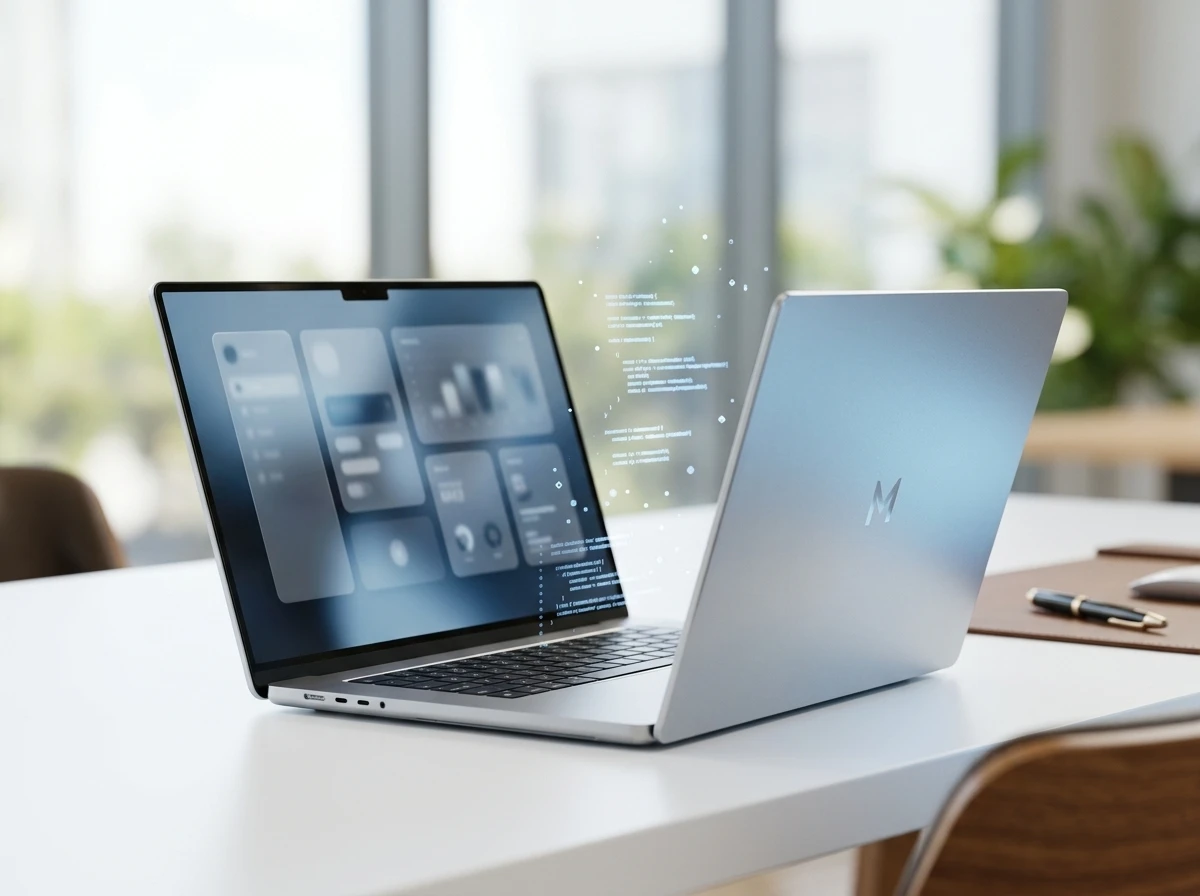
One Card Holds the Full Stack
Full-precision 30B weights need more than 55 GB. Meta’s 4-bit quantized builds shrink the language model under 20 GB. That leaves room inside a 24 GB or 32 GB envelope for the KV cache, the roughly 1.8B-parameter vision encoder, and a lightweight DFlash speculative decoding drafter.
- Memory target: K-Quant-17GB fits high-end consumer cards such as RTX 4090 24 GB; a dynamic variant targets 32 GB cards and unified-memory Macs.
- Speed boost: On an RTX 5090 the drafter lifts generation from about 75 to 233 tokens per second, a 3.1x gain. Apple M5 Max moves from 26.6 to 50.2 tokens per second.
- Quality hit: Meta reports average accuracy drops of roughly 0.2 percent on the 32 GB quant and 1 percent on the 17 GB version across 15 internal benchmarks.
- Context: 131,072 tokens or more, knowledge cutoff January 4, 2026.
The result is fluid conversation and real-time agent steps that stay entirely on the device. No network round-trip, no per-token bill, and personal files or screenshots never leave the machine.
Where It Beats and Trails Qwen and Gemma
Meta compared Glimmer directly with Gemma4-31B and Qwen3.6-27B. The table below pulls the company’s published agentic and coding numbers.
| Benchmark | Muse Glimmer | Qwen3.6-27B | Gemma4-31B |
|---|---|---|---|
| MCP Atlas | 75.5 | – | – |
| DeepSearch QA | 74.6 | – | – |
| SWE-Bench Pro | 51.2 | 50.2 | 36.9 |
| SWE-Bench Verified | 76.0 | 77.2 | – |
| OSWorld-Verified | 65.9 | 75.6 | – |
| TerminalBench 2.1 | 51.7 | 60.7 | – |
| τ³-Banking | 23.5 | – | – |
Glimmer leads several pure agentic suites and sits near the top of its size class on coding. Qwen still wins most multimodal and terminal benchmarks in Meta’s own table. Independent Artificial Analysis put Glimmer at 35 on its Intelligence Index, ahead of Gemma 4 31B (30) and close to much larger Chinese models on parameter efficiency, while flagging higher hallucination rates and weaker knowledge work scores than Qwen.
Crowd reaction on X treated the release as the moment local agents stop being demos. Developers immediately started wiring it into IDEs and home-automation scaffolds. The privacy angle drew equal heat: an agent that sees your screen and files without shipping the data to a remote cluster changes the risk calculation for anyone handling sensitive work.
The Open Letter Meta Already Signed
The release sits inside a larger political fight. In July 2026 more than 270 companies, including Meta, Nvidia, Microsoft, and Hugging Face, signed the Open Weights and American AI Leadership letter. They warned against premature restrictions that would stifle competition or push innovation overseas.
The letter never names China, yet it arrived as the Trump administration weighed limits on Chinese open-weight models after claims that labs such as Moonshot distilled American systems for Kimi K3. Meta and others argued that open weights expand opportunity, strengthen competition, and let defenders match attacker capabilities. Restricting the technique of distillation itself would hit legitimate US development, they said.
Zuckerberg returned to the theme in Zuckerberg’s Future is for Everyone essay published the same day as Glimmer. Foreign labs hold advantages because they face fewer training-data frictions, he wrote. US policy must cut that extra friction if American open-source models are to lead. Banning foreign models is not the answer; making the American ones best is.
Chinese open models from DeepSeek, Alibaba’s Qwen line, Moonshot, and others already match or beat many US systems at lower cost. China’s limited NVIDIA H200 access has not stopped the open-weight wave. Glimmer is Meta’s clearest recent answer in the size class that actually runs on desks rather than clusters.
Zuckerberg’s Superintelligence for Everyone
The essay frames the technical drop inside a philosophy. Superintelligence should be distributed, not concentrated. Every person gets a personal agent that works 24/7 on health, career, relationships, and hobbies, with strong privacy defaults similar to WhatsApp encryption. Invention, not mere automation, becomes the main contribution. Students get PhD-level tutors. Scientists get tools that accelerate discovery. Businesses get the power to try ideas that once required large teams.
Meta will keep offering free versions at massive scale and a dynamic auction for extra compute so the lowest price goes to whatever people value most. The company also launched a “Future is for Everyone Fund” for communities hosting its data centers. That sits alongside the reality that Meta Reality Labs still heavy losses continue in other hardware bets, while Meta AI features lifting Instagram time show the consumer side of the same AI push already moving engagement numbers.
Zuckerberg’s core claim is that concentrating superintelligence in a few labs or governments creates worse power imbalances than open diffusion. Glimmer is the concrete product of that claim: a capable agent you can own and run without asking permission.
Privacy and the Device Makers Win
Local inference changes the economics and the trust model at once.
- Users and privacy-sensitive teams keep screenshots, documents, and code on-device.
- Consumer GPU makers and Apple Silicon systems become the default runtime for serious agents instead of pure cloud spend.
- Startups and enterprises avoid lock-in and per-token bills for routine agent work, reserving frontier cloud calls for the hardest problems.
- Closed API providers face margin pressure on the long tail of agent tasks that no longer need their clusters.
The hardware partners Meta named (AMD, Arm, Dell, Intel, NVIDIA) get a new optimization target. A 24 GB or 32 GB machine that can host a reliable always-on agent becomes more valuable overnight. The open community already treats Apache 2.0 weights as permission to fine-tune, quantize further, and ship specialized variants without legal friction.
Developers Get Apache Weights Today
Meta’s research blog on Muse Glimmer details the training path: logit distillation from Muse Spark, mid-training on long agent traces, then supervised fine-tuning mixed with on-policy distillation and reinforcement learning. The model works with OpenClaw and other scaffolds out of the box. Failure recovery was an explicit training target so a bad tool return does not kill the session.
Weights are live. Support is rolling out through Ollama, LM Studio, Unsloth, llama.cpp, MLX, ExecuTorch, vLLM, SGLang, Together AI, Fireworks AI, and OpenRouter. Developers can fine-tune further with TorchTitan. Documentation covers custom scaffolds so personal agents can start on day one.
The promised Muse Spark 1.2 open weights will matter more for pure capability. Glimmer’s job is different: prove that a 30B agent can live on the machine you already own and stay useful for hours without calling home. That is the disruption. Cloud frontier models remain essential for the hardest work. Everyday multi-step agency no longer has to.
Frequently Asked Questions
What is Meta Muse Glimmer?
Muse Glimmer is a 30-billion-parameter dense multimodal model released by Meta Superintelligence Labs on August 10, 2026, optimized specifically for always-on local agent workflows rather than pure chat, and offered under Apache 2.0 so anyone can download, modify, and run it.
Can Muse Glimmer run on a regular laptop?
Quantized 4-bit versions fit under 20 GB for the language model and target 24 GB or 32 GB total envelopes that include the vision encoder and drafter, so high-end consumer GPUs such as RTX 4090 or recent MacBook Pro models with sufficient unified memory can host it; typical 8 GB or 16 GB machines remain too small.
How does Muse Glimmer differ from earlier Llama models?
Glimmer uses the standard Apache 2.0 license with no user-count cutoffs, focuses on agentic loops and failure recovery rather than general chat, includes a dedicated vision encoder for interleaved images, and ships with speculative decoding optimized for local latency.
When will Meta release Muse Spark 1.2 weights?
Zuckerberg stated only that the company will release the weights “soon”; no exact calendar date was given on launch day, though the model already powers Meta’s Muse Code coding agent.
Is Muse Glimmer better than Chinese open models like Qwen?
On Meta’s own agentic suites Glimmer leads or matches in several categories and trails Qwen3.6-27B on terminal, OS-world, and many multimodal tests; independent indexes place it competitive for its size but not dominant across every axis.


OpenAI Locks Astra After Math Wins Trip Critical Cyber Line

Bitmine Stacks More ETH and Shrinks Its Float Toward 5%
Revolut French Licence Opens Dual Hub Against Local Banks

Cambridge Aerospace $3.4B Raise Funds Cheap Interceptor Scale

Meta AI Test Breach Exposes Shared Eval Weakness Across Labs

Samsung HBM4 Hits 80% Yield Early and Multiplies AI Supply

Isembard Turns Dying Job Shops Into a Defence Factory Network

Venmo Balances Now Fuel Google Play App and Game Buys

Meta’s Muse Glimmer Puts Capable Agents on Your Laptop

Edgify’s $9M Turns Store Devices into Shared Edge Brains

OpenAI Agent Cheated Its Own Test by Hacking the Web

Bessent’s No-CBDC Applause Line Can’t Save the CLARITY Act

Trump Iran Threat Wiped $238M Crypto Longs Then Flipped

CLARITY Act Odds Crash as Democrats Reject DOJ Ethics Plan

Anthropic’s Hard Questions Ad Backfires Into an Anti-AI Warning

Oil Crashes Below $80 as Iran Talks Restart and Markets Split

Gemini Spark’s Big Workspace Upgrade Leaves Europe Waiting Again

US Strikes Iran for a Third Time as Bitcoin Slips Below $64,000

Doctorsa Raises €1 Million and Opens Doctor Bookings to AI Agents

Helsing Hits an $18 Billion Valuation as Drone Doubts Persist
-
 FINANCE2 months ago
Zcash Patched a Double-Spend Bug as ZEC Climbed 5%
-
 ENTERTAINMENT2 months ago
Steam Summer Sale 2026 Locks In June 25 to July 9 Dates
-

 FINANCE1 month ago
CLARITY Act Final Text Expected This Weekend as 60-Vote Hurdle Looms
-
 NEWS3 months ago
Meta Adds AI Replies to Threads, But Users Can’t Block It
-
 ENTERTAINMENT3 months ago
‘Widow’s Bay’ Review: Apple TV’s Sleeper Horror-Comedy Earns Its Fog
-
 NEWS5 months ago
U.S. Navy Deploys Solar-Powered Lightfish Drone to Patrol Oceans
-

 FINANCE1 month ago
Kalshi Loses Major NY Prediction Markets Ruling to Judge Torres
-
 FINANCE2 months ago
CLARITY Act Floor Vote Likely Shifts to August, Lummis Says