
NEWS
London Police Net £8m Supercars Under New Seizure Powers
New June powers let Met officers seize 90 vehicles worth over £8m in three days, netting a £3.7m Ferrari Monza and uncovering money laundering alongside.

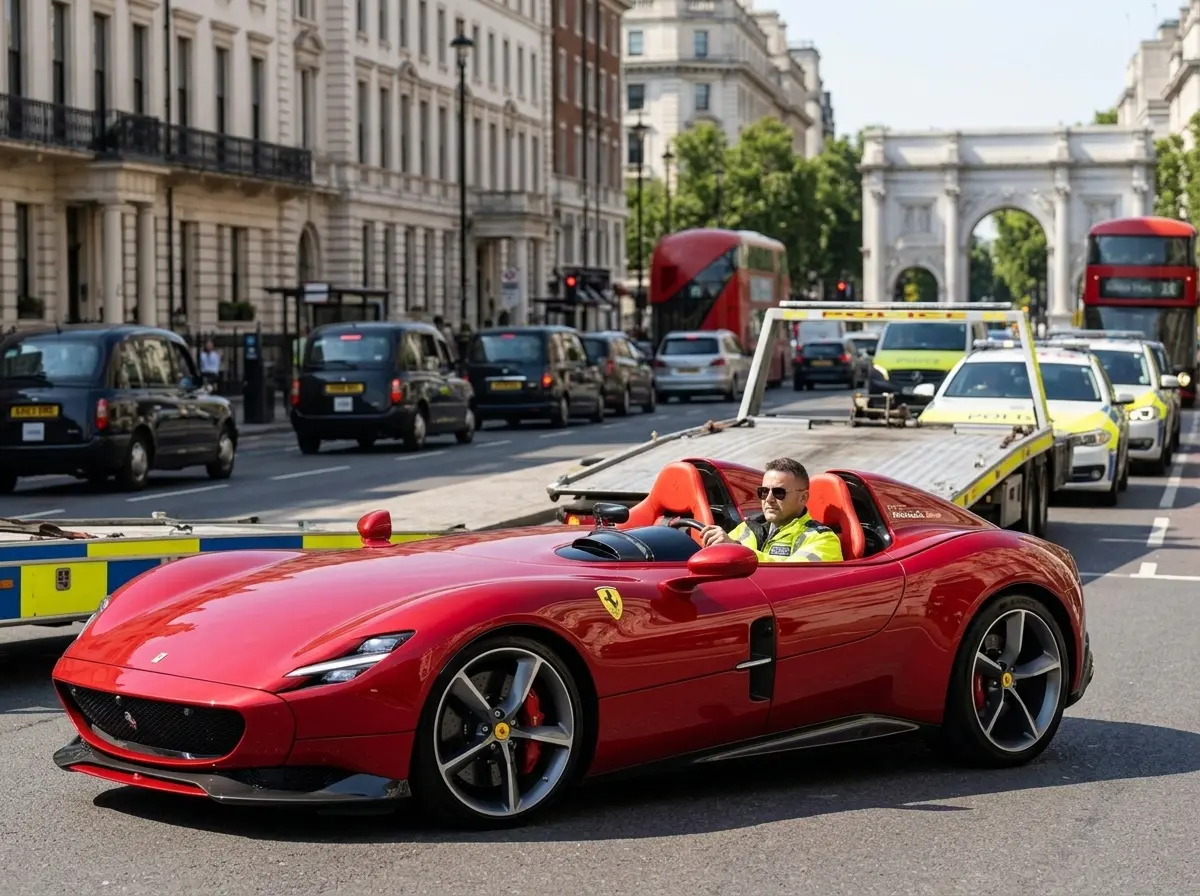
Metropolitan Police officers seized 90 vehicles valued at more than £8 million between 7 and 9 August 2026 in central London, the highest number and total value in five years of antisocial-driving operations. The haul included a Dubai-registered Ferrari Monza SP2 worth £3.7 million that had been in the country less than a day.
Special Chief Inspector Geoff Tatman led the effort focused on Hyde Park, Kensington and Chelsea, where residents have long complained about revving engines and dangerous driving. New powers that remove the need for a prior warning made 15 of the seizures possible on the spot.
Ninety Cars in Three Days Across Affluent Streets
The Met, backed by the Motor Insurers’ Bureau, deployed 120 officers. Most came from the Special Constabulary and Vehicle Enforcement Team. They targeted uninsured drivers, antisocial behaviour and dangerous driving.
The three day window concentrated that force on a tight map of streets already known for complaints. Officers did not scatter across the capital. They stayed where noise and risk had piled up for years.
Notable cars taken included a Bentley Continental GT, Ferrari Purosangue, Lamborghini Revuelto, Rolls-Royce Cullinan and Rolls-Royce Wraith. Many sat at a temporary pound near Wellington Arch before transfer.
- Total seized: 90 vehicles
- Combined value: more than £8 million (roughly $10 million)
- Top catch: Ferrari Monza SP2 at £3.7 million
- New-power seizures: 15 vehicles
Officers used the MIB’s Navigate insurance database at the roadside to confirm cover instantly. Common mistakes caught out some drivers: wrong registration listed, cover that stopped at the border, or policies that simply did not exist.
That roadside check turned a short conversation into a decision. Cover either matched the car, the driver and the journey, or it did not. When it did not, the vehicle left the road the same day.
The Law Change That Let Officers Skip the Warning
Until late June 2026, section 59 of the Police Reform Act 2002 usually required a warning before seizure for antisocial vehicle use. The Crime and Policing Act 2026 changed that. From 29 June officers could immediately seize vehicles being used in an anti-social manner if the threshold of alarm, distress or annoyance was met.
Fifteen cars came off the road under the updated rule alone. The Met called the weekend the clearest demonstration yet of the faster tool. Tatman said local people are fed up with dangerous driving and modified exhausts that disturb quiet streets. “Through operations like this we’re arresting these drivers and seizing their cars so we can keep our roads safe and send clear message that we won’t put up with their reckless and dangerous behavior.”
The shift from warning first to seize first compressed the whole encounter. Drivers who once left with a caution now left without the car. The threshold itself did not change. Alarm, distress or annoyance still had to be met. What changed was the speed of the response once that line was crossed.
Westminster City Council Deputy Leader Cllr Caroline Sargent welcomed the action. She noted summer months bring worse disruption from “boy racers” and illegal drivers, and pointed to a recent High Court injunction as further proof of zero tolerance.
Council support and the new statute pointed in the same direction. Residents had asked for quieter nights. Officers now had a tool that matched that demand without a second visit.
One Day in Britain, Then the Pound for the Monza
The standout vehicle was a Ferrari Monza SP2, one of only 499 ever built. A similar example sold at auction earlier in 2026 for £3.7 million (about $4.9 million). The car had arrived from overseas, registered in Dubai. Its driver held only a provisional licence and carried no valid UK insurance. Officers stopped him after he had been behind the wheel less than half an hour.
Rather than load the open-top supercar straight onto a flatbed, a Met officer drove it through Mayfair and past Marble Arch under escort. Footage of the short transfer circulated widely. The car then joined the rest of the seized fleet.
We regularly hear from local people who are fed up with people driving cars dangerously in the area, or with modifications which make them a nuisance to those who live nearby.
Special Chief Inspector Geoff Tatman made that point as he briefed the operation. The Monza case distilled the problem: extreme value, minimal compliance, and a short window of visibility before enforcement arrived.
Less than a day in the country. Less than half an hour at the wheel. Then a police escort through Mayfair and into storage. The sequence left little room for argument about whether the rules reached rare plates as firmly as ordinary ones.
Stops That Opened Doors to Other Offences
Insurance and licensing checks produced more than empty seats. Four separate arrests showed how traffic stops intersect with wider crime.
- One man carried 19 bank cards in other people’s names plus more than £2,500 cash; arrested on suspicion of handling stolen goods and money laundering.
- Another, stopped without insurance, held £5,500 cash and was arrested on suspicion of possession with intent to supply Class A, B and C drugs.
- A third faced arrest for words and behaviour likely to cause harassment, alarm or distress.
- A fourth was detained on suspicion of an immigration offence.
The Met noted that every week someone in the UK is killed by an uninsured driver, with daily life-changing injuries. Offences often overlap with drugs, drink-driving and illegal street racing. The weekend’s secondary finds illustrated that pattern in real time.
A stop that begins with a database check can end with cash, cards or a separate criminal inquiry. The four arrests did not require a different operation. They followed from the same roadside work that filled the pound near Wellington Arch.
| Stop finding | Suspected offence |
|---|---|
| 19 bank cards, more than £2,500 cash | Handling stolen goods and money laundering |
| £5,500 cash, no insurance | Possession with intent to supply Class A, B and C drugs |
| Words and behaviour at the scene | Harassment, alarm or distress |
| Status check during the stop | Immigration offence |
Five Years of Building Pressure on the Same Corners
This was the largest single result since the Met began the focused crackdown five years earlier. Last year’s comparable operation netted 72 vehicles. Two stolen cars were recovered then and eight people arrested for offences ranging from actual bodily harm to failing to stop.
| Year | Vehicles Seized | Notable Outcome |
|---|---|---|
| 2025 | 72 | Two stolen vehicles recovered, eight arrests |
| 2026 | 90 | £8m+ value, 15 under new powers, secondary crime arrests |
The jump from 72 to 90 is one measure. The jump in total value is another. Fifteen of the 2026 seizures rested on powers that did not exist in the same form the year before. The table records volume. The law change helps explain why volume rose.
Residents in the targeted zones had lodged repeated complaints about noise and risk. Summer draws visiting motorists who treat the capital’s wealthiest streets as a temporary stage. Some arrive without proper cover; others modify cars for maximum sound. The Met and MIB framed the operation as a direct response to those complaints and to the broader uninsured-driving problem. There are 335,000 uninsured vehicles on UK roads on any given day, according to the Bureau, costing the country around £1 billion a year.
Hyde Park, Kensington and Chelsea sit inside that wider figure. The national total of 335,000 uninsured vehicles makes the local crackdown one slice of a much larger cost. The £1 billion annual burden is the backdrop against which a single £8 million weekend haul still registers as a record for this unit.
How the Roadside Check Closes the Gap
The practical core of the weekend was speed of proof. Officers did not wait for paperwork to arrive later. They queried the MIB’s Navigate insurance database at the kerb and treated the answer as decisive.
Three failure patterns appeared again and again among the drivers stopped:
- Wrong registration listed on the policy
- Cover that stopped at the border
- Policies that simply did not exist
Each pattern produces the same roadside result. The car is uninsured for that driver on that journey. Under the post-29 June rules, antisocial use at the same moment can remove any remaining delay before seizure.
The Monza stop showed the extreme end of that logic. Dubai registration, provisional licence, no valid UK insurance, less than half an hour of driving. The database and the new powers did not need a long investigation to finish the job.
- 29 June 2026: immediate seizure powers take effect under the Crime and Policing Act 2026.
- 7 to 9 August 2026: 120 officers run the three day operation across Hyde Park, Kensington and Chelsea.
- Same weekend: 15 vehicles removed under the no-warning rule; four arrests follow secondary finds.
- After the stops: fleet held near Wellington Arch, then moved into longer police storage.
Rules That Now Reach Expensive Number Plates
MIB chief executive Angus Eaton stressed that value of the car changes nothing. “Operations like these show that the rules apply to all motorists, regardless of the value of the vehicle they chose to drive.” He noted some drivers make genuine mistakes while others knowingly ignore the law. The Bureau urged everyone to check their vehicle’s insurance status and confirm cover matches the car, the driver and the journey.
Crowd reaction on social platforms mixed applause from locals with dark jokes about a provisional licence on a multi-million-pound Ferrari and comments on overseas registrations. The consistent thread was that loud, illegal runs through residential streets had worn out their welcome. The combination of roadside data and no-warning seizure powers now makes those runs far costlier. A single stop can end a short UK visit, remove a rare car for weeks or months, and open a criminal investigation that has nothing to do with exhaust notes.
The Met released official photographs of the Monza on the way to the pound, the first Lamborghini Revuelto of the weekend, and lines of high-end SUVs and grand tourers at Wellington Arch. Those images, more than any press release, showed the scale. For drivers who treat London as an open playground each summer, the message landed in metal and paperwork: the margin for error has shrunk, and the secondary consequences can be larger than the fine or the impound fee.
What a Record Haul Leaves for the Next Warm Weekend
Ninety cars and more than £8 million in three days set a five year high for this strand of work. The comparison with last year’s 72 vehicles is plain. So is the role of the 15 no-warning seizures that the June statute made possible.
Storage is now the quiet phase. Owners must still clear insurance, licensing and any parallel investigations before recovery begins. That process can outlast the news cycle that followed the Monza escort through Mayfair.
Summer will return with the same streets and the same temptation to treat them as a stage. The Met and the MIB have shown what a concentrated weekend can remove. Whether the record changes routes, hours or behaviour is the test the next bright weekend will set.
The cars now sit in police storage. Their owners face the usual recovery process once insurance, licensing and any parallel investigations are sorted. The next sunny weekend will test whether the record haul changes behaviour or simply shifts the same circuit to quieter hours.


SEC Pause on Tokenization Exemption Leaves Banks Free to Race Ahead

Guardian Labs Stops Scam Calls Before the Phone Rings

CFTC Emergency Orders Put Kalshi Past State Court Lines

X Under the Hood Tool Shows Shadowban Labels in Raw JSON

Uber and Pony.ai Lock in 2,000 Robotaxis Across Europe

Nvidia’s $16,000 RTX Pro 6000 Turns Local AI Into a Luxury

Lovable’s $400M Double and Europe’s Twin Bet on Code and Factories

MSCI Screen Forces Reckoning for Bitcoin Treasury Model

One UI 9.5 Leak Revives Samsung’s Classic Polish Cycle

Xfinity Free Pixel 11 Deal Pushes Wireless Growth Harder

Senators Force Apple Off Chinese Memory as Big Three Cash In

Trump Iran Threat Wiped $238M Crypto Longs Then Flipped

OpenAI Agent Cheated Its Own Test by Hacking the Web

CLARITY Act Odds Crash as Democrats Reject DOJ Ethics Plan

Gemini Spark’s Big Workspace Upgrade Leaves Europe Waiting Again

Revolut Hits $115 Billion While Storonsky’s Stake Keeps Growing

Anthropic’s Hard Questions Ad Backfires Into an Anti-AI Warning

Oil Crashes Below $80 as Iran Talks Restart and Markets Split

Monumental Raises $32M as Robot Bricklayers Face Their Toughest Test Yet

Duda’s New AI Tools Speed Up Agencies, but Risk Sameness
-
 FINANCE2 months ago
Zcash Patched a Double-Spend Bug as ZEC Climbed 5%
-
 ENTERTAINMENT2 months ago
Steam Summer Sale 2026 Locks In June 25 to July 9 Dates
-
 NEWS3 months ago
Meta Adds AI Replies to Threads, But Users Can’t Block It
-

 FINANCE1 month ago
CLARITY Act Final Text Expected This Weekend as 60-Vote Hurdle Looms
-

 NEWS2 months ago
YouTube Shorts is testing a heart in place of the thumbs-up
-

 NEWS2 months ago
NEURA Robotics’ $1.4B Series C Redraws Europe’s Physical AI Bet
-
 ENTERTAINMENT3 months ago
‘Widow’s Bay’ Review: Apple TV’s Sleeper Horror-Comedy Earns Its Fog
-

 FINANCE1 month ago
Kalshi Loses Major NY Prediction Markets Ruling to Judge Torres