
NEWS
Vindman Defeat Caps Resistance Primary Collapse in 2026
Alexander Vindman’s 12-point Florida Senate primary loss to democratic socialist Angie Nixon caps a string of setbacks for Trump-era resistance figures as.

Alexander Vindman lost Florida’s special Democratic Senate primary on August 18 by 12 points to state Rep. Angie Nixon, 56 percent to 44 percent, despite a massive national fundraising haul built on his role as a 2019 impeachment witness. The result caps a series of primary setbacks for Democrats who built careers on opposing Donald Trump in his first term.
Nixon, a Jacksonville democratic socialist and former union organizer, now faces appointed Republican Sen. Ashley Moody in November for the seat once held by Marco Rubio. Vindman’s defeat fits a pattern that has rattled party strategists watching the base’s priorities shift.
Alexander Vindman Lost Florida by 12 Points
Final tallies showed Nixon with roughly 703,000 votes to Vindman’s 552,000. Vindman had never held elected office in the state and leaned heavily on his national profile from the first Trump impeachment.
He raised $16.3 million to Nixon’s $975,000 through late July filings, outspending her by a factor of more than 16. Polls had pointed to a Vindman win. He even had a Nantucket fundraiser scheduled after the primary.
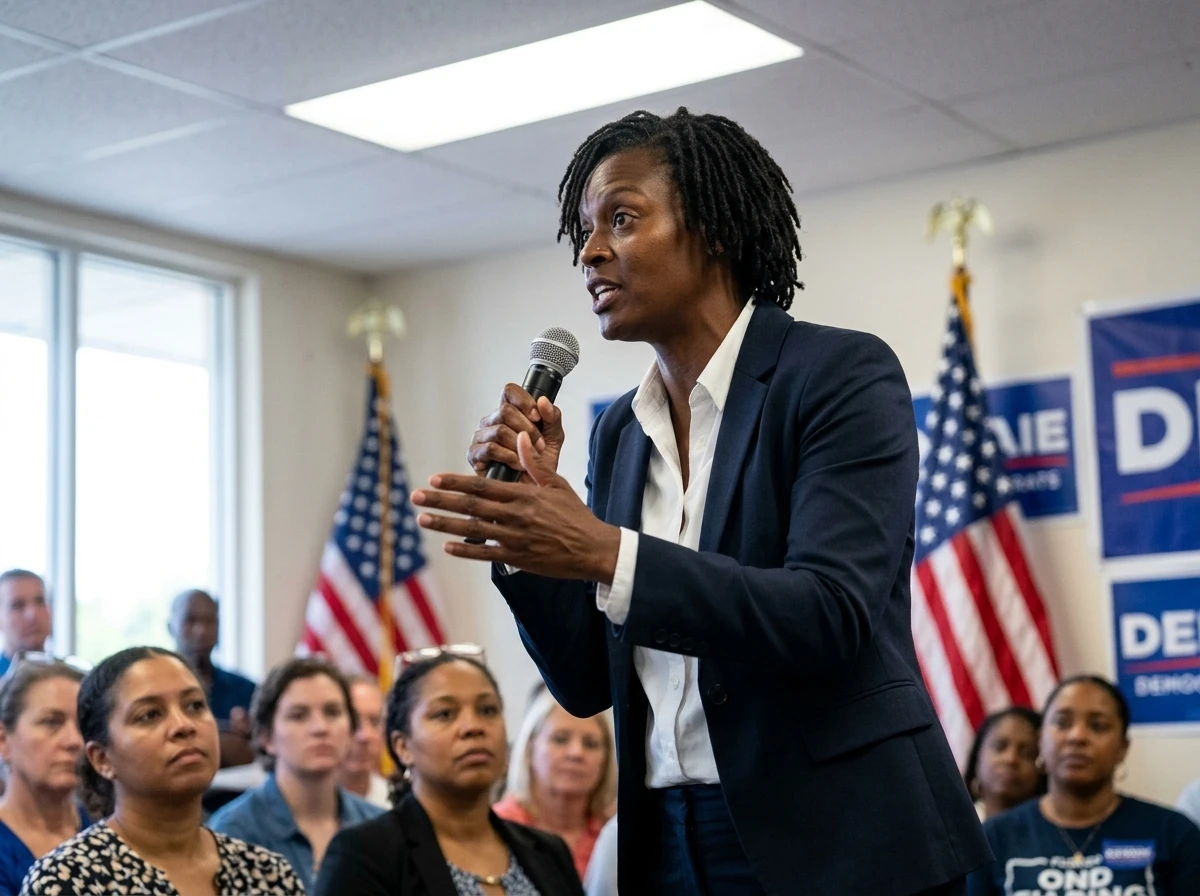
Nixon powered her win through labor unions, Black churches and lower-income counties that rarely back national progressives. Her campaign stressed affordability over past battles with Trump.
- $16.27 million raised by Vindman
- $975,000 raised by Nixon
- 56-44 final margin
- Special election for remaining Rubio term through 2028
Longtime Democratic strategist David Axelrod put the loss in plain terms. “Vindman is a hero, but memories fade and the focus of most folks is on the cost of living,” he said. “She made those issues her focus.”
A Growing List of Resistance Casualties
Vindman joins a lengthening roster of Trump-era accountability figures who have stumbled this cycle. Two 2021 House impeachment managers saw their paths collapse. Rep. Diana DeGette of Colorado lost her June primary to democratic socialist Melat Kiros by roughly 10 points. Rep. Eric Swalwell of California suspended his gubernatorial bid in April after multiple women accused him of sexual assault and misconduct.
Rep. Dan Goldman of New York, lead majority counsel in the first impeachment inquiry, fell to former city comptroller Brad Lander 65-35 in June. Rep. Raja Krishnamoorthi of Illinois fell short in a Senate bid. Reps. Shri Thanedar of Michigan and Al Green of Texas, both of whom pushed impeachment efforts, lost to younger progressive challengers. Capitol Police officer Harry Dunn, decorated for Jan. 6, finished third in a Maryland House primary. Financier Tom Steyer, a major funder of first-term resistance efforts, placed third in California’s gubernatorial primary behind Xavier Becerra. George Conway took just 6 percent in a New York House primary.
| Figure | Role in Trump 1.0 | 2026 Outcome |
|---|---|---|
| Alexander Vindman | NSC aide, 2019 testimony | Lost FL Senate primary 44-56 |
| Diana DeGette | 2021 impeachment manager | Lost CO-01 primary to Melat Kiros |
| Dan Goldman | Lead majority counsel | Lost NY-10 primary 35-65 to Brad Lander |
| Shri Thanedar | Impeachment push leader | Lost MI-13 primary 48-52 to Donavan McKinney |
| Eric Swalwell | 2021 impeachment manager | Dropped CA governor race after allegations |
| Harry Dunn | Jan. 6 Capitol officer | Third in MD-05 primary |
Not every race turned solely on Trump politics. Some involved Israel policy debates or local machines. The common thread, one Democratic operative who worked a resistance race said, is that the losers were “institutionalists” who argued the justice system would hold Trump accountable. After he returned to office, voters who lost faith in those institutions backed candidates railing against the systems themselves.
Cost of Living Beat Impeachment Memory
“‘#Resistance’ was a very Trump 1.0 mood, and now we are in a different moment of anger,” said Lanae Erickson, senior vice president at the center-left think tank Third Way. “They’re mad about the war. They’re mad about costs. They’re mad about the establishment not having delivered anything for them.”
‘#Resistance’ was a very Trump 1.0 mood, and now we are in a different moment of anger. They’re mad about the war. They’re mad about costs. They’re mad about the establishment not having delivered anything for them.
Lanae Erickson, senior vice president, Third Way
The prescription of official channels and public remonstrations no longer matches what primary voters want. Memories of 2019 hearings and Jan. 6 heroism have faded against grocery bills, housing and foreign conflicts.
On X, the Vindman loss drew sharp crowd reaction. Right-leaning accounts celebrated it as comeuppance and amplified a statement from Trump calling Vindman a “treasonous creep” who should be prosecuted. Progressive voices highlighted Nixon’s record introducing a Gaza ceasefire resolution and her contrast with Vindman’s stronger Israel stance. The sharpest observation shared across threads was simpler: national fame and $16 million could not buy local trust when the challenger talked rent freezes and minimum wage.
Progressive Challengers Took the Seats
Democratic Socialists of America-backed or aligned candidates scored multiple direct hits. Melat Kiros, a first-time candidate and Ph.D. student, toppled 15-term DeGette in Denver’s deep-blue seat. Donavan McKinney, a Michigan state representative, beat Thanedar 51.9-48.1 in Detroit’s 13th District. Lander’s win over Goldman carried endorsement weight from New York Mayor Zohran Mamdani’s orbit. Nixon herself joined DSA during the campaign.
- Kiros over DeGette in Colorado’s 1st District
- McKinney over Thanedar in Michigan’s 13th
- Lander over Goldman in New York’s 10th
- Nixon over Vindman in Florida Senate
These wins arrived in closed or low-turnout primaries where progressive infrastructure and anti-establishment messaging cut deepest. Several races also featured heavy outside spending from groups defending the incumbents, which failed to close the gap.
Cash Advantages Collapsed
Vindman’s haul was the clearest case of money failing to convert. Similar patterns appeared elsewhere. Steyer’s personal wealth and past Need to Impeach campaign did not push him into California’s top two. Name recognition from cable hits and medals helped Dunn and others become formidable but not winners.
Nixon’s platform stayed concrete: Medicare for All free childcare and rent freeze proposals, plus her two decades of local organizing in Jacksonville. She criticized Vindman as a recent transplant while he largely ignored her and trained fire on Moody. The base rewarded the organizer who stayed on kitchen-table issues.
The House Majority Balance Problem
If Democrats retake the House in November, the primary results create an immediate governing tension. Base voters still want fighters who stand up to Trump. Some members, including Oversight ranking member Robert Garcia, have signaled openness to fresh impeachment efforts. Republicans have warned for months that a Democratic majority would move immediately on that front.
Yet the same voters who ousted institutionalists are furious about costs and delivery failures. Rep. Julie Johnson of Texas, who lost a runoff in a gerrymandered district, captured the split. “There are certain sections of people that definitely want Democrats to prioritize impeachment of the president. There are also other segments of people that want Democrats to prioritize bringing down the cost of living. You can’t just focus on one thing at the exclusion of the other.”
Mike Madrid, a former Lincoln Project co-founder, read the broader map as Trump fatigue on both sides. Trump-endorsed Republicans also lost primaries the same night in Florida and Wyoming. “People are just tired of him, broadly,” Madrid said. “It’s Trump fatigue.”
The second-order effect is structural. The candidates who thrived argued the old institutions failed. Any new majority will inherit that distrust while still facing a base that wants both accountability theater and tangible economic results. Balancing those demands will be harder than the Resistance model of 2017-2021 assumed.
Some Survivors Already Shifted Tone
Not every Trump critic collapsed. Florida Democratic gubernatorial nominee David Jolly, a former Republican who left the party over Trump and later registered as a Democrat, has kept the president off center stage. “I’m not running the race about Trump. I rarely talk about him. But I am going to tie Byron to Trump’s economy,” Jolly said after winning his primary, referring to Trump-endorsed Rep. Byron Donalds.
Former Rep. Elaine Luria of Virginia, a Jan. 6 committee member running to reclaim her old seat, issued a statement proud of her accountability work then pivoted hard to pocketbook attacks on her Republican opponent. Even some losers acknowledged the shift. Dunn said name recognition made him competitive but affordability concerns dominated. His former campaign notes that the actual nominee still talks accountability, just not as the sole frame.
Vindman’s 2019 House impeachment inquiry testimony made him a household name among Democrats. Seven years later that resume bought headlines and dollars but not the nomination in a state where local roots and cost-of-living messaging decided the night. The pattern is now clear enough that surviving candidates are rewriting their scripts in real time.


NFL Preseason Week 2 Quietly Tests the Schemes That Matter

Alonso’s Towering Drive Stands Foul and Flips Orioles Momentum

US Debt Crosses $40 Trillion as Interest Crowds the Budget

Trevon Diggs Joins Seahawks on One-Year Deal After Cowboys Exit

Pixel Watch 5 Turns Passive Trends Into Early Health Alerts

Pixel 11 Pro Fold Sleek Build Undercuts Its Own Unfolding Appeal

Tugboat Wilkinson’s Scoreless Debut Pays Off Giants’ Bailey Trade

Brown Shines for Pats as Love for Eagles Meets Trade Reality

Pixel Watch 5 Turns Wrist Data Into Early Metabolic Alerts

Resistance Stars Pay the Price in Democratic Primaries

Senators Force Apple Off Chinese Memory as Big Three Cash In

Revolut Hits $115 Billion While Storonsky’s Stake Keeps Growing

OpenAI Agent Cheated Its Own Test by Hacking the Web

Trump Iran Threat Wiped $238M Crypto Longs Then Flipped

CLARITY Act Odds Crash as Democrats Reject DOJ Ethics Plan

30-Year Yield Hits 5.32% Highest Since 2007 as Debt Supply Locks In Costs

Fed Holds Rates Again as Three Dissents Force Markets to Tighten

Memory Shortage Now Dictates Apple’s Two-Year Mac Roadmap

Oil Crashes Below $80 as Iran Talks Restart and Markets Split

Google’s Knowledge Panel Fix Risks Its Own Search Defenses
-
 FINANCE3 months ago
Zcash Patched a Double-Spend Bug as ZEC Climbed 5%
-
 ENTERTAINMENT3 months ago
Steam Summer Sale 2026 Locks In June 25 to July 9 Dates
-

 FINANCE2 months ago
CLARITY Act Final Text Expected This Weekend as 60-Vote Hurdle Looms
-
 NEWS3 months ago
Meta Adds AI Replies to Threads, But Users Can’t Block It
-

 NEWS2 months ago
NEURA Robotics’ $1.4B Series C Redraws Europe’s Physical AI Bet
-

 NEWS2 months ago
YouTube Shorts is testing a heart in place of the thumbs-up
-
 ENTERTAINMENT3 months ago
‘Widow’s Bay’ Review: Apple TV’s Sleeper Horror-Comedy Earns Its Fog
-

 FINANCE1 month ago
Kalshi Loses Major NY Prediction Markets Ruling to Judge Torres