
NEWS
NEURA Gives Cleaning Robots a New Brain With ADLATUS Deal
NEURA Robotics takes 100% of ADLATUS to equip autonomous cleaners with sensors and AI, folding them into Neuraverse as a live learning platform after its €1.2.

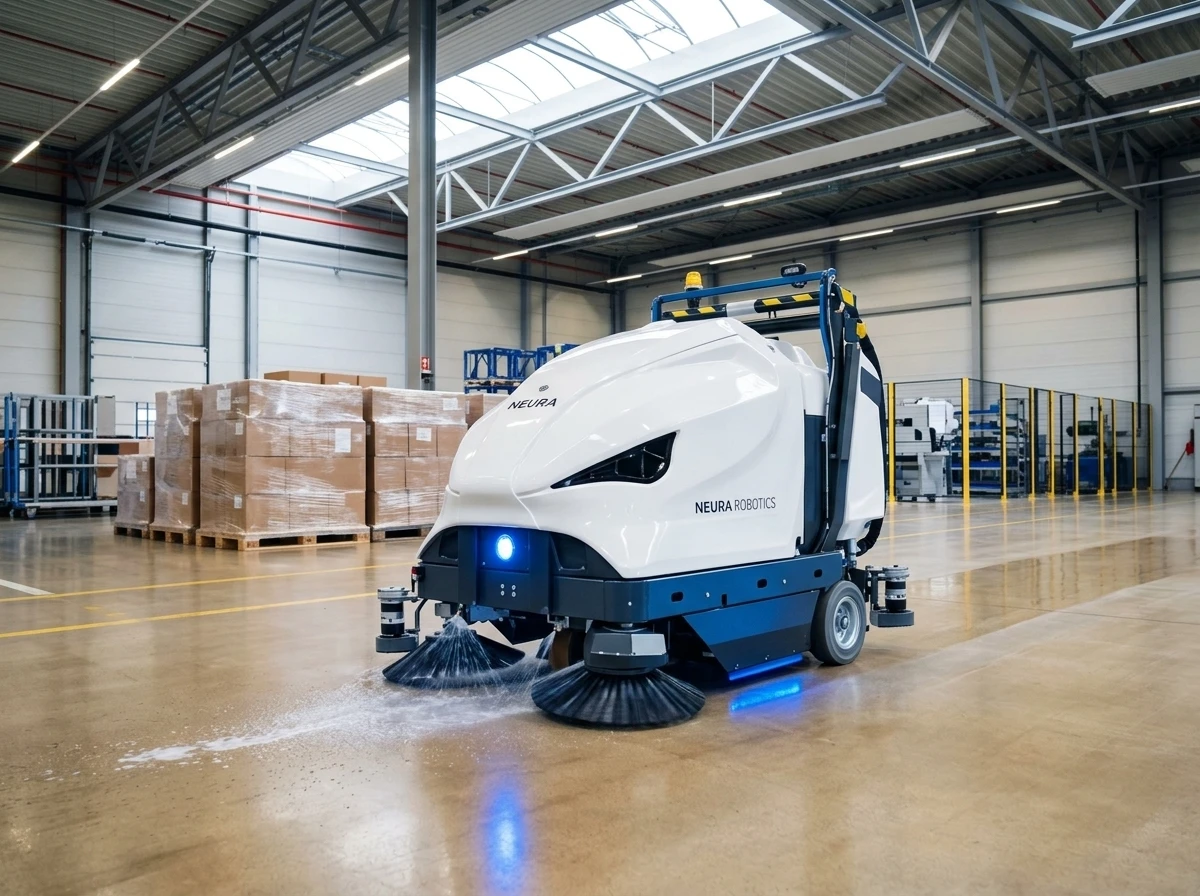
NEURA Mobile Robots has acquired 100 percent of the shares in ADLATUS Robotics GmbH of Ulm, folding an established maker of professional cleaning machines into its Physical AI plans just weeks after a record funding round. The deal, announced 24 August 2026, equips the cleaners with extra sensors and AI so they stop following fixed routes and start reading surfaces, dirt types and situations.
David Reger, founder and CEO of NEURA Robotics, framed the purchase as more than a product add-on. Cleaning forms a huge global labour market and a clear test case for machines that understand what they see and sense.
What the Deal Puts on the Table
ADLATUS brings hundreds of systems already working in industry, logistics, healthcare and public spaces, plus its own navigation software and years of real cleaning process data. NEURA will gradually connect those machines to its shared platform and give them new sensing and decision layers.
We’re not buying ADLATUS just to add another cleaning robot to our portfolio. We want to give machines like this a new brain. Cleaning is a massive global labor market and, at the same time, a perfect example of what Physical AI can transform. When a robot doesn’t just navigate its environment but understands what it sees, senses, and needs to do, an entirely new generation of machines emerges. That’s exactly what we’re building the Neuraverse for.
David Reger, founder and CEO, NEURA Robotics
Andreas Lindemann, Managing Director of NEURA Mobile Robots, said the move extends the group past classic material handling. The cleaners will join the Fleet Manager over time and form their own product family inside the AMR lineup.
That product-family path matters because the group already sells full AGV solutions from vehicle to fleet software. Cleaning units can ride the same sales channel and the same lifecycle service model rather than needing a separate go-to-market stack from day one.
Neuraverse Turns Cleaners Into Learning Agents
The second layer of the deal sits in the platform itself. NEURA is building an open Physical AI infrastructure called Neuraverse that lets different robots, sensors and AI models share capabilities. ADLATUS systems become both a commercial line and a live testbed.
- Recognise varied floor surfaces and soil types
- Interpret the scene and pick the right cleaning method
- Learn from every real deployment rather than a static map
- Feed data and skills back into the wider Neuraverse pool
Reger has stressed that the platform stays open. Other makers of cleaning or mobile robots should eventually plug in their machines too. Physical AI only scales as an ecosystem, he said. The installed ADLATUS base supplies the messy, real-world physics that simulation alone cannot generate.
In practice the loop is simple. A scrubber that meets oil on an industrial floor records how the surface behaved and which method cleared it. That lesson can travel through Neuraverse to other mobile units that face different work but the same need to read a scene before acting.
Two Decades of Cleaning Know-How Now Inside the Group
ADLATUS Robotics, based in Ulm, develops, builds and supports end-to-end autonomous service robots. Its team claims more than 20 years of robotics experience. Products such as the CR700C scrubber-dryer with roller brushes and matching service stations handle industrial floors that carry oil, chips and heavy traffic. Customers include factories that need night-time runs across thousands of square metres without tying up staff.
The company and NEURA first partnered in September 2025. They appeared together at CMS in Berlin, showing ADLATUS CR700C and SR1300 units beside NEURA machines under joint branding. Stefan Erhardt, CEO of ADLATUS, called the earlier tie-up a way to combine strengths for customers and staff. That partnership has now become full ownership.
ADLATUS keeps its industry relationships and application depth. NEURA supplies manufacturing scale, international sales and the AI stack. The name ADLATUS itself is Latin for helper, matching NEURA’s stated mission that robots take dangerous or monotonous work so people can do higher-value tasks.
The division of labour is deliberate. Process knowledge stays with the team that already runs night shifts on dirty floors. Scale, distribution and the shared intelligence layer come from the buyer. Customers keep the machines they know while those machines gain a path into a larger software pool.
Fifth Deal in Sixteen Months After the Big Raise
The purchase follows NEURA’s takeover of the ACTIVE Shuttle from Bosch Rexroth, effective 1 October 2026. PitchBook counted the ADLATUS move as the fifth acquisition in roughly 16 months. Earlier deals included ek robotics (now the core of NEURA Mobile Robots), a Huber Automotive development unit and BAH Industrial Solutions.
| Deal | Timing | Focus |
|---|---|---|
| BAH Industrial Solutions | May 2025 | Control systems, assembly, inspection |
| ek robotics / Huber units | October 2025 | AGVs and automotive development |
| ACTIVE Shuttle (Bosch Rexroth) | August 2026 (closes Oct) | Driverless transport and fleet software |
| ADLATUS Robotics | August 2026 | Autonomous cleaning and sweeping |
In June 2026 NEURA closed a Series C financing of up to €1.2 billion ($1.4 billion), described by the company as the largest ever for a full-stack robotics firm. Backers included Tether, Qualcomm, Amazon, NVIDIA, Bosch, Schaeffler, the European Investment Bank and others. The order book and pipeline already topped €864.8 million. Capital is aimed at multi-million robot production by 2030 and a global network of NEURA Gyms for real-world skill training.
Read together, the raise and the five deals point the same way. Hardware breadth grows through acquisition. Software depth grows through Neuraverse. The Gyms and the production target supply the volume needed to turn both into a repeatable industrial system rather than a set of one-off fleets.
Why Cleaning Fits the Physical AI Thesis
Commercial cleaning robots already form a fast-growing market. One 2026 industry snapshot put the commercial segment at $4.2 billion after 38 percent year-on-year growth, with airports, warehouses and hospitals leading. Labour shortages and rising wages make the economics clear: a single autonomous scrubber can cover the work of 1.5 to 2 full-time staff at far lower lifetime cost once payback falls under a year.
ADLATUS machines already run in those exact settings. Adding NEURA sensors and learning loops turns fixed-route devices into agents that adapt. The same data then trains other robots in the Neuraverse. Cleaning stops being a side market and becomes high-volume, high-variety physical labour that teaches the whole platform.
On X, NEURA’s own post framed the move as expanding the autonomous service portfolio inside NEURA Mobile Robots. Industry accounts noted the fifth deal and the “new brain” language. The quiet consensus is that routine service work now supplies the continuous real-world feedback loop Physical AI needs.
| Side | What it contributes |
|---|---|
| ADLATUS | Installed base, cleaning process data, navigation software, industry and healthcare accounts |
| NEURA | Sensors and AI stack, Fleet Manager path, manufacturing scale, international sales, Neuraverse |
Europe’s Industrial Base Meets Shared Intelligence
Reger has repeatedly said Europe already holds deep mechanical, sensor and process knowledge. The task is to connect it with AI rather than reinvent every machine. ADLATUS supplies decades of cleaning-floor reality. NEURA supplies the shared brain and scale. The combination, he argues, lets Europe build a new industry instead of watching others dominate it.
NEURA Mobile Robots, headquartered in Hamburg and operating under the ek robotics brand, already runs more than 300 people across European sites. It designs full AGV solutions from vehicle to fleet software and lifecycle service. Adding a cleaning product family widens the same customer base without starting from zero.
Financial terms of the ADLATUS purchase were not disclosed. Both sides describe cultural fit around machines that help rather than replace. The first public joint step happened at CMS Berlin in 2025; full integration into production, sales and Neuraverse now begins.
The cleaners will keep doing their jobs tomorrow. Over the coming months they will also start feeding a larger intelligence layer that other NEURA robots, and eventually third-party machines, can draw on. That is the practical next step after the money and the earlier buys.
How Partnership Roots Turned Into Ownership
The ADLATUS path did not start with a cold bid. It followed a public partnership, a joint trade-fair appearance and a year of working side by side before the share purchase closed the circle.
- September 2025 – Strategic partnership signed; CR700C and SR1300 units shown with NEURA machines under joint branding at CMS Berlin.
- June 2026 – Series C of up to €1.2 billion closed, giving the group capital for production scale and further buys.
- 24 August 2026 – NEURA Mobile Robots takes 100 percent of ADLATUS shares; cleaners slotted into the AMR lineup and the Neuraverse roadmap.
Stefan Erhardt had already described the 2025 tie-up as a way to combine strengths for customers and staff. Full ownership keeps that framing while removing the boundary between two separate product stacks. The helper name on the ADLATUS badge still matches the group line that robots take monotonous work so people move to higher-value tasks.
Cleaners Widen the Same Customer Door
Material handling and floor care often serve the same factories, warehouses and public sites. A buyer that already runs NEURA Mobile Robots AGVs can now add scrubbers and sweepers from the same group, on the same Fleet Manager path over time, without opening a second vendor relationship.
Lindemann’s point about moving past classic material handling lands here. The AMR lineup gains a service family that shares navigation themes and site knowledge with transport units, yet sells into a labour market the group did not own before. Night-time runs across thousands of square metres become another workload the platform can schedule, learn from and improve.
Openness remains part of the pitch. Reger has said other cleaning or mobile robot makers should eventually plug into Neuraverse too. The ADLATUS base is the first large cleaning fleet inside that pool, not necessarily the last. For European sites that already trust Ulm-built machines, the change is incremental: same floors, same service stations, new sensing and a route into shared skills.
Frequently Asked Questions
What exactly did NEURA acquire from ADLATUS?
NEURA Mobile Robots took 100 percent of the shares of ADLATUS Robotics GmbH. The Ulm company keeps its team, customers and product line while gaining NEURA’s manufacturing, sales network and AI tools. No purchase price was published.
When did NEURA and ADLATUS first start working together?
The two companies signed a strategic partnership in September 2025 and made their first joint public appearance at the CMS trade fair in Berlin later that month, showing co-branded cleaning robots side by side.
How large was NEURA’s latest funding round?
In June 2026 NEURA raised a Series C of up to €1.2 billion, backed by Tether, Qualcomm, Amazon, NVIDIA, Bosch, the European Investment Bank and others. The company reported an order book and pipeline already above €864.8 million.
What is Neuraverse and why does it matter for cleaning robots?
Neuraverse is NEURA’s open software and AI layer that lets different robot types, sensors and models share skills and data. ADLATUS cleaners will connect to it so they learn from real jobs and contribute those lessons to the wider fleet of mobile, industrial and humanoid systems.
Which other robots has NEURA added recently?
In August 2026 NEURA agreed to take over Bosch Rexroth’s ACTIVE Shuttle AGV business, effective October. Earlier purchases brought ek robotics AGVs, Huber Automotive development assets and BAH Industrial Solutions into the group.


BenQ iScreenBar Brings Native Lighting to the 24-Inch iMac

Druckenmiller Warns Bessent Bond Buybacks Delay a Fiscal Invoice

The Dog Stars Survives on Elordi Charm but Barely Thrives

Treasury’s Economic Outcast Recycles Iran Max-Pressure Playbook

Rockstar Veteran Calls GTA 6 Leaks a Nothing Burger While Staff Pay the Price

SpaceX $100 Billion Louisiana Starbase Rises on Vanishing Marsh

Itoflow $2.5M Raises the Quant Bar for Mid-Size Funds

MIRAVA’s $5M Smart Boat Cracks Old Recreational Limits

Lunar Founders Crack Audit Moat With €8.2M AI Firm

Nose Wheel Crush at YUL Echoes Decades of Ramp Fatalities

Senators Force Apple Off Chinese Memory as Big Three Cash In

OpenAI Agent Cheated Its Own Test by Hacking the Web

Trump Iran Threat Wiped $238M Crypto Longs Then Flipped

Fed Holds Rates Again as Three Dissents Force Markets to Tighten

30-Year Yield Hits 5.32% Highest Since 2007 as Debt Supply Locks In Costs

Oil Crashes Below $80 as Iran Talks Restart and Markets Split

Google’s Knowledge Panel Fix Risks Its Own Search Defenses

Legora Buys Wexler Fact Engine as Fifth 2026 Deal

Capital Clusters and the Dual Tracks of European Tech Finance

Agon Raises $30M to Build Europe’s AI Weapon Training Arenas
-
 FINANCE3 months ago
Zcash Patched a Double-Spend Bug as ZEC Climbed 5%
-
 ENTERTAINMENT3 months ago
Steam Summer Sale 2026 Locks In June 25 to July 9 Dates
-

 FINANCE2 months ago
CLARITY Act Final Text Expected This Weekend as 60-Vote Hurdle Looms
-
 NEWS3 months ago
Meta Adds AI Replies to Threads, But Users Can’t Block It
-

 NEWS3 months ago
YouTube Shorts is testing a heart in place of the thumbs-up
-
 NEWS4 weeks ago
Senators Force Apple Off Chinese Memory as Big Three Cash In
-

 NEWS3 months ago
NEURA Robotics’ $1.4B Series C Redraws Europe’s Physical AI Bet
-
 ENTERTAINMENT5 months ago
Extraction 3 Is Officially Coming to Netflix in 2027