
BUSINESS
TAG Alliance Hits 19 Members and Speeds Defence Spin-Outs
Babcock, Frazer-Nash and UKRI join Ploughshare’s TAG Alliance, lifting membership to 19 as three more defence spin-outs head for market by year-end.

Ploughshare’s Technology and Growth Alliance reached 19 members on 25 August 2026 after Babcock, Frazer-Nash Consultancy and UK Research and Innovation joined. At least three further defence technology spin-outs are expected before year-end.
The group, convened by the Ministry of Defence’s commercialisation partner, now pulls together primes, academia, investors and government bodies to move defence-origin IP into wider commercial markets.
Three Heavy Hitters Push Membership to Nineteen
The newest arrivals bring distinct strengths. Babcock adds deep engineering and nuclear know-how. Frazer-Nash Consultancy contributes systems and safety expertise across critical infrastructure. UKRI opens routes into the broader research base and funding landscape.
Together the three fill gaps the earlier cohort left open. Engineering depth, safety systems and research funding now sit inside the same room as the primes and investors already on the list. That mix matters because dual-use deals rarely close when only one type of partner is present.
Full membership now stands as:
- ADS
- Babcock
- BAE Systems
- CBI
- Cranfield University
- UK DIN
- The D Group
- Dstl
- Frazer-Nash Consultancy
- Future Planet Capital
- GALLOS
- Helsing
- IOT Tribe
- Leonardo
- NPL
- Ploughshare
- QinetiQ
- Thales
- UKRI
The roster mixes defence primes, specialist consultancies, universities, investor networks and government bodies. No single category dominates. That balance is deliberate: commercialisation needs technical originators, capital, routes to market and policy cover at once.
The 25 August announcement from Ploughshare also launched the alliance website. Minister for Defence Readiness and Industry Luke Pollard said the nineteen partners and emerging spin-outs show the collaboration that will drive reindustrialisation forward.
Rho-C and StirlingX Already Trading
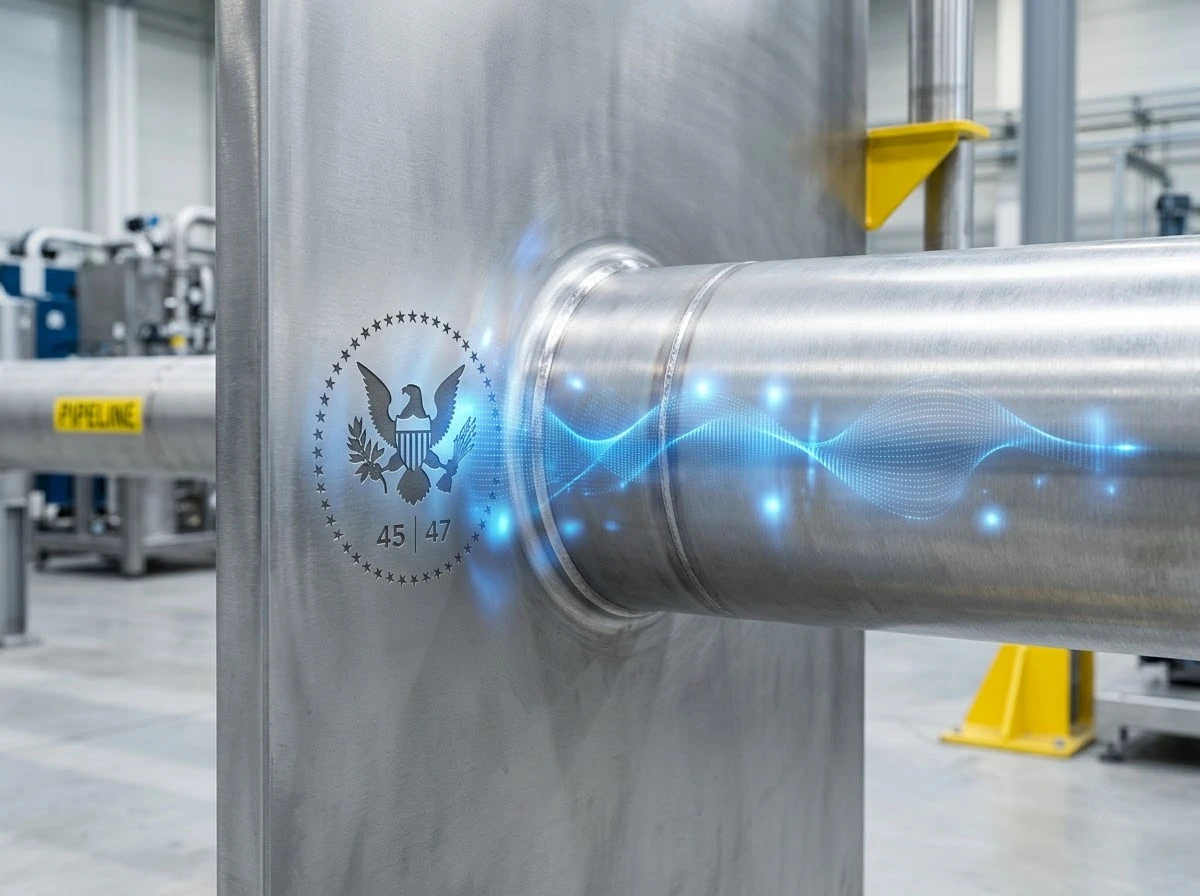
Alliance members have already formed new companies. BAE Systems created Rho-C through its Launchpad vehicle. The firm takes technology first developed for submarines and applies it to transmit power and data through solid materials. That removes the need to drill holes for cables, a practical gain for energy, oil and gas, and infrastructure operators.
GALLOS produced StirlingX, a sovereign intelligence platform that fuses multi-sensor data into insight for critical infrastructure. StirlingX raised a $20 million Series A in mid-2026 and operates drone-based survey and monitoring missions under defence-grade security standards.
Robert Merryweather, Group Technology Director at BAE Systems, noted that Launchpad has already spun out two companies with a healthy pipeline, and that the alliance lets partners combine IP to raise the odds of success.
| Spin-out | Origin member | Core technology | Target markets |
|---|---|---|---|
| Rho-C | BAE Systems | Power and data through solids | Energy, oil and gas, infrastructure |
| StirlingX | GALLOS | Multi-sensor data intelligence | Critical national infrastructure, defence |
Both illustrate the second-order shift: defence-grade solutions leave the military domain and solve civilian problems that previously required expensive work-arounds.
Rho-C’s solid-material transmission and StirlingX’s multi-sensor fusion share a common pattern. Each keeps the security and reliability standards of its defence origin while changing the customer set. Energy and infrastructure operators get capability they could not buy off the shelf. The parent primes keep a link to the IP without carrying the full commercial risk of new markets.
Combined IP is the next step Merryweather flagged. When two members each hold part of a solution, the alliance gives them a forum to package those parts before a spin-out forms. That is harder to arrange through bilateral talks alone.
Reindustrialisation Meets Rising Defence R&D
Prime Minister Andy Burnham told the Farnborough Airshow in July that the nation is reindustrialising by working with businesses to drive growth across the country. The TAG Alliance treats that statement as an operating brief.
MOD research and development is set above £2 billion for 2026-27 and will rise each year as a ten-year baseline. The Strategic Defence Review and Defence Industrial Strategy both call for dual-use exploitation and wartime pace of innovation. Andrew Haldane, President of the British Chambers of Commerce, observed that commercialisation of defence innovation has historically lagged, holding back productivity; the alliance arrives when R&D spend is climbing and growth remains subdued.
The timing is tight. Higher R&D budgets create more IP. Without faster routes to market, that IP stays on the shelf and the productivity drag Haldane described continues. The alliance is the mechanism ministers and industry now point to when they say dual-use must move at wartime pace.
Ben White, Director Industrial Strategy at the Ministry of Defence, put the core problem plainly: defence environments breed innovation, yet value appears only when ideas reach practical platforms and communities. The alliance exists to make those connections routine.
With nineteen partners now on board and new spin-outs already emerging, this is exactly the kind of collaboration between government, industry and academia that will drive our reindustrialisation forward.
Luke Pollard MP, Minister for Defence Readiness and Industry
Pollard’s line links membership growth directly to reindustrialisation. The claim is testable. If spin-outs hire outside traditional defence clusters and attract private capital at the rates Ploughshare has already shown over two decades, the ministerial framing holds. If they do not, the collaboration stays symbolic.
Twenty Years of Quiet Conversion Supply the Base
Ploughshare was set up in 2005 as the MoD’s commercialisation arm. It holds exclusive access to UK government defence IP and has taken more than 140 technologies to market. The firm has created 16 spin-out companies to date.
Independent assessment of its work shows £126 million in gross value added, more than £163 million in exports, over £180 million in private equity attracted to MOD innovation, and around 500 jobs. Those numbers cover two decades of licensing and spin-out activity that previously moved at the pace of a handful of new companies per year.
| Measure | Result over two decades |
|---|---|
| Technologies to market | More than 140 |
| Spin-out companies | 16 |
| Gross value added | £126 million |
| Exports | More than £163 million |
| Private equity attracted | Over £180 million |
| Jobs | Around 500 |
At the original September 2025 launch at DSEI, Hetti Barkworth-Nanton CBE, Ploughshare CEO and alliance chair, said the UK sits on a goldmine of technology yet struggles to move solutions out of defence. She set an ambition of 20 to 30 new companies a year once pathways are standardised.
History supplies the pattern. Radar, GPS, microwave ovens, the internet and devices such as EpiPens all began in military programmes before reaching everyday use. The alliance tries to make that transfer systematic rather than accidental.
The gap between 16 spin-outs across twenty years and an ambition of 20 to 30 a year is large. Standardised pathways are the stated fix. Membership growth, shared IP deals and earlier investor sight of assets are the tools the alliance brings to close that gap.
- 2005 – Ploughshare established as the MoD commercialisation arm
- September 2025 – Technology and Growth Alliance launches at DSEI
- July 2026 – Prime Minister sets reindustrialisation brief at Farnborough
- Mid-2026 – StirlingX closes $20 million Series A
- 25 August 2026 – Membership reaches 19 with Babcock, Frazer-Nash and UKRI
Who Gains From the Dual-Use Bridge
Defence primes gain new revenue streams and equity in spin-outs without diluting core military focus. The BAE Systems Launchpad programme shows one model: retain IP links while letting independent teams raise capital and chase civilian customers at speed.
Investors such as Future Planet Capital and the UK Defence Investor Network gain earlier sight of vetted dual-use assets. Academia, via Cranfield and now UKRI, gains clearer routes from lab to licence. Regions outside the traditional defence clusters stand to pick up skilled manufacturing and service jobs once technologies scale.
Taxpayers receive a higher return on the billions already spent on defence science. Rupert Pearce, National Armaments Director, described the supply chain’s creativity as a strategic asset that the alliance unlocks for sovereign capability and UK-wide growth.
Smaller firms reach the table through ADS and CBI membership rather than individual applications, keeping the group manageable while still open to UK-registered organisations without foreign adversary ownership.
- Primes: equity and revenue from civilian markets without loss of military focus
- Investors: earlier access to vetted dual-use assets
- Academia: clearer lab-to-licence routes through Cranfield and UKRI
- Regions: skilled jobs once technologies leave traditional defence clusters
- Taxpayers: higher return on existing defence science spend
- Smaller firms: access via ADS and CBI without solo applications
Each group needs the others. Investor capital without vetted IP stalls. Academic routes without primes and routes to market stall. The alliance’s value is the simultaneous presence of all six interests under one roof.
The Pipeline Aims Higher Than a Handful a Year
Three additional spin-outs are already scheduled for the rest of 2026. BAE has signalled further Launchpad companies. GALLOS, fresh from a £35 million balance-sheet raise, plans a new cohort of security and resilience start-ups. Leonardo has a separate MoU with Ploughshare to accelerate its own dual-use IP.
Hetti Barkworth-Nanton framed the next phase as turning commitment into clear routes from IP to investment and from research to market. If the process becomes repeatable, the UK can set a national model for industrialising defence-origin innovation at scale.
Public conversation on X around the specific membership announcement stayed quiet, mostly limited to syndicated coverage. Broader defence-tech funding rounds and dual-use platform launches show investors already pricing the same bridge the alliance is building.
The immediate test is simple. Deliver the three named spin-outs on schedule, prove combined IP deals between members, and show measurable job and GVA gains outside traditional defence geography. The machinery is now in place; the next numbers will decide whether the second-order effect materialises at the pace ministers and industry both want.
Members Turn Shared IP Into Market Routes
The alliance model rests on a simple sequence. A member holds defence-origin IP. Another member holds complementary technology, capital or a customer channel. Ploughshare supplies the commercialisation frame and exclusive access to government defence IP. The spin-out forms with security standards intact and a civilian brief from day one.
Rho-C and StirlingX already follow that sequence. Launchpad kept BAE linked to the IP while an independent team raised capital. GALLOS moved multi-sensor intelligence into critical infrastructure under defence-grade rules and secured a $20 million Series A. Leonardo’s MoU with Ploughshare points to the same path for a further tranche of dual-use assets.
Combined IP deals between members remain the open proof point. Merryweather’s comment on raising the odds of success by combining IP sets the expectation. The rest of 2026 will show whether those deals appear on the schedule alongside the three further spin-outs already named.
Standardised pathways are the difference between a handful of companies a year and the 20 to 30 Barkworth-Nanton described. Membership at nineteen, a live website, and ministerial cover give the pathways political and industrial weight they lacked when Ploughshare worked largely alone after 2005.
Delivery Tests Will Decide the Pace
Ministers and industry both want wartime pace. The machinery now includes nineteen partners, rising MOD R&D above £2 billion for 2026-27, a ten-year baseline, and two trading spin-outs with more scheduled. Ambition is no longer the constraint.
Execution is. The three spin-outs due before year-end, further Launchpad companies from BAE, the GALLOS security and resilience cohort, and Leonardo’s dual-use acceleration all need to clear the same gates: IP packaging, investment, and market entry outside the military domain.
Job and GVA figures outside traditional defence geography will show whether reindustrialisation language matches outcomes. Ploughshare’s existing record of around 500 jobs, £126 million in gross value added and more than £163 million in exports sets the baseline. Scaling from 16 spin-outs in twenty years toward dozens a year is the step change the alliance exists to deliver.
Investors are already pricing dual-use bridges in broader defence-tech rounds. The alliance’s task is to make that pricing routine for MOD-origin IP, not exceptional. The next set of company launches and combined IP announcements will show whether the routine has begun.


BenQ iScreenBar Brings Native Lighting to the 24-Inch iMac

Druckenmiller Warns Bessent Bond Buybacks Delay a Fiscal Invoice

The Dog Stars Survives on Elordi Charm but Barely Thrives

Treasury’s Economic Outcast Recycles Iran Max-Pressure Playbook

Rockstar Veteran Calls GTA 6 Leaks a Nothing Burger While Staff Pay the Price

SpaceX $100 Billion Louisiana Starbase Rises on Vanishing Marsh

Itoflow $2.5M Raises the Quant Bar for Mid-Size Funds

MIRAVA’s $5M Smart Boat Cracks Old Recreational Limits

Lunar Founders Crack Audit Moat With €8.2M AI Firm

Nose Wheel Crush at YUL Echoes Decades of Ramp Fatalities

Senators Force Apple Off Chinese Memory as Big Three Cash In

OpenAI Agent Cheated Its Own Test by Hacking the Web

Trump Iran Threat Wiped $238M Crypto Longs Then Flipped

Fed Holds Rates Again as Three Dissents Force Markets to Tighten

30-Year Yield Hits 5.32% Highest Since 2007 as Debt Supply Locks In Costs

Oil Crashes Below $80 as Iran Talks Restart and Markets Split

Google’s Knowledge Panel Fix Risks Its Own Search Defenses

Legora Buys Wexler Fact Engine as Fifth 2026 Deal

Capital Clusters and the Dual Tracks of European Tech Finance

Agon Raises $30M to Build Europe’s AI Weapon Training Arenas
-
 FINANCE3 months ago
Zcash Patched a Double-Spend Bug as ZEC Climbed 5%
-
 ENTERTAINMENT3 months ago
Steam Summer Sale 2026 Locks In June 25 to July 9 Dates
-

 FINANCE2 months ago
CLARITY Act Final Text Expected This Weekend as 60-Vote Hurdle Looms
-
 NEWS3 months ago
Meta Adds AI Replies to Threads, But Users Can’t Block It
-

 NEWS3 months ago
YouTube Shorts is testing a heart in place of the thumbs-up
-
 NEWS4 weeks ago
Senators Force Apple Off Chinese Memory as Big Three Cash In
-

 NEWS3 months ago
NEURA Robotics’ $1.4B Series C Redraws Europe’s Physical AI Bet
-
 ENTERTAINMENT5 months ago
Extraction 3 Is Officially Coming to Netflix in 2027