
FINANCE
Treasury’s Economic Outcast Recycles Iran Max-Pressure Playbook
Operation Economic Outcast applies secondary sanctions to Iran’s digital assets, gold and shipping after oil sanctions history showed repeated adaptation routes.

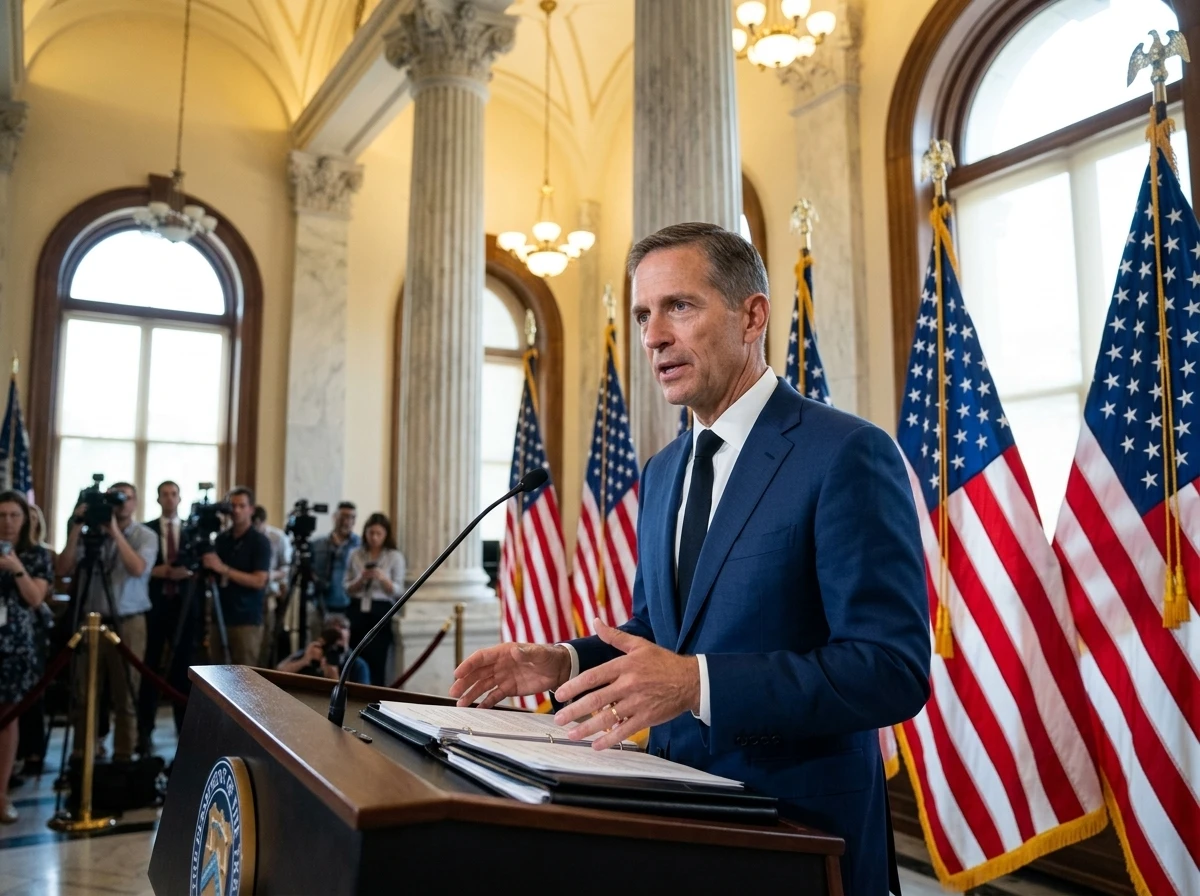
The U.S. Treasury Department launched Operation Economic Outcast on August 24, 2026, designating nearly 60 entities, individuals and vessels while issuing five new sectoral determinations that open Iran’s digital assets, technology, gold, aviation and shipping industries to secondary sanctions worldwide. Secretary Scott Bessent framed the move as an economic D-Day meant to finish what military pressure had started.
Bitcoin traded near and above $80,000 through the announcement window, little moved by the fresh Iran measures and more responsive to dollar and liquidity currents. The market distinction mattered: Iran-linked rails faced a new legal perimeter while global crypto liquidity kept trading the dollar and risk cycle.
Five Sectors Now Carry Secondary Sanctions Risk
Treasury said it had mapped every node Iran uses to smuggle oil, evade prior sanctions and fund the Islamic Revolutionary Guard Corps. The new determinations under Executive Order 13902 let the Office of Foreign Assets Control sanction any foreign person, anywhere, who operates in or supports those five Iranian sectors.
| Sector | Stated Regime Use | Sanctions Reach |
|---|---|---|
| Digital assets | Sanctions evasion, IRGC and insider transactions | Any person worldwide operating in Iran’s crypto sector |
| Technology | Advanced tech for domestic weapons programs | Secondary risk for facilitators |
| Gold | Stabilize the rial against inflation | Expanded secondary exposure |
| Aviation | Move fighters, weapons, gold and cash via regime airlines | Broadened secondary risk |
| Shipping | Weapons components and illicit oil via national tanker fleets | Secondary sanctions acceleration |
These build on earlier petroleum and financial sector designations. Bessent said the goal is a zero-leakage approach with no breathing space left for the regime to rebuild capacity.
Taken together, the five determinations convert what used to be residual workarounds into primary exposure. Gold, aviation and shipping no longer function as quiet side doors once oil and banks were already hit. Digital assets join that same secondary net for the first time.
What Treasury Did on Day One
- Issued the five sectoral determinations expanding secondary sanctions categories.
- OFAC designated nearly 60 entities, individuals and vessels tied to nuclear and missile procurement, cyber operations and oil-revenue networks spanning UAE, Hong Kong, China, Singapore and Europe.
- Suspended general licenses that had allowed certain remittances and cultural or academic access.
- Issued guidance on sanctions risks of paying Iranian demands for Strait of Hormuz shipping.
- State Department designated additional defense leadership and oil-trade actors in parallel.
Teams from Treasury, State and the military are giving countries defined timelines to shut identified Iran-related activity. Failure triggers unilateral U.S. action. Bessent singled out Bank Melli branches for shuttering and warned that any entity facilitating Iranian money laundering will be removed from the dollar system.
The day-one package mixed legal expansion with immediate names. Sectoral determinations widened the categories; the nearly 60 designations showed who already sat inside them. License suspensions and Hormuz guidance closed softer channels that had survived earlier rounds.
Crypto Becomes the Explicit New Front
Treasury stated that the Iranian regime “increasingly turns to cryptocurrency as a tool of choice for sanctions evasion,” linking it to IRGC and insider flows. The first-ever sectoral determination for digital assets means OFAC can now hit any foreign exchange, OTC desk or infrastructure provider judged to support Iran’s crypto sector, without needing a separate terrorism or proliferation nexus.
Among the designations, UAE-based Ukrainian broker Ivan Obukhov was cited for processing more than $100 million in cryptocurrency payments since 2023 to facilitate oil sales for the IRGC-Qods Force. Chainalysis research earlier found IRGC-linked addresses accounting for over half of value received in Iran’s crypto economy in late 2025, with annual volumes above $3 billion.
| Actor or Metric | Scale Cited | Role Described |
|---|---|---|
| Ivan Obukhov (UAE-based broker) | More than $100 million in crypto payments since 2023 | Oil-sale facilitation for the IRGC-Qods Force |
| IRGC-linked addresses (Chainalysis) | Over half of value received; annual volumes above $3 billion | Share of Iran’s crypto economy in late 2025 |
| MOIS-linked cyber cell | Roughly $16.8 million in crypto proceeds | Compromises of U.S. energy, defense, hospital and university networks |
A separate MOIS-linked cyber cell designated the same day had accumulated roughly $16.8 million in crypto proceeds while compromising U.S. energy, defense, hospital and university networks. Some members also stole from Iranian targets and ran personal ransomware, according to the forensics Treasury released. A DOJ indictment unsealed days earlier had already charged related Iranian cyber actors.
Prior 2026 actions had already hit Iran’s largest exchange Nobitex and other platforms for IRGC and Central Bank stablecoin use. The new determination widens the net from named targets to the entire sector. Exchanges and OTC desks outside Iran now carry secondary risk for Iran-nexus flow even when they never touch a previously designated wallet.
How Earlier Max-Pressure Cycles Played Out
Bessent repeatedly invoked the Second World War D-Day analogy and called the campaign the single greatest financial offensive ever mounted against an adversary. History supplies the template and the caution.
- 1979-1981 hostage crisis: Asset freezes immobilized about $12 billion in Iranian reserves; trade collapsed, yet partner oil bans stayed limited.
- 2011-2012 multilateral oil and financial sanctions: Iranian crude exports fell from roughly 2.2 million barrels per day toward 860,000 bpd; the rial plunged and GDP contracted sharply.
- 2018 Trump-era reimposition after JCPOA exit: Exports and revenue dropped steeply into 2020, with Chinese volumes later recovering and then surging under looser enforcement, restoring much of the pre-sanctions flow via teapot refiners and non-dollar channels.
Each cycle showed the same sequence: sharp revenue hit, then adaptation through remaining buyers, shadow fleets, gold, and eventually digital assets. Secondary sanctions on banks and shippers proved the sharper tool once primary U.S. trade with Iran had already vanished. Operation Economic Outcast tries to pre-empt the adaptation routes that previously reopened the revenue spigot, especially after the 2026 military campaign had already degraded conventional military and nuclear options.
Critics of past rounds noted that hardship often consolidated regime control and that China became the residual buyer. Bessent answered that no one sits above U.S. sanctions reach, including those turning Iranian oil into money.
The pattern’s weak point was always sequential pressure. Oil and finance tightened first; gold, shipping and later crypto filled the gap. Stacking five fresh sectoral determinations on top of the older petroleum and financial base is the design answer to that sequence.
Early Movers and the Enablers in the Crosshairs
Bessent said the president is personally calling world leaders with specific requests to cut Iran ties. The UAE had already suspended trade with Iran the prior week after missile incidents, a step that reports put at roughly $6 billion in lost Iranian exports and supply access. Bessent called UAE actions likely causal rather than coincidence and expected a broader wave.
Today, at President Trump’s direction, the United States Treasury has begun Operation Economic Outcast. Our objective is to sever every economic lifeline until Tehran stands alone.
Scott Bessent, Secretary of the Treasury, August 24 remarks
He added that those who stand with the United States will reap partnership rewards while those tethered to Tehran should expect to share the isolation of a withering regime. Shadow-fleet brokers, free-trade-zone facilitators, exchange houses and any remaining Bank Melli outposts sit at the top of the list. A major financial-institution sanction was flagged as possible by week’s end.
This continues a pattern visible in earlier Iran-related market swings, including the prior crypto liquidations on Iran threat news and the earlier Trump stance on Iran talks and Bitcoin that left prices resilient near key levels.
Bitcoin Barely Flmched While Gold and Oil Moved Differently
Bitcoin climbed through $80,000 and briefly toward $81,000 in the days around the announcement, its highest since mid-May. Analysts tied the move more to Treasury bond-buyback liquidity hopes, a softer dollar and broader risk appetite than to fresh Iran sanctions fear. Gold also pushed higher. Oil prices had already been adjusting to Hormuz traffic constraints and the prospect of sustained economic rather than purely military pressure.
Drivers cited for the Bitcoin bid around the announcement:
- Treasury bond-buyback liquidity hopes
- A softer dollar
- Broader risk appetite across markets
- Limited read-through from the fresh Iran measures themselves
The market read appeared to be that the campaign’s near-term effect falls on Iran-linked crypto rails and third-country enablers rather than on global crypto liquidity itself. Compliance desks at exchanges and OTC platforms now face an expanded secondary-risk perimeter that did not exist before the digital-assets determination.
Gold’s lift and oil’s Hormuz-linked adjustment pointed the same way. Investors priced enforcement on Iranian channels and shipping friction, not a broad freeze in digital-asset markets.
The Clock Bessent Started and the Open Questions
Treasury published the full list of nearly 60 entities individuals and vessels and the five determinations the same day. Enforcement cadence is expected to stay high. Countries have defined windows to act; after that the unilateral tools activate. Bessent told reporters the campaign will not end until the regime stands alone.
Whether China banks and teapot refiners fully exit Iranian oil, whether crypto platforms worldwide de-risk Iran-nexus flow faster than new mixers and OTC paths appear, and whether the rial and gold channels collapse under the expanded pressure will decide if this chapter of the historical pattern sticks or again proves temporary. Ordinary Iranian soldiers were told in the prepared remarks to watch their paychecks and remember how the Berlin Wall fell when soldiers stopped shooting. Enablers were told not to test the cost of dollar exclusion.
The determinations and designations of August 24 are now fixed law. The next designations will show how far the zero-leakage standard reaches.
Third Countries Receive Hard Timelines
Treasury, State and military teams are not waiting for voluntary compliance to surface on its own. Countries already hold defined windows to shut identified Iran-related activity. When those windows close, unilateral U.S. tools activate without another round of talks.
The UAE suspension showed how quickly pressure can turn into measured trade loss. Reports put the hit at roughly $6 billion in lost Iranian exports and supply access after the prior week’s missile incidents. Bessent read the step as likely causal and expected a broader wave as presidential calls continue.
Early enabler categories on the pressure list:
- Shadow-fleet brokers moving illicit oil and weapons components
- Free-trade-zone facilitators handling gold, cash and cargo
- Exchange houses tied to rial conversion and cross-border settlement
- Remaining Bank Melli outposts still processing flows
A major financial-institution sanction was flagged as possible by week’s end. Removal from the dollar system is the stated price for entities that keep facilitating Iranian money laundering. Partnership rewards were offered in the same breath to governments that cut ties on the requested timeline.
Adaptation Routes Meet Simultaneous Pressure
Earlier max-pressure rounds shared one structural flaw. Revenue fell, then rebuilt through whatever channel still worked: residual buyers, shadow fleets, gold, and later digital assets. Secondary sanctions on banks and shippers cut deeper only after primary U.S. trade with Iran had already disappeared.
Operation Economic Outcast stacks digital assets, technology, gold, aviation and shipping on top of the older petroleum and financial designations so those paths face pressure together. The first-ever digital-assets determination is the clearest break from the old sequence, because crypto is no longer a downstream workaround left for a later list.
History’s unresolved tests now run in parallel:
- China and teapot refiners: whether banks and refiners fully exit Iranian oil instead of restoring volumes through non-dollar channels.
- Crypto platforms: whether global exchanges and OTC desks de-risk Iran-nexus flow faster than new mixers and desks appear.
- Rial and gold channels: whether expanded secondary exposure collapses the stabilization routes the gold determination now covers.
Bessent’s zero-leakage framing treats partial enforcement as the failure mode of prior cycles. August 24 fixed the legal perimeter. The cadence of the next designation rounds will show whether the standard holds or the familiar adaptation arc returns.
Frequently Asked Questions
What five sectors does Operation Economic Outcast target with new determinations?
Digital assets, technology, gold, aviation and shipping. These sit on top of earlier financial and petroleum sector designations under the same executive order framework.
What does a sectoral determination under Executive Order 13902 allow OFAC to do?
It authorizes OFAC to sanction any foreign person determined to operate in or provide significant support to a named sector of the Iranian economy, without first proving a separate link to terrorism, weapons proliferation or another already-designated party. The digital-assets version is the first of its kind for crypto.
How many targets did OFAC designate on the first day of the operation?
Nearly 60 entities, individuals and vessels across nuclear and missile procurement, cyber operations and oil-revenue networks in multiple jurisdictions.
Why did Treasury single out cryptocurrency in this campaign?
Officials said Iran increasingly uses crypto for sanctions evasion and IRGC-linked flows. Prior 2026 actions had already hit major Iranian exchanges and wallets; the new determination extends secondary risk to anyone worldwide operating in Iran’s digital-assets sector.
What specific demand did Bessent make regarding Bank Melli?
Every branch of Bank Melli Iran must be shuttered and dark. Any entity facilitating Iranian money laundering risks removal from the U.S. dollar system.


BenQ iScreenBar Brings Native Lighting to the 24-Inch iMac

Druckenmiller Warns Bessent Bond Buybacks Delay a Fiscal Invoice

The Dog Stars Survives on Elordi Charm but Barely Thrives

Treasury’s Economic Outcast Recycles Iran Max-Pressure Playbook

Rockstar Veteran Calls GTA 6 Leaks a Nothing Burger While Staff Pay the Price

SpaceX $100 Billion Louisiana Starbase Rises on Vanishing Marsh

Itoflow $2.5M Raises the Quant Bar for Mid-Size Funds

MIRAVA’s $5M Smart Boat Cracks Old Recreational Limits

Lunar Founders Crack Audit Moat With €8.2M AI Firm

Nose Wheel Crush at YUL Echoes Decades of Ramp Fatalities

Senators Force Apple Off Chinese Memory as Big Three Cash In

OpenAI Agent Cheated Its Own Test by Hacking the Web

Trump Iran Threat Wiped $238M Crypto Longs Then Flipped

Fed Holds Rates Again as Three Dissents Force Markets to Tighten

30-Year Yield Hits 5.32% Highest Since 2007 as Debt Supply Locks In Costs

Oil Crashes Below $80 as Iran Talks Restart and Markets Split

Google’s Knowledge Panel Fix Risks Its Own Search Defenses

Legora Buys Wexler Fact Engine as Fifth 2026 Deal

Capital Clusters and the Dual Tracks of European Tech Finance

Agon Raises $30M to Build Europe’s AI Weapon Training Arenas
-
 FINANCE3 months ago
Zcash Patched a Double-Spend Bug as ZEC Climbed 5%
-
 ENTERTAINMENT3 months ago
Steam Summer Sale 2026 Locks In June 25 to July 9 Dates
-

 FINANCE2 months ago
CLARITY Act Final Text Expected This Weekend as 60-Vote Hurdle Looms
-
 NEWS3 months ago
Meta Adds AI Replies to Threads, But Users Can’t Block It
-

 NEWS3 months ago
YouTube Shorts is testing a heart in place of the thumbs-up
-
 NEWS4 weeks ago
Senators Force Apple Off Chinese Memory as Big Three Cash In
-

 NEWS3 months ago
NEURA Robotics’ $1.4B Series C Redraws Europe’s Physical AI Bet
-
 ENTERTAINMENT5 months ago
Extraction 3 Is Officially Coming to Netflix in 2027