
FINANCE
WBT Hits Record as Whitechain Turns Exchange Users Into L2 Fuel
WhiteBIT Coin sets a fresh all-time high near $75 while Whitechain relaunches as a distribution-first Ethereum Layer 2 on the OP Stack.

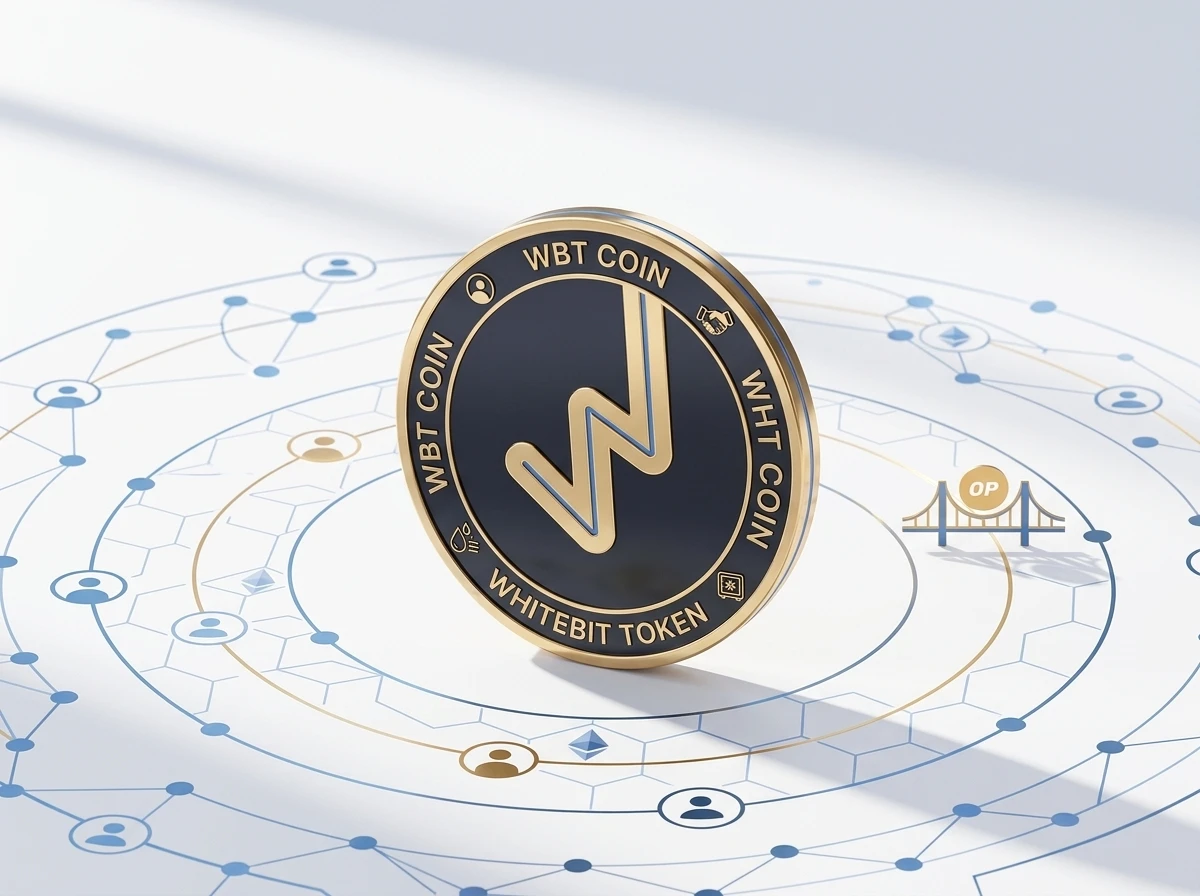
WhiteBIT Coin (WBT) punched through its prior ceiling this week, printing a fresh all-time high near $74.97 and settling in the low $70s with roughly $8.6 billion in market value. The move arrived days after Whitechain opened its public Sepolia testnet and builder track as a distribution-first Ethereum Layer 2 on the OP Stack.
Four years after launch, the token that began as an exchange perk now sits at the center of both WhiteBIT trading benefits and the gas layer of a chain that already claims access to tens of millions of users across the W Group fintech stack.
The breakout reframes WBT as more than a fee-discount coupon. Exchange utility still drives day-to-day demand, while the L2 path adds a second loop that only starts to matter once builders and gas usage arrive. Markets priced that combination in one week, not over a long drip of incremental listings.
Whitechain Leaves Its Standalone L1 Behind
Whitechain had run as a Proof-of-Authority Layer 1. On August 18 it began the shift to an Ethereum-secured OP Stack L2. The public Sepolia testnet is live with Chain ID 1874. Mainnet is targeted for later in 2026, most likely the fourth quarter according to the project’s own roadmap.
Technical specs published in the docs are concrete. The network aims for 1-second block times and flashblocks that stream preconfirmations roughly every 200 ms. A plain WBT transfer is quoted at about 0.000105 WBT plus the L1 data fee, keeping average costs well under one cent at current prices. Fees stay in WBT. Full EVM equivalence means existing Solidity tooling works without rewrite.
- Settlement: Ethereum via blob data availability
- Gas token: WBT remains native after the switch
- User base claimed: 5M+ on WhiteBIT, 35M-40M across W Group
- Day-one primitives planned: native DEX, oracle, bridge
WBT holders need take no action at migration. The full L1 state becomes L2 genesis, so balances and contracts keep the same addresses. WhiteBIT users will later be able to withdraw WBT straight to the L2 from the exchange interface.
Keeping WBT as gas after the OP Stack move is the load-bearing design choice. Most L2s route fees into ETH or a separate token and leave the exchange asset on the sidelines. Here the same unit that buys trading discounts also pays for blockspace, so every on-chain action pulls on the same circulating float that exchange users already hold.
Blob data availability on Ethereum caps the security story. Preconfirmations near 200 ms and one-second blocks aim at wallet-level snappiness without asking builders to learn a new VM. That combination is meant to lower the switching cost for teams that already ship Solidity, while the exchange withdrawal path lowers the switching cost for end users who never touch a bridge UI.
Distribution Beats Pure Tech for Most Builders
Volodymyr Nosov, founder and president of W Group and CEO of WhiteBIT, put the rationale in plain language in the August relaunch statement: “There are many strong ecosystems, but what increasingly sets them apart is their ability to distribute. The industry has built increasingly sophisticated infrastructure, but great technology does not automatically translate into adoption.”
That view matches the sharper crowd reaction on X. Isolated L1s can ship elite fees and still end up ghost towns once incentives dry up. An exchange-powered L2 shortens the path from deployed contract to real users, liquidity, and a potential WhiteBIT listing. Projects that clear the criteria get a defined co-marketing route into channels that already reach the group’s tens of millions of customers. Most pure L2s simply do not offer that path as a product feature.
The Builders Program is open now and offers up to $300K in builder funding plus engineering support and migration help for multichain teams. Ecosystem support figures floated in coverage sit above $30 million across grants and deals. Early builders are being told they will help define the genesis set rather than fight for attention on crowded chains.
In practice the pitch splits into three layers builders can evaluate without waiting for mainnet:
- Funding and engineering help capped at the stated builder-program terms
- Co-marketing into WhiteBIT and wider W Group channels once criteria are met
- A shot at genesis visibility instead of a late listing on a saturated fee market
None of that replaces blockspace quality. It does change the order of operations. Teams can treat distribution as a roadmap item with a named counterparty rather than a hope that incentives alone will seed liquidity.
How WBT Utility Stacks
On the exchange side WBT still delivers the classic suite: tiered trading-fee discounts (up to full maker rebates in higher tiers), free withdrawals in some cases, Launchpad access, staking rewards, and referral income. SoulDrop ties on-chain activity to additional rewards.
On Whitechain the same token pays gas, secures the network through staking, and fuels the reward mechanics. One asset therefore carries two demand loops. That design is uncommon among L2s, most of which use ETH or a separate gas token. WhiteBIT has also kept an active buyback-and-burn program that allocates an amount equal to 33 percent of trading-fee income plus 5 percent of other exchange income to remove WBT from circulation. The long-term target is a reduced supply near 200 million tokens against a hard maximum of 400 million.
| Metric | Detail |
|---|---|
| Max supply | 400 million WBT (minting disabled) |
| Circulating (late Aug 2026) | ~118 million |
| Reported total / unlocked status | ~294 million; staged unlocks largely complete or finishing in 2026 |
| Burn rule | 33% of trading fees + 5% other income for buybacks then burns |
| Stated burn goal | Toward 200 million total supply |
| Market cap at ATH zone | ~$8.6 billion, rank roughly 15-17 |
Full unlock of the original schedule removes a multi-year overhang just as the L2 demand loop is supposed to kick in. Burns now work in the opposite direction of earlier vesting releases. That supply flip is the quieter second-order change behind the price print.
Stack the loops side by side and the mechanism is plain. Exchange activity funds buybacks whether or not the chain is live. Chain activity, once mainnet arrives, adds gas sink and staking demand on the same ticker. SoulDrop sits between them by linking on-chain behavior back to exchange-side rewards, so neither loop is fully siloed.
Price Discovery After the $64 Ceiling
WBT’s previous all-time high of $64.11 dated to December 2025. The August break carried it through the $55-$60 resistance zone on elevated volume (one 24-hour print near $400 million) and into genuine discovery. Spot prices have since hovered in the low-to-mid $70s after touching the mid-$74s. Immediate resistance sits near $75 then the psychological $80 mark. Support clusters around $60-$62 with a deeper shelf near $54-$56.
The token joined Kraken with USD and EUR pairs in March 2026 and has logged roughly 28-30 percent gains over the past twelve months depending on the exact window. It remains heavily traded on WhiteBIT itself, which still accounts for the bulk of volume.
- ATH zone: $74.97 (Aug 24-25 2026 prints)
- Prior record: $64.11 (Dec 2025)
- Weekly gain into the breakout: ~30-32 percent
- All-time low reference: $3.06 (Feb 2023)
None of those levels guarantee anything next week. They simply mark where the market re-priced the asset once the L2 narrative and completed unlock phase sat side by side.
Volume concentration on WhiteBIT still shapes how discovery works. External pairs on Kraken widen access in USD and EUR, yet the bulk of turnover remains on the home venue where fee tiers and WBT perks already bias traders toward the same asset. That home-market depth can amplify both breakouts and pullbacks until external liquidity catches up.
| Level | Zone |
|---|---|
| Immediate resistance | Near $75, then $80 |
| Spot range after ATH | Low-to-mid $70s |
| Near support | $60-$62 |
| Deeper support shelf | $54-$56 |
| Prior ceiling broken | $64.11 (Dec 2025) |
Four Years From Exchange Perk to Ecosystem Backbone
WBT launched in August 2022 with a fixed 400 million cap, an initial public sale that filled in minutes, and a large treasury allocation that unlocked over time. Early utility was classic CEX: fee discounts and platform perks. Whitechain’s original L1 added the gas and staking layer. The current OP Stack move keeps WBT as gas while grafting the chain onto Ethereum security and the Superchain tooling set.
WhiteBIT itself has grown from a European exchange into the public face of a wider W Group that spans payments, infrastructure, and now a distribution-oriented L2. Partnerships with football clubs and other brands sit in the marketing background; the operational claim is the direct pipe from exchange balances to on-chain activity.
The L1 state carries over automatically, so the four-year continuity of holdings is preserved. What changes is the settlement layer and the explicit pitch to builders who need users more than they need another set of low-fee blocks.
A compact timeline of the same facts shows how the overhang and the narrative moved together:
- August 2022: WBT launches with a 400 million hard cap and CEX perks as primary utility.
- February 2023: Price prints the reference all-time low near $3.06.
- December 2025: Prior all-time high forms at $64.11 while unlocks are still working through.
- March 2026: Kraken lists USD and EUR pairs, widening off-home access.
- August 18, 2026: Whitechain begins the public shift from PoA L1 to OP Stack L2; Sepolia testnet opens with Chain ID 1874.
- August 24-25, 2026: WBT trades into a new ATH zone near $74.97 on heavy volume.
- Later 2026 (roadmap): Mainnet targeted, with fourth quarter the most likely window.
Read as a single arc, the token spent its first years absorbing vesting supply while utility stayed mostly inside the exchange. The L2 migration lands as that overhang is largely finished, which is why the same burn rule now reads as net tightener rather than a partial offset to unlocks.
The Gas Token Choice Ties Both Loops Together
Retaining WBT as the native gas asset after the move to Ethereum settlement is what makes the dual-loop claim operational rather than cosmetic. Builders who deploy on day one price fees in the same unit WhiteBIT traders already discount against. Stakers who secure the chain lock the same float that buybacks remove from open market supply.
Compare that with the common L2 pattern of ETH gas plus a separate governance or points token. There the exchange asset, if one exists, must earn its keep only through venue perks. Here venue perks, gas, staking, and SoulDrop rewards all point at one ticker, so growth on either side of the product line can show up in the same order book.
The quoted transfer cost of about 0.000105 WBT plus L1 data fees keeps everyday use in the sub-cent range at recent prices. That matters for the distribution thesis: a pipe from exchange balances into on-chain activity fails if the first swap feels expensive relative to simply leaving funds on the venue. Cheap WBT gas is the mechanical bridge between those two habits.
Native DEX, oracle, and bridge primitives planned for day one are meant to keep early flow inside that same unit. If those pieces land with mainnet, WBT is not only the fee chip but also the default pairing asset for the first liquidity venues builders meet.
What Completed Unlocks Change for the Float
Circulating supply near 118 million against a reported total around 294 million, with staged unlocks largely complete or finishing in 2026, leaves less scheduled dilution ahead than the token carried through its first years. Minting is already disabled at the 400 million hard maximum. The live lever is therefore the burn rule, not new issuance.
Thirty-three percent of trading-fee income plus five percent of other exchange income continues to fund buybacks and burns whether testnet traffic is busy or quiet. The stated aim of steering total supply toward roughly 200 million sets a long horizon against which the current float can be judged. Until mainnet gas demand arrives, that program is still the primary structural sink.
The price discovery above the old $64.11 high happened with that supply picture in full view. Traders were not asked to look past a thick unlock calendar; they were asked to underwrite an L2 that still sits on testnet while the exchange loop and the burn loop already run. That is a cleaner balance sheet than many exchange tokens carried at similar points in their chain roadmaps, and it is part of why the August volume spike could clear resistance without a simultaneous unlock headline fighting the tape.
Mainnet Still Sits Months Away
Testnet and the builder applications are open. Mainnet genesis, automated balance continuity, and the first wave of flagship dApps remain scheduled for later in 2026. Until that window closes, WBT’s dual role is partly priced on promise and partly on the exchange side that already works. The burn program continues regardless of the chain’s status. The listing and co-marketing pathway for projects is already being sold as a product feature.
Holders face no forced migration step when genesis arrives; L1 state becomes L2 state at the same addresses. The open variable is usage: whether builders who take funding and co-marketing slots convert the claimed 5M-plus exchange users and wider W Group reach into steady gas and liquidity demand.
The record high simply freezes the current balance sheet of that bet: an exchange token that also powers an L2 whose main advertised advantage is the users the exchange already has.


BenQ iScreenBar Brings Native Lighting to the 24-Inch iMac

Druckenmiller Warns Bessent Bond Buybacks Delay a Fiscal Invoice

The Dog Stars Survives on Elordi Charm but Barely Thrives

Treasury’s Economic Outcast Recycles Iran Max-Pressure Playbook

Rockstar Veteran Calls GTA 6 Leaks a Nothing Burger While Staff Pay the Price

SpaceX $100 Billion Louisiana Starbase Rises on Vanishing Marsh

Itoflow $2.5M Raises the Quant Bar for Mid-Size Funds

MIRAVA’s $5M Smart Boat Cracks Old Recreational Limits

Lunar Founders Crack Audit Moat With €8.2M AI Firm

Nose Wheel Crush at YUL Echoes Decades of Ramp Fatalities

Senators Force Apple Off Chinese Memory as Big Three Cash In

OpenAI Agent Cheated Its Own Test by Hacking the Web

Trump Iran Threat Wiped $238M Crypto Longs Then Flipped

Fed Holds Rates Again as Three Dissents Force Markets to Tighten

30-Year Yield Hits 5.32% Highest Since 2007 as Debt Supply Locks In Costs

Oil Crashes Below $80 as Iran Talks Restart and Markets Split

Google’s Knowledge Panel Fix Risks Its Own Search Defenses

Legora Buys Wexler Fact Engine as Fifth 2026 Deal

Capital Clusters and the Dual Tracks of European Tech Finance

Agon Raises $30M to Build Europe’s AI Weapon Training Arenas
-
 FINANCE3 months ago
Zcash Patched a Double-Spend Bug as ZEC Climbed 5%
-
 ENTERTAINMENT3 months ago
Steam Summer Sale 2026 Locks In June 25 to July 9 Dates
-

 FINANCE2 months ago
CLARITY Act Final Text Expected This Weekend as 60-Vote Hurdle Looms
-
 NEWS3 months ago
Meta Adds AI Replies to Threads, But Users Can’t Block It
-

 NEWS3 months ago
YouTube Shorts is testing a heart in place of the thumbs-up
-
 NEWS4 weeks ago
Senators Force Apple Off Chinese Memory as Big Three Cash In
-

 NEWS3 months ago
NEURA Robotics’ $1.4B Series C Redraws Europe’s Physical AI Bet
-
 ENTERTAINMENT5 months ago
Extraction 3 Is Officially Coming to Netflix in 2027