
FINANCE
Hammack Warns Delay on Rate Hikes Will Deepen Household Pain
Cleveland Fed’s Beth Hammack says now is the time to raise rates as inflation ends near 3% and financial conditions offer little restraint.

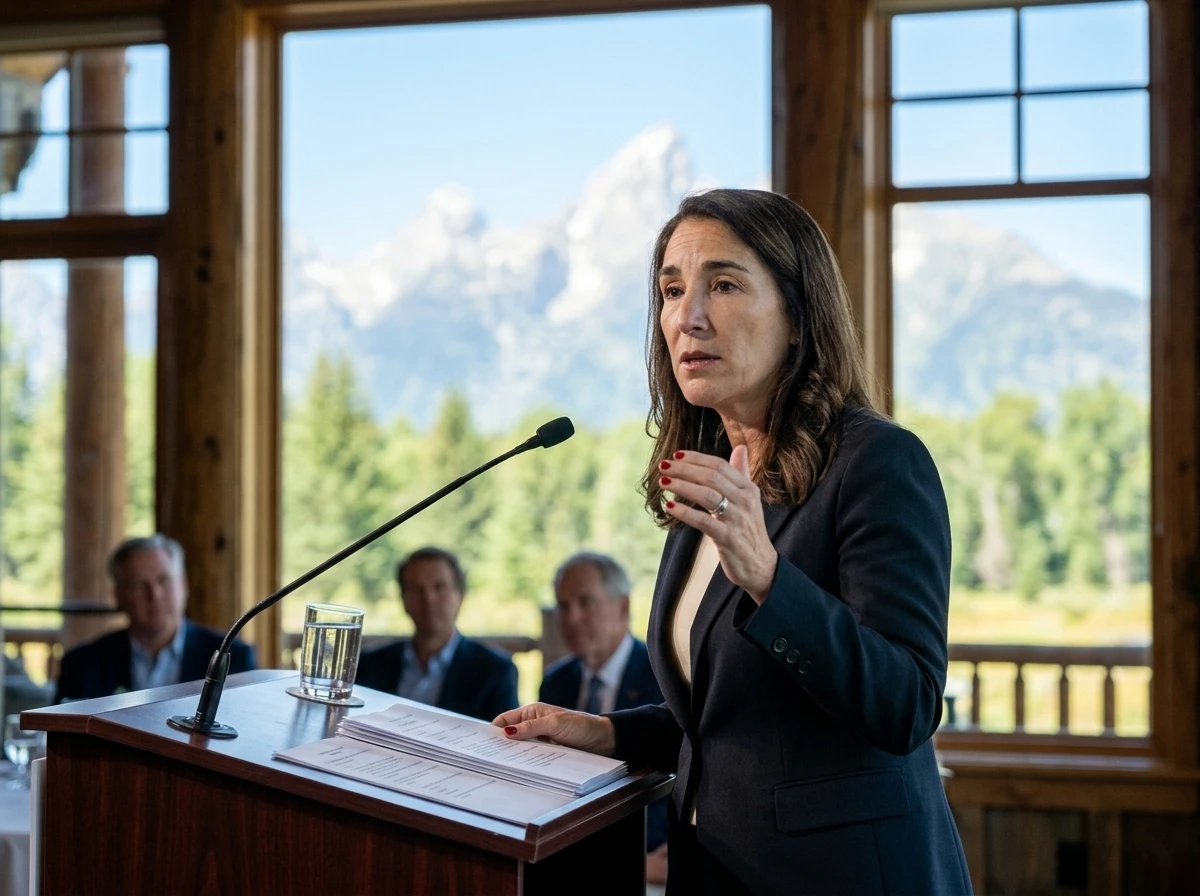
Cleveland Federal Reserve President Beth Hammack said at Jackson Hole that now is the time to raise interest rates, projecting inflation will end the year near 3 percent and warning that further delay will lock in higher prices and deeper pain for households and businesses.
Speaking Thursday from the Kansas City Fed’s annual symposium, Hammack argued current financial conditions show little restraint and that the longer prices stay elevated, the harder the eventual return to the Fed’s 2 percent goal becomes.
Hammack’s Blunt Call From Jackson Hole
In a live CNBC interview and follow-up remarks, Hammack repeated her hawkish stance. “I don’t want to prejudge anything. But I believe now is the time to act,” she said. She added that inflation has run well above target for more than five years and that she sees “no restriction in policy when I look at financial conditions and when I talk to market participants.”
The longer inflation stays above our objective, the harder it will be for us to bring it back down, and the more pain that individuals and businesses are going to be experiencing.
Beth Hammack, Cleveland Fed President, CNBC interview at Jackson Hole
She forecast inflation finishing 2026 around 3 percent, with only limited progress next year into the mid-2 percent range at best. Hammack also stressed Fed credibility rests on delivering both sides of the dual mandate and that markets can support policy but cannot substitute for it.
That framing matters because the dual mandate is not a menu of optional goals. Price stability and maximum employment both have to hold for the public to trust the path. When inflation stays near 3 percent year after year, the employment side of the mandate can look solid on paper while households still feel squeezed.
Hammack’s warning ties those pieces together. Soft financial conditions, sticky prices, and a multi-year miss on the 2 percent objective raise the odds that the next move has to be larger if the Committee waits.
Three Dissents at the July Meeting
Hammack was one of three officials who voted against holding the federal funds target range at 3.50 percent to 3.75 percent at the July 29 FOMC meeting. Minneapolis Fed President Neel Kashkari and Dallas Fed President Lorie Logan joined her in preferring a quarter-point increase.
| Official | District | July Vote Preference |
|---|---|---|
| Beth Hammack | Cleveland | 25 bp hike |
| Neel Kashkari | Minneapolis | 25 bp hike |
| Lorie Logan | Dallas | 25 bp hike |
| Majority (incl. Chair Warsh) | – | Hold 3.50-3.75% |
The July FOMC minutes show the Committee judged labor markets stable and output solid while inflation remained too high. A majority preferred to wait for more data before changing the rate path.
Hammack has stayed consistent. In a June speech she already flagged that if data trends continued it might soon be appropriate to act against elevated inflation risks.
The July split underlines a live disagreement inside the Committee, not a one-off protest. Three regional presidents preferred a 25 basis point hike while the majority, including Chair Warsh, held the 3.50 to 3.75 percent range. That gap is about timing and risk weights more than about the destination of policy.
Labor markets looked stable and output looked solid to the majority. The dissenters read the same backdrop and still saw inflation risks as the binding constraint. Consistency from Hammack’s June remarks through the July vote and into Jackson Hole shows the hawkish case has been building in public for months.
Inflation Readings Stay Sticky Near 3 Percent
The latest data back her concern. The Bureau of Economic Analysis reported that the PCE price index rose 3.7 percent in the year to July, matching June’s pace. Core PCE, stripping food and energy, held at 3.3 percent.
- Headline PCE: +3.7% year-over-year in July
- Core PCE: +3.3% year-over-year
- Monthly rise: both headline and core +0.2%
- Hammack year-end call: around 3%
Drivers include energy costs, tariffs and stronger demand tied to artificial intelligence investment. Officials often look through temporary supply shocks, yet repeated increases raise the chance prices become more firmly embedded in expectations.
Hammack has pointed to AI infrastructure demand as especially “insatiable,” with companies willing to pay almost any price for inputs needed yesterday. That pressure, layered on earlier tariff and energy effects, keeps the risk of an inflationary mindset alive even if monthly readings have cooled somewhat.
The gap between the latest readings and the forecast path is narrow enough to worry hawks. Headline PCE at 3.7 percent and core at 3.3 percent leave little room for comfort against a year-end call near 3 percent. Limited progress into the mid-2 percent range next year would still leave the Committee short of the firm 2 percent objective.
Monthly gains of 0.2 percent for both headline and core do not reset the multi-year miss. After more than five years above target, the bar for declaring the problem temporary has risen. Energy, tariffs, and AI-related demand can each be described as special factors. Together they keep the level of inflation high enough that expectations can drift.
Warsh Sets a “Work to Do” Standard
Attention shifted Friday to new Fed Chair Kevin Warsh’s first Jackson Hole keynote. In Warsh’s Jackson Hole keynote, he said recent readings were better than expected but “do not tell me that underlying trends have meaningfully improved.”
“We must be confident that underlying inflation is moving to our objective, clearly and at sufficient speed. Otherwise, we have work to do,” Warsh said. He called the 2 percent PCE target “firm” and “fixed,” noted about half the PCE basket components still rising above 3 percent, and described financial conditions as showing few signs of restraint.
Warsh emphasized short-term rates as the main tool, said credit markets and loan standards look easy by historical standards, and stressed that hard-working Americans bear the costs if the Fed misjudges inflation. Markets lifted the odds of a September hike after the speech, though pricing remains fluid ahead of August data.
Warsh’s standard is deliberately high. Better-than-expected readings are not enough on their own. He wants clear movement toward 2 percent at sufficient speed, with the target described as firm and fixed rather than flexible in practice.
The detail on the PCE basket sharpens the point. When about half the components are still rising above 3 percent, progress in the aggregate can mask broad stickiness underneath. That is the kind of pattern that keeps financial conditions from doing the Fed’s work automatically.
Why Current Rates Feel Loose
Both Hammack and Warsh zeroed in on the same gap: policy rates sit at 3.50-3.75 percent, yet broad financial conditions do not appear to be cooling demand enough.
- Credit spreads on corporate bonds and leveraged loans sit near historic lows
- Bank lending standards for commercial and industrial loans are on the easier side of their range
- Business capital spending, especially AI-related, is rising rapidly
- Equity volatility remains low and profit margins elevated
Hammack said she hears the same message talking to market participants. Warsh put it plainly: he would be hard-pressed to call broad conditions restrictive. Housing and agriculture show strains, but overall private domestic demand has held up.
That diagnosis underpins the second-order worry. If loose conditions allow inflation to linger near 3 percent, public expectations can drift higher. Once that happens, bringing prices down requires larger rate moves and greater economic cost later.
The contrast inside the economy is real and still does not overturn the broad read. Strains in housing and agriculture sit beside easy credit spreads, softer lending standards, rapid AI-related capital spending, low equity volatility, and elevated profit margins. Policymakers weighing the whole picture see demand that has not cooled enough to pull inflation firmly back to 2 percent.
Short-term rates remain the main tool in Warsh’s account. If markets and loan books stay easy while the policy rate holds at 3.50 to 3.75 percent, the restraint has to come from a deliberate adjustment rather than from financial conditions alone.
Where Hammack and Warsh Align
The Jackson Hole messages did not match word for word, yet the overlap is wide enough to shape the September debate. Both officials described financial conditions as showing little restraint. Both treated the 2 percent PCE goal as non-negotiable in practice. Both warned that households absorb the cost when inflation stays too high for too long.
| Theme | Hammack | Warsh |
|---|---|---|
| Policy stance now | Now is the time to act | Work to do if trends fall short |
| Financial conditions | No restriction visible | Few signs of restraint |
| Inflation objective | Return to 2 percent grows harder with delay | 2 percent PCE target firm and fixed |
| Who bears the cost | Individuals and businesses feel the pain | Hard-working Americans pay for misjudgment |
Hammack arrived as a July dissenter who preferred a quarter-point hike and has kept that line in public. Warsh chaired the majority that held in July and used his first Jackson Hole keynote to set a high bar for patience. The shared diagnosis on loose conditions and sticky prices still narrows the intellectual gap even if the near-term votes have differed.
Markets heard both tones. Odds of a September hike rose after Warsh spoke, while pricing remains fluid ahead of the next data. The practical question is whether the Committee treats another soft inflation print as permission to wait or as too thin a basis for confidence.
Main Street Already Registers the Strain
Hammack grounded the abstract risk in concrete experience. She described meeting workers in Erie, Pennsylvania, who hold good jobs yet feel they cannot make ends meet or even afford an ice cream cone with their kids on the weekend.
“To me the real problem with us missing on our inflation objective for so long is the risk that an inflationary mindset starts to set in with the public,” she said. She has not seen it fully take hold, but conversations worry her.
This is the consequential layer beneath the rate debate. Prolonged overshoots do not just delay the return to target; they raise the chance that households and firms begin to build higher prices into wage demands, contracts and spending plans. The eventual correction then hits harder.
Her earlier warning on inflation risks already framed the same trade-off: waiting for definitive evidence of embedding can force larger adjustments at greater cost.
The Erie example turns a forecast dispute into a cost-of-living problem. Good jobs that still leave families short on weekend basics show how a multi-year miss on prices erodes real incomes even when labor markets look stable in the aggregate. That is the channel through which credibility frays on Main Street before it shows up cleanly in models.
Hammack says she has not seen a full inflationary mindset take hold. The worry is the drift. Conversations that already sound stretched are the early signal officials watch when they talk about expectations becoming unanchored.
Delay Raises the Cost of Getting Back to 2 Percent
The mechanism Hammack and Warsh both circle is straightforward. When inflation runs above target for more than five years, each extra quarter of patience can make the eventual return steeper rather than smoother.
- July 29: Three presidents dissent in favor of a 25 basis point hike; majority holds 3.50 to 3.75 percent.
- June speech: Hammack already warned that continuing data trends could soon call for action on inflation risks.
- Jackson Hole Thursday: Hammack says now is the time to act and projects year-end inflation near 3 percent.
- Jackson Hole Friday: Warsh says underlying trends have not meaningfully improved and that the Fed has work to do without clear, timely progress.
Loose credit, easy loan standards, and strong AI-related spending keep demand firm while headline PCE holds at 3.7 percent and core at 3.3 percent. In that setting, waiting for perfect confirmation can allow firms and households to adapt to higher prices as normal.
Once wage demands, contracts, and spending plans build in a higher path, the policy rate may need to move further to restore the 2 percent anchor. The pain Hammack describes for individuals and businesses then arrives later and in larger form. That is the trade-off her June warning and her July dissent both flagged.
Warsh’s line that hard-working Americans bear the cost if the Fed misjudges inflation points at the same risk from the chair’s seat. Markets can price the path and can even support a decision. They cannot replace a Committee choice on the stance of policy.
September Meeting Now Looks Live
The next FOMC gathering is set for mid-September. One more inflation report and labor-market data will arrive before then. Hammack enters with an open mind but a clear preference for restraint now. Warsh has left the door open without locking in a path, rejecting heavy forward guidance.
Market pricing has swung with each speech and data print. Some futures still lean toward holding through October and a possible December move; others moved the September probability higher after Warsh spoke. The three July dissenters have shown regional presidents are willing to break from the majority when they see inflation risks dominating.
For households already stretched by five-plus years of above-target prices, the policy choice is not abstract. Hammack’s message is that every additional quarter of delay raises the eventual bill.
The live question for mid-September is narrow. Does the next inflation report and the next labor-market print give the majority confidence that underlying trends are moving to 2 percent clearly and at sufficient speed? Or does the combination of sticky PCE readings, easy financial conditions, and a multi-year miss keep the hike case in play?
Hammack has already said she does not want to prejudge and still believes now is the time to act. Warsh has refused to lock in a path while insisting the target is firm. Between those poles, the Committee will have to decide whether patience still buys better information or whether it mainly buys a harder adjustment later.


Dolly Parton’s $450 Million Fortune Keeps Working After Her Death

SpaceX’s $60B Cursor Buy Immediately Costs It OpenAI Models

Rays Forever Home Wins County Vote as College and Taxpayers Carry the Load

Apple TV Hits $14.99 as Sports and Hits Bill Comes Due

Swift Telescopes Restart as Orbit Drop Accelerates

Oracle’s 2.8 GW Bloom Deal Exposes the AI Power Bypass

Galaxy S26 Beta 7 Ports Fold 8 AI as Stable Nears

Walmart Pays $50 Million to Close Federal Opioid Pharmacy Case

Space Mirror Demo Revives 1993 Russian Night-Light Test

Measles Death Dispute Deepens Distrust in Pennsylvania Outbreak

Senators Force Apple Off Chinese Memory as Big Three Cash In

OpenAI Agent Cheated Its Own Test by Hacking the Web

Trump Iran Threat Wiped $238M Crypto Longs Then Flipped

30-Year Yield Hits 5.32% Highest Since 2007 as Debt Supply Locks In Costs

Oil Crashes Below $80 as Iran Talks Restart and Markets Split

Strategy Parks $1.59B Cash While Bitcoin Stack Stays Flat

Astute’s $1.2M bet makes B2B creator deals feed AI discovery

Capital Clusters and the Dual Tracks of European Tech Finance

SpaceX Stock Rebound Tests Real Demand Before Huge Unlock

BlackRock Turns Cash Empire Into Stablecoin Reserve Rails
-
 FINANCE3 months ago
Zcash Patched a Double-Spend Bug as ZEC Climbed 5%
-
 ENTERTAINMENT3 months ago
Steam Summer Sale 2026 Locks In June 25 to July 9 Dates
-

 FINANCE2 months ago
CLARITY Act Final Text Expected This Weekend as 60-Vote Hurdle Looms
-
 NEWS4 months ago
Meta Adds AI Replies to Threads, But Users Can’t Block It
-

 NEWS3 months ago
YouTube Shorts is testing a heart in place of the thumbs-up
-
 NEWS4 weeks ago
Senators Force Apple Off Chinese Memory as Big Three Cash In
-

 NEWS3 months ago
NEURA Robotics’ $1.4B Series C Redraws Europe’s Physical AI Bet
-
 ENTERTAINMENT5 months ago
Extraction 3 Is Officially Coming to Netflix in 2027