
NEWS
Porsche Cayenne Electric Turbo Owns Its Two-Ton Mass
The 2026 Porsche Cayenne Turbo Electric delivers 1,139 hp and Active Ride that embraces weight rivals hide.

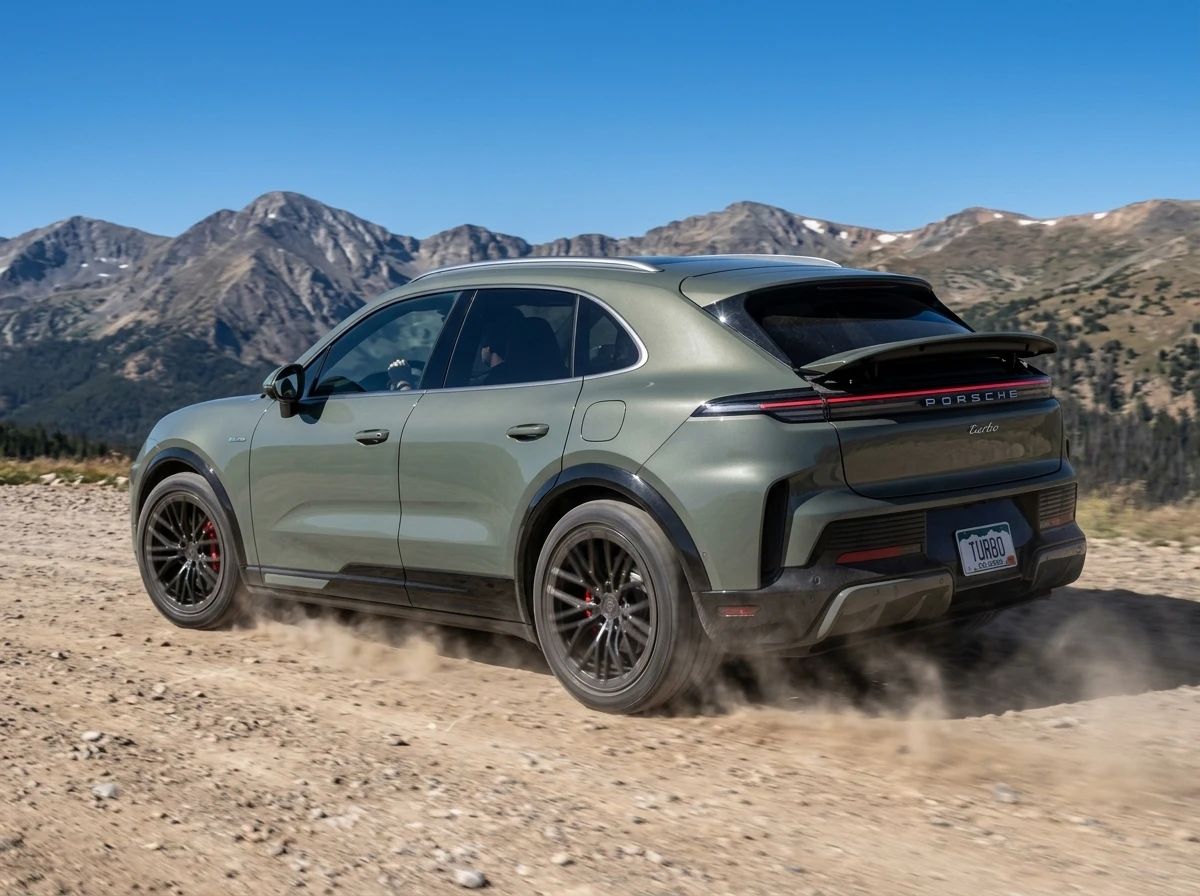
The 2026 Porsche Cayenne Turbo Electric packs up to 1,139 horsepower and 1,106 lb-ft in Launch Control, sprints to 60 mph in 2.4 seconds, and carries an EPA-estimated 298 miles of range while weighing nearly 5,700 pounds. SlashGear’s Michael Teo Van Runkle drove it across Colorado’s 12,000-foot passes and gravel and found a machine that owns every ounce of that mass instead of pretending it is not there.
Rivals soft-pedal steering and flatten suspension to mask bulk. Porsche leaves the weight honest, then uses hydraulic Active Ride and tight steering to make the honesty work.
Three Trims, One Battery, Peak Numbers That Matter
Every Cayenne Electric rides the same 113-kWh gross battery (108 kWh usable) on the 800-volt PPE skateboard shared with the Macan. Dual motors and all-wheel drive are standard. The Turbo alone unlocks the headline figures.
| Trim | Peak Power (Launch Control) | 0-60 mph | Starting MSRP | EPA Range (est.) |
|---|---|---|---|---|
| Cayenne Electric | 435 hp / 615 lb-ft | 4.5 s | $109,000 | ~300+ mi |
| Cayenne S Electric | 657 hp | 3.6 s | $126,300 | ~300 mi |
| Cayenne Turbo Electric | 1,139 hp / 1,106 lb-ft | 2.4 s | $163,000 | 298 mi |
In normal driving the Turbo still makes 844 hp (630 kW). A steering-wheel Push-to-Pass button adds another 176 hp for ten-second bursts. Porsche quotes the full 850 kW / 1,139 hp overboost only under Launch Control. Top speed is 162 mph. Towing capacity reaches 7,716 pounds. Cargo volume sits at 26.4 cubic feet behind the rear seats and expands to 54.9 cubic feet with them folded; the frunk adds another 3 cubic feet or so.
Cd is 0.25 for the SUV and 0.23 for the Coupe thanks to active front intakes, rear side blades that deploy above 34 mph, and an adaptive spoiler. The battery packs 192 cells in six liquid-cooled modules with exterior control units so technicians can service them without dropping the entire floor.
Active Ride Turns Two Tons Into a Flat Platform
Active Ride is standard on the Turbo and optional on the S. Hydraulic actuators at each corner cancel pitch and roll so hard that Comfort mode can keep the body almost perfectly level while still soaking washboard gravel. Van Runkle called the system the microcosm of the whole car: it does not hide mass, it manages it.
Rivals such as the Rivian R1 and certain Land Rovers use similar hardware and end up harsh. Porsche dials the pressure so the Cayenne stays communicative. Steering stays firm and on-center. Body roll is present enough to tell the driver what the tires are doing, then it is checked before it becomes wallow. Rear-axle steering (up to five degrees) shortens the turning circle and stabilizes high-speed lanes.
- Ground clearance reaches 9.6 inches at maximum lift.
- Wading depth is 19 inches.
- Off-road programs and an optional Offroad Package with unique front fascia raise approach angles.
- Ceramic composite brakes and a clutch-pack rear LSD are available for track or mountain work.
The same hardware that flattens the car also lets it carve when the dampers are set to Sport. Van Runkle found the base air-suspension Cayenne felt lighter and more skittish; Active Ride made the Turbo the one he preferred after a single downhill run.
Leave it to Porsche to absolutely nail the tech this time around. But Active Ride also serves as a sort of microcosm for everything the Cayenne Electric manages to achieve.
Michael Teo Van Runkle, SlashGear Colorado drive
Colorado Passes, Gravel, and Too Much Grip
The media route climbed two 12,000-foot passes and mixed highway, rain, and graded gravel. The Turbo started the day predicting 360 miles at 100 percent. After 104 miles of full-throttle romps and elevation it still showed 103 miles remaining at 35 percent. A nine-minute stop on a 170-kW charger (CCS adapter on the NACS port) added 10 percent and 34 miles, enough to reach Aspen.
On gravel the problem was traction, not power. The Pirelli P Zero R Elect tires on 22-inch wheels and the 5,695-pound curb weight simply refused to break loose easily. Wheelspin lasted a heartbeat before the dual motors and electronic LSD hooked up and launched the car forward. Drifts required Sport mode, dampers in Comfort, and ESC as far “off” as the software allows, plus a careful steering angle that stayed inside the algorithm’s oversteer window. Even then the slides were occasional rather than constant rally-car fun.
Interior notes mixed high and low. The 992-generation steering wheel and knurled physical knobs for climate and volume feel proper. A curved center touchscreen and optional passenger display work. Climate vents controlled only by screen, a sharp new inner door-handle design, and some plasticky Sport Chrono surround drew complaints. Ambient lighting and Mood Modes feel out of place on a Porsche, yet the Bose system and overall serenity made long highway stretches effortless.
From the 1898 P1 to a Two-Ton Family Rocket
Ferdinand Porsche’s first complete vehicle design was already electric. The 1898 Egger-Lohner C.2 Phaeton, nicknamed 1898 P1 electric design, used a rear-mounted octagonal motor that made 3 hp normally and 5 hp in overload. Top speed was about 22 mph and range roughly 50 miles. It weighed nearly 3,000 pounds and won an early electric race on efficiency as well as speed.
- 1898: P1 debuts in Vienna with rear motor and 50-mile range.
- 1899: P1 wins a 40-km electric race while using the least energy.
- 2019: Taycan arrives as Porsche’s first modern production EV.
- 2024-25: Macan Electric expands the PPE platform.
- 2026: Cayenne Electric becomes the most powerful production Porsche ever, still carrying family cargo and a trailer hitch.
The full circle is almost too neat. The company that began with a slow, heavy electric buggy now builds a fast, heavy electric SUV and sells the honesty of the weight as a feature. The lightweight, mechanically simple sports-car ethos that defined the brand for seven decades is no longer the only path. The Cayenne Electric proves spectacular engineering can break new ground even when it runs counter to that older story.
Price Tags Climb Fast and Leave Some Buyers Behind
The Turbo starts at $163,000 and the tested example reached $197,820. The base model begins at $109,000 and can hit $139,440 with options. Active Ride is locked to S and Turbo. Ceramic brakes, the full aero package, inductive charging hardware, and Exclusive Manufaktur paint push stickers well past $250,000. That is hypercar money for a five-seat SUV.
At those prices the Cayenne Turbo competes less with other electric SUVs on range-per-dollar and more with the idea of owning both a family hauler and a supercar in one garage. The Lucid Gravity offers more range for less. A loaded Rivian R1S undercuts it dramatically on value and still delivers three-row practicality and serious power. Porsche buyers already shopping at the dealership will pay the premium for the chassis feel and badge; everyone else will notice the gap.
The Macan Electric remains the more rational city companion. Its base rear-drive model starts near $82,650, cargo is only modestly smaller, and the GTS version already shocked testers with its own power-to-price ratio. The Cayenne’s advantage is sheer force and the Active Ride magic that makes two tons feel planted. Buyers who want the character of the Coupe body style can read the separate Cayenne Coupe Electric character notes for the flyline trade-offs.
Charging Speed and the Quiet Next Step
Peak DC charging is rated at up to 400 kW. Under ideal conditions 10-80 percent takes 16 minutes. Recuperation reaches 600 kW, high enough that most everyday braking is handled by the motors alone. Dual ports (NACS/CCS on one side, J-1772 on the other) and Plug-and-Charge support make public stops simple. An optional 11-kW inductive pad for home use arrives later in 2026; park over the floor plate and charging starts automatically.
The battery’s double-sided cooling and predictive thermal management keep the curve usable even after repeated hard launches or cold mountain mornings. Real-world Colorado charging on a modest 170-kW station still delivered useful miles quickly enough that range anxiety never appeared. That reliability, more than the peak horsepower number, is what will keep Cayenne Electrics parked outside Aspen chalets and Los Angeles driveways this winter.
For context on how the smaller sibling stacks up on price and punch, the Macan GTS Electric power and price piece covers the overlapping PPE hardware and the value question that follows every high-output Porsche EV.
The Cayenne Turbo Electric does not need to be the most powerful Porsche ever to succeed as a family SUV. It just needs to make that power usable while two tons of battery and body feel honest under the driver’s hands. On the evidence from Colorado, it does exactly that.
Frequently Asked Questions
How much horsepower does the 2026 Porsche Cayenne Turbo Electric make?
In Launch Control the dual-motor Turbo reaches 850 kW or 1,139 horsepower and 1,106 lb-ft of torque. Everyday driving uses up to 844 hp, with an extra 176 hp available for ten-second Push-to-Pass bursts from a steering-wheel button.
What is the EPA range of the Cayenne Electric Turbo?
Porsche lists up to 298 miles of EPA-estimated range for the Turbo on standard wheels; smaller aero wheels and tires add about five more miles. Real-world mountain driving in Colorado returned better-than-predicted efficiency even with repeated full-throttle runs.
Does the Cayenne Electric offer wireless charging?
Yes. An optional Porsche Wireless Charging System with an 11-kW inductive floor pad becomes available in the second half of 2026. The vehicle simply parks over the pad and charging begins automatically at up to 90 percent efficiency.
How does Porsche Active Ride work on the Cayenne Electric?
The system uses hydraulic actuators at each corner to cancel pitch and roll almost completely in Comfort mode while preserving compliance. It is standard on Turbo models and optional on the S, and testers found it superior to similar setups on heavier competitors because it keeps body motions communicative rather than locked solid.
What was Ferdinand Porsche’s first electric car?
The 1898 Egger-Lohner C.2 Phaeton, known as the P1, used a rear-mounted electric motor producing 3 to 5 horsepower, reached about 22 mph, and offered roughly 50 miles of range. It was the first vehicle design stamped with Porsche’s “P1” mark and later won an early electric efficiency race.


Dolly Parton’s $450 Million Fortune Keeps Working After Her Death

SpaceX’s $60B Cursor Buy Immediately Costs It OpenAI Models

Rays Forever Home Wins County Vote as College and Taxpayers Carry the Load

Apple TV Hits $14.99 as Sports and Hits Bill Comes Due

Swift Telescopes Restart as Orbit Drop Accelerates

Oracle’s 2.8 GW Bloom Deal Exposes the AI Power Bypass

Galaxy S26 Beta 7 Ports Fold 8 AI as Stable Nears

Walmart Pays $50 Million to Close Federal Opioid Pharmacy Case

Space Mirror Demo Revives 1993 Russian Night-Light Test

Measles Death Dispute Deepens Distrust in Pennsylvania Outbreak

Senators Force Apple Off Chinese Memory as Big Three Cash In

OpenAI Agent Cheated Its Own Test by Hacking the Web

Trump Iran Threat Wiped $238M Crypto Longs Then Flipped

30-Year Yield Hits 5.32% Highest Since 2007 as Debt Supply Locks In Costs

Oil Crashes Below $80 as Iran Talks Restart and Markets Split

Strategy Parks $1.59B Cash While Bitcoin Stack Stays Flat

Capital Clusters and the Dual Tracks of European Tech Finance

Astute’s $1.2M bet makes B2B creator deals feed AI discovery

SpaceX Stock Rebound Tests Real Demand Before Huge Unlock

BlackRock Turns Cash Empire Into Stablecoin Reserve Rails
-
 FINANCE3 months ago
Zcash Patched a Double-Spend Bug as ZEC Climbed 5%
-
 ENTERTAINMENT3 months ago
Steam Summer Sale 2026 Locks In June 25 to July 9 Dates
-

 FINANCE2 months ago
CLARITY Act Final Text Expected This Weekend as 60-Vote Hurdle Looms
-
 NEWS4 months ago
Meta Adds AI Replies to Threads, But Users Can’t Block It
-

 NEWS3 months ago
YouTube Shorts is testing a heart in place of the thumbs-up
-
 NEWS4 weeks ago
Senators Force Apple Off Chinese Memory as Big Three Cash In
-

 NEWS3 months ago
NEURA Robotics’ $1.4B Series C Redraws Europe’s Physical AI Bet
-
 ENTERTAINMENT5 months ago
Extraction 3 Is Officially Coming to Netflix in 2027