
NEWS
Porsche Cayenne Coupe Electric Packs Power, Lacks Soul

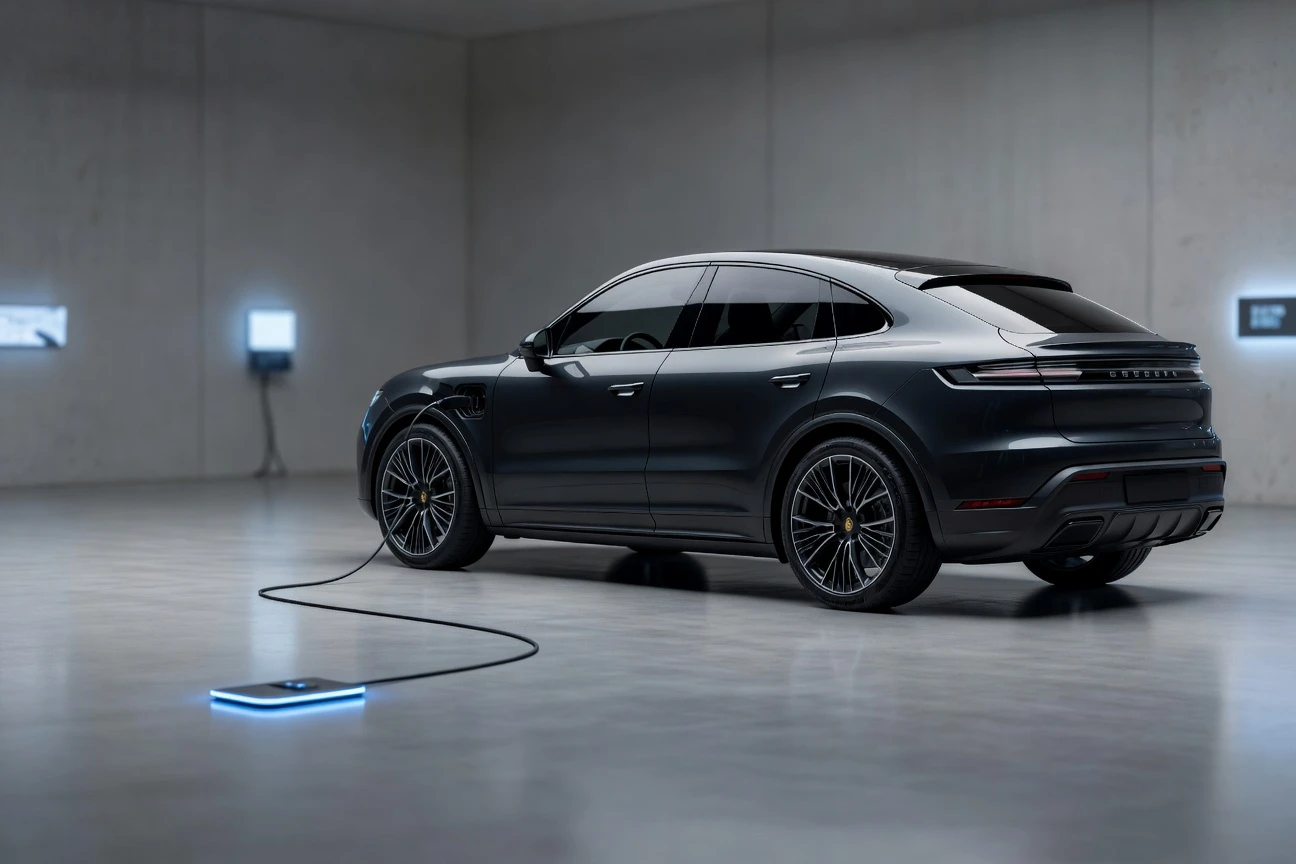
The 2026 Porsche Cayenne Coupe Electric answers the easy question with brutal numbers: up to 1,139 hp, 0-60 mph in 2.4 seconds, and a claimed 10-80% fast charge in less than 16 minutes. The harder question is whether a 5,600-pound electric luxury SUV can still feel like a Porsche when the road gets narrow.
That tension sits under Stephen Edelstein’s SlashGear drive report. Porsche has built a battery-electric SUV coupe with serious range, towing, charging and cabin technology, but the first verdict turns on something harder to order from a spec sheet: character.
The Six-Figure Porsche That Has to Feel Small
Porsche has not treated this model as a side project. In Porsche’s U.S. launch release for the electric coupe, the company says the full range is available to order now, with deliveries expected to begin at the end of summer 2026.
The base price starts at $113,800 before Porsche’s $2,350 delivery, processing and handling fee. Add that required fee and the entry ticket is $116,150. The S lands at $133,550 with delivery, while the Turbo reaches $170,350 before options. Porsche buyers know the drill: the base figure is a starting point, not the car most people will drive home.
- $116,150 – base Cayenne Coupe Electric price including Porsche’s U.S. delivery fee.
- 16 minutes – claimed 10-80% direct-current fast charge under ideal conditions.
- 7,716 pounds – maximum towing capacity when properly equipped.
The business case explains the body style. Porsche says the Cayenne Coupe body accounted for 40% of U.S. Cayenne share in 2025. For a model line that sells on personal taste as much as need, skipping the lower roof would have left money on the table.
Three Trims, One Very High Bar
The lineup is clean: base, S and Turbo. All three use dual-motor all-wheel drive and launch control, but the step up from one trim to the next is large enough to change the car’s personality. The base model has the numbers to shame old sports sedans. The Turbo has the numbers to embarrass supercars.
| Model | Price With Delivery | Launch-Control Output | 0-60 mph | Top Track Speed |
|---|---|---|---|---|
| Cayenne Coupe Electric | $116,150 | 435 hp | 4.5 seconds | 143 mph |
| Cayenne S Coupe Electric | $133,550 | 657 hp | 3.6 seconds | 155 mph |
| Cayenne Turbo Coupe Electric | $170,350 | 1,139 hp | 2.4 seconds | 162 mph |
Those prices use Porsche’s U.S. model data and the delivery fee listed in the launch release. The official Cayenne Coupe Electric model page also lists the base, S and Turbo outputs, along with the same 0-60 mph claims.
The S is the quiet sweet spot on paper. It avoids the Turbo’s $170,000 starting point but gets the richer output and access to key chassis hardware. Edelstein’s drive notes point in the same direction: the base model feels quick, but the S and Turbo make the stronger case for paying Porsche money.
Platform Sharing Stops Being an Excuse
The electric Cayenne sits on Premium Platform Electric (PPE, the shared electric-vehicle architecture developed by Porsche and Audi). That matters because PPE also supports the Porsche Macan Electric and Audi’s latest electric models. Audi describes the architecture as a joint Porsche-Audi project in its Premium Platform Electric technical release.
Shared bones can make a luxury car feel diluted if the brand tuning is thin. Here, Porsche had more room to work. The Cayenne uses an 800-volt electrical system, a 113 kWh high-voltage battery, and battery cooling from both top and bottom. The Turbo also gets direct oil cooling for the rear motor, a motorsport-flavored solution meant to keep repeated power delivery from fading.
Charging may be the most convincing part of the engineering brief. Porsche says a compatible 400 kW charger can move the battery from 10% to 80% state of charge (SoC, the usable battery percentage) in less than 16 minutes. The U.S. car has a North American Charging Standard (NACS, the Tesla-developed plug format) port on the driver’s-side rear fender, a J1772 alternating-current port on the other side, and a Combined Charging System (CCS, the older fast-charging connector family) adapter included.
That split-port setup is inelegant but useful. It lets Porsche reach Tesla-style fast charging while keeping Level 2 home and destination charging straightforward. Wireless charging is planned as a factory-backed option later, with pre-wiring available first.
The Coupe Body Pays Back in Drag, Not Space
The coupe roofline is not just a styling indulgence. Porsche says the body sits 24 millimeters lower than the regular SUV and reaches a 0.23 drag coefficient, compared with 0.25 for the conventional Cayenne Electric SUV. On an electric vehicle (EV, a battery-powered vehicle with no combustion engine), aero is range currency.
The trade is cargo. Porsche’s product page lists 18.9 cubic feet behind the rear seats and 47.6 cubic feet with them folded. That is still useful family space, especially with the small front trunk, but it is the price of the sleeker rear glass and 911-inspired flyline.
The cabin sounds more practical than emotional. The dashboard is screen heavy: a 14.2-inch curved organic light-emitting diode (OLED, a thin display type with individually lit pixels) instrument cluster, a 14.1-inch central Flow Display, and an available 14.9-inch passenger screen. Porsche kept physical climate and audio controls, which matters in a vehicle with this many menus.
SlashGear’s biggest interior complaint was not space. It was distinction. When the dashboard is dominated by panels shared in spirit with other premium EVs, Porsche has less room to make the car feel special before it even moves.
The Chassis Option That Decides the Drive
The drive impression pivots on suspension. Standard adaptive air suspension gives the car range between comfort and control, but the optional Porsche Active Ride system appears to be the hardware that makes the S and Turbo feel worth the badge. Porsche Active Suspension Management (PASM, adaptive damping tied to the suspension) is standard, but Active Ride is the more forceful anti-roll and body-control answer.
Three pieces of chassis hardware carry the car’s case:
- Rear-axle steering – available across the lineup, it helps shrink the turning circle and calm lane changes at speed.
- Mechanical torque vectoring – optional on the S and standard on the Turbo, it helps place power across the rear axle.
- Active Ride – available on S and Turbo models, it attacks body roll and pitch more aggressively than passive hardware can.
The problem is mass. Edelstein found the base car lumpy on optional 22-inch wheels and never especially nimble, even when equipped with rear-axle steering. The higher trims rode better and controlled their weight better, but the steering still did not bring the intimacy Porsche’s best heavy cars usually manage.
That is the missing thing in the first-drive verdict. Electric torque can create shock. Active suspension can create confidence. Character takes feedback, proportion and trust, and the Cayenne’s mission leaves little spare room for all three.
Rivals Put Pressure on the Badge Premium
Porsche can charge more because it is Porsche. Still, the electric luxury SUV field has changed fast. Lucid sells the Gravity with up to 450 miles of Environmental Protection Agency (EPA, the U.S. range-testing regulator) estimated range and a $79,900 starting price for the Touring trim on its Lucid Gravity product page. Mercedes-Benz USA lists the EQS SUV at 317 miles of EPA-estimated range with a 118 kWh battery on the EQS SUV model page. BMW says the iX xDrive60 reaches an estimated 318 to 364 miles on its BMW iX overview.
| Electric SUV | Official Starting Point | Range Claim | Performance Claim |
|---|---|---|---|
| Porsche Cayenne Coupe Electric | $116,150 with delivery | No EPA figure listed yet | Up to 1,139 hp and 2.4 seconds to 60 mph |
| Lucid Gravity | From $79,900 before fees | Up to 450 miles EPA estimated | Up to 828 hp |
| Mercedes-Benz EQS SUV | Model pricing varies by trim | 317 miles EPA estimated | 4.6-second acceleration claim for EQS 550 4MATIC shown |
| BMW iX | Model pricing varies by trim | Up to 364 miles estimated on xDrive60 | iX M70 reaches 60 mph in 3.6 seconds |
There is also pressure from within Porsche. The electric Macan is smaller, less expensive and already carries the same PPE story in a more manageable footprint. Thunder Tiger Europe’s earlier coverage of the Macan GTS Electric’s power and price problem points to the same brand question: when EV performance becomes abundant, Porsche has to sell feel, not just acceleration.
The timing is awkward. Porsche’s 2025 annual report shows sales revenue fell 9.5% to 36.27 billion euros, while operating profit dropped to 413 million euros and return on sales fell to 1.1%. The same report says Cayenne group sales fell 23.4% to 76,917 vehicles. Against that backdrop, the electric Cayenne coupe has to do more than win a spec comparison.
If buyers treat the Turbo’s violence and the S model’s chassis tech as enough, Porsche will have a profitable electric flagship for customers who still want a badge, a high seating position and outrageous thrust. If they want the car to feel smaller than it is, the first drive suggests the most expensive option sheet in the world can only go so far.
Frequently Asked Questions
How Much Does the Porsche Cayenne Coupe Electric Cost?
The Porsche Cayenne Coupe Electric starts at $116,150 in the United States when Porsche’s $2,350 delivery, processing and handling fee is included. The S starts at $133,550 with that fee, and the Turbo starts at $170,350 before options, taxes, registration, dealer charges and other costs.
How Fast Is the Porsche Cayenne Coupe Electric?
The fastest version is the Cayenne Turbo Coupe Electric, which Porsche says makes up to 1,139 hp with launch control and reaches 60 mph in 2.4 seconds. The S reaches 60 mph in 3.6 seconds, while the base model takes 4.5 seconds.
How Quickly Can the Electric Cayenne Coupe Charge?
Porsche says the 113 kWh battery can charge from 10% to 80% in less than 16 minutes when connected to a compatible 400 kW, 800-volt direct-current fast charger under ideal conditions. Real charging speed depends on charger output, battery temperature and state of charge.
Does the Porsche Cayenne Coupe Electric Use the Tesla Plug?
Yes, the U.S. Cayenne Coupe Electric has a NACS port for direct-current fast charging, plus a J1772 port for alternating-current Level 2 charging. Porsche also includes a CCS adapter as standard for compatible fast chargers.
What Is Missing From the Porsche Cayenne Coupe Electric?
The main criticism from the SlashGear first drive is character. The car is extremely quick, technically advanced and more capable with Porsche Active Ride, but the steering and weight make it feel less engaging than the best Porsche models.


Replit Opens Its London Office Inside an AI Crowd

Straight Circle Trailer Lands Without a U.S. Date

Anemo Labs Bets £700,000 on an AI Sense of Smell

Nintendo Prices the Zelda 40th Switch 2 at $519

Copilot Capital Buys the Autopilot Already Running 90 GW

Ground A Raises €9.1 Million for a Pallet Laser

Gibney’s Musk Film Opens in Venice Without Its Subject

Torvalds Blames AI for a Full-Fat Linux 7.3-rc2

Dexter Returns Sharper, Older, and Stuck Between Killers

Meta’s Muse Agent Can Spend Before the Privacy Lock

Walter’s TWG Insists No Fraud as Insurer Probes Force Cleanup

30-Year Yield Hits 5.32% Highest Since 2007 as Debt Supply Locks In Costs

PCE Stays at 3.7% as Gas and Tariffs Outrun Coming Revisions

Evernorth S-4 Clears Path for Active XRP Treasury on Nasdaq

Astute’s $1.2M bet makes B2B creator deals feed AI discovery

Strategy Parks $1.59B Cash While Bitcoin Stack Stays Flat

Instinct Hits $2.5 Billion as AI Agent Access Sparks Trust Fights

Oracle’s 2.8 GW Bloom Deal Exposes the AI Power Bypass

CLARITY Act Cloture Opens a Door Ethics Still Blocks

Space Mirror Demo Revives 1993 Russian Night-Light Test
-
 FINANCE3 months ago
Zcash Patched a Double-Spend Bug as ZEC Climbed 5%
-
 ENTERTAINMENT3 months ago
Steam Summer Sale 2026 Locks In June 25 to July 9 Dates
-

 FINANCE2 months ago
CLARITY Act Final Text Expected This Weekend as 60-Vote Hurdle Looms
-
 NEWS4 months ago
Meta Adds AI Replies to Threads, But Users Can’t Block It
-
 ENTERTAINMENT5 months ago
Extraction 3 Is Officially Coming to Netflix in 2027
-

 NEWS3 months ago
YouTube Shorts is testing a heart in place of the thumbs-up
-

 NEWS1 month ago
Senators Force Apple Off Chinese Memory as Big Three Cash In
-

 NEWS3 months ago
NEURA Robotics’ $1.4B Series C Redraws Europe’s Physical AI Bet