
ENTERTAINMENT
Dark Matter Season 2 Turns the Box Into a Moral Trap
Apple TV’s Dark Matter Season 2 premieres with Joel Edgerton and Jennifer Connelly as the Box escapes the Dessens and becomes a wider ethics problem across.

Apple TV’s Dark Matter Season 2 opened August 28 with the Dessen family already on the run again, the quantum Box no longer a private tool of regret but a device multiple players now hunt, weaponize, and try to enlarge. Joel Edgerton and Jennifer Connelly keep the human cost visible even as the map of realities multiplies.
The first season adapted Blake Crouch’s original novel that launched the series nearly beat for beat. Season 2 is pure invention, a blank-page sequel written by Crouch and Jacquelyn Ben-Zekry that treats the Box as technology with consequences far past one Chicago physicist’s midlife crisis.
That shift changes the series’ gravity. Where Season 1 stayed close to a single stolen life, Season 2 treats the Box as infrastructure. Once the device leaves private hands, the story becomes less about one man’s path not taken and more about who gets to decide which worlds are fair game.
The Family Scatters Across Worlds
Season 1 ended with Jason, Daniela, and Charlie stepping into the Box to escape an army of variant Jasons. Season 2 finds them attempting a quiet life in what seems a safer Chicago until another doppelgänger invades their home. The trauma of living with an impostor in Season 1 returns for Daniela with fresh force.
She can no longer accept that everything is fine. Jason becomes obsessed with reverse-engineering what Jason2 knew and whether the Box can ever be destroyed. Charlie, alienated and missing the twin brother who died at four, secretly enters the Box himself. Daniela follows. The family fractures along three separate paths.
- Jason stays to master or dismantle the Box and confront what Jason2 understood.
- Daniela gains distance, discovers her father Gabriel alive in this reality, then chases Charlie.
- Charlie seeks a world where Max survived, pulling the adults after him.
That scatter is dramatically sharp. It is also the first place the season’s structure frays. Multiple Jasons, multiple Leightons, numbered worlds, and scenes that take minutes to identify force genuine mental labor.
Each path answers a different version of the same wound. Jason wants control over the machine that undid his life. Daniela wants proof that family can still mean something solid. Charlie wants the brother the original timeline erased. The show refuses to let any of those wants cancel the others, which keeps the split honest and keeps the reunion work for later.
Edgerton and Connelly Carry the Weight
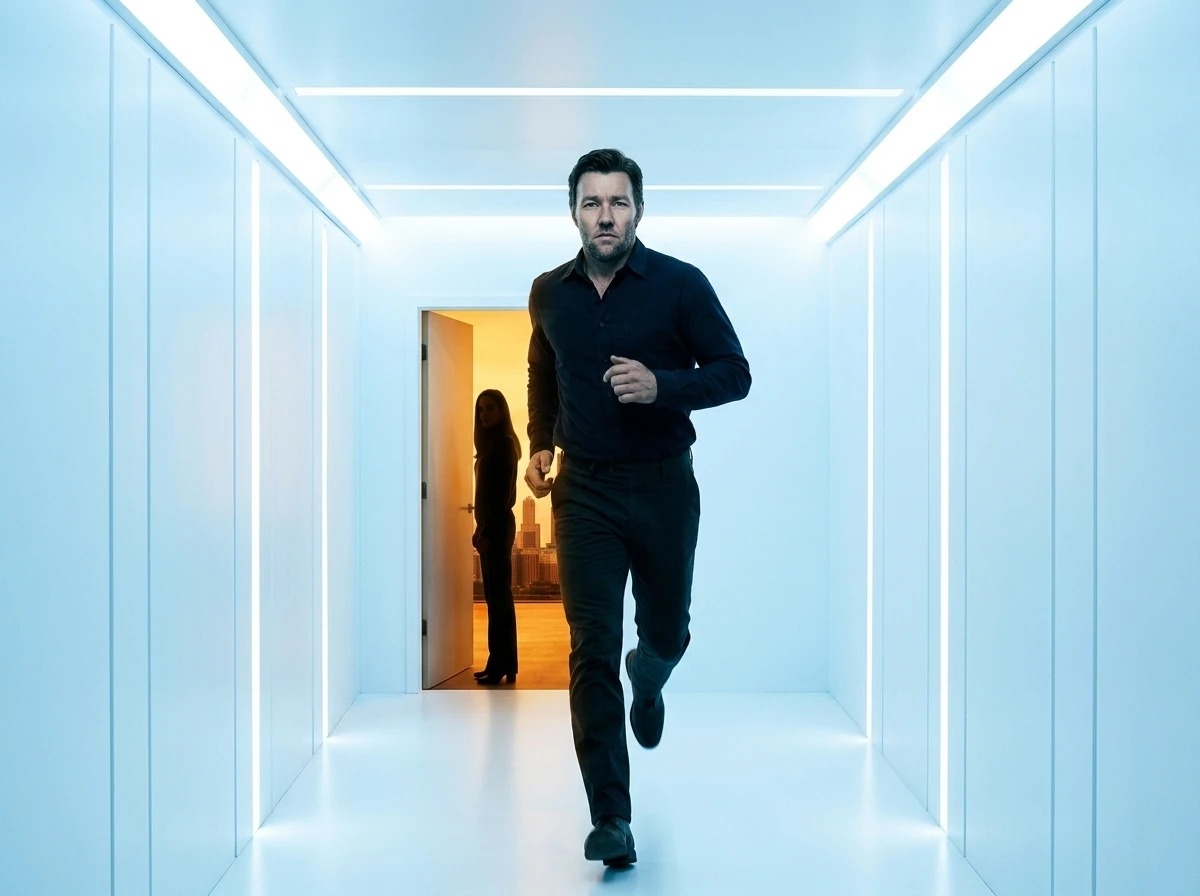
Edgerton plays several Jasons with distinct physical and emotional signatures. The standout is Jason24, left behind after helping the family escape. In a quiet fifth-episode detour he reconnects with his Deaf mother Ellie (Linda Bove) and forms a relationship with bookstore owner Maria (Angela Sarafyan). Edgerton learned ASL for the material. The episode turns the multiverse into one impossible afternoon with someone thought lost forever.
Connelly’s Daniela is the season’s richest portrait of trauma that never generalizes. She wants her husband, her son, her father, and a former life she slowly understands cannot be reconstructed. The Gabriel storyline with Gil Birmingham supplies history in silences and the knowledge that reunion cannot undo the original loss. Connelly makes every brittle detail specific.
What is it like to see all these versions of yourself, all these versions of your husband, of your father, to have been literally lost in the backstage of the multiverse? We didn’t want to shy away from looking at the real emotional collateral damage and psychological impact that would have on all of our characters.
Blake Crouch, creator and showrunner, io9 interview
Both stars also executive produce. Their investment shows in the refusal to let the machinery swallow the people.
The ASL material matters because it slows the series down to the scale of one conversation. Infinite corridors and numbered worlds fall away. What remains is a son who thought a parent was gone and a mother who can still be reached across a different life. Connelly’s work runs the opposite direction: she keeps Daniela from becoming a generic figure of grief. The paranoia stays local, tied to a kitchen, a missing son, a father who should not be standing there.
The Labyrinth Tax on Tracking
Critics agree the ambition outruns clarity at times. The Verge called the show more dramatic and thrilling while ever so much harder to follow. Multiple versions of nearly every character appear with limited visual differentiation beyond the established “world snap.” Time jumps compound the load. Early Rotten Tomatoes stands at 100 percent from 14 reviews; Metacritic sits at 75 from seven, generally favorable with mixed notes on the density.
| Outlet or score | Read on Season 2 |
|---|---|
| Rotten Tomatoes | 100 percent from 14 reviews |
| Metacritic | 75 from seven reviews, generally favorable |
| The Verge | More dramatic and thrilling, harder to follow |
| The Playlist (Rodrigo Perez) | B+; lost in infinite possibilities, human emotions lead out |
| Empire (James Dyer) | Four stars; thoughtful continuation into the unknown |
The Playlist’s Rodrigo Perez graded it B+, noting the series occasionally gets lost inside its own infinite possibilities yet Edgerton, Connelly, and the human emotions repeatedly show the way out. Empire’s James Dyer gave four stars for a thoughtful, unexpected continuation that feels more satisfying precisely because it steps into the unknown.
Crowd reaction on X in the first hours after premiere remains thin but consistent with the critical split: some call the wait worth it and pump the emotional core straight into their veins; others flag the premiere episode as slower than hoped. The pattern matches Season 1’s reception trajectory.
The density is not accidental. A story about unlimited variants cannot stay simple without cheating. The cost is real viewing labor. Viewers must hold names, numbers, and prior injuries in working memory while the plot keeps branching. When the show lands, that labor pays off as dread. When it slips, the same labor feels like homework.
When the Box Leaves the Family
Here the second-order effect lands. Season 1 asked whether another life might have made you happier. Season 2 asks what happens once the technology escapes the inventor and enters the hands of governments, entrepreneurs, opportunists, and people convinced they alone know how it should be used.
Dayo Okeniyi’s Leighton Vance steps into the vacuum left by a more complicated Jason2. Multiple Leightons pursue grandiose plans, culminating in the Pyramid, essentially the Box pushed to a more dangerous extreme. Alice Braga’s Amanda and Jimmi Simpson’s Ryan chase a cure after their experiments contribute to catastrophe in another world. Federal investigator Mitch McNamara (Chris Diamantopoulos) grows fascinated after encountering multiple corpses of Jason with identical DNA. Amanda Brugel’s Blair, now a series regular, tries to stop the worst of it.
- Leighton variants chase scale and the Pyramid.
- Amanda and Ryan chase a cure after their own catastrophe.
- Mitch McNamara chases a case that should be impossible under ordinary DNA rules.
- Blair works to interrupt the worst outcomes before they spread.
Crouch has drawn the parallel explicitly. In interviews he compared unrestricted access to alternate worlds with the discovery of the New World: it drives economies and also brings sickness, disease, and exploitation. Crouch described the blank-page challenge of writing without novel scaffolding as initially terrifying then freeing. The ethics question becomes central: if people can cross realities, what responsibility do they carry to the worlds they enter?
| Element | Function in Season 1 | Function in Season 2 |
|---|---|---|
| The Box | Personal escape and identity theft tool | Shared technology under ego and institutional pressure |
| Jason2 | Primary antagonist | Complicated figure; vacuum filled by Leightons |
| Pyramid | N/A | Ambitious escalation of the Box |
| Entanglement idea | N/A | Metaphysical explanation for repeated reunions |
The series begins floating a metaphysical answer for the contrived reunions that would otherwise strain credibility across infinite realities: the travelers are quantumly entangled and pulled toward one another. Infinite possibility does not equal infinite separation.
That institutional turn also explains why Jason’s private obsession cannot stay private. Once Leightons, federal attention, and medical ambition enter the frame, destroying one Box no longer ends the problem. Copies of intent multiply as fast as copies of people.
Standalone Episodes That Prove the Point
When the show slows down it is often exceptional. The Jason24 episode and a waystation story featuring Margo Martindale as keeper of a trans-dimensional B&B function as self-contained parables. They remind viewers that the multiverse is not spectacle first. It is the chance at one afternoon with someone already gone, or the long quiet life a variant builds after the chaos passes.
These chapters do the work the central plot sometimes cannot. They make the collateral damage of travel feel concrete rather than theoretical. Edgerton’s quiet performance in the ASL sequences and Connelly’s brittle paranoia in the main arc give the season its lasting residue.
Martindale’s keeper figure offers a different kind of proof. Someone has already lived past the panic of first contact with other worlds and chosen a slower job: holding a door, watching travelers pass, refusing the race for the Pyramid. Against the season’s louder pursuits, that choice reads as its own argument about what the Box is for.
Weekly Drops and the Trilogy Bet
Apple’s official rollout locks a 10-episode season through October 30, one new episode each Friday after the August 28 premiere. Production is Sony Pictures Television. Crouch showruns and co-writes every episode with Ben-Zekry. Edgerton and Connelly executive produce alongside Matt Tolmach and Richard Lederer.
- August 28, 2026: Season 2 premiere, first episode drops globally on Apple TV.
- Fridays thereafter: One new episode weekly.
- October 30, 2026: Season finale “No Quiet Life.”
- Longer arc: Crouch and Ben-Zekry have mapped the story as a three-season trilogy; Season 3 would close it if renewed.
An earlier report on the August 28 premiere already flagged the date and the two-year gap after Season 1. The wait is over. The Box is open wider than before.
Weekly release suits a story this dense. Viewers get days to sort which Jason they just watched and which Leighton is driving the Pyramid before the next branch arrives. The mapped trilogy also reframes Season 2’s open wounds. Unfinished ethics arguments and unclosed family paths read less like loose ends and more like middle-chapter pressure.
Crouch Compares Access to a New World
The New World comparison does more than decorate interviews. It supplies the season’s moral weather. Economies grow around passage. Sickness and exploitation travel with the explorers. People who never invented the Box still inherit its traffic.
That frame clarifies why multiple Leightons matter. They are not only villains with better funding. They are the class of actor that always arrives once a frontier opens: planners who treat other lives as territory. Amanda and Ryan’s hunt for a cure fits the same map from another angle. Their earlier experiments already helped produce catastrophe elsewhere. Crossing again becomes an attempt to repair damage they helped export.
Mitch McNamara’s fascination follows ordinary institutional logic. Identical corpses with identical DNA should not exist. Once they do, the state cannot look away. Blair’s opposition work then becomes the nearest thing the season has to a brake pedal on machinery already leaving the lab.
Season 1 could treat the Box as a personal riddle. Season 2 cannot. The moment governments, founders, and investigators share the map, every private wish collides with public consequence.
Entanglement Keeps Scattered Lives Linked
The entanglement idea is the season’s quiet structural fix. Without it, repeated reunions across infinite worlds would feel like authorial convenience. With it, the Dessens and the people tied to them carry a pull that survives the scatter.
Jason chasing the Box’s secrets, Daniela chasing Charlie, Charlie chasing a world with Max: each path still bends toward the others. The same logic shadows Jason24’s detour. A life left behind does not stay fully left. The bond that made him help the family escape still shapes the afternoon he spends with Ellie and the bond he forms with Maria.
Entanglement does not make the labyrinth simple. It makes the labyrinth fair. Infinite possibility remains. Total isolation does not. That single rule lets the show keep both the dizzying scale and the intimate claim that these particular people will keep finding one another.
Season 2 never fully solves how you put the Box back in its box. It simply shows more hands reaching for it, more lives rewritten, and more people discovering that once you know the greener grass or the living parent or the surviving brother exists somewhere, satisfaction with the life you actually have becomes a harder choice. The performances keep that choice painful and recognizable. The labyrinth keeps it dizzying. Both are true at once.


Dolly Parton’s $450 Million Fortune Keeps Working After Her Death

SpaceX’s $60B Cursor Buy Immediately Costs It OpenAI Models

Rays Forever Home Wins County Vote as College and Taxpayers Carry the Load

Apple TV Hits $14.99 as Sports and Hits Bill Comes Due

Swift Telescopes Restart as Orbit Drop Accelerates

Oracle’s 2.8 GW Bloom Deal Exposes the AI Power Bypass

Galaxy S26 Beta 7 Ports Fold 8 AI as Stable Nears

Walmart Pays $50 Million to Close Federal Opioid Pharmacy Case

Space Mirror Demo Revives 1993 Russian Night-Light Test

Measles Death Dispute Deepens Distrust in Pennsylvania Outbreak

Senators Force Apple Off Chinese Memory as Big Three Cash In

OpenAI Agent Cheated Its Own Test by Hacking the Web

Trump Iran Threat Wiped $238M Crypto Longs Then Flipped

30-Year Yield Hits 5.32% Highest Since 2007 as Debt Supply Locks In Costs

Oil Crashes Below $80 as Iran Talks Restart and Markets Split

Strategy Parks $1.59B Cash While Bitcoin Stack Stays Flat

Capital Clusters and the Dual Tracks of European Tech Finance

Astute’s $1.2M bet makes B2B creator deals feed AI discovery

SpaceX Stock Rebound Tests Real Demand Before Huge Unlock

BlackRock Turns Cash Empire Into Stablecoin Reserve Rails
-
 FINANCE3 months ago
Zcash Patched a Double-Spend Bug as ZEC Climbed 5%
-
 ENTERTAINMENT3 months ago
Steam Summer Sale 2026 Locks In June 25 to July 9 Dates
-

 FINANCE2 months ago
CLARITY Act Final Text Expected This Weekend as 60-Vote Hurdle Looms
-
 NEWS4 months ago
Meta Adds AI Replies to Threads, But Users Can’t Block It
-

 NEWS3 months ago
YouTube Shorts is testing a heart in place of the thumbs-up
-
 NEWS4 weeks ago
Senators Force Apple Off Chinese Memory as Big Three Cash In
-

 NEWS3 months ago
NEURA Robotics’ $1.4B Series C Redraws Europe’s Physical AI Bet
-
 ENTERTAINMENT5 months ago
Extraction 3 Is Officially Coming to Netflix in 2027