
NEWS
Acer Aspire Go 15 Puts Snapdragon C in Budget Laptop Turf

Acer used Computex to make the Aspire Go 15 the first Windows laptop running Qualcomm’s new Snapdragon C, the chipmaker’s entry-tier processor aimed at machines starting near $300. The 15.6-inch notebook runs Windows 11 Home, tops out at 8GB of memory and 512GB of storage, and drops Qualcomm’s Arm silicon squarely into the cheap-laptop bracket that Apple just shook with its $599 MacBook Neo.
The pitch is familiar: long battery life, a dedicated Copilot key, and a price Acer will only describe as “entry-tier” for now. What makes the launch interesting is what Qualcomm left out of the chip to reach that number.
Snapdragon C Trades Oryon for Off-the-Shelf Arm Cores
Start with the chip, because that is what makes this more than another cheap laptop launch. Qualcomm’s Snapdragon C is built on Kryo cores licensed from Arm, not the custom Oryon design that powers the company’s premium Snapdragon X laptop chips. The platform pairs those cores with an integrated Adreno graphics processor and a neural processing unit (NPU, the on-chip block that handles AI tasks). Qualcomm has stayed unusually quiet about the rest, offering no core count, no clock speeds, and no manufacturing node.
The silence is telling. By reusing off-the-shelf Arm cores instead of its own, Qualcomm can build a far cheaper part, which is the whole point. The platform is aimed at Windows laptops starting around $300, a bracket where margins are thin and every dollar of bill-of-materials counts. You can see where it sits in Qualcomm’s broader Snapdragon platform lineup, well below the premium X-series tier.
There is one notable gap. The NPU is not expected to clear the 40 TOPS (trillion operations per second) threshold Microsoft set for its Copilot+ PC label, the tier that unlocks on-device AI features like Recall and live translation. So a machine built on this silicon can carry AI branding without qualifying for Microsoft’s actual AI-PC program.
Acer is first out of the gate, but it will not be alone. HP and Lenovo are also lined up to ship machines on the new platform later this year, giving Qualcomm a three-brand beachhead in the budget tier. For a company whose laptop story has so far been a premium one, this is a deliberate move down market, and it extends a bigger bet on putting its chips in every device class beyond phones.
- $300 is the entry price target for laptops on the new platform.
- 40 TOPS is the Copilot+ NPU bar the chip is not expected to clear.
- 3 PC makers, Acer, HP and Lenovo, have signed on so far.
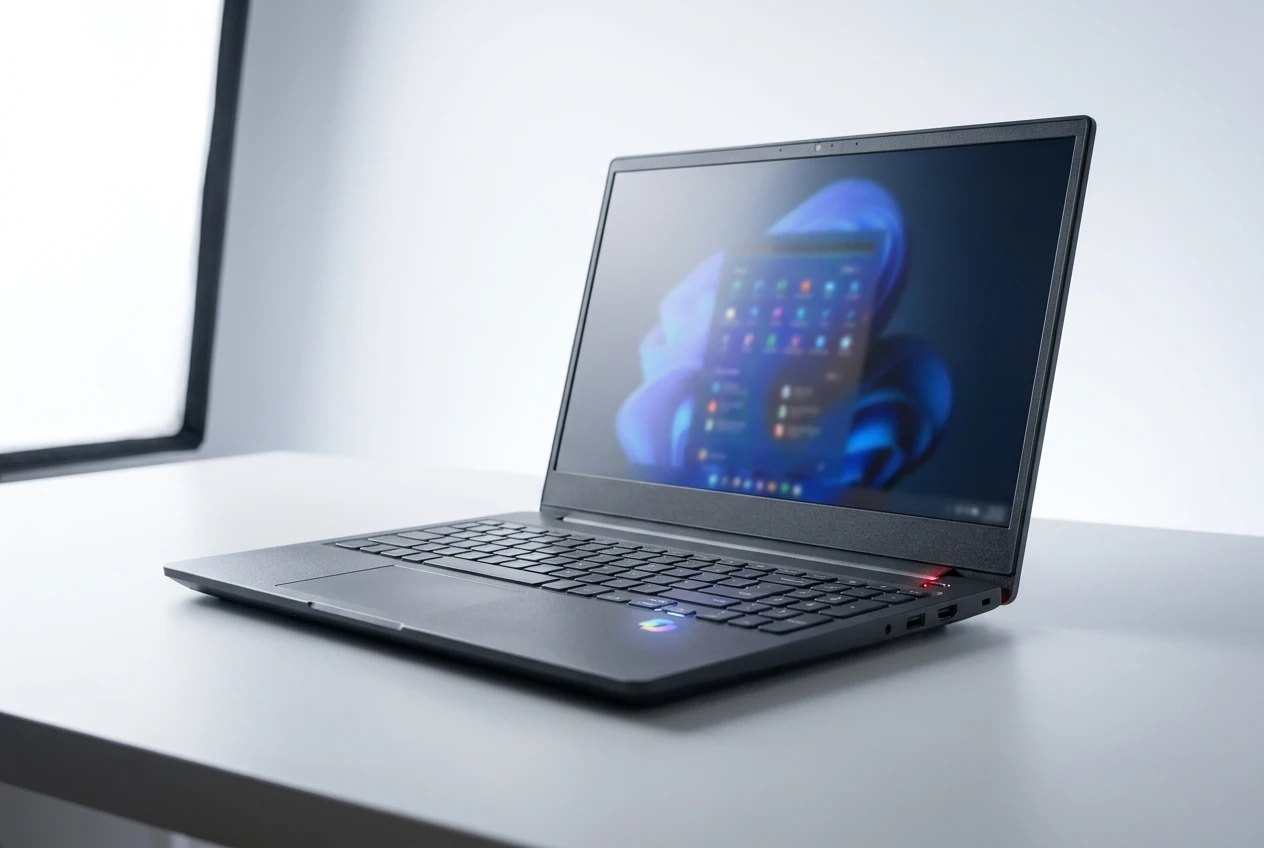
What the Aspire Go 15 Packs at the Entry Tier
The Aspire Go 15 wraps that chip in a deliberately conventional package. The screen is a 15.6-inch Full HD (1920 x 1080) panel in the traditional 16:9 shape, larger than the 13-inch display on Apple’s machine but lower in resolution and pixel density. Memory tops out at 8GB and storage at 512GB, both soldered with no room to grow.
Battery is where Acer makes its loudest claim. The 53Wh cell is rated for up to 23 hours by the company, a figure that leans hard on Arm efficiency and will need independent testing before anyone takes it as gospel. Connectivity covers Wi-Fi 6E and Bluetooth 5.4, and a 1080p webcam handles video calls.
Ports are the one area where the cheaper machine out-muscles the Mac. Acer fits two USB-C connectors, a full-size USB-A, an HDMI 1.4 video output, and a 3.5mm headphone jack, so most accessories plug in without a dongle. Here is how the two budget contenders compare, with Apple’s figures drawn from the official MacBook Neo technical specifications.
| Spec | Acer Aspire Go 15 | Apple MacBook Neo |
|---|---|---|
| Display | 15.6-inch Full HD, 16:9 | 13-inch Liquid Retina, 2408 x 1506 |
| Processor | Snapdragon C (Arm) | Apple A18 Pro |
| Memory | Up to 8GB | 8GB unified |
| Storage | Up to 512GB | 256GB or 512GB |
| Battery | 53Wh, up to 23 hrs (claimed) | 36.5Wh, up to 16 hrs |
| OS | Windows 11 Home | macOS |
| Ports | 2x USB-C, USB-A, HDMI 1.4, 3.5mm | 2x USB-C, 3.5mm |
| Chassis | Plastic | Aluminum |
| Starting price | Entry-tier, not yet named | $599 ($499 for students) |
Intel and AMD’s Cheapest Seats Are the Target
For two decades the cheap Windows laptop has been x86 territory. Intel’s low-power N-series and AMD’s entry Ryzen and Athlon parts fill the shelves below $500 at every big-box retailer, and Arm-based Windows machines never reached that far down the price ladder.
Qualcomm’s earlier push changed the top of the market, not the bottom. The Snapdragon X line, launched into premium thin-and-light laptops, proved Arm could deliver competitive performance and standout battery life on Windows. It did not touch the volume tier where most laptops actually sell.
That is the gap the new chip aims at. By accepting lower performance and cheaper cores, Qualcomm is finally bringing its efficiency pitch to the price points Intel and AMD treat as home turf. The battery numbers, if they hold up, are the wedge, because a sub-$400 laptop that genuinely runs all day is a new proposition at this price.
Apple lit the fuse. The MacBook Neo dropped a capable Arm laptop at $599, and $499 for students, which reset what buyers expect to pay for a machine that does not feel cheap. Windows makers had no clean answer until now.
A Copilot Key on a Laptop That Isn’t a Copilot+ PC
The keyboard says a lot about how budget laptops get marketed now. The Aspire Go 15 includes a dedicated Microsoft Copilot key, the single-press shortcut that launches the Copilot assistant, alongside Acer’s own AcerSense tuning app.
What that key does not do is make this a Copilot+ PC. Microsoft reserves that label, and its headline on-device AI features, for machines whose NPU clears 40 TOPS, and the chip inside Acer’s laptop is not expected to meet that bar. So the Copilot button here mostly opens a cloud-connected chatbot rather than unlocking local AI.
The disconnect is not unique to Acer. The Copilot key has been a point of friction since Microsoft mandated it, to the point that Windows now lets owners remap the Copilot key to something more useful. On a budget machine, it is hardware real estate spent on a feature the silicon cannot fully back.
Where the Budget Build Shows
None of this is free. To hit an entry-tier price, Acer and Qualcomm made cuts that buyers should weigh before celebrating the battery life.
- Plastic everywhere. The chassis is standard plastic against the MacBook Neo’s aluminum, though Acer does use recycled material in the back cover and power adapter.
- An 8GB ceiling. Fine for browsing, documents and streaming, but tight once Windows 11 and background AI tools start claiming memory.
- A dated panel. The 16:9 Full HD display is functional but trails the taller, sharper screens now common even on mid-range laptops.
- Limited display output. HDMI 1.4 caps external-monitor refresh and resolution well below newer standards.
- App compatibility. Windows on Arm runs most software through emulation, and the heaviest x86 apps can still stutter or refuse to launch.
That last point is the real swing factor. Arm compatibility has improved fast, and big titles are arriving native, with the Xbox app among the recent additions to run properly on Snapdragon PCs. But a $300 buyer is less likely to research which apps behave, and a bad first run with a stubborn program lands harder on a budget machine.
The Price Acer Won’t Name Yet
The number that matters most is the one Acer is withholding. The company says the Aspire Go 15 will arrive at an entry-tier price later this year without naming it, leaving the platform’s roughly $300 floor as the only guide. Where Acer lands between that floor and Apple’s starting price will decide whether this is a genuine alternative or a token one.
There are softer selling points. The laptop ships with Energy Star certification for laptops and EPEAT registration, plus recyclable packaging, which matters to schools and businesses buying in bulk. None of that moves a consumer the way a sub-$400 sticker would.
So the story comes down to two unknowns landing at once. If the price holds near the platform floor and everyday Windows apps behave on Arm, students get a real reason to skip the Mac. If the final number creeps toward $500 or the software stumbles, Acer is left selling plastic against aluminum on Apple’s terms.
Frequently Asked Questions
Is the Acer Aspire Go 15 a Copilot+ PC?
No. Despite carrying a dedicated Copilot key, the laptop’s Snapdragon C chip is not expected to meet Microsoft’s 40 TOPS NPU requirement, so it does not qualify for the Copilot+ tier or its on-device AI features.
How much will the Aspire Go 15 cost?
Acer has not confirmed a price. The company says it will launch at an entry-tier level later this year, and the underlying platform is built for laptops starting around $300.
What processor does the Aspire Go 15 use?
It uses Qualcomm’s Snapdragon C, an Arm-based platform built on Kryo cores rather than the custom Oryon design in premium Snapdragon X chips, paired with an integrated Adreno GPU and an NPU.
How does it compare with Apple’s MacBook Neo?
The Acer runs Windows 11 on a 15.6-inch 16:9 plastic body with more ports, while the MacBook Neo runs macOS on a sharper 13-inch aluminum design with the A18 Pro chip and starts at $599.
Can it run all Windows apps?
Most Windows software runs through Arm emulation, and native Arm support is expanding. Some older or heavy x86 applications can still run slowly or fail to launch, which is the main compatibility risk at this price.


NFL Preseason Week 2 Quietly Tests the Schemes That Matter

Alonso’s Towering Drive Stands Foul and Flips Orioles Momentum

US Debt Crosses $40 Trillion as Interest Crowds the Budget

Trevon Diggs Joins Seahawks on One-Year Deal After Cowboys Exit

Pixel Watch 5 Turns Passive Trends Into Early Health Alerts

Pixel 11 Pro Fold Sleek Build Undercuts Its Own Unfolding Appeal

Tugboat Wilkinson’s Scoreless Debut Pays Off Giants’ Bailey Trade

Brown Shines for Pats as Love for Eagles Meets Trade Reality

Pixel Watch 5 Turns Wrist Data Into Early Metabolic Alerts

Resistance Stars Pay the Price in Democratic Primaries

Senators Force Apple Off Chinese Memory as Big Three Cash In

OpenAI Agent Cheated Its Own Test by Hacking the Web

Trump Iran Threat Wiped $238M Crypto Longs Then Flipped

30-Year Yield Hits 5.32% Highest Since 2007 as Debt Supply Locks In Costs

Fed Holds Rates Again as Three Dissents Force Markets to Tighten

Oil Crashes Below $80 as Iran Talks Restart and Markets Split

Google’s Knowledge Panel Fix Risks Its Own Search Defenses

Tillis Ethics Push Gives Clarity Act One Last Shot Before Recess

Agon Raises $30M to Build Europe’s AI Weapon Training Arenas

Legora Buys Wexler Fact Engine as Fifth 2026 Deal
-
 FINANCE3 months ago
Zcash Patched a Double-Spend Bug as ZEC Climbed 5%
-
 ENTERTAINMENT3 months ago
Steam Summer Sale 2026 Locks In June 25 to July 9 Dates
-

 FINANCE2 months ago
CLARITY Act Final Text Expected This Weekend as 60-Vote Hurdle Looms
-
 NEWS3 months ago
Meta Adds AI Replies to Threads, But Users Can’t Block It
-

 NEWS2 months ago
YouTube Shorts is testing a heart in place of the thumbs-up
-

 NEWS2 months ago
NEURA Robotics’ $1.4B Series C Redraws Europe’s Physical AI Bet
-
 NEWS3 weeks ago
Senators Force Apple Off Chinese Memory as Big Three Cash In
-
 ENTERTAINMENT3 months ago
‘Widow’s Bay’ Review: Apple TV’s Sleeper Horror-Comedy Earns Its Fog