
NEWS
NVIDIA’s Open-Source AI Agent Tools Hide a Moat Play

NVIDIA has put a large collection of open-source physical AI agent tools and skills on GitHub, letting autonomous coding agents call its Omniverse, Isaac, Cosmos and Jetson frameworks to automate robotics, factory and autonomous-vehicle work. Early users including contract manufacturers Pegatron and Foxconn say the approach has already cut training time and lifted production yields.
On the surface it reads as generosity: free repositories, no licence fee, and ready-made plug-ins for coding assistants like Claude Code and Codex. But every skill is wired to call NVIDIA’s own simulation frameworks and run them on NVIDIA chips, which turns the free toolkit into the broadest on-ramp the company has yet built to its paid stack.
What NVIDIA Put on GitHub
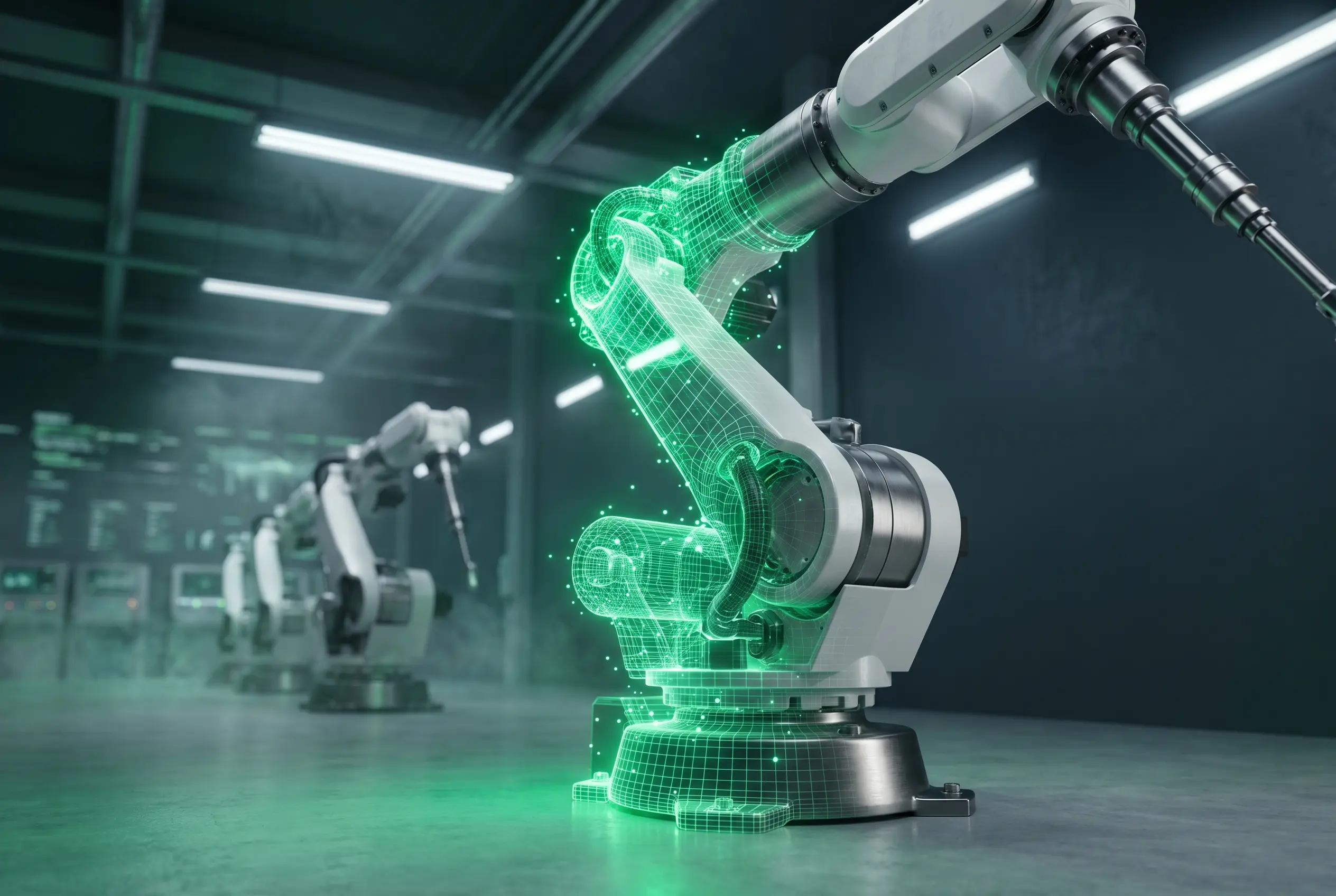
The release does one structural thing: it converts NVIDIA’s catalogue of simulation and hardware software into discrete, agent-callable skills. Instead of an engineer hand-configuring each stage of a development pipeline, a coding agent reads a skill that spells out which tool to call, what output to produce, and how to verify the result holds up. According to the open-source physical AI agent release, the skills live inside the NVIDIA Agent Toolkit and work with any coding agent.
Six core frameworks sit underneath, each now reachable through plain-language instructions:
- Cosmos – world foundation models that reason about and generate physical scenes
- Omniverse – libraries for simulation and industrial digital twins
- Isaac – robotics simulation and robot-learning tools
- Jetson – the edge platform that runs models on real hardware
- Metropolis – vision AI for video analytics
- Alpamayo – models aimed at autonomous driving
Distribution is deliberately wide. The tools are posted on the skills.sh public catalogue and packaged as plug-ins inside the Claude Code and Codex marketplaces and Vercel’s Skill Marketplace. That reach mirrors the logic behind Solana’s open-source agent toolkit for developers, where distribution matters more than any single feature.
The Factory Numbers Carrying the Pitch
Most of the marketing weight rests on three Taiwanese manufacturers that piloted the skills on real production lines. The common thread is synthetic data: instead of photographing thousands of flawed parts to train an inspection model, a Defect Image Generation skill manufactures the defective images on demand, in simulation, using the Isaac robotics simulation platform and related tools.
| Company | What it used | Reported result |
|---|---|---|
| Pegatron | Defect Image Generation skill for synthetic visual data | 67% cut in model training and deployment time |
| Delta Electronics | Same synthetic-data method on metal busbar soldering | 17% higher defect-detection rate |
| Foxconn | Early error detection in assembly | About 3% gain in first-pass yield |
The gains are narrow by design and worth reading literally. The headline 67% covers training and deployment time, not total factory output; the detection improvement applies to one defect type, busbar soldering; the yield lift is measured on first-pass units that clear inspection without rework. All of it depends on running NVIDIA’s simulation software to generate the data in the first place.
Why the Free Tools Lead Back to NVIDIA’s Stack
NVIDIA has run a version of this play before. CUDA (Compute Unified Device Architecture, the programming layer that ties software to NVIDIA GPUs) became indispensable not because it was closed, but because a generation of developers learned on it. Once your code is tuned for one architecture, a faster competing chip stops being enough to make you switch.
The physical AI toolkit extends that logic one level up. The skills are open and forkable, yet each assumes NVIDIA’s Omniverse simulation platform, NVIDIA’s world models, and NVIDIA’s edge hardware at the other end. Adopt the agent workflow and you adopt the substrate underneath it. The moat moves up a layer, from silicon to skills.
AI agents are revolutionizing software development, and that shift is now coming to physical AI, extending into the systems that will transform transportation, manufacturing, healthcare and robotics.
That was Jensen Huang, NVIDIA’s founder and chief executive, in the launch announcement. Analysts who track the company read the timing as defensive as much as visionary. NVIDIA’s hardware lead is under more pressure than it was two years ago, with cloud buyers and rivals designing their own accelerators, and becoming the default platform for open physical AI development keeps developers inside the tent even if a cheaper chip appears. That linkage between software reach and silicon demand showed up plainly in recent chip-stock moves around NVIDIA.
None of this makes the tools less useful. Developers get a genuine shortcut. The cost is that the next decade of robotics and factory code gets written against NVIDIA’s stack, which is exactly the point.
The Security Layer Wrapped Around the Agents
Handing autonomous agents control of simulation pipelines and edge devices raises an obvious question: what stops them going off-script. NVIDIA’s answer is a pair of components bundled into the toolkit that sit between the agent and anything it can touch.
Two pieces do the work:
- NVIDIA NemoClaw – a security blueprint that applies policy-based privacy and access rules to what an agent is allowed to do
- NVIDIA OpenShell – a runtime that enforces those policies whether the code executes locally or in the cloud
The pitch is that policy-based privacy guardrails travel with the agent rather than living in a separate review step. For a factory operator wary of letting software reconfigure a live production line, that governance layer is as much a part of the sale as the speed gains, and it is one more NVIDIA-defined standard baked into the workflow.
The Names Already Building With It
Adoption beyond the three pilot factories is already broad. NVIDIA lists Agile Robots, Cadence, Dassault Systemes, PTC, Siemens, Synopsys and TSMC among the companies using its physical AI tools.
In industrial simulation, Siemens and Cadence are wiring the skills into Omniverse to build interactive digital twins. Entire semiconductor fabs can be modelled and optimised in software before construction starts, a workflow NVIDIA has been pushing with Taiwanese manufacturers running NVIDIA digital twins.
Autonomous-vehicle teams are using the agents differently. They feed real fleet data in and have the tools reconstruct it into photorealistic simulated driving scenes, multiplying the rare edge cases a self-driving system needs to train against.
Healthcare is the newest entry. Developers are testing clinical and service robots in simulation before those machines reach an occupied hospital ward, where a mistake is costly in a different currency than a missed solder joint.
Whether that breadth hardens into permanent dependence is the open question. If the skills become the default way robotics and factory code gets written, NVIDIA owns the agentic layer of physical AI the way it already owns AI training; if open forks drift toward rival chips, the free toolkit ends up being exactly what it looks like, a helpful shortcut with no strings. The next year of GitHub commits, not the launch-day numbers, will settle which one it is.
Frequently Asked Questions
Are NVIDIA’s physical AI agent tools free?
Yes. The tools and skills are open source and posted publicly on GitHub and skills.sh at no licence cost, and they are also distributed as plug-ins in the Claude Code, Codex and Vercel marketplaces. Running them at scale, however, assumes NVIDIA simulation software and hardware.
Do you need NVIDIA hardware to use them?
In practice, yes. The skills call NVIDIA frameworks and are built to run on NVIDIA GPUs and the Jetson edge platform, so meaningful use ties back to NVIDIA silicon even though the code itself is open and forkable.
What is NVIDIA NemoClaw?
NemoClaw is the security blueprint NVIDIA bundled with the toolkit. It applies policy-based privacy and access rules to what an autonomous agent can do, and it works alongside the OpenShell runtime, which enforces those policies whether code runs locally or in the cloud.
What efficiency gains have early users reported?
Pegatron reported a 67% reduction in model training and deployment time using a synthetic Defect Image Generation skill, Delta Electronics a 17% higher defect-detection rate on busbar soldering, and Foxconn roughly a 3% gain in first-pass manufacturing yield.
Where can developers download the tools?
The tools are available on GitHub and skills.sh, and as plug-ins in the Claude Code marketplace, the Codex marketplace and Vercel’s Skill Marketplace, plus NVIDIA Brev launchables. They work with any coding agent.


Replit Opens Its London Office Inside an AI Crowd

Straight Circle Trailer Lands Without a U.S. Date

Anemo Labs Bets £700,000 on an AI Sense of Smell

Nintendo Prices the Zelda 40th Switch 2 at $519

Copilot Capital Buys the Autopilot Already Running 90 GW

Ground A Raises €9.1 Million for a Pallet Laser

Gibney’s Musk Film Opens in Venice Without Its Subject

Torvalds Blames AI for a Full-Fat Linux 7.3-rc2

Dexter Returns Sharper, Older, and Stuck Between Killers

Meta’s Muse Agent Can Spend Before the Privacy Lock

Walter’s TWG Insists No Fraud as Insurer Probes Force Cleanup

30-Year Yield Hits 5.32% Highest Since 2007 as Debt Supply Locks In Costs

PCE Stays at 3.7% as Gas and Tariffs Outrun Coming Revisions

Evernorth S-4 Clears Path for Active XRP Treasury on Nasdaq

Astute’s $1.2M bet makes B2B creator deals feed AI discovery

Strategy Parks $1.59B Cash While Bitcoin Stack Stays Flat

Instinct Hits $2.5 Billion as AI Agent Access Sparks Trust Fights

Monzo chair Gary Hoffman exits after board revolt fallout

Oracle’s 2.8 GW Bloom Deal Exposes the AI Power Bypass

CLARITY Act Cloture Opens a Door Ethics Still Blocks
-
 FINANCE3 months ago
Zcash Patched a Double-Spend Bug as ZEC Climbed 5%
-
 ENTERTAINMENT3 months ago
Steam Summer Sale 2026 Locks In June 25 to July 9 Dates
-

 FINANCE2 months ago
CLARITY Act Final Text Expected This Weekend as 60-Vote Hurdle Looms
-
 NEWS4 months ago
Meta Adds AI Replies to Threads, But Users Can’t Block It
-
 ENTERTAINMENT5 months ago
Extraction 3 Is Officially Coming to Netflix in 2027
-

 NEWS3 months ago
YouTube Shorts is testing a heart in place of the thumbs-up
-

 NEWS1 month ago
Senators Force Apple Off Chinese Memory as Big Three Cash In
-

 NEWS3 months ago
NEURA Robotics’ $1.4B Series C Redraws Europe’s Physical AI Bet