
NEWS
Nvidia’s RTX Spark Ends Qualcomm’s Windows on Arm Monopoly

Nvidia unveiled the RTX Spark, its first consumer processor in more than a decade, at chief executive Jensen Huang’s GTC Taipei keynote on Monday, pairing a 20-core Arm-based Grace CPU with a Blackwell graphics engine and 128GB of memory inside a single laptop chip. The Windows on Arm package, known for months by the codename N1 and N1X, is set to ship this fall in laptops from Dell, HP, Lenovo and Microsoft.
That win comes at someone’s expense. Qualcomm spent two years turning Arm laptops into a real Windows category, and its exclusive claim to that category has now lapsed. Intel and AMD, which have split the laptop chip socket for a generation, suddenly face an Arm challenger carrying the strongest graphics brand in the room.
RTX Spark Lands With Grace, Blackwell, and 128GB
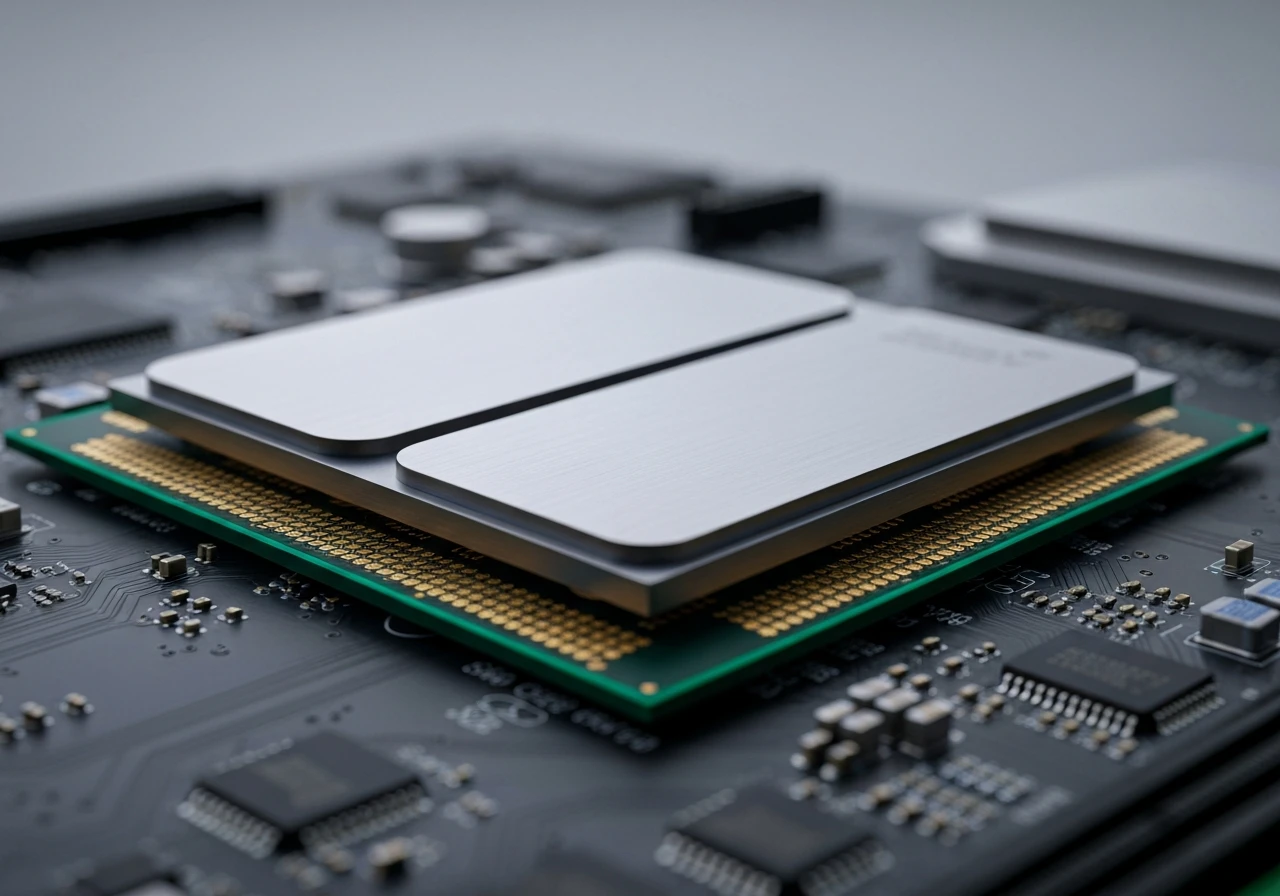
The chip Nvidia put on stage carries the name RTX Spark, though leakers tracked it for months as N1 and N1X. It is one package that fuses a 20-core Grace CPU, built on Arm’s instruction set, with a Blackwell graphics block of 6,144 CUDA (Compute Unified Device Architecture, Nvidia’s parallel-processing cores). The two halves talk over NVLink-C2C, the company’s chip-to-chip interconnect, and share a single pool of memory rather than splitting it the way a discrete-GPU laptop does.
Nvidia is selling it as more than a notebook processor. The pitch is an on-device AI machine with up to 1 petaflop of AI compute, fifth-generation Tensor Cores running FP4 (4-bit floating point, a low-precision format that speeds up AI inference), and enough memory to run sizeable models without a cloud round trip. The same silicon also carries the full RTX gaming stack, so DLSS (Deep Learning Super Sampling, Nvidia’s AI frame-generation feature), Reflex and G-SYNC come along, and Nvidia’s shift toward a single unified GPU control app carries over to the new chip.
The hardware reads like a workstation squeezed into a thin chassis. Reference laptops run as slim as 14mm and as light as roughly three pounds, with 14 to 16-inch OLED screens, while compact desktops will follow for creators and gamers. The numbers behind the pitch, drawn from the full RTX Spark hardware specifications Nvidia published alongside the keynote, are unusually dense for a mobile part.
- 6,144 Blackwell CUDA cores with fifth-generation Tensor Cores
- 128GB of unified memory shared across CPU and GPU
- 1 petaflop of AI compute aimed at on-device agents
- 14mm thin reference laptops weighing about three pounds
Qualcomm Seeded the Beachhead, Then Lost the Gate
Qualcomm built this market almost single-handed. Its Snapdragon X chips launched in 2024 as the silicon behind Microsoft’s Copilot+ push, the first Arm processors that made Windows laptops feel like a genuine answer to Apple’s M-series rather than a science project. For most of the two years since, if you wanted Windows on Arm, you wanted a Qualcomm machine.
The reason no one else shipped a rival was contractual. Qualcomm held an exclusivity arrangement with Microsoft covering Arm chips for Windows, and Arm chief executive Rene Haas confirmed that deal was set to expire. Once the exclusivity that kept rivals off the platform lapsed, the gate Qualcomm had been standing in front of simply opened.
Nvidia walked through it with a partner already in hand. MediaTek co-designed the Grace-class silicon that underpins Nvidia’s earlier GB10 superchip in the DGX Spark workstation, and that same engineering feeds the consumer push. Microsoft, for its part, used the keynote to detail its Windows platform plans built around RTX Spark, including new security primitives for on-device agents.
None of this kills Qualcomm. The company still ships the fastest Arm chip you can buy for Windows, and its newest Snapdragon parts keep a clear performance edge. What it lost is the thing that mattered most commercially: being the only name a laptop maker could call.
Grace Trails on Single Core, Gains on Multi
Nvidia has not published its own benchmark numbers, and the figures floating around come from pre-release leaks, so treat them as direction rather than gospel. On that basis the Grace CPU looks strong but not dominant. Leaked Geekbench 6 results put the N1X at roughly 3,096 single-core and 18,837 multi-core, which leaves it about a third behind the fastest Snapdragon on single-thread work while its multi-core figure lands near AMD’s Strix Halo laptop parts.
| Chip | CPU config | Leaked single-core | Leaked multi-core |
|---|---|---|---|
| Nvidia RTX Spark (N1X) | 20-core Grace (10+10) | ~3,096 | ~18,837 |
| Qualcomm Snapdragon X2 Elite Extreme | 18-core | ~4,074 | ~23,449 |
| Apple M4 Max | 16-core | ~30% above N1X | class leader |
So the ranking, if the leaks hold, runs Apple and Qualcomm ahead on raw CPU throughput, with Nvidia trailing on single-core but competitive on the multi-threaded loads that matter for video and rendering. The pre-release silicon reportedly operates in a 45 to 80-watt window, and Nvidia’s real edge was never the CPU score anyway. It is the graphics block sitting on the same die.
The x86 Laptop Bundle Meets an Arm Package
For two decades a Windows laptop meant a tidy division of labor. Intel or AMD supplied the processor, and when buyers wanted real graphics, Nvidia sold them a discrete GPU to bolt in alongside it.
RTX Spark collapses that arrangement. The CPU and the GPU now arrive as one part, which means a laptop maker can build a high-end machine without buying an x86 chip at all.
That lands hardest on the premium tier. Gaming and creator notebooks, the slices where a powerful GPU justifies the sticker price, are exactly where Nvidia already owns the silicon buyers care about most.
There is an irony baked into the move. Nvidia is now competing with the same Intel and AMD platforms that host the bulk of its discrete laptop GPUs, a bet that its brand pull outweighs the awkwardness of squeezing its own customers.
The threat has edges, though. Desktop gaming rigs still pair x86 chips with Nvidia cards, and corporate fleets will not swap their x86 software stacks overnight. This is a laptop wedge, not a clean sweep of the PC market.
From Tegra X1 to a Grace Comeback
Nvidia’s last consumer processor was the Tegra X1, the 2015 chip inside the Shield TV set-top box. After that, the company effectively walked away from selling CPUs to ordinary buyers and poured everything into discrete graphics and, later, the data center. The road back ran through several detours.
- 2015: Tegra X1 ships in the Nvidia Shield TV, the company’s last consumer CPU before this week.
- 2020 to 2022: Nvidia’s roughly $40 billion bid to buy Arm collapses under regulatory pressure and is abandoned.
- 2023 onward: Grace, Nvidia’s Arm-based server CPU, ships in data-center superchips and proves the design.
- 2025: The MediaTek-codesigned GB10 powers the DGX Spark desktop AI box.
- 2026: RTX Spark brings that lineage to consumer laptops.
The pattern matters because the consumer return is riding credibility Nvidia earned elsewhere. Grace was battle-tested in servers before it ever reached a notebook, and the company’s data-center machine has been minting cash, with recent chip-sector gains tied to Nvidia’s results giving it room to gamble on a category it abandoned a decade ago.
That history also explains the caution. Nvidia has tried and failed to crack consumer CPUs before, and the failed Arm acquisition showed how badly its ambitions can stall. This time it is arriving with a proven core and a graphics moat no rival can match.
Software, Emulation, and the Fall Test
The hardware is the easy part. The harder question is whether Windows on Arm runs the apps people actually use, because every x86 program that lacks a native Arm build leans on emulation, and emulation costs performance. Microsoft’s work on agentic features and a more secure shell, detailed at the GTC Taipei keynote in June, only matters if that compatibility layer holds up under daily load.
Gaming is the sharpest test of all. Native Arm titles are scarce, anti-cheat software has historically choked on emulation, and even a 6,144-core graphics block cannot help if a game refuses to launch. Nvidia’s RTX stack should soften the blow, and tuning work such as recent Windows 11 latency improvements hints at the kind of platform polish the launch will need.
Then there is price and supply. Nvidia and its partners are aiming at the premium end, and a long list of names has signed on for fall machines.
- ASUS, Dell, HP and Lenovo confirmed as launch partners
- Microsoft Surface and MSI joining the first wave
- Acer and GIGABYTE models slated to follow
If the fall laptops match the leaked benchmarks and Windows runs x86 apps cleanly on Grace, Qualcomm’s two-year head start shrinks to a footnote and Intel and AMD inherit a second Arm rival overnight. If the software stumbles the way the earliest Snapdragon X machines did, RTX Spark becomes a premium curiosity and the x86 socket keeps the volume it has always held.


Veridue Raises $4 Million to Speed Energy Deal Diligence

Healey Adds a £150m Rung for Northern Scale-Ups

Ten Deals Took Most of Europe’s August Tech Money

Holmes Hired Fielder to Film Her Last Days

Molten Bets £100m of Plc Cash on Late-Stage Tech

Garlinghouse Cited Dutch Gold, and London Got the Bars

byFounders Bets $4.3 Million on Fluencify After $2M ARR

Alpha Gang Puts A-List Stars on a Zellner Wager

Angel Bets a Recut PG-13 Chase on Ritchson and Wilson

Flex IT and T1A Combine to Own Corporate Device Supply

Walter’s TWG Insists No Fraud as Insurer Probes Force Cleanup

30-Year Yield Hits 5.32% Highest Since 2007 as Debt Supply Locks In Costs

PCE Stays at 3.7% as Gas and Tariffs Outrun Coming Revisions

Evernorth S-4 Clears Path for Active XRP Treasury on Nasdaq

Astute’s $1.2M bet makes B2B creator deals feed AI discovery

Strategy Parks $1.59B Cash While Bitcoin Stack Stays Flat

Instinct Hits $2.5 Billion as AI Agent Access Sparks Trust Fights

CLARITY Act Cloture Opens a Door Ethics Still Blocks

Oracle’s 2.8 GW Bloom Deal Exposes the AI Power Bypass

Amber’s €7M locks Mittelstand knowledge inside Europe
-
 FINANCE3 months ago
Zcash Patched a Double-Spend Bug as ZEC Climbed 5%
-
 ENTERTAINMENT3 months ago
Steam Summer Sale 2026 Locks In June 25 to July 9 Dates
-

 FINANCE2 months ago
CLARITY Act Final Text Expected This Weekend as 60-Vote Hurdle Looms
-
 NEWS4 months ago
Meta Adds AI Replies to Threads, But Users Can’t Block It
-
 ENTERTAINMENT5 months ago
Extraction 3 Is Officially Coming to Netflix in 2027
-

 NEWS3 months ago
YouTube Shorts is testing a heart in place of the thumbs-up
-

 NEWS1 month ago
Senators Force Apple Off Chinese Memory as Big Three Cash In
-

 NEWS3 months ago
NEURA Robotics’ $1.4B Series C Redraws Europe’s Physical AI Bet