
ENTERTAINMENT
Questlove’s Earth, Wind & Fire Doc Turns Hits Into History

Questlove’s Earth, Wind & Fire documentary, from the Roots drummer and Oscar-winning filmmaker Ahmir “Questlove” Thompson, now has a firm HBO landing: June 7 at 9:00 p.m. ET/PT, after a June 3 world premiere at the Tribeca Festival. The trailer sells more than a hit parade. It positions the nine-time Grammy-winning band as a spiritual, visual and cultural project built around Maurice White’s belief that pop could carry a cosmic charge.
That matters because Thompson is no longer just making music films one at a time. With this HBO project after Summer of Soul and Sly Lives!, he is building a screen archive for Black popular music, one where joy, pressure, invention and memory sit in the same frame.
The Trailer Sells a Bigger Case Than Nostalgia
HBO, Warner Bros. Discovery’s premium cable network, announced the May 21 release with the formal title Earth, Wind & Fire (To Be Celestial vs. That’s the Weight of the World), a two-hour film directed and produced by Thompson. The network’s own description says the film follows the band from its genesis through late founder Maurice White, then pushes into the philosophical and spiritual meaning behind the music through archives and interviews. The HBO documentary debut announcement gives the film its clearest shape: biography, performance film and cultural argument in one package.
- June 7: HBO debut at 9:00-11:00 p.m. ET/PT, with streaming on HBO Max.
- 119 minutes: the runtime listed by Tribeca for the feature documentary.
- June 3: world premiere date at the Beacon Theatre in New York.
The trailer’s promise is simple enough for casual viewers: archival footage, famous fans, big songs. The deeper sell is archive, not jukebox. The footage is being used to argue that the spectacle was the message, not decoration around it.
Tribeca Gives the Film a Live Stage
Tribeca Festival, the New York film and culture event founded after the attacks on the World Trade Center, chose the film as the opening night selection for its twenty-fifth edition. That slot carries its own meaning. The premiere is not tucked into a late-festival documentary lane; it opens the entire program at the Beacon Theatre with a performance by the band and The Roots, the hip-hop group co-founded by Thompson and Tariq “Black Thought” Trotter.
The Tribeca opening-night announcement says the festival will run from June 3 to June 14 and links the premiere to a long history of music-driven events. Cara Cusumano, Tribeca’s festival director and senior vice president of programming, described the pairing as a rare live event built around joy, creativity and community. Thompson, in the same announcement, called the project the result of two years of “deep research and creative magic.”
That live element changes the temperature. A standard streamer premiere asks viewers to press play at home. Tribeca turns the film into a public gathering, with the concert functioning as a second text after the documentary.
Maurice White Becomes the Center of Gravity
The smartest part of the HBO rollout is its focus on White, not only the songs. White was the band’s founder, producer, conceptual driver and one of its lead voices. He also carried the oddest, most durable part of the group’s identity: the conviction that astrology, metaphysics, African diasporic imagery, jazz discipline and mass pop could share one stage without apology.
The official Tribeca film program listing calls the movie a decades-spanning story of a legendary American band and its enigmatic founder. It lists Philip Bailey, Verdine White and Ralph Johnson among the credited participants, while noting the film’s line-drawn animation and archival concert footage. Those details point to a portrait built around design, not just testimony.
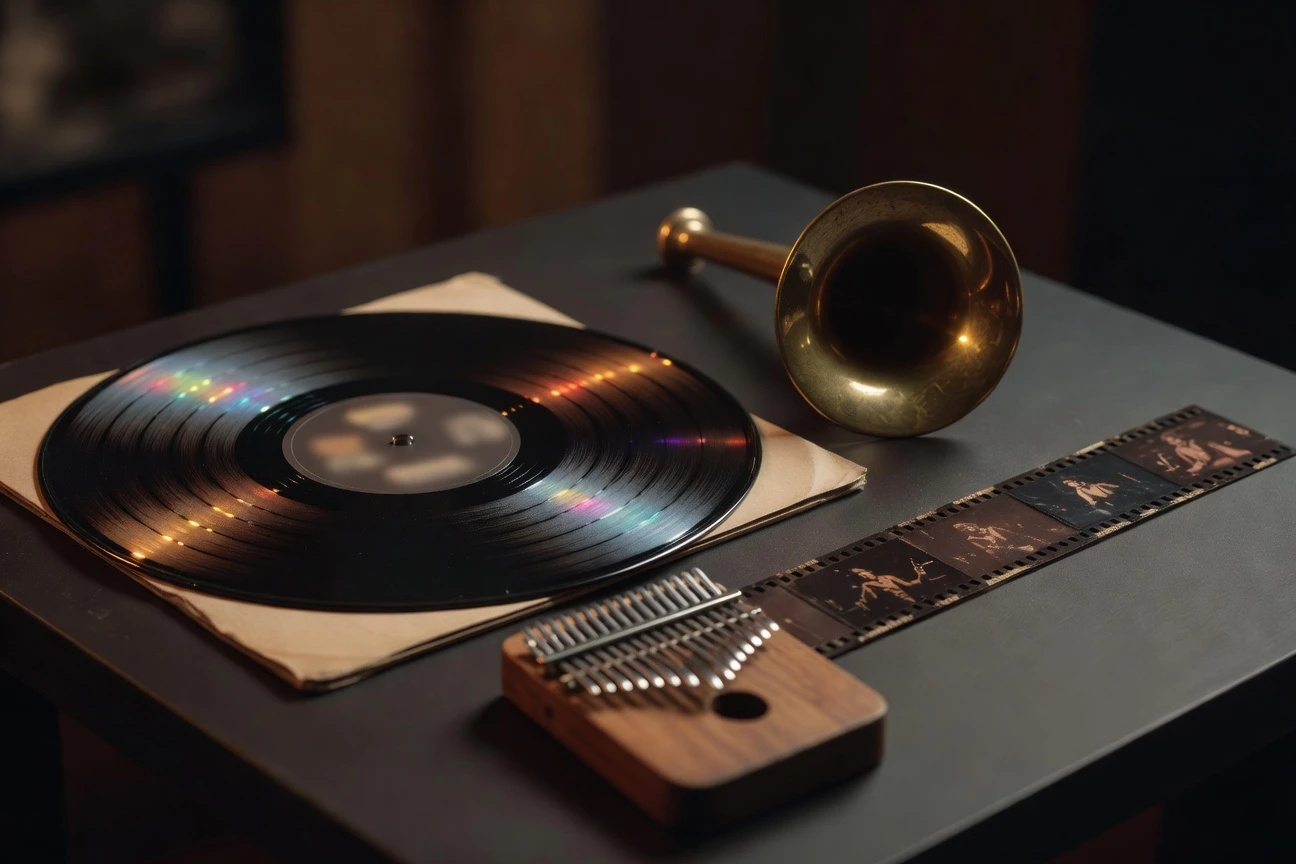
That is the part casual listeners may miss. White’s group made party records, wedding records, cookout records and arena records. But the same catalog also carried visual symbols, stage architecture, pyramids, kalimbas, horn charts and lyrics about ascent. In that sense, Maurice White’s design brief was hiding in plain sight for decades.
The Rock & Roll Hall of Fame, the Cleveland institution that inducted the group in the performer category, describes the band’s blend as funk, soul, jazz, Africana and pop melodicism, and says its grooves were repeatedly sampled by hip-hop artists. The Rock Hall’s Earth, Wind & Fire entry helps explain why the film has a larger job than biography. It has to make a familiar sound strange again.
Questlove’s Archive Trilogy Is Taking Shape
Thompson’s move into documentary has followed a clear pattern. First came a buried festival. Then came a funk pioneer whose genius carried heavy personal cost. Now comes a band whose public image is sunnier, but whose story also turns on ambition, pressure and control.
| Film | Subject | Primary Release Path | Archive Question |
|---|---|---|---|
| Summer of Soul | The Harlem Cultural Festival | Searchlight Pictures and Hulu | Why was a major Black cultural event left unseen for decades? |
| Sly Lives! | Sly and the Family Stone | Hulu and Onyx Collective | How did Black genius turn into burden under fame? |
| Earth, Wind & Fire | White’s band and its legacy | HBO and HBO Max | How did spectacle carry spiritual and cultural meaning? |
Summer of Soul, Thompson’s directorial debut, was presented by Searchlight Pictures as part concert film and part historical record about the Harlem Cultural Festival. The Searchlight Pictures page for Summer of Soul calls it a film about an event that celebrated Black history, culture and fashion. That phrasing fits the new HBO film too, even though the subject is a band rather than a lost festival.
Sly Lives!, Thompson’s follow-up about Sly and the Family Stone, premiered on Hulu through Onyx Collective, Disney’s content brand focused on creators of color and underrepresented stories. The Hulu release for Sly Lives placed the film beside interviews with André 3000, D’Angelo, Chaka Khan, Q-Tip, Nile Rodgers, George Clinton and Clive Davis. Put next to the new HBO project, a pattern emerges: Thompson is chasing artists whose joy became public property while their methods stayed under-examined.
The Guest List Makes a Cross-Genre Argument
The participant list is doing editorial work before anyone reviews the film. HBO names Philip Bailey, Verdine White and Ralph Johnson from the band, plus former members, managers, authors, family and admirers including former President Barack Obama, former First Lady Michelle Obama, Stevie Wonder, Lionel Richie, H.E.R. and Flea, the Red Hot Chili Peppers bassist.
That is not just a celebrity montage. It maps the reach of the group across political memory, R&B, pop songwriting, rock bass culture and younger soul. The Recording Academy, the organization behind the Grammy Awards, lists the band’s award and nomination history on the Recording Academy artist page, but awards alone do not explain why those names would line up for a documentary.
- Bailey, Verdine White and Johnson can speak to the mechanics of the band from the inside.
- The Obamas can speak to the music as shared American memory, not only entertainment.
- Wonder and Richie connect the band to peers who understood crossover without surrender.
- H.E.R. and Flea show how the sound moved into later generations and other genres.
The list also protects the film from becoming a museum piece. A band this sampled, covered and absorbed into public life needs witnesses from outside its own era.
HBO Gets a Music Film With Catalog Gravity
For HBO Max, Warner Bros. Discovery’s streaming service, the timing is useful. Music documentaries can cut through a crowded release calendar because they come with built-in songs, older fans, younger sample hunters and cultural-history readers. This one also arrives with a premiere event that gives the network more than a quiet Sunday night debut.
The business logic is plain, but the creative risk is sharper. Everyone knows “September” and “Let’s Groove.” Fewer viewers know how much discipline, belief and friction sat behind that lift. If Thompson’s film leans too far into celebration, it becomes a handsome greatest-hits package. If it leans into the archive with the same curiosity that powered his earlier work, the HBO project can give one of pop’s most beloved bands a tougher and richer frame.
That is why the trailer’s best promise is not the famous faces. It is the suggestion that a band associated with communal happiness can still surprise people when the camera stays on the blueprint.


Replit Opens Its London Office Inside an AI Crowd

Straight Circle Trailer Lands Without a U.S. Date

Anemo Labs Bets £700,000 on an AI Sense of Smell

Nintendo Prices the Zelda 40th Switch 2 at $519

Copilot Capital Buys the Autopilot Already Running 90 GW

Ground A Raises €9.1 Million for a Pallet Laser

Gibney’s Musk Film Opens in Venice Without Its Subject

Torvalds Blames AI for a Full-Fat Linux 7.3-rc2

Dexter Returns Sharper, Older, and Stuck Between Killers

Meta’s Muse Agent Can Spend Before the Privacy Lock

Walter’s TWG Insists No Fraud as Insurer Probes Force Cleanup

30-Year Yield Hits 5.32% Highest Since 2007 as Debt Supply Locks In Costs

PCE Stays at 3.7% as Gas and Tariffs Outrun Coming Revisions

Evernorth S-4 Clears Path for Active XRP Treasury on Nasdaq

Astute’s $1.2M bet makes B2B creator deals feed AI discovery

Strategy Parks $1.59B Cash While Bitcoin Stack Stays Flat

Instinct Hits $2.5 Billion as AI Agent Access Sparks Trust Fights

CLARITY Act Cloture Opens a Door Ethics Still Blocks

Oracle’s 2.8 GW Bloom Deal Exposes the AI Power Bypass

AI data centers win as RAM kits jump nearly 500 percent
-
 FINANCE3 months ago
Zcash Patched a Double-Spend Bug as ZEC Climbed 5%
-
 ENTERTAINMENT3 months ago
Steam Summer Sale 2026 Locks In June 25 to July 9 Dates
-

 FINANCE2 months ago
CLARITY Act Final Text Expected This Weekend as 60-Vote Hurdle Looms
-
 NEWS4 months ago
Meta Adds AI Replies to Threads, But Users Can’t Block It
-
 ENTERTAINMENT5 months ago
Extraction 3 Is Officially Coming to Netflix in 2027
-

 NEWS3 months ago
YouTube Shorts is testing a heart in place of the thumbs-up
-

 NEWS1 month ago
Senators Force Apple Off Chinese Memory as Big Three Cash In
-

 NEWS3 months ago
NEURA Robotics’ $1.4B Series C Redraws Europe’s Physical AI Bet