
NEWS
400-Year-Old Swedish Warship Resurfaces as Baltic Sea Hits Record Low

A 17th-century Swedish Navy warship, hidden beneath the Baltic Sea for nearly 400 years, has broken through the surface near Stockholm. The vessel emerged after water levels in the Baltic dropped to their lowest point since records began in 1886. What caused this rare event, and what does it mean for one of the world’s most fascinating underwater time capsules?
How a Sunken Warship Became Visible Again
8 The wooden planks of the ship’s well-preserved hull have since early February been peeking out above the surface of the water off the island of Kastellholmen, providing a clear picture of its skeleton. 1 Marine archaeologist Jim Hansson from Stockholm’s Vrak Museum of Wrecks confirmed the find to AFP. 1 Experts believe that after serving in the navy, the ship was sunk around 1640 to use as a foundation for a new bridge to the island of Kastellholmen.
The ship was not lost in battle or a storm. It was sunk on purpose. 1Hansson explained the logic: “This is a solution, instead of using new wood you can use the hull itself, which is oak” to build the bridge.
1 Archaeologists have yet to identify the exact ship, as it is one of five similar wrecks lined up in the same area to form the bridge, all dating from the late 16th and early 17th centuries. 4 However, the wreck is widely believed to be the Danish warship Gra Ulven (Gray Wolf), captured by Sweden in 1659 and sunk in 1670.
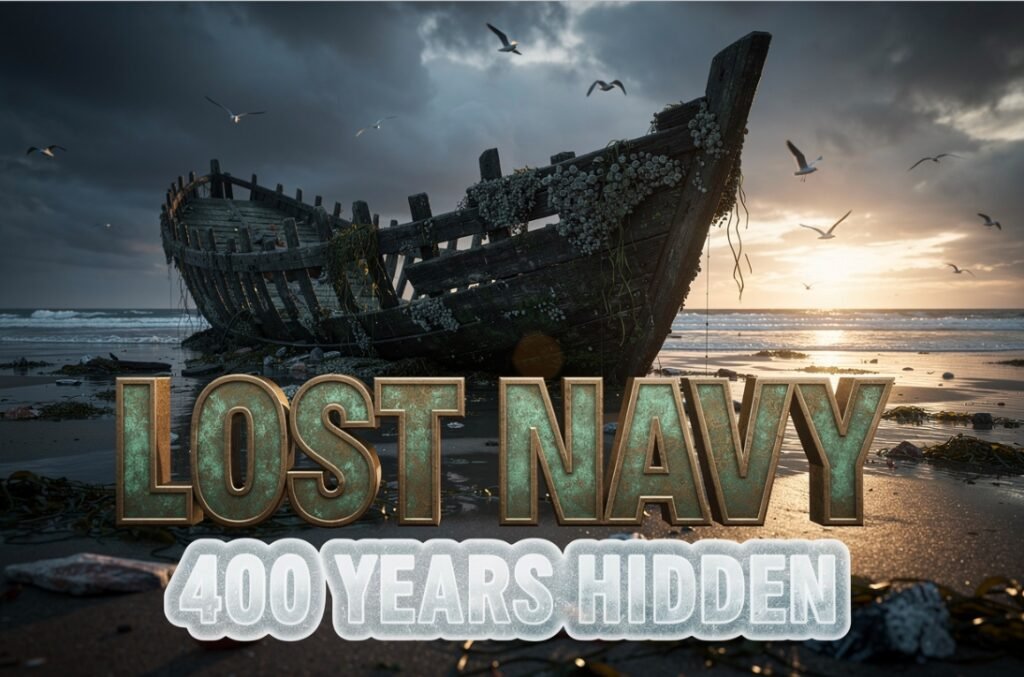
400 year old Swedish Navy shipwreck resurfaces Stockholm Baltic Sea
Record Low Baltic Sea Levels Triggered the Reappearance
12
So what caused such a massive shift? 7Hansson explained: “There has been a really long period of high pressure here around our area in the Nordics. So the water from the Baltic has been pushed out to the North Sea and the Atlantic.”
Here is what made this event so extreme:
- 16 The Baltic Sea is almost an inland sea, with only a narrow connection to the North Sea through the Danish Straits, so water cannot quickly flow back.
- 14 Strong easterly winds prevailing since January pushed enormous masses of water through the Danish Straits into the North Sea.
- 11 Measurements at Sweden’s Landsort-Norra gauge show values that are the lowest since records began in 1886.
9 Parts of the wreck surfaced briefly in 2013, but current visibility is unprecedented due to the Baltic’s lowest water levels in about 100 years. 4 Before 2013, the wreck had not been visible since the 1940s.
Why a Wooden Ship Survived 400 Years Underwater
Most people would expect a wooden vessel to rot away in the ocean within a few decades. But the Baltic Sea is different.
1 Hansson put it simply: “We don’t have shipworm here in the Baltic that eats the wood, so it lasts, as you see, for 400 years.” Shipworms, which can grow up to two meters long, are notorious for destroying submerged timber. The Baltic’s cold, brackish water keeps them out.
Instead of breaking down the wood, the water actually preserves it. The low salt content and near-freezing temperatures create a natural time capsule. Oxygen levels at deeper points are low enough to prevent the bacteria that cause decay.
But here is the catch. 31Although vessels like the Vasa were in surprisingly good condition after centuries on the sea floor, they can quickly deteriorate if the hull is allowed to dry. Water fills the spaces between wood cells, and once it leaves, the structure begins to collapse.
The Vasa’s Warning About Preservation Risks
This newly exposed shipwreck faces the same danger that Sweden’s most famous warship, the Vasa, has battled for decades.
31 The Vasa, a Swedish warship built between 1626 and 1628, sank after sailing roughly 1,300 meters into her maiden voyage on August 10, 1628. 31 She was salvaged with a largely intact hull in 1961.
After recovery, scientists treated the Vasa with polyethylene glycol (PEG) for 17 years to stop it from cracking. 31Between her recovery in 1961 and the beginning of 2025, the Vasa has been seen by over 45 million visitors.
But the battle is far from over. 30High acidity and a rapid spread of sulphate salts were recently observed on many wooden surfaces, which threaten the continued preservation of the Vasa.
The core problem is alarming:
| Threat | Details |
|---|---|
| Sulphuric acid formation | 30Elemental sulphur within the Vasa could produce up to 5,000 kg of sulphuric acid when fully oxidized. |
| Iron contamination | 36Vasa’s wood is contaminated with iron from thousands of corroded bolts, nails, and cannon balls. Iron catalyzes harmful chemical reactions, and clear links between high iron content, high acidity, and reduced wood strength have been found. |
| Structural weakness | 36Vasa has been resting in the same support cradle since 1961, and regular measurements show ongoing deformations in the hull. A new support structure is needed. |
36 In 2024, work began to install a new support structure, with the aim of completing it by 2028, just in time for the ship’s 400th anniversary.
This is exactly why the low water levels in Stockholm worry researchers. The Kastellholmen wreck is now exposed to air, and that exposure could trigger the same kind of chemical breakdown that threatens the Vasa.
The Lost Navy Program and What Comes Next
21 The research program “The Lost Navy” maps, documents, and researches the Swedish navy of circa 1450 to 1850. During this period, the Swedish navy consisted of sailing ships. There is information on around 785 ships, but only a few have been archaeologically examined. 21 The program runs from 2021 to 2026 and is a collaboration between Stockholm University’s Centre for Maritime Studies, the Swedish National Maritime and Transport Museums, and the Finnish Heritage Agency.
The stakes are not just historical. They are ecological.
11 Researchers say the chances of a major saltwater inflow from the North Sea into the Baltic in coming weeks are higher than they have been for a long time, with the probability currently between 80 and 90 percent. 14 Cold water absorbs much more oxygen than warm water, creating a unique opportunity to oxygenate the deep waters of the Baltic.
“The combination of long-term observations and current measurement data allows us to accurately assess both the intensity and the potential effects.” – IOW researchers
4 In total, seven shipwrecks have been identified in the waters around Kastellholmen, dating from the early 1600s to the late 1800s. 4 Kastellholmen and neighboring Skeppsholmen were once at the heart of Sweden’s naval operations, where warships were built, repaired, armed, and anchored. 1 In April 2024, researchers exploring an ancient shipwreck off Sweden discovered centuries-old artifacts, including a weapons chest and pieces of armor. 1 In July 2024, divers found a massive haul of champagne and wine on a Baltic Sea shipwreck, and the precious cargo was later declared off-limits by the government.
There is something deeply moving about watching a 400-year-old warship rise from the water, quietly reminding us of a time when Sweden’s naval power shaped Northern Europe. But that same moment carries an urgent warning. Once exposed to the air, these wooden time capsules begin to break down. The clock is now ticking for researchers to study, document, and protect what the sea has kept safe for centuries. What do you think should happen next? Should the wreck be salvaged, or is it better left undisturbed beneath the waves? Drop your thoughts in the comments below.


Dolly Parton’s $450 Million Fortune Keeps Working After Her Death

SpaceX’s $60B Cursor Buy Immediately Costs It OpenAI Models

Rays Forever Home Wins County Vote as College and Taxpayers Carry the Load

Apple TV Hits $14.99 as Sports and Hits Bill Comes Due

Swift Telescopes Restart as Orbit Drop Accelerates

Oracle’s 2.8 GW Bloom Deal Exposes the AI Power Bypass

Galaxy S26 Beta 7 Ports Fold 8 AI as Stable Nears

Walmart Pays $50 Million to Close Federal Opioid Pharmacy Case

Space Mirror Demo Revives 1993 Russian Night-Light Test

Measles Death Dispute Deepens Distrust in Pennsylvania Outbreak

Trump Iran Threat Wiped $238M Crypto Longs Then Flipped

30-Year Yield Hits 5.32% Highest Since 2007 as Debt Supply Locks In Costs

Oil Crashes Below $80 as Iran Talks Restart and Markets Split

Strategy Parks $1.59B Cash While Bitcoin Stack Stays Flat

Astute’s $1.2M bet makes B2B creator deals feed AI discovery

SpaceX Stock Rebound Tests Real Demand Before Huge Unlock

BlackRock Turns Cash Empire Into Stablecoin Reserve Rails

The 20% Savings Ideal Meets a 2.7% Reality Check

Amber’s €7M locks Mittelstand knowledge inside Europe

Walter’s TWG Insists No Fraud as Insurer Probes Force Cleanup
-
 FINANCE3 months ago
Zcash Patched a Double-Spend Bug as ZEC Climbed 5%
-
 ENTERTAINMENT3 months ago
Steam Summer Sale 2026 Locks In June 25 to July 9 Dates
-

 FINANCE2 months ago
CLARITY Act Final Text Expected This Weekend as 60-Vote Hurdle Looms
-
 NEWS4 months ago
Meta Adds AI Replies to Threads, But Users Can’t Block It
-

 NEWS3 months ago
YouTube Shorts is testing a heart in place of the thumbs-up
-

 NEWS1 month ago
Senators Force Apple Off Chinese Memory as Big Three Cash In
-

 NEWS3 months ago
NEURA Robotics’ $1.4B Series C Redraws Europe’s Physical AI Bet
-
 ENTERTAINMENT5 months ago
Extraction 3 Is Officially Coming to Netflix in 2027