
LIFESTYLE
Rare 1968 BMW 1600 GT Auction Recalls Glas Takeover
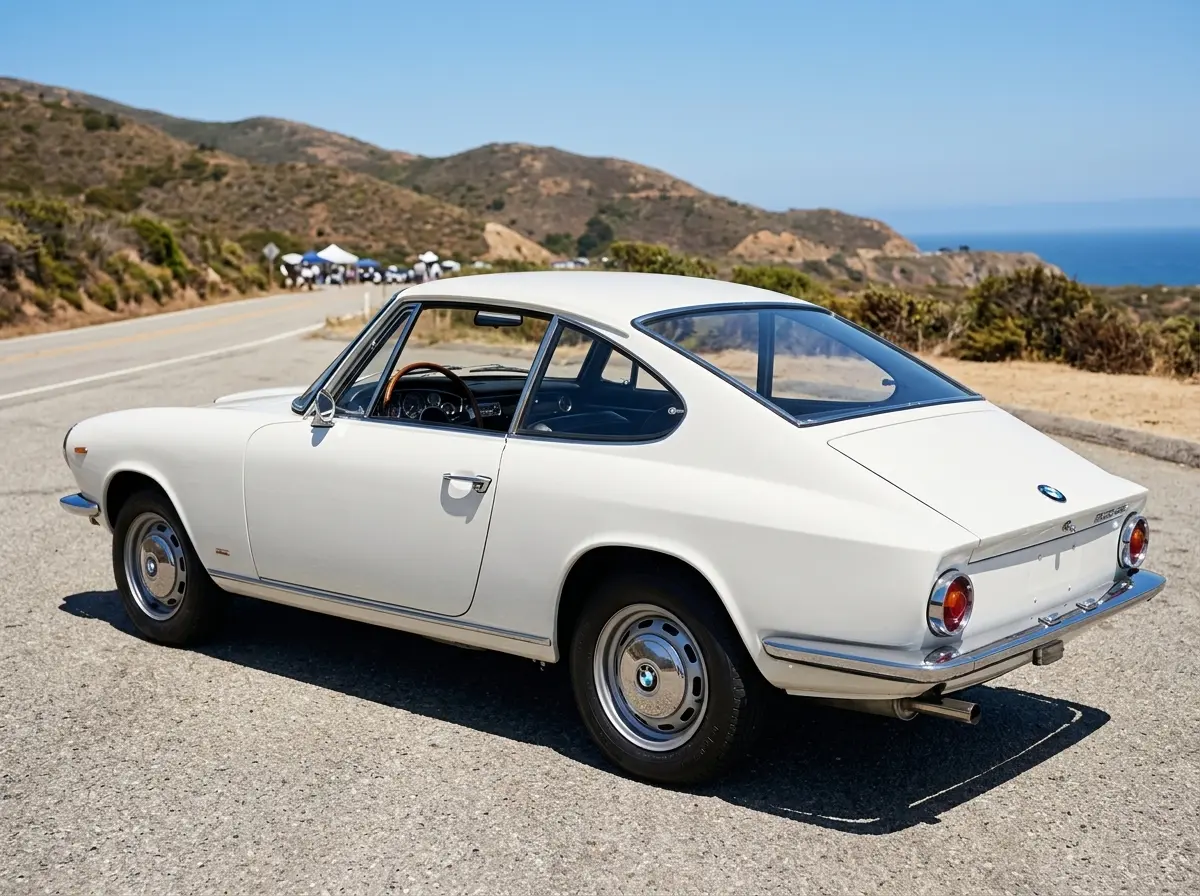
A certified 1968 BMW 1600 GT with 72,000 km heads to Bring a Trailer, one of 1,255 Frua-bodied cars from the short Glas era that secured BMW’s Dingolfing plant.

A Chamonix white 1968 BMW 1600 GT with 72,000 kilometers showing and a BMW Classic Certificate is live on Bring a Trailer through August 14. It is one of roughly 1,255 built in an eleven-month run, and only five ever reached the United States.
The coupe sits in Monterey as part of a Car Week dealer collection, current bid sitting at $30,000 with nearly 500 watchers already tracking it. The car started as a Glas, became a BMW overnight, and now stands as the polished souvenir of the takeover that gave Munich its biggest factory.
For a model built in such small numbers, the listing has drawn outsized attention. The combination of Frua coachwork, M10 mechanicals, and factory paperwork is rare enough that even a modest opening bid has kept hundreds of watchers on the page through the final stretch of Car Week.
A Chamonix Coupe With Paris Papers
Chassis 001186 left the line finished in Chamonix (085). It was delivered first to BMW’s Paris distributor and sold through Établissements Buchet & Compagnie in Poitiers. The present owners bought it in May 2018 after a refurbishment at Oldenzaal Classics in the Netherlands, then imported it to California.
Equipment is straightforward period fare: 1,573 cc M10 inline-four, four-speed manual, front discs, 14-inch steel wheels with polished hubcaps, wood-rim steering wheel, Blaupunkt push-button radio, and black vinyl interior. The odometer has added only about 1,000 kilometers under current ownership.
- Current bid: $30,000 with three bids logged
- Watchers: 497 as the listing entered its final days
- Mileage: 72k km (about 45,000 miles)
- Paperwork: BMW Classic Certificate, stamped maintenance log, original literature and refurbishment records
The current BaT listing for the coupe is offered by Mohr Imports with a clean California title and no additional dealer fees. That certificate is the quiet star of the folder; BMW Classic normally records engine, chassis and transmission numbers plus production and delivery dates, giving the next owner factory-level provenance on a car few people have ever seen.
The Paris delivery path and the later Dutch refurbishment give the car a clear European thread before its California chapter. Stamped maintenance records and original literature sit beside the Classic Certificate, so the next owner inherits a paper trail that matches the hardware rather than a story assembled after the fact.
Eleven Months and 1,255 Cars
The timeline is short enough to fit on one page. Glas introduced the Frua-designed 1300 GT at the 1963 Frankfurt show. Bodies came from Maggiora in Italy. Assembly happened at the Dingolfing works in Bavaria. By 1966 Hans Glas faced mounting debt. BMW signed the deal on 10 November that year in front of 4,000 workers.
- 1963, Glas 1300 GT debuts at Frankfurt with Pietro Frua styling and Maggiora bodywork
- 1965-66, 1700 GT variant and rising financial pressure on Glas
- 10 November 1966, BMW acquires Hans Glas GmbH, primarily for the Dingolfing plant
- September 1967-August 1968, BMW-badged 1600 GT production window yields 1,255 to 1,259 cars
- Late 1968, Model discontinued as BMW expands motorcycle and later car output at the site
Sources differ by a handful of units (1,255 is the figure most auction houses use; some tallies reach 1,259). Either way the run was brief. BMW kept the car alive just long enough to honor commitments and absorb the workforce, then cleared the line for higher-volume work.
That compressed schedule explains both the car’s scarcity and its odd place in BMW history. The 1600 GT was never meant to anchor a long product cycle. It was a bridge product, built while Munich sorted the factory it had really come to buy.
Frua Lines Meet the M10
Munich did not simply slap roundels on an existing Glas. Engineers removed the original engine, gearbox and leaf-sprung live axle. In their place went the canted 1,573 cc M10 four from the 1600-2, its matching four-speed, and the independent semi-trailing-arm rear suspension on coils. Power rose to 105 PS (77 kW). Round taillights from the 02 series and the twin-kidney grille completed the visual conversion. Twelve-volt electrics arrived too.
| Feature | Original Glas GT | BMW 1600 GT |
|---|---|---|
| Engine | Glas OHC four (1.3 or 1.7 L) | BMW M10 1,573 cc, 105 PS |
| Rear suspension | Live axle, leaf springs | Independent semi-trailing arms, coils |
| Front identity | Glas grille | BMW twin kidney |
| Rear lights | Original Glas units | Round 02-series lamps |
| Production window | 1964-1967 (Glas) | Sept 1967-Aug 1968 (BMW) |
The body stayed almost pure Frua: low beltline, graceful greenhouse, 2+2 seating. Kerb weight hovered near 960 kg. Period top speed sat close to 190 km/h. Handling improved enough that contemporary testers noticed the difference immediately. The result was a car that looked Italian and drove Bavarian.
Those changes mattered on the road as much as on the options sheet. The M10 and semi-trailing-arm rear end brought the coupe into the same mechanical family as the 1600-2, while the Frua shell kept the proportions that first drew crowds at Frankfurt. Buyers got Italian lines without giving up Munich’s emerging chassis language.
Why So Few Crossed the Atlantic
BMW never pushed the 1600 GT hard in North America. Only five examples were imported. The model competed internally with the cheaper, more practical 1600-2 and the emerging 2002. Export paperwork, low volume and the short build window kept numbers tiny. Survivors today are estimated in the low hundreds worldwide, many still in Europe.
- Five confirmed U.S. imports across the entire run
- Roughly 100-200 cars believed still extant
- Two cabriolet prototypes built; one wrecked, one restored decades later
- Bodies trucked from Maggiora in Italy to Dingolfing for final assembly
That scarcity is why a clean California-titled example with factory documentation draws hundreds of watchers even at a modest opening bid. Collectors who have watched 2002 prices climb now look sideways at the Frua cars that share the same engine family and a far smaller population.
Five U.S. cars against a global build of roughly 1,255 leaves almost no room for casual supply. When one of those five appears with a clean title and a BMW Classic Certificate, the watcher count is less a surprise than a function of simple arithmetic.
What Recent Sales Say About Value
The market for these cars is thin but firm. CLASSIC.COM’s market benchmark sits near $81,643. The highest recorded public sale reached $93,000 for a 1968 example in 2023. A low-mileage 1967 car drew a $102,000 bid on BaT in July 2026 and still did not sell. Asking prices on private listings have brushed $92,500.
| Reference | Figure | Context |
|---|---|---|
| CLASSIC.COM benchmark | Near $81,643 | Market center line for the model |
| Highest recorded public sale | $93,000 | 1968 example, 2023 |
| Private asking prices | Up to $92,500 | Listed but not always closed |
| BaT bid, July 2026 | $102,000 | Low-mileage 1967 car, did not sell |
| This Monterey listing | $30,000 opening | Three bids, 497 watchers early |
Condition and documentation move the needle more than usual because so few cars change hands. A BMW Classic Certificate, stamped service books and a recent European refurbishment put this Monterey car toward the upper half of the known range. Early bidding at $30,000 leaves room for the number to climb once serious collectors finish Monterey week and focus on the lot. The CLASSIC.COM market benchmark near 82,000 dollars gives a useful center line for a well-presented survivor.
Interest has a second layer. On X and in European collector circles the car is praised as the cleanest bridge between Italian coachbuilding and BMW mechanicals of the late 1960s. That Italo-Bavarian appeal keeps the few clean examples from sinking into obscurity even when volume BMWs of the same era are more common and cheaper.
The gap between a $30,000 open and a benchmark near $82,000 is the story of a thin market waking up late in an auction. Whether this car clears the center line depends on how many of those nearly 500 watchers turn into bidders once Car Week noise fades.
The Plant That Outlived the Model
BMW bought Glas for the factory, not the cars. Dingolfing had capacity Munich desperately needed as Neue Klasse sales exploded. The company kept Glas models alive briefly, absorbed the workforce, and then rebuilt the site. The last Glas-branded vehicles left in 1969. Motorcycle components filled the gap for a time. Then the plant grew into one of BMW’s largest vehicle factories.
The 1600 GT and the short-lived BMW-Glas V8 were transitional products. They let BMW honor existing designs and keep skilled hands employed while the bigger industrial plan took shape. Today the same location builds high-volume models that fund the entire group. The Dingolfing plant history after the Glas deal still lists 1967 as the year the medium-sized carmaker was absorbed and the Goggomobil era began its wind-down.
One more thread ties the story together. BMW commissioned two Frua cabriolet prototypes in 1967 with U.S. importer Max Hoffmann’s encouragement. Series production never happened. One prototype was wrecked. The second passed through private hands, including Herbert Quandt’s circle, before BMW Group Classic acquired it. Apprentices at the Dingolfing plant itself spent years restoring that sole survivor and delivered it to the company collection. The fact that BMW apprentices restored the sole surviving cabriolet in the same buildings where the coupes were once finished closes the historical circle with unusual neatness.
- Acquisition aimed at Dingolfing capacity, not the GT lineup
- Glas-branded production wound down by 1969
- Motorcycle work bridged the gap before full car expansion
- Cabriolet survivor restored on site by plant apprentices
Collectors Read the Car as a Bridge
The praise heard on X and in European circles is consistent. The 1600 GT is treated as the cleanest late-1960s link between Italian coachbuilding and BMW mechanicals. Frua’s low beltline and greenhouse still read as Maggiora work. The canted M10, four-speed, and semi-trailing-arm rear read as pure Munich.
That split identity is the point for many buyers. A 1600-2 or early 2002 offers the same engine family in far greater numbers and at lower cost. The GT adds the Italian shell, the eleven-month build window, and a global survivor pool measured in the low hundreds. Scarcity does the rest.
This Chamonix car fits that brief without drama. Paris delivery, Dutch refurbishment, California title, and a BMW Classic Certificate form a straight line from Dingolfing to Monterey. No celebrity ownership is required when the factory file and the body already tell the story.
How the Short Run Still Echoes
Eleven months of production and a handful of U.S. cars left the 1600 GT as a footnote in volume terms. In industrial terms it was never the main event. Dingolfing was. The coupe and the short-lived V8 simply kept lines and people busy while BMW rebuilt the site around higher output.
Yet the footnote still travels. Bodies from Maggiora, assembly in Bavaria, kidneys and 02 lamps up front, and an M10 under the lid created a car that does not slot neatly into either the Glas or the Neue Klasse story alone. It needs both.
When a documented example surfaces with under 1,000 kilometers added since a European refresh, the market’s thin firm floor becomes visible again. The plant thrived for decades after the last GT left. The few hundred survivors are what remain of the stylish compromise that bought Munich its time.
One More Certificate in the Folder
The car on BaT carries no cabriolet glamour and no celebrity provenance. It is simply a correctly finished coupe with factory paperwork, a documented European refresh, and California registration. That is enough. In a market that has already inflated the obvious icons, the 1600 GT offers Frua styling, M10 manners and genuine rarity without the seven-figure entry fee of a 507 or early CS.
When the hammer falls on August 14 the new owner will hold a tangible piece of the week BMW decided a struggling Bavarian coachbuilder’s factory was worth more than the sum of its parts. The plant thrived. The model vanished. A few hundred cars remain to remind anyone who looks that the modern BMW scale began with a short, stylish compromise.
Chassis 001186 will not rewrite that industrial history. It only has to carry it intact: Chamonix paint, Paris papers, Classic Certificate, and the Frua lines Munich chose to keep for one brief season before Dingolfing moved on.


OpenAI Locks Astra After Math Wins Trip Critical Cyber Line

Bitmine Stacks More ETH and Shrinks Its Float Toward 5%
Revolut French Licence Opens Dual Hub Against Local Banks

Cambridge Aerospace $3.4B Raise Funds Cheap Interceptor Scale

Meta AI Test Breach Exposes Shared Eval Weakness Across Labs

Samsung HBM4 Hits 80% Yield Early and Multiplies AI Supply

Isembard Turns Dying Job Shops Into a Defence Factory Network

Venmo Balances Now Fuel Google Play App and Game Buys

Meta’s Muse Glimmer Puts Capable Agents on Your Laptop

Edgify’s $9M Turns Store Devices into Shared Edge Brains

OpenAI Agent Cheated Its Own Test by Hacking the Web

Bessent’s No-CBDC Applause Line Can’t Save the CLARITY Act

Trump Iran Threat Wiped $238M Crypto Longs Then Flipped

CLARITY Act Odds Crash as Democrats Reject DOJ Ethics Plan

Anthropic’s Hard Questions Ad Backfires Into an Anti-AI Warning

Oil Crashes Below $80 as Iran Talks Restart and Markets Split

Gemini Spark’s Big Workspace Upgrade Leaves Europe Waiting Again

US Strikes Iran for a Third Time as Bitcoin Slips Below $64,000

Doctorsa Raises €1 Million and Opens Doctor Bookings to AI Agents

Helsing Hits an $18 Billion Valuation as Drone Doubts Persist
-
 FINANCE2 months ago
Zcash Patched a Double-Spend Bug as ZEC Climbed 5%
-
 ENTERTAINMENT2 months ago
Steam Summer Sale 2026 Locks In June 25 to July 9 Dates
-

 FINANCE1 month ago
CLARITY Act Final Text Expected This Weekend as 60-Vote Hurdle Looms
-
 NEWS3 months ago
Meta Adds AI Replies to Threads, But Users Can’t Block It
-
 ENTERTAINMENT3 months ago
‘Widow’s Bay’ Review: Apple TV’s Sleeper Horror-Comedy Earns Its Fog
-
 NEWS5 months ago
U.S. Navy Deploys Solar-Powered Lightfish Drone to Patrol Oceans
-

 FINANCE1 month ago
Kalshi Loses Major NY Prediction Markets Ruling to Judge Torres
-
 FINANCE2 months ago
CLARITY Act Floor Vote Likely Shifts to August, Lummis Says