
BUSINESS
British Gas Boss Warns Oil Rise Could Push Up UK Bills

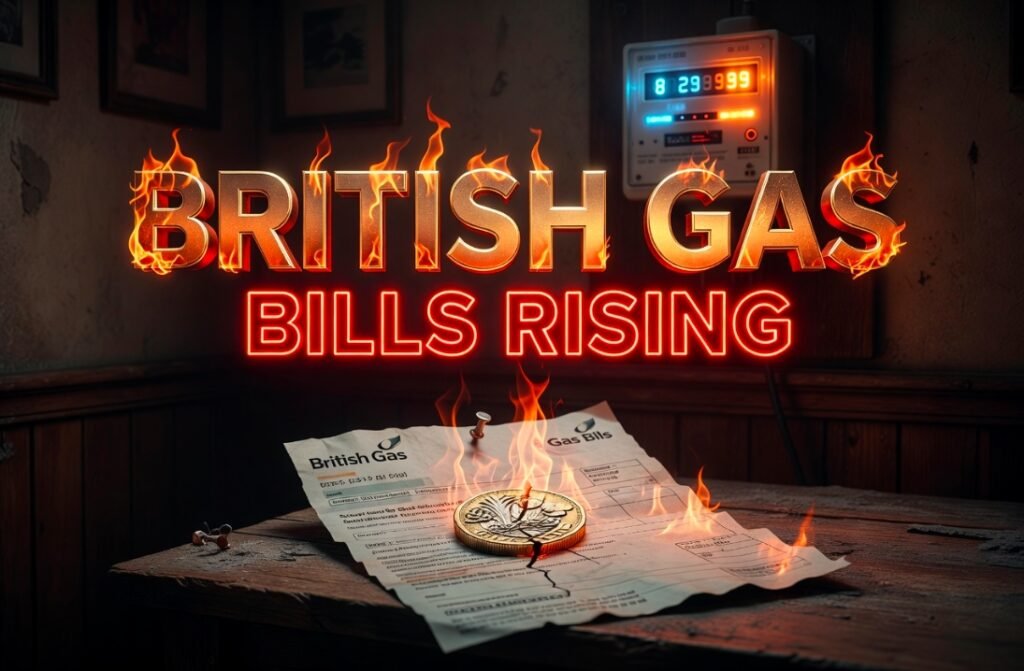
Britain’s biggest household energy supplier has fired a direct warning to millions of families. If oil prices keep climbing, UK energy bills will follow. The message from Centrica’s chief executive is clear, calm, and sobering all at once.
The alert lands at a deeply sensitive time. Households in England, Scotland and Wales only just saw their energy costs drop by £117 from April. Now, that brief relief is already looking fragile.
What Centrica Actually Said
One of the UK’s largest energy suppliers has said an increase in household bills was “inescapable” if oil prices remain high due to the conflict in the Middle East. Chris O’Shea, chief executive of Centrica, the company that owns British Gas, warned that the disruption to global energy markets caused by the conflict is already being felt, and that it is only a matter of time before that pressure filters through to what people pay at home. O’Shea acknowledged the disruption is severe, but was careful to draw a distinction between oil and gas markets. He said only 3 to 4 percent of the global gas supply has been lost due to the closure of the Strait of Hormuz. “So, the impact on gas, and therefore on electricity bills, should be lower than the impact on oil,” he said. That is a measured reassurance. But it is far from a clean bill of health for household budgets.
Centrica British Gas oil price rise UK household energy bills 2026
Why Oil Prices Are Surging Right Now
In mid-March 2026, the International Energy Agency estimated that around 20 million barrels of oil per day had been affected by the drop in shipping in the Strait of Hormuz, with oil production cut by at least 10 million barrels in Gulf countries, representing about 10 percent of global production. Brent crude oil rose from around $70 a barrel before the conflict began to temporary peaks of over $100 a barrel. That is a seismic swing in a short space of time. UK wholesale natural gas prices also rose by roughly 75 percent between late February and 23 March 2026. Here is the key chain of events that connects an oil shock to your monthly direct debit:
- Global conflict disrupts oil supply through the Strait of Hormuz
- Oil price spikes pull gas and LNG prices higher across world markets
- UK electricity prices are set by the last generator on the system needed to meet demand, which is typically a gas plant. This is called marginal pricing, which is the same way almost every other commodity market works. This means that even when cheaper sources like renewables or nuclear provide much of the electricity, the overall market price can still be set by a gas power plant as much as 85 percent of the time.
- Higher wholesale costs get averaged into the Ofgem price cap calculation
- Households feel the impact when the next cap update takes effect
What the Numbers Look Like for UK Households
Between 1 April and 30 June 2026, the energy price cap is set at £1,641 per year for a typical household using electricity and gas paying by Direct Debit. This is a decrease of 6.6 percent compared to the cap set between 1 January and 31 March 2026. That brief fall, however, may soon be wiped out. Cornwall Insight, an energy consultancy well-regarded for the accuracy of its price cap predictions, expects the July price cap to rise to £1,836 per year, an increase of more than 12 percent or around £195. Some forecasts go even further. EDF Energy expects the price cap will rise by £225 on 1 July, from £1,641 per year to £1,866, and says prices could rise again in October to £1,893, and start 2027 at £1,909. A sustained return to recent price peaks would see British households spending an extra £11 billion on fuel and energy in 2026 compared to if prices had remained at early-2026 levels. Energy prices have fallen back from the highs they reached during the energy crisis, but even with the 7 percent fall in the April 2026 cap, they will still be 35 percent above their pre-energy crisis levels. Families are being asked to absorb yet another potential rise on a baseline that was already punishing.
The Lag Problem Nobody Talks About
One crucial thing most people do not realise is that there is a built-in delay between what happens in global markets and what lands on your bill. The price cap is set every three months and reflects the average price suppliers would have bought energy for over a three-month observation window. This means there is a lag between live wholesale prices and the price cap level. The 1 April to 30 June 2026 price cap was confirmed at £1,641 before the conflict in the Middle East started. Therefore, households on a standard variable tariff will not see the impact of higher gas prices on their bills until the 1 July to 30 September price cap period. That window is closing fast. Ofgem will confirm the next price cap, covering the July to September period, by 27 May. It is widely expected to announce an increase in prices. Craig Lowrey, principal consultant at Cornwall Insight, said energy markets are experiencing “the kind of volatility not seen since 2022.” He added that “infrastructure damage and continued disruption to marine traffic through the Strait of Hormuz are limiting the potential for any meaningful wholesale price fall.” He said: “A rise in July is pretty much unavoidable, but how high prices go remains to be seen.”
What Families and the Government Can Do
British households are unusually exposed to gas prices. Gas accounts for 62 percent of final household energy consumption, the highest share in the G7, and electricity prices are closely tied to wholesale gas. That structural weakness is not new. It is why this warning from Centrica stings harder than it would in other countries. The Centrica boss suggested that the government should allow further oil and gas exploration in the North Sea as a way to alleviate potential energy price rises, alongside increasing gas and battery storage, as well as renewable generation. The government’s broader package of measures announced in April 2026 also included an increase in the Boiler Upgrade Scheme grant to £9,000 for properties heated by oil and LPG in England and Wales. That is a step, but most households cannot retrofit overnight. Oxford researchers say the best long-term way to keep bills low is to expand renewables and batteries, which can shield electricity prices from geopolitical energy shocks. Alongside this, the UK should continue focusing on electrifying heating and insulating homes, reducing exposure to gas volatility so that households need less gas to stay warm even when prices spike. For right now, though, the practical advice is simpler. If you are on a tracker tariff or standard variable tariff, this is the moment to review your options. Switching energy supplier and locking in certainty could protect your household before the next price rise arrives. Energy debt is at a record high, with around £5.5 billion owed to retail suppliers according to official figures. That number will only grow if another round of bill increases lands on a population already stretched thin. The UK has been through this before. After the Russia-Ukraine invasion, wholesale gas prices exploded. The UK energy price cap eventually surged to an eye-watering £4,279 at its peak. Nobody is predicting a repeat of that nightmare. But the warning from the boss of British Gas is a signal that the direction of travel is worrying, and the window to act is narrow. Every household in Britain deserves to know that clearly. What do you think? Is the government doing enough to protect families from another energy price shock? Drop your opinion in the comments below.


Galaxy Ring’s FDA Sleep Apnea Clearance Faces a Familiar Wait

kausable’s €12 Million Seed Joins a Quiet Bet Against AI Scaling

Bitcoin ETFs Shed $225 Million as Treasury’s Biggest Buyers Retreat

telli Raises $15 Million Seed to Rival Billion-Dollar AI Giants

PageMind Raises €1.2 Million to Crack AI Shopping Search

Hackers Hijack Robinhood CEO’s X to Push Fake Memecoin

Apple’s Trade Secrets Suit Against OpenAI Is Europe’s Problem Too

Adobe’s Patch Leaves WhatsApp’s Own Security Gap Untouched

Reddit and Publishers Weigh Blocking Google Over AI Traffic Losses

CuspAI’s $2.6 Billion Bet Echoes AI Drug Discovery’s Playbook

CLARITY Act Final Text Expected This Weekend as 60-Vote Hurdle Looms

Fed Minutes Cite AI Demand as Inflation Risk, Put a 2026 Hike Back on the Map

Kalshi Loses Major NY Prediction Markets Ruling to Judge Torres

Marker AI Writing Startup Lands $13M Seed Led by Index Ventures

Dota 2 Esports World Cup 2026: Spirit Defends $2M Title In Paris

Meta’s Muse Spark 1.1 Beats Rivals on Price, Trails on Coding

CS2 Premier Season 5 Lands With Cache and a C4 Damage Rework

Backrooms Returns to Theaters as the Everything Must Go Edition

Trump Calls Iran ‘Islamic Republic of Japan’ as Ceasefire Ends

ARC Intelligence Closes €4M Seed Round in Roughly a Week
-
 FINANCE2 months ago
Zcash Patched a Double-Spend Bug as ZEC Climbed 5%
-
 ENTERTAINMENT2 months ago
Steam Summer Sale 2026 Locks In June 25 to July 9 Dates
-
 NEWS2 months ago
Meta Adds AI Replies to Threads, But Users Can’t Block It
-
 FINANCE3 weeks ago
CLARITY Act Final Text Expected This Weekend as 60-Vote Hurdle Looms
-
 ENTERTAINMENT2 months ago
‘Widow’s Bay’ Review: Apple TV’s Sleeper Horror-Comedy Earns Its Fog
-
 NEWS7 months ago
FolderFresh Review: This Free Tool Automates Windows File Organizing
-
 FINANCE2 weeks ago
Fed Minutes Cite AI Demand as Inflation Risk, Put a 2026 Hike Back on the Map
-
 NEWS4 months ago
U.S. Navy Deploys Solar-Powered Lightfish Drone to Patrol Oceans