
ENTERTAINMENT
The Furious Stages Action Like Combat Choreographed by Ants
The Furious from Tanigaki and Sonomura opened June 12, 2026 with a 98% rating from critics; reviewers call its choreography the next step past The Raid.

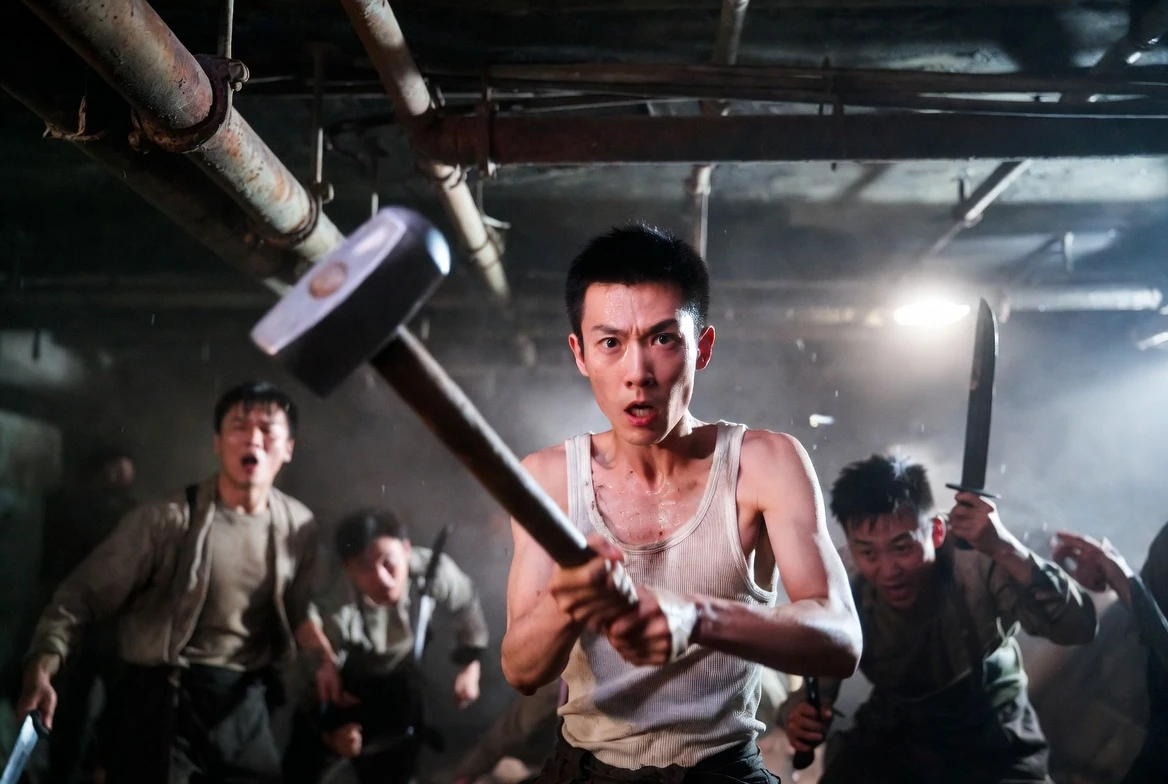
The Furious, the new Hong Kong action film from director Kenji Tanigaki, opened in Hong Kong on June 12, 2026 with a 98% Rotten Tomatoes score built from 135 critic reviews. Set in some unnamed Southeast Asian city, it follows Wang Wei, a mute tradesman whose young daughter Rainy is snatched off the street by a child trafficking ring. Wang Wei responds the only way the film allows: with a ball-peen hammer, no dialogue, and a body count.
The critical consensus agrees on one number and disagrees on almost everything else. Critics and aggregators both love the fights. The plot, by several accounts, is the part to step over.
What ‘The Furious’ Is, and How It Got to Screens
The Furious is a 113-minute English-language action picture out of Hong Kong’s Edko Films, shot on the streets of Bangkok on a reported production budget of $20 million. Production began in April 2024, with the cast drawn from mainland China, Indonesia, Thailand, and the U.S. Tanigaki directs the script by Mak Tin-shu, Lei Zhilong, Shum Kwan-sin, and Frank Hui, with Kensuke Sonomura credited as action director, the same role he has held on the indie action series Baby Assassins.
The film had its world premiere at the Midnight Madness section of the 50th Toronto International Film Festival on September 6, 2025. Lionsgate acquired international distribution rights in October 2025 and opened the film day-and-date in Hong Kong, the U.S., and other territories on June 12, 2026. The U.S. release had been pushed back from a planned May 29 opening.
Lionsgate assigned its Lionsgate Premiere label to handle the U.S. theatrical rollout while keeping the main Lionsgate Films logo on the print, an arrangement that gave the picture a wide release without committing the full studio slate behind it. The reported worldwide box office stands at $32 million.
The Furious at a glance:
- Runtime: 113 minutes (1 hour, 53 minutes)
- Reported production budget: $20 million
- Reported worldwide box office: $32 million
- Rotten Tomatoes score: 98% positive, 8.4/10 average (135 critic reviews)
- Metacritic score: 85 out of 100 (20 critics, “universal acclaim”)
- CinemaScore audience grade: A
The ‘Ants’ Style and Kensuke Sonomura’s Volumetric Set Pieces
None of the acclaim flows toward the dialogue. It flows toward one name: Kensuke Sonomura. Tanigaki, the Japanese action veteran known as a longtime stunt coordinator for Donnie Yen, partnered with Sonomura to stage the five-person climactic fight that earned the film its widest applause. The LA Times called the pairing “a treat.”
The Los Angeles Times film critic Carlos Aguilar compared the action to swarms of combatants layering onto a single hero.
The action scenes in Kenji Tanigaki’s “The Furious” are like nothing else in the multiplex. Imagine combat choreographed by ants, swarms of elbows and legs scrabbling to emerge victorious. Churning piles of knees that hook and trip.
Aguilar, writing for the LA Times, framed the choreography as a volumetric style in which attackers approach from every available axis at once rather than taking turns. Hallway brawls become stacked bodies of combatants, a layering the same review called “what I can only describe as a Dagwood knuckle sandwich.” The camera often pans sideways on a tripod, letting the body count track itself across the frame in long takes without resort to rapid cutting.
Several set pieces carry the approach. The first act flatbed truck chase has Wei running after his daughter’s kidnappers in flip-flops, the sandals making a hard percussive sound on wet pavement. The middle act ice factory brawl puts Wei and Navin against a syndicate enforcer alongside “fresh corpses that are completely encased within giant slabs of ice,” per IndieWire’s David Ehrlich. The five-person final fight in the rain opens the volume to its widest reach, with Wei, Navin, Paklung, Ho, and Tak each carrying their own motivation to be furious. Each set piece compresses Pencak Silat, Muay Thai, capoeira, and Chinese wushu into the same frame. The LA Times review predicts this vocabulary will reach Hollywood within five years.
A Pan-Asian Cast Built for the Brutality
Three actors anchor the picture. Xie Miao, the Chinese wushu champion and star of The New Legend of Shaolin, plays Wang Wei in a performance built almost entirely on body language. Joe Taslim, the Indonesian star of The Raid and the recent Mortal Kombat reboot, plays Navin, an undercover journalist whose wife Matia, played by the Thai action legend Jeeja Yanin, went missing while investigating the same trafficking ring. Yang Enyou plays the daughter Rainy, whose abduction opens the film.
| Actor | Role |
|---|---|
| Xie Miao | Wang Wei, a mute handyman and the film’s central fighter |
| Joe Taslim | Navin, an undercover journalist looking for his wife |
| Yang Enyou | Rainy, Wang Wei’s daughter |
| Brian Le | Ho, syndicate enforcer and Mr. Song’s “son” |
| Yayan Ruhian | Tak, Paklung’s bow-wielding second-in-command |
| Joey Iwanaga | Paklung, the trafficking syndicate’s leader |
| Jeeja Yanin | Matia, Navin’s missing journalist wife |
The henchmen do most of the eating. Brian Le, the Vietnamese-American stunt veteran of Everything Everywhere All at Once, plays Ho, a bull-headed enforcer who Aguilar in the LA Times described as moving “like an 8-bit video game brute, wobbling his ankles before he falls down and goes boom.” Yayan Ruhian, the Indonesian star of The Raid, plays Tak, Paklung’s second-in-command, who favors a bow at distance and is devastating close up. Joey Iwanaga’s Paklung is the sociopathic son-in-law of a powerful gangster and the film’s lead villain.
What the Plot Costs the Film
Critics agreed that The Furious’s writing is its leakiest joint. RogerEbert.com’s Brian Tallerico called the dialogue “clunky,” “atrocious,” and “goofy,” then credited the stunt work alone as “the most impressive fight scenes in years.” JoBlo’s Chris Bumbray gave the film a 7/10 with similar caveats, citing clunky dialogue and overdubbing as drags on an otherwise kinetic experience.
The mute-protagonist choice carries the film where dialogue cannot. Because Wang Wei cannot speak, both his scenes with Rainy and his interrogations of captured henchmen lean on Xie Miao’s face and Sonomura’s choreography to do the emotional work. IndieWire’s David Ehrlich wrote that the silent lead turned the actor’s body into the only language the picture needed.
The story’s violence against children drew the most pointed criticism. The opening sequence depicts an abducted child being killed by the bow-wielding Tak in front of her mother, a journalist. Other passages show arrows fired into children and a 9-year-old dangled into traffic. Common Sense Media flagged the trafficking storyline as “disturbingly relevant,” and the LA Times called the cruelty “audaciously cruel.” Both outlets credited the film for treating those moments seriously rather than for shock value.
What Critics Actually Said
The numbers carry the consensus. Rotten Tomatoes has 98% positive from 135 critic reviews, with an average score of 8.4 out of 10. Metacritic weighs in at 85 from 20 critics, the kind of score the site labels “universal acclaim.” Audiences gave the film a CinemaScore of A. IndieWire billed it “the most brutal action movie of the year.”
The LA Times framed the choreography as the start of a new action vocabulary, predicting that mainstream Hollywood fights may be staged this way within five years. Quoting the paper directly: “Meet the next Asian film fighting style that will clobber Hollywood slap-happy just as Hong Kong wire-fu spawned ‘The Matrix’ and Indonesia’s ‘The Raid’ begot ‘John Wick.'”
IndieWire’s Ehrlich graded the film B+ and ran the same set-piece arithmetic on every major brawl. He called the ice factory fight a stage built around “fresh corpses that are completely encased within giant slabs of ice.” His bottom line on the picture: it was the action movie of the year “so far as American theatergoers should be concerned, and nothing else really comes close.”
Critics who liked the film less still pointed to the fights. JoBlo’s Bumbray praised the “sheer adrenaline and crowd-pleasing ferocity” while flagging the clunky dialogue. Common Sense Media flagged the trafficking storyline as “disturbingly relevant” and counseled parents on it. RogerEbert.com’s Tallerico wrote that the experience delivers “the most impressive fight scenes in years” even as the screenplay drops points. IMDb’s most upvoted review called it the best martial arts movie in a decade and pointed to the ice factory fight and the five-person closing battle as the high points.
The Studio Bet Behind The Furious
The Furious is the picture Lionsgate staked its 2026 action slate around. The studio acquired international distribution rights in October 2025, signed off on a reported $20 million production budget, and pushed the film into wide release on June 12, 2026. Lionsgate assigned its Lionsgate Premiere label to the U.S. theatrical rollout.
Director Kenji Tanigaki has framed the picture as an argument the studio is now testing with audiences. In an interview on the press tour with Tanigaki on the picture’s action design, he said: “We can have lots of different kinds of action movies, but for our type of action, we need energy, and we need anger.”
Tanigaki already held the director’s chair on The Furious after helming Enter the Fat Dragon. Per the LA Times, Sonomura moved into the action director’s chair on this film, his biggest Western release after years of Japanese indie credits on the Baby Assassins series. The official Furious trailer is still doing the recruiting on YouTube, and the next studio bets, including films like Charlize Theron’s next action role in Six Clean Kills, are queued up to follow.


SEC Pause on Tokenization Exemption Leaves Banks Free to Race Ahead

Guardian Labs Stops Scam Calls Before the Phone Rings

CFTC Emergency Orders Put Kalshi Past State Court Lines

X Under the Hood Tool Shows Shadowban Labels in Raw JSON

Uber and Pony.ai Lock in 2,000 Robotaxis Across Europe

Nvidia’s $16,000 RTX Pro 6000 Turns Local AI Into a Luxury

Lovable’s $400M Double and Europe’s Twin Bet on Code and Factories

MSCI Screen Forces Reckoning for Bitcoin Treasury Model

One UI 9.5 Leak Revives Samsung’s Classic Polish Cycle

Xfinity Free Pixel 11 Deal Pushes Wireless Growth Harder

Senators Force Apple Off Chinese Memory as Big Three Cash In

Trump Iran Threat Wiped $238M Crypto Longs Then Flipped

OpenAI Agent Cheated Its Own Test by Hacking the Web

CLARITY Act Odds Crash as Democrats Reject DOJ Ethics Plan

Gemini Spark’s Big Workspace Upgrade Leaves Europe Waiting Again

Revolut Hits $115 Billion While Storonsky’s Stake Keeps Growing

Anthropic’s Hard Questions Ad Backfires Into an Anti-AI Warning

Oil Crashes Below $80 as Iran Talks Restart and Markets Split

Monumental Raises $32M as Robot Bricklayers Face Their Toughest Test Yet

Duda’s New AI Tools Speed Up Agencies, but Risk Sameness
-
 FINANCE2 months ago
Zcash Patched a Double-Spend Bug as ZEC Climbed 5%
-
 ENTERTAINMENT2 months ago
Steam Summer Sale 2026 Locks In June 25 to July 9 Dates
-
 NEWS3 months ago
Meta Adds AI Replies to Threads, But Users Can’t Block It
-

 FINANCE1 month ago
CLARITY Act Final Text Expected This Weekend as 60-Vote Hurdle Looms
-

 NEWS2 months ago
YouTube Shorts is testing a heart in place of the thumbs-up
-

 NEWS2 months ago
NEURA Robotics’ $1.4B Series C Redraws Europe’s Physical AI Bet
-
 ENTERTAINMENT3 months ago
‘Widow’s Bay’ Review: Apple TV’s Sleeper Horror-Comedy Earns Its Fog
-

 FINANCE1 month ago
Kalshi Loses Major NY Prediction Markets Ruling to Judge Torres