
FINANCE
Tesla and SpaceX Short Sellers Are Reliving Musk’s Costliest Trade
Short sellers against Tesla and SpaceX have booked almost $20 billion in paper profits, a trade that echoes the 2020 squeeze that once cost Tesla bears $40 billion.

Short sellers betting against Elon Musk’s two biggest companies are sitting on almost $20 billion in paper gains this week, and the trade has a familiar shape. Tesla shares just posted their worst single day in a year. SpaceX shares are trading below their IPO price barely six weeks after going public.
The numbers are real. So is the risk that comes with them. Musk has broken this exact bet before, and the man who tracks it for a living says nothing about this round looks calm.
SpaceX Shorts Turn a Six-Week Slide Into Billions
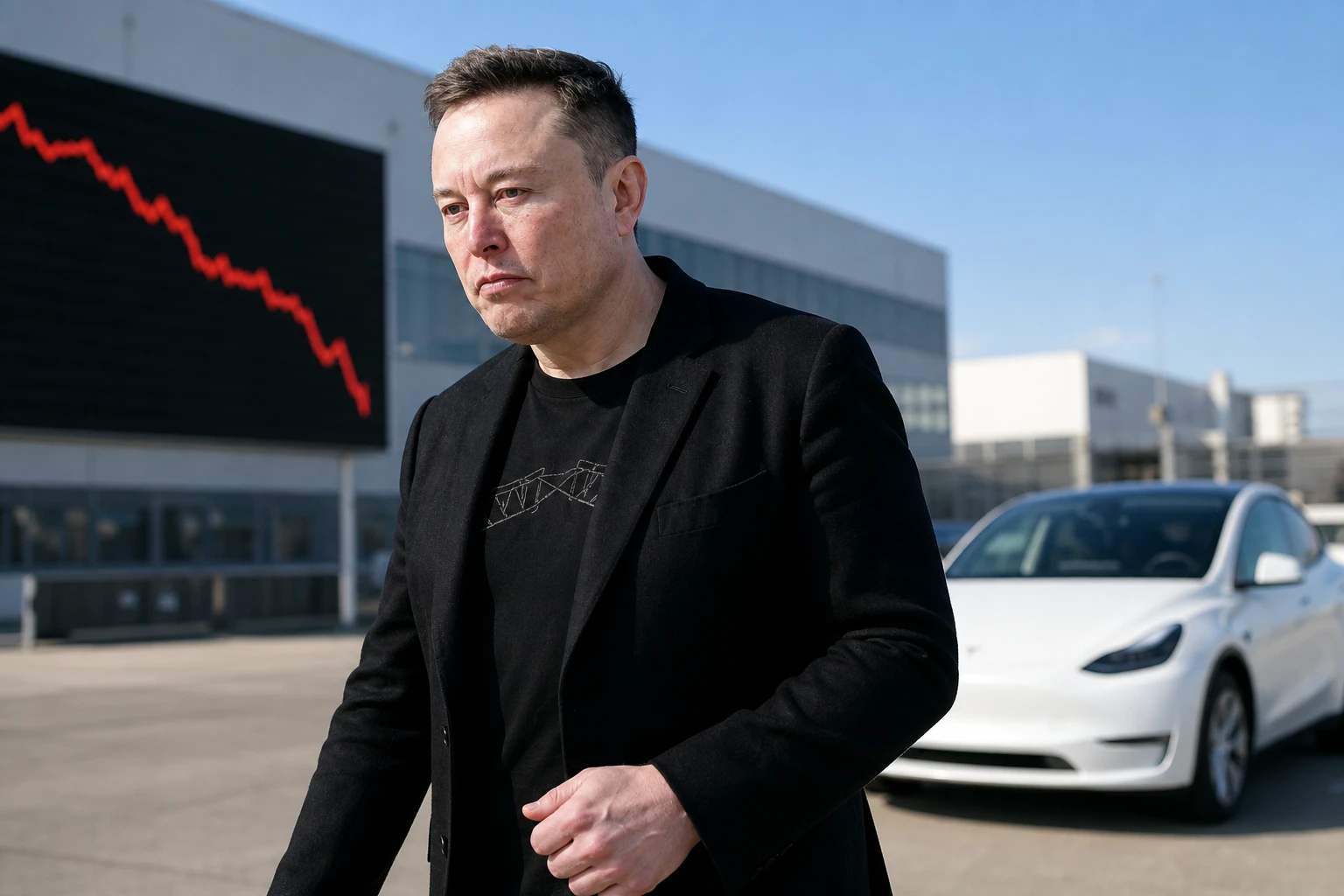
Tesla stock closed down 14.5% on Thursday to $319.69, its lowest close since August 5, 2025, as investors weighed the earnings miss alongside the company’s physical AI efforts. S3 Partners managing director Ihor Dusaniwsky said that single day added $4.12 billion in mark-to-market gains for Tesla short sellers, on top of an $8.92 billion cumulative paper profit since the stock’s 30% pullback from its yearly high.
SpaceX has been the bigger story. Ortex estimated paper profits at $8.7 billion on July 16, meaning short sellers added almost $7 billion in unrealized gains within less than a week as the stock continued to decline. By the following week that figure had reached $15.5 billion, and about 360 million SpaceX shares, about 56 per cent of the free float, were out on loan, Ortex data through Tuesday showed.
Ortex co-founder Peter Hillerberg put it bluntly. “There is no sign of short sellers taking profits on SpaceX,” he said. “If anything they are leaning in harder.” He told Reuters the stock had turned into “a rollercoaster for the short sellers, and it has ended up firmly in their favor.”
| Metric | Tesla (TSLA) | SpaceX (SPCX) |
|---|---|---|
| Latest move | Down 14.5% Thursday to $319.69 | New low of $115.26, below the $135 IPO price |
| Short interest | About 3% of shares outstanding | About 56% of free float on loan |
| Shorts’ paper profit | $4.12 billion (one day) / $8.92 billion (since yearly high) | $15.5 billion (since mid-June IPO) |
| Data source | S3 Partners | Ortex Technologies |
SpaceX priced its IPO at $135 a share in mid-June, touched a record $225.64, then reversed hard. Short interest at the listing was tiny by comparison, roughly 40 million shares, or 5% to 7% of the tradable float. Within weeks that had grown past 190 million shares and then to 360 million on loan, an escalation Hillerberg called unusual for any newly listed stock, let alone one this large.
Tesla’s Capex Guidance Spooked the Market
Tesla’s own quarter gave bears fresh ammunition. The company beat on the top line and on deliveries, then missed badly on profit and cash.
- Revenue: $28.24 billion, up 26% year over year, above the roughly $26.3 billion Wall Street expected.
- Adjusted EPS: $0.33, well short of the roughly $0.50 analysts had penciled in.
- Capex: $5.79 billion for the quarter, up 142% from $2.39 billion a year earlier, with full-year spending guided above $25 billion.
- Free cash flow: a $1.1 billion deficit, Tesla’s first negative quarter in about two years.
Deliveries told a different story. Tesla reported Q2 deliveries of 480,126, up 25% year over year and easily topping Bloomberg consensus estimates of 397,466. Full self-driving subscriptions climbed 56% to 1.48 million, and Cybercab production has begun at Giga Texas as part of a robotaxi service now running in seven U.S. metro areas, a rollout aided by a federal proposal clearing pedal-less Cybercabs for public roads.
None of that offset the cash math. Chief Financial Officer Vaibhav Taneja said capex will grow for the next two or three years as the company expands its Robotaxi fleet, production capacity for Optimus, semiconductor fab investment, solar manufacturing capacity and AI compute infrastructure. Musk called 2026 a “massive capex year”, and some of that spending is going toward engineers Tesla is trying to keep from leaving, part of an ongoing push that has raised Tesla engineer salaries to fight xAI poaching.
A Second Bet Is Running Through Crypto Tokens
There is a shadow version of this trade that most short-interest data never captures. SpaceX’s IPO set off a rush into tokenized versions of the stock on crypto platforms, and tokenized stock volumes climbed to a record $20 billion around the listing alone.
One provider, BingX, describes its version as a blockchain-based digital asset that mirrors the real-world price of SpaceX stock, and platforms including Ondo Finance, xStocks and Backpack have all listed their own versions. Coinbase went further, rolling out perpetual futures that let traders speculate on SpaceX’s valuation before it even priced.
These products carry none of the rights that come with the Nasdaq-listed shares. Most of these products provide no dividends, voting rights, or direct claim on SpaceX itself, meaning a crypto trader shorting a SpaceX token is betting purely on price, layered on top of, and separate from, the traditional short interest Ortex and S3 track. Even so, the appetite has not disappeared. SpaceX’s tokenized stock added 25% more holders over the past month, according to CryptoTimes, even as monthly trading volume slid roughly 31% from the prior period, a sign speculative flows are cooling while the underlying base of holders keeps growing.
Musk Broke This Exact Trade Once Before
Wall Street has run this play against Musk before, and it did not end well for the bears. In 2020, investors who shorted Tesla stock on the assumption the share price would go down lost a record $40.1 billion, according to analysis by S3 Partners, as the stock surged over 730% during the year.
The scale of that loss dwarfed everything else on Wall Street. By comparison, the next-biggest loss for short sellers was on Apple Inc., at just under $7 billion, S3 data shows. Tesla shorts controlled roughly 18% to 19% of the float heading into that year, more than six times the roughly 3% of Tesla shares sold short today, yet the dollar losses were staggering because so many traders were crowded into the same side of the same trade.
Musk’s public jabs at short sellers are not new either. He has a long history of needling the people betting against him, and this year’s version came straight from the same script.
The survival probability of firms who maintain a significant short position in SpaceX over time is very low.
Musk wrote that on X last Friday, a warning aimed squarely at the traders piling into the SpaceX short.
Analysts Cannot Agree on What Tesla Is Worth
The split among professional analysts is unusually wide for a stock this closely watched.
- BNP Paribas analyst James Picariello holds a sell rating with a $280 price target, warning, “As Tesla continues to pursue ambitious AI goals via an exceedingly aggressive capex timeline, we weigh severe caution on the speed of its AI progress ramp,” and flagging separately that the stock’s valuation already embeds a very high bar.
- Mizuho analyst Vijay Rakesh cut his price target to $450 from $480, even while noting Tesla’s Cybercab fleet is still a fraction of the size of Alphabet’s Waymo operation.
- Morningstar analyst Seth Goldstein set a fair value of $450 and called the pullback “a good opportunity” for long-term investors.
Morgan Stanley’s Andrew Percoco landed somewhere in between. “The open question remains the timing of when we actually see the ROI, specifically, a scaled robotaxi network that demonstrates increasing density and improving safety within existing cities, plus tangible progress commercializing Optimus,” he wrote, adding, “Absent consistent, transparent proof points, we’d expect the market’s tolerance for incremental capex to narrow.”
Tesla trades at 151 times expected earnings over the next year, the richest multiple in the Magnificent Seven, even as it has been the group’s weakest performer this year. Meta Platforms sits at the other extreme, with just 1.6% of its float sold short, the second-lowest level in the group.
Retail Buyers Are Not Backing Off
Institutional money is piling onto the short side, but plenty of individual investors are doing the opposite. On Thursday, retail investors bought $42 million of Tesla shares, making it the single most-purchased stock on Vanda Research’s tracking list that day.
Prediction markets tell a more cautious story about the biggest bull case floating around Tesla and SpaceX, a formal merger of the two companies. Traders have sharply pulled back on that bet. The prediction market now puts just an 11% chance on an official announcement by 30 September, down 28 percentage points, while the odds of a deal being unveiled by 31 December have fallen 19 points to 24%, with more than $836,000 wagered across the market. The live contract on Polymarket’s merger tracker priced the December outcome near 23% as of this week.
The idea is not far-fetched on paper. SpaceX bought the AI company xAI in an all-stock deal earlier this year, and xAI itself acquired the social media platform X in 2025, a pattern of consolidation that keeps Musk’s companies’ cap tables tangled together even without a formal Tesla-SpaceX deal. Some of that AI ambition also shows up in humanoid robotics, a field crowded enough now that even a UK startup building wheeled humanoid robots reached a $1.35 billion valuation this year, competition Tesla’s Optimus program has to answer.
Could Musk Engineer Another Squeeze?
A squeeze happens when short sellers rush to buy back borrowed shares to limit losses, and that buying itself pushes the price higher, forcing more shorts to cover. It is exactly what erased Tesla’s short sellers’ gains in 2020, and the math behind SpaceX’s current short position makes the risk unusually sharp.
Every one-dollar move in SpaceX shares changes the value of outstanding short positions by more than $300 million, increasing the potential for a sharp short squeeze if sentiment reverses. With more than half of the free float already borrowed, there are fewer shares left to lend, which tends to make borrowing costs rise and any reversal move faster.
That has not scared bears off yet. S3 Partners head of research Matthew Unterman told CNBC, “We are seeing continuous demand from short sellers building speculative positions since the IPO.” Hillerberg’s read is the same: the bears added to their bets the entire way down, rather than locking in gains along the way.
Paper profits are not cash in hand. Tesla’s 2020 shorts learned that the hard way, watching a $40 billion loss pile up in months. SpaceX’s shorts are $15.5 billion ahead for now, and Musk has already told them how he expects the story to end.
Frequently Asked Questions
Why Does SpaceX Already Have Such Heavy Short Interest?
SpaceX priced its IPO conservatively at $135 a share, but some banks had estimated the company could be worth more than $1.5 trillion based on financials showing roughly $8 billion in profit the year before it listed. That gap between a cautious IPO price and a much higher private-market valuation discussion drew skeptical traders almost immediately, pushing short interest from about 40 million shares at the IPO to hundreds of millions within weeks.
What Is the Difference Between Shares Sold Short and Shares on Loan?
Shares on loan include stock borrowed for reasons beyond short selling, such as hedging or settlement needs, so the two figures are not identical. Ortex’s Hillerberg has said the firm believes most of SpaceX’s 56% on-loan figure reflects active short positions rather than other uses, which is why the paper-profit estimates track so closely with the loan data.
Do Tokenized SpaceX Tokens Make You a SpaceX Shareholder?
No. Tokenized products tied to SpaceX’s price, including versions on Solana-based platforms, typically carry no dividends, no voting rights and no direct legal claim on the company itself. They mirror the share price for trading purposes only, which means gains or losses on a token do not reflect any change in actual SpaceX equity ownership.
Has Musk Clashed With Short Sellers Before This Year?
Yes, repeatedly. His public sparring with investors betting against Tesla stretches back years and became especially heated during Tesla’s 2020 rally, when short sellers lost a record $40.1 billion. This year’s warning about SpaceX short sellers’ “survival probability” follows the same pattern of Musk directly calling out bearish investors on social media.
Disclaimer: This article is for informational purposes only and does not constitute investment advice. Short selling, tokenized securities and early-stage IPO stocks carry substantial risk, and figures cited are accurate as of the article’s publication date.


Galaxy Ring’s FDA Sleep Apnea Clearance Faces a Familiar Wait

kausable’s €12 Million Seed Joins a Quiet Bet Against AI Scaling

Bitcoin ETFs Shed $225 Million as Treasury’s Biggest Buyers Retreat

telli Raises $15 Million Seed to Rival Billion-Dollar AI Giants

PageMind Raises €1.2 Million to Crack AI Shopping Search

Hackers Hijack Robinhood CEO’s X to Push Fake Memecoin

Apple’s Trade Secrets Suit Against OpenAI Is Europe’s Problem Too

Adobe’s Patch Leaves WhatsApp’s Own Security Gap Untouched

Reddit and Publishers Weigh Blocking Google Over AI Traffic Losses

CuspAI’s $2.6 Billion Bet Echoes AI Drug Discovery’s Playbook

CLARITY Act Final Text Expected This Weekend as 60-Vote Hurdle Looms

Fed Minutes Cite AI Demand as Inflation Risk, Put a 2026 Hike Back on the Map

Kalshi Loses Major NY Prediction Markets Ruling to Judge Torres

Marker AI Writing Startup Lands $13M Seed Led by Index Ventures

Dota 2 Esports World Cup 2026: Spirit Defends $2M Title In Paris

Meta’s Muse Spark 1.1 Beats Rivals on Price, Trails on Coding

CS2 Premier Season 5 Lands With Cache and a C4 Damage Rework

Trump Calls Iran ‘Islamic Republic of Japan’ as Ceasefire Ends

ARC Intelligence Closes €4M Seed Round in Roughly a Week

Finto Picks Munich Over Silicon Valley After YC, Raises $3.4M
-
 FINANCE2 months ago
Zcash Patched a Double-Spend Bug as ZEC Climbed 5%
-
 ENTERTAINMENT2 months ago
Steam Summer Sale 2026 Locks In June 25 to July 9 Dates
-
 NEWS2 months ago
Meta Adds AI Replies to Threads, But Users Can’t Block It
-
 FINANCE3 weeks ago
CLARITY Act Final Text Expected This Weekend as 60-Vote Hurdle Looms
-
 ENTERTAINMENT2 months ago
‘Widow’s Bay’ Review: Apple TV’s Sleeper Horror-Comedy Earns Its Fog
-
 NEWS7 months ago
FolderFresh Review: This Free Tool Automates Windows File Organizing
-
 FINANCE2 weeks ago
Fed Minutes Cite AI Demand as Inflation Risk, Put a 2026 Hike Back on the Map
-
 ENTERTAINMENT2 months ago
Amazon Scraps Its Stargate Revival After a 20-Week Writers Room