
NEWS
DOT Move Lets Tesla’s Pedal-Less Cybercab Finally Hit the Road
The DOT’s June 2026 proposal drops the brake-pedal requirement for autonomous vehicles, finally clearing the path for Tesla’s pedal-less Cybercab and rival robotaxis to ship at scale.

The U.S. Department of Transportation proposed on June 25, 2026, to drop the federal requirement that fully autonomous vehicles carry a brake pedal. The change, if finalized, removes one of the last manual controls still mandated on cars built to drive themselves, and the public has until July 27 to weigh in before the rule advances.
Tesla’s long-promised Cybercab sits directly in the crosshairs of the proposal. The two-seater was shown on stage at Tesla’s “We, Robot” event in 2024 without a steering wheel or pedals. Production began at the company’s Giga Texas facility, with the first Cybercab rolling off the line in February 2026, according to drone footage verified by Electrek. Yet the Cybercab is not the only vehicle the rule affects. The same regulatory rewrite clears the path for every purpose-built robotaxi on the drawing board, including Amazon-owned Zoox, and it exposes how much of the industry’s clock has been waiting on Washington.
The Brake Pedal Rule Tesla Has Been Waiting On
Under current federal rules, any autonomous vehicle missing a part required by the Federal Motor Vehicle Safety Standards must ask the National Highway Traffic Safety Administration for an exemption. Tesla has never filed one for the Cybercab. As Tesla’s Q1 2026 confirmation that Cybercab production is underway made clear, Tesla took a different route: when asked on X whether the NHTSA’s 2,500-vehicle annual exemption cap applies to the Cybercab, Tesla VP of Vehicle Engineering Lars Moravy answered with a single word, “No.”
The reason is self-certification. Tesla designed the Cybercab to comply with all existing FMVSS standards on its own, the same process used by every Toyota Camry or Ford F-150 sold in the U.S. Drone footage from Giga Texas shows early Cybercab units already carrying official federal compliance stickers. Congress is debating the SELF DRIVE Act, which would raise the AV exemption cap to 90,000 vehicles, but Tesla’s interpretation removes the Cybercab from that legislative fight altogether.
The Two Regulatory Paths
- Exemption path: Tesla, Zoox, and Cruise have historically filed for FMVSS exemptions on individual vehicle types. Each granted exemption is capped at 2,500 units per year under current NHTSA rules.
- Self-certification path: Tesla designed the Cybercab to meet all existing FMVSS standards without a waiver, the same pathway used by every mass-market car sold in America.
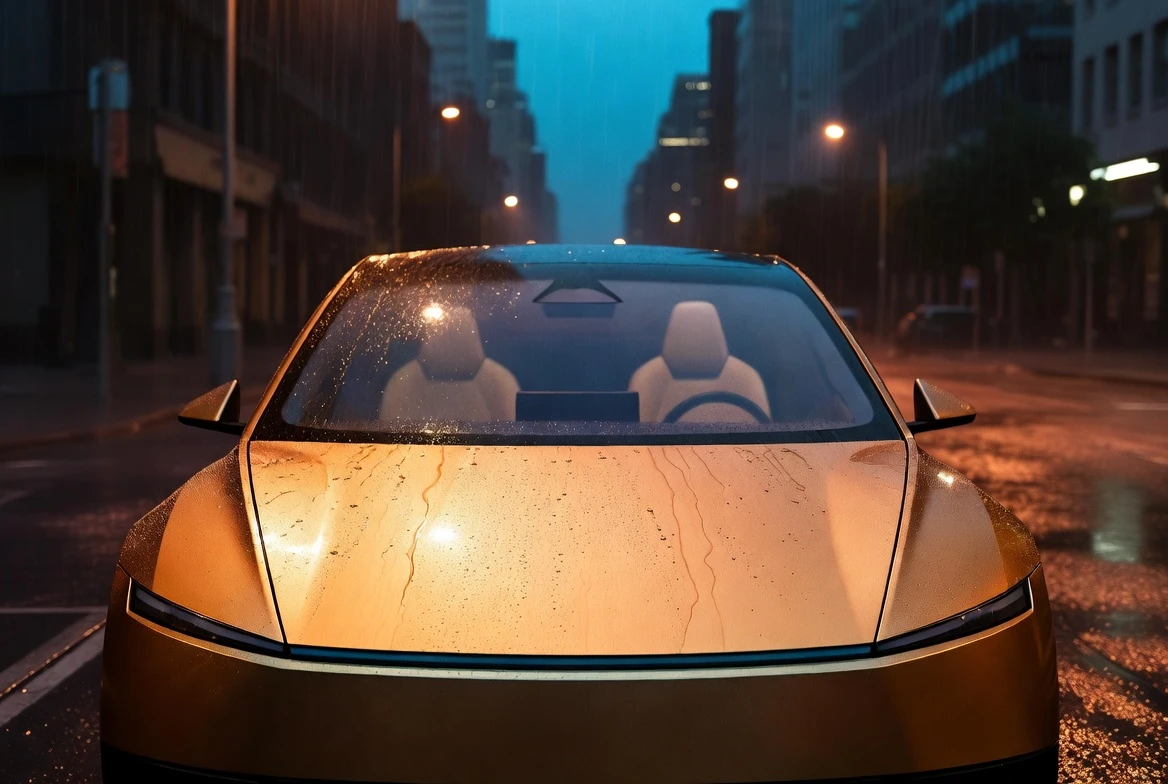
How the Proposal Reshapes FMSS No. 135
The new rule targets Federal Motor Vehicle Safety Standard No. 135, the light-vehicle brake systems standard, by removing the requirement for a physical brake pedal in vehicles “designed to be driven exclusively by automated driving systems.” Other manual controls are on the table too. NHTSA’s announcement flags rearview mirrors, windshield wipers, and windshield defrosters as features that may no longer make sense on cars whose cameras and sensors do the seeing.
Critical safety floors stay in place. Stopping distance rules cover every vehicle on the road, autonomous or not. The rewrite is about the human-machine interface, not the physics of braking, an important distinction for any reader trying to understand what the change actually buys.
NHTSA Administrator Jonathan Morrison framed the moment as historic in a statement released with the DOT’s first National AV Safety Forum announcement. “We are at the cusp of the greatest technological revolution in vehicle technology since the innovation of the Model T,” Morrison said. “If we want America to lead the way, we have to reimagine our regulatory framework. That’s why under Secretary Sean Duffy’s AV Framework, NHTSA is tearing down pointless barriers to innovative designs while strengthening the fundamental safety requirements that matter and holding AV developers accountable for safe performance.”
Inside the Cybercab’s Long Road to a Factory
The Cybercab has traveled from concept car to production line across two presidential administrations and several missed Elon Musk timelines. The path, as documented across DOT’s brake-pedal proposal from June 25 and earlier reporting, moves through these milestones:
- October 2024: Tesla reveals the Cybercab at its “We, Robot” event in Los Angeles, with no steering wheel, no pedals, and a two-seat cabin.
- 2025: Tesla begins quietly operating a small robotaxi service in Austin, Texas, with safety monitors in the front seats.
- February 2026: The first Cybercab unit without a steering wheel rolls off the Giga Texas line. Drone footage shows the cars wearing federal compliance stickers.
- April 2026: Musk confirms on the Q1 2026 earnings call that continuous Cybercab production is underway, while warning of a slow “S-curve” before the year-end ramp.
- June 2026: Safety monitors removed from the Austin fleet; teleoperators handle “rare” remote interventions at low speed.
Production timing has slipped at every stage. Musk’s promise of unsupervised FSD “probably Q4” of this year, made on the same earnings call, sits on a track record of FSD timelines that have run years late. Tesla’s supervised robotaxi fleet in Austin currently crashes at roughly four times the rate of human drivers, with one crash per 57,000 miles against a human benchmark of one per 229,000 miles.
Tesla Has Not Solved the Driving Yet
The Cybercab is designed to operate without a driver. Tesla has not yet demonstrated that it can. On the April 2026 call, Musk acknowledged that the cars still get “scared to move” or stuck in loops, requiring human intervention. The company has also confirmed to NHTSA that teleoperators actively monitor and occasionally move vehicles remotely at low speed during “rare” post-crash or obstacle-avoidance situations.
The Cybercab program has lost three senior leaders since February. Vehicle program manager Victor Nechita left days after the first unit rolled off the line. OTA and ride-hailing infrastructure director Thomas Dmytryk departed after eleven years at Tesla. Assembly leader Mark Lupkey followed in March. Tesla now has no original program managers remaining for any of its production vehicles, a fact that frames the production ramp as much as the FMVSS rewrite does.
Waymo, by contrast, is operating its modified Jaguar I-Pace robotaxis without an exemption cap because its vehicles retain steering wheels and pedals, and the company’s co-CEO Tekedra Mawakana told the National AV Safety Forum that Waymo serves “well over 400,000 trips served each week.” The contrast captures how the new rule changes the math for automakers whose cars have never had manual controls at all.
California Already Says the Names Mislead
Even before the federal brake-pedal question goes to a vote, Tesla’s marketing language for the software those cars run is under attack. On December 16, 2025, the California Department of Motor Vehicles issued its decision in the Tesla administrative case, adopting an administrative law judge’s proposed finding that Tesla’s use of the terms “Autopilot” and “Full Self-Driving Capability” to describe its driver-assistance features constitutes misleading advertising under state law. The full ruling is published on the DMV’s December 16, 2025 ruling on Autopilot and FSD marketing.
The penalty: a permanent stay on the suspension of Tesla’s manufacturer license, and a 60-day clock for Tesla to address its use of the “Autopilot” name or face a 30-day suspension of its dealer license. Tesla pushed back on X with a one-line promise: “Sales in California will continue uninterrupted.” Tesla has separately sued the DMV to reverse the finding; CNBC reported the suit was filed in February 2026.
California DMV Director Steve Gordon framed the decision as an opening for Tesla, not a closure. “Tesla can take simple steps to pause this decision and permanently resolve this issue,” Gordon said, “steps autonomous vehicle companies and other automakers have been able to achieve in California’s nation-leading and supportive innovation marketplace.” Tesla had already shifted branding before the ruling, swapping “Full Self-Driving Capability” for “Full Self-Driving (Supervised),” a name change the DMV noted in its decision.
The California judgment matters more than its California-only scope might suggest. The state’s case was the longest-running action of its kind on Tesla’s naming, and a federal judge does still need to settle whether Tesla’s broader marketing claims cross any line. For a Cybercab that is, by Tesla’s own design, never driven by a human, the legal definition of “self-driving” is more than a label. A reader trying to picture the gap between today’s Austin fleet and tomorrow’s nationwide Cybercab service can also see how a competitor presses the same fight, in Mercedes CLA’s autonomous tech going up against Tesla FSD.
A 30-Day Window for the Public, and Washington
Federal rulemaking does not end with a public comment period, but it often starts there. The DOT’s brake-pedal proposal opened a 30-day window for public comment the day it published, and that window closes July 27, 2026. NHTSA will then weigh submissions, finalize the rule, and set an effective date. Industry lobbying has already begun. The Alliance for Automotive Innovation thanked Secretary Duffy, OSTP Director Michael Kratsios, and Administrator Morrison at the AV Safety Forum for “focusing not just on safe AV deployment… but a strategy to advance American competitiveness and national security.”
The push for a federal AV framework has reached the Senate, where Tesla and Waymo executives have already testified. The full record of that hearing is captured in our write-up of Tesla and Waymo’s Capitol Hill push for federal AV rules. The brake-pedal rewrite is one of the smaller tools in that larger push, and NHTSA is, as the June 25 proposal story noted, working through a backlog of FMVSS revisions including windshield wiping, defogging, and tire placard rules.
Tesla’s pedal-less Cybercab was always a bet that the federal rulebook would catch up to the design. The proposal in June 2026 is the closest that bet has come to paying off. The Cybercab still has to be finished, software included, and the public has four weeks to decide whether the rule deserves a green light.
Frequently Asked Questions
What does the DOT’s June 2026 brake-pedal proposal actually do?
It would remove the requirement for a physical brake pedal under FMVSS No. 135 on vehicles “designed to be driven exclusively by automated driving systems.” Stopping distance rules still apply to every vehicle on the road.
Until when can the public comment on the proposal?
Public comments close on July 27, 2026, per the Federal Register notice. NHTSA will then consider submissions before issuing a final rule.
Does Tesla need the rule change to sell the Cybercab?
Not directly. Tesla has built the Cybercab to meet existing FMVSS standards through self-certification, and VP of Vehicle Engineering Lars Moravy has stated the 2,500-vehicle exemption cap does not apply to the Cybercab. The rule change would nonetheless simplify the design and remove future friction as Cybercab variants evolve.
Has the Cybercab started production?
Yes. Tesla CEO Elon Musk confirmed on the company’s Q1 2026 earnings call that Cybercab production is underway at Giga Texas. The first steering-wheel-less unit left the line in February 2026, with continuous production beginning in April 2026.
What does California’s DMV ruling have to do with a brake-pedal rule?
Separate fight. On December 16, 2025, the California DMV ruled that Tesla’s marketing of “Autopilot” and “Full Self-Driving Capability” misled consumers. The ruling gave Tesla 60 days to address the “Autopilot” name or face a 30-day dealer-license suspension, and Tesla has sued to reverse the decision. For a vehicle that is, by Tesla’s design, never driven by a human, the legal weight of the words “Full Self-Driving” carries directly into the Cybercab’s market rollout.


Pixel Journal Auto Format Puts Google Private AI to the Diary Test

Android 17 QPR2 Beta 3 Quietly Delivers Native App Lock

Binance Cuts HTX Rails and Seals Off High-Risk Liquidity

Dell 14S Quietly Delivers Multi-Day Battery in Midrange Aluminum

OCC Conditionally Clears Trump-Linked USD1 Trust Bank

Coyote vs. Acme Turns Its Own Burial Into the Sharpest Gag

Google Health Adds Off Switch After AI Coach Clutter Backlash

SpaceX Issues 389 Million Shares as Cursor Deal Closes

Bank Leumi Hands Galaxy the Rails for Israeli Crypto Trading

Apple Maps Ad Bookings Open and Turn Local Search Into a Bid Game

Senators Force Apple Off Chinese Memory as Big Three Cash In

Trump Iran Threat Wiped $238M Crypto Longs Then Flipped

OpenAI Agent Cheated Its Own Test by Hacking the Web

Revolut Hits $115 Billion While Storonsky’s Stake Keeps Growing

CLARITY Act Odds Crash as Democrats Reject DOJ Ethics Plan

Oil Crashes Below $80 as Iran Talks Restart and Markets Split

Community Banks’ $1.3 Trillion Warning Is Stalling Clarity Act

Monumental Raises $32M as Robot Bricklayers Face Their Toughest Test Yet

Uber’s €13 Billion Delivery Hero Bid Echoes a Deal Regulators Killed

Airbus Anchors a €500 Million European Defense Fund, Picks Alta Ares First
-
 FINANCE2 months ago
Zcash Patched a Double-Spend Bug as ZEC Climbed 5%
-
 ENTERTAINMENT2 months ago
Steam Summer Sale 2026 Locks In June 25 to July 9 Dates
-
 NEWS3 months ago
Meta Adds AI Replies to Threads, But Users Can’t Block It
-

 FINANCE1 month ago
CLARITY Act Final Text Expected This Weekend as 60-Vote Hurdle Looms
-

 NEWS2 months ago
YouTube Shorts is testing a heart in place of the thumbs-up
-

 NEWS2 months ago
NEURA Robotics’ $1.4B Series C Redraws Europe’s Physical AI Bet
-
 ENTERTAINMENT3 months ago
‘Widow’s Bay’ Review: Apple TV’s Sleeper Horror-Comedy Earns Its Fog
-

 FINANCE1 month ago
Kalshi Loses Major NY Prediction Markets Ruling to Judge Torres