
NEWS
Acer Googlebook 14 Carries Proven 714 DNA Into New Era
Acer’s Moonstone Googlebook 14 evolves the beloved 714 series with Intel Panther Lake, 2.8K OLED and local Gemini NPU power ahead of fall launch.

Acer’s high-end Googlebook 14, long tracked as Moonstone under model GP714-91N, surfaces in European retailer listings and Chromium commits with Intel Panther Lake Core Ultra chips, a 14-inch 2.8K OLED panel and a dedicated Gemini key. The machine builds directly on the brand’s Spin 714 and Chromebook Plus 714 lineage rather than starting from a clean sheet.
That continuity matters more than another specs sheet. Reviewers have recommended Acer’s 714-series machines for years as balanced aluminum productivity tools. Now the same DNA moves into Google’s new laptop category.
The result is a launch product that feels less like a concept and more like a revision. Buyers already familiar with the 714 chassis can read the new board, panel and AI keys as upgrades on a known base instead of a full redesign gamble.
What the Retail Listings Show
GBookHub and Chrome Unboxed tied the codename Moonstone to the retail SKU GP714-91N through Bluetooth SIG entries, European inventory portals and Fatcat baseboard references in Chromium. One retailer sheet lists a concrete entry configuration.
| Component | Entry config | Higher configs |
|---|---|---|
| Processor | Intel Core Ultra 5 325 | Core Ultra 7 355 |
| Display | 14-inch 16:10 OLED, 2.8K WQXGA+, 120Hz, 100% DCI-P3 | Same panel family |
| Memory | 16GB LPDDR5X | Up to 32GB LPDDR5X |
| Storage | 256GB PCIe NVMe | 512GB PCIe NVMe |
| Wireless | Wi-Fi 7, Bluetooth 5.4 | Same |
The Fatcat reference board is the same Intel foundation reported for ASUS’s CX9406 Googlebook. Acer keeps the familiar 14-inch 16:10 form that made earlier 714 models practical for documents and multitasking.
Shared board language across OEMs usually means common thermal targets, power envelopes and driver paths. That lowers the chance of odd early-driver gaps when the first units reach reviewers. The retailer sheet also keeps wireless identical across tiers, so the step-up path is mainly CPU, memory and storage rather than a fragmented radio story.
Entry memory at 16GB LPDDR5X and the climb to 32GB matter for on-device model context. Storage starting at 256GB PCIe NVMe leaves room for app and model cache without forcing every buyer into the higher tier on day one.
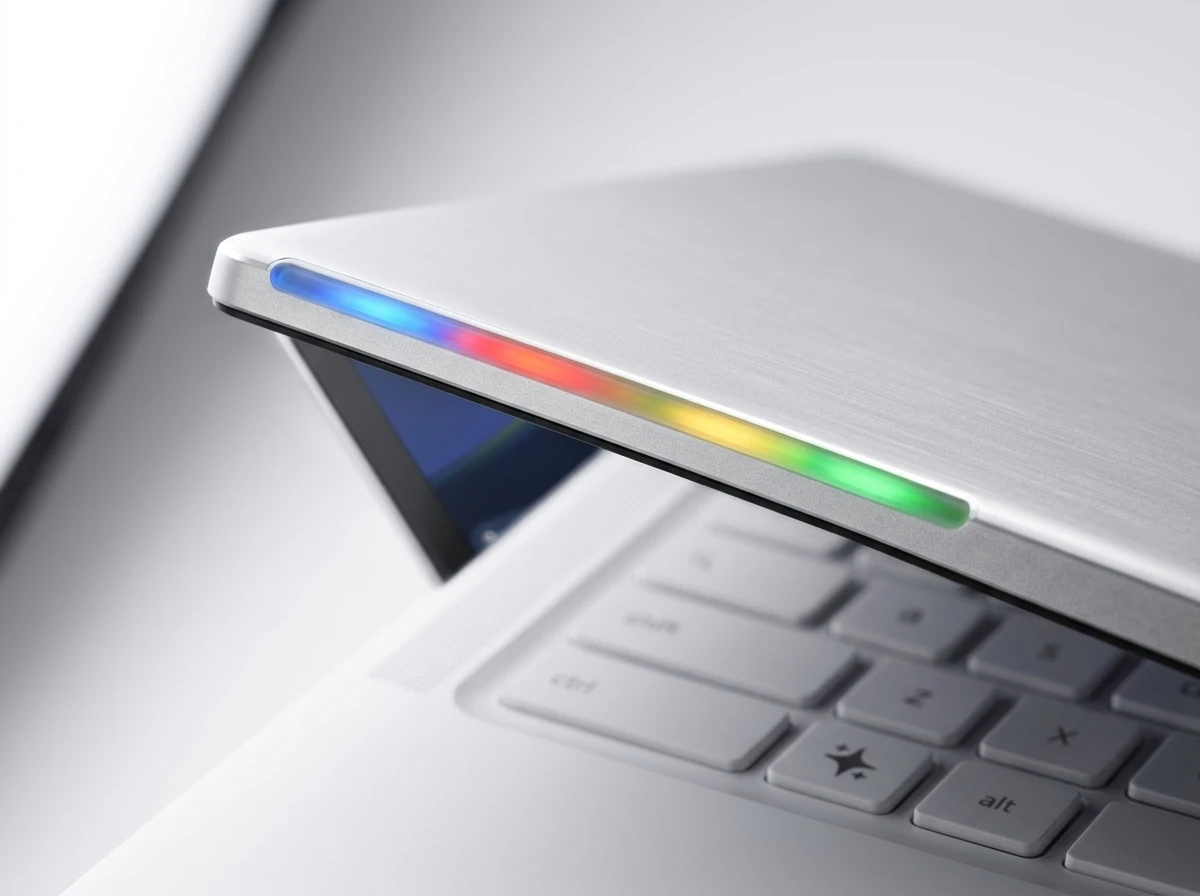
The 714 Lineage That Reviewers Already Trust
Model numbering is not accidental. GP714 continues the CP714 and related 714-series prefixes that marked Acer’s premium convertibles and Chromebook Plus machines. Those earlier units combined rigid aluminum, usable ports and displays that stayed sharp under daily work.
Chrome Unboxed has repeatedly held the Spin 714 and its predecessors as frequent recommendations for productivity. The Acer Chromebook Spin 714 product page still shows the chassis language: 16:10 panel, Intel Evo roots, dual speakers and military-grade durability claims. Googlebook simply swaps the OS layer and AI focus while keeping that physical foundation.
Other partners are exploring fresh shapes. Acer is shipping the chassis people already know works.
That choice shortens the trust gap at launch. A buyer who already accepted the Spin 714’s weight, keyboard feel and hinge behavior does not need a second education on the shell. The open questions shrink to battery under Panther Lake loads, OLED brightness outdoors and how often the Gemini key earns a press in real workflows.
- Familiar 14-inch 16:10 aluminum shell carried forward from the 714 series
- Known port and durability posture already described on the Spin 714 product page
- OS and AI layer swap instead of a clean-sheet industrial design
- Reviewer habit already pointing at the line for productivity use
Local NPU Power for Gemini Screen Tasks
The Panther Lake chips shift AI workload on-device. Integrated NPUs deliver over 47 TOPS, with the Core Ultra 7 355 rated at Intel Core Ultra 7 355 NPU rating of 49 peak TOPS Int8. That headroom targets real-time Gemini screen reasoning and multimodal side-panel work without constant cloud round-trips.
- 47+ TOPS local NPU tuned for Gemini screen and side-panel tasks
- Core Ultra 5 325 and Ultra 7 355 options on the Fatcat board
- LPDDR5X up to 32GB to keep models and context in memory
- PCIe NVMe storage starting at 256GB for app and model cache
Earlier Chromebooks leaned harder on cloud AI. This generation puts measurable silicon behind the Gemini features Google is pitching as core to the platform.
Local TOPS numbers only help if memory and storage keep pace. The higher configs pair the Ultra 7 355 with up to 32GB LPDDR5X so larger contexts stay resident. The 256GB and 512GB NVMe steps give the OS space to cache models beside ordinary apps rather than thrashing over the network for every side-panel call.
Screen reasoning and multimodal side-panel work are latency sensitive. Cutting round-trips matters when the user is staring at a live document or browser tab and expects the assistant to track what is already on screen. The NPU rating is the hardware answer to that expectation.
Platform Hardware Every Googlebook Must Carry
Google’s own materials set minimums. The official Googlebook platform introduction highlights premium craftsmanship, Android app continuity and the signature Glow Bar. Acer’s leak checklist matches.
- Dedicated physical Gemini key on the bottom keyboard row for one-press AI access
- Top-lid Glow Bar light strip for status, notifications and visual identity
- Onboard Titan C2 security chip
- Physical webcam privacy shutter
- Wi-Fi 7 and Bluetooth 5.4
Those pieces turn a strong laptop into a recognizable Googlebook. The Glow Bar in particular is the public marker Google wants users to notice across every OEM design.
The Gemini key on the bottom row removes a software hunt for the assistant. One press is the product story Google wants at retail demos and in first-run tours. The Titan C2 chip and the privacy shutter cover the trust checklist that enterprise and education buyers already expect from Chromebook-class hardware.
Wi-Fi 7 and Bluetooth 5.4 keep the radio story current across the platform floor. None of these items is optional decoration. Together they define the floor every partner must clear before the Googlebook badge applies.
Where Acer Sits Among the First Wave
Dell, Lenovo and ASUS have their own Googlebook leaks running in parallel. The Dell XPS 13 Googlebook chassis leak points at a thinner premium clamshell, while Lenovo Googlebook tablet and AI mouse plans expand the family beyond pure laptops. Google has already Google multi-chip Googlebook confirmation that Intel will not be the only silicon option.
Acer’s play is narrower and safer. It takes the 14-inch aluminum productivity formula that already sold and updates the board, display and AI keys. In a launch window full of experimental form factors, that continuity gives buyers a lower-risk entry point.
Crowd chatter on X still includes calls for a pure first-party Google hardware device. Until that appears, the OEMs that have shipped reliable Chromebooks for a decade will define the first shelves. Acer is acting like it knows that.
| Partner signal | Direction shown in leaks |
|---|---|
| Acer GP714-91N | 14-inch aluminum continuity from the 714 line, Intel Panther Lake, OLED |
| Dell XPS 13 Googlebook | Thinner premium clamshell focus |
| Lenovo plans | Tablet and AI mouse family beyond pure laptops |
| ASUS CX9406 | Same Fatcat Intel board foundation as Acer |
| Platform silicon | Intel plus Qualcomm and MediaTek paths confirmed |
Multi-chip confirmation means shoppers will compare NPU behavior, battery curves and app stability across vendors, not only screen size. Acer’s bet is that a known 14-inch shell plus a clear Intel tier list will still read as the simple pick when those comparisons get noisy.
Price Signals and a Possible November Window
European staging listings put one configuration near €1,150. GBookHub notes that European Chromebook pricing often tracks close to U.S. dollars, suggesting a roughly $1,150 starting point. That sits in the same neighborhood as recent high-end Chromebook Plus 714 configs that already carried Core Ultra chips and 120Hz panels.
One retailer placeholder listed November 8, 2026 as an availability date. Google has only committed publicly to a fall 2026 window for the broader Googlebook category. The rapid Chromebook Plus pattern of announce-then-ship within days remains possible, but nothing is locked until official channels move.
- May 12, 2026, Google publishes the Googlebook category introduction and names Acer among launch partners
- July 2026, GBookHub and Bluetooth SIG surface GP714-91N model variants and early specs
- August 10, 2026, Retailer listings and Chromium ties lock Moonstone as the Acer Googlebook 14 with full Panther Lake and OLED details
- Fall 2026, Expected official reveal and first availability window
Inventory placeholders can slip. The hardware direction does not.
A start near €1,150, or about $1,150 under the tracking pattern GBookHub describes, keeps the machine in the band buyers already paid for high-end 714 hardware. That reduces sticker shock if the software story still feels new. The November 8, 2026 placeholder is a single retailer signal inside Google’s wider fall 2026 window, useful as a planning marker and nothing more until official channels confirm.
How the Shared Fatcat Board Shapes Early Units
Moonstone and the ASUS CX9406 both point at the Fatcat Intel foundation. Shared reference design work usually means similar power limits, cooling budgets and bring-up sequences for the Core Ultra 5 325 and Core Ultra 7 355 options.
For Acer that path supports a faster move from Chromium commits and Bluetooth SIG entries to shelf-ready SKUs. The brand is not inventing a one-off board story while also teaching buyers a new chassis. It is loading Panther Lake, LPDDR5X and the Googlebook key set into a shell the 714 audience already understands.
Cross-OEM board commonality also helps the software side. Drivers, thermal profiles and early firmware fixes can travel between partners on the same foundation. That does not erase brand differences in keyboard tuning or lid design, yet it narrows the set of surprises when the first wave lands together.
Buyers still pick by keyboard, weight and support channels. The Fatcat link simply explains why Acer’s Intel configurations line up so cleanly with the wider platform story Google already confirmed for multiple chip vendors.
Why Continuity Matters at Category Launch
New laptop categories often bury buyers under novel hinges, odd aspect ratios and accessory ecosystems that need a second purchase to make sense. Acer’s Googlebook 14 leans the other way. It keeps the 14-inch 16:10 aluminum productivity formula, then layers the required Gemini key, Glow Bar, Titan C2 chip and privacy shutter on top.
That mix suits the first shopping cycle. Early adopters who want the platform features still get a machine that behaves like the Spin 714 and Chromebook Plus 714 units reviewers already trusted for documents and multitasking. Risk concentrates in software maturity and NPU feature polish, not in whether the hinge or keyboard will feel alien.
Other leaks show thinner clamshells, tablets and AI mouse plans. Those paths can win later once the OS habits settle. At open boxes, a lower-risk entry point has value. Acer is shipping that entry point on purpose.
- Known chassis math from the 714 series for weight, keyboard and screen use
- Required Googlebook markers already matched on the leak checklist
- Intel tier ladder from Core Ultra 5 325 up to Core Ultra 7 355
- Price band near recent high-end 714 configs rather than a blank premium slate
Crowd calls for a pure first-party Google device will continue. Until that product exists, OEM continuity is the practical on-ramp. Acer’s listing trail reads as a bet on that reality.
What Ships When the Lid Finally Opens
The Acer Googlebook 14 arrives as a known quantity dressed for a new OS and AI layer. Buyers who already liked the Spin 714’s balance of weight, keyboard and screen get a faster NPU, brighter OLED and the Gemini hardware keys Google requires. Other OEMs will chase thinner designs or accessory ecosystems. Acer is betting that the chassis people already recommend will still win daily use once the software settles.
September and October will bring official photos and final SKUs. Until then the retailer sheets and code commits have already drawn the outline: a 14-inch aluminum Googlebook that feels like the logical next 714, not a speculative concept.
The outline is steady across every leak channel that named Moonstone and GP714-91N. Panther Lake options, the 2.8K 120Hz OLED family, LPDDR5X memory steps and the platform key set all point the same direction. What remains is confirmation, pricing locks and the first hands-on verdicts on whether the local NPU work feels as immediate as the TOPS figures imply.


OpenAI Locks Astra After Math Wins Trip Critical Cyber Line

Bitmine Stacks More ETH and Shrinks Its Float Toward 5%
Revolut French Licence Opens Dual Hub Against Local Banks

Cambridge Aerospace $3.4B Raise Funds Cheap Interceptor Scale

Meta AI Test Breach Exposes Shared Eval Weakness Across Labs

Samsung HBM4 Hits 80% Yield Early and Multiplies AI Supply

Isembard Turns Dying Job Shops Into a Defence Factory Network

Venmo Balances Now Fuel Google Play App and Game Buys

Meta’s Muse Glimmer Puts Capable Agents on Your Laptop

Edgify’s $9M Turns Store Devices into Shared Edge Brains

OpenAI Agent Cheated Its Own Test by Hacking the Web

Bessent’s No-CBDC Applause Line Can’t Save the CLARITY Act

Trump Iran Threat Wiped $238M Crypto Longs Then Flipped

CLARITY Act Odds Crash as Democrats Reject DOJ Ethics Plan

Anthropic’s Hard Questions Ad Backfires Into an Anti-AI Warning

Oil Crashes Below $80 as Iran Talks Restart and Markets Split

Gemini Spark’s Big Workspace Upgrade Leaves Europe Waiting Again

US Strikes Iran for a Third Time as Bitcoin Slips Below $64,000

Doctorsa Raises €1 Million and Opens Doctor Bookings to AI Agents

Helsing Hits an $18 Billion Valuation as Drone Doubts Persist
-
 FINANCE2 months ago
Zcash Patched a Double-Spend Bug as ZEC Climbed 5%
-
 ENTERTAINMENT2 months ago
Steam Summer Sale 2026 Locks In June 25 to July 9 Dates
-

 FINANCE1 month ago
CLARITY Act Final Text Expected This Weekend as 60-Vote Hurdle Looms
-
 NEWS3 months ago
Meta Adds AI Replies to Threads, But Users Can’t Block It
-
 ENTERTAINMENT3 months ago
‘Widow’s Bay’ Review: Apple TV’s Sleeper Horror-Comedy Earns Its Fog
-
 NEWS5 months ago
U.S. Navy Deploys Solar-Powered Lightfish Drone to Patrol Oceans
-

 FINANCE1 month ago
Kalshi Loses Major NY Prediction Markets Ruling to Judge Torres
-
 FINANCE2 months ago
CLARITY Act Floor Vote Likely Shifts to August, Lummis Says