
NEWS
Apple Trains China AI Model With Alibaba and Splits Its Global Stack
Apple trained a proprietary China LLM with Alibaba help for Apple Intelligence, creating a dual-track system that other tech firms will now have to copy under.

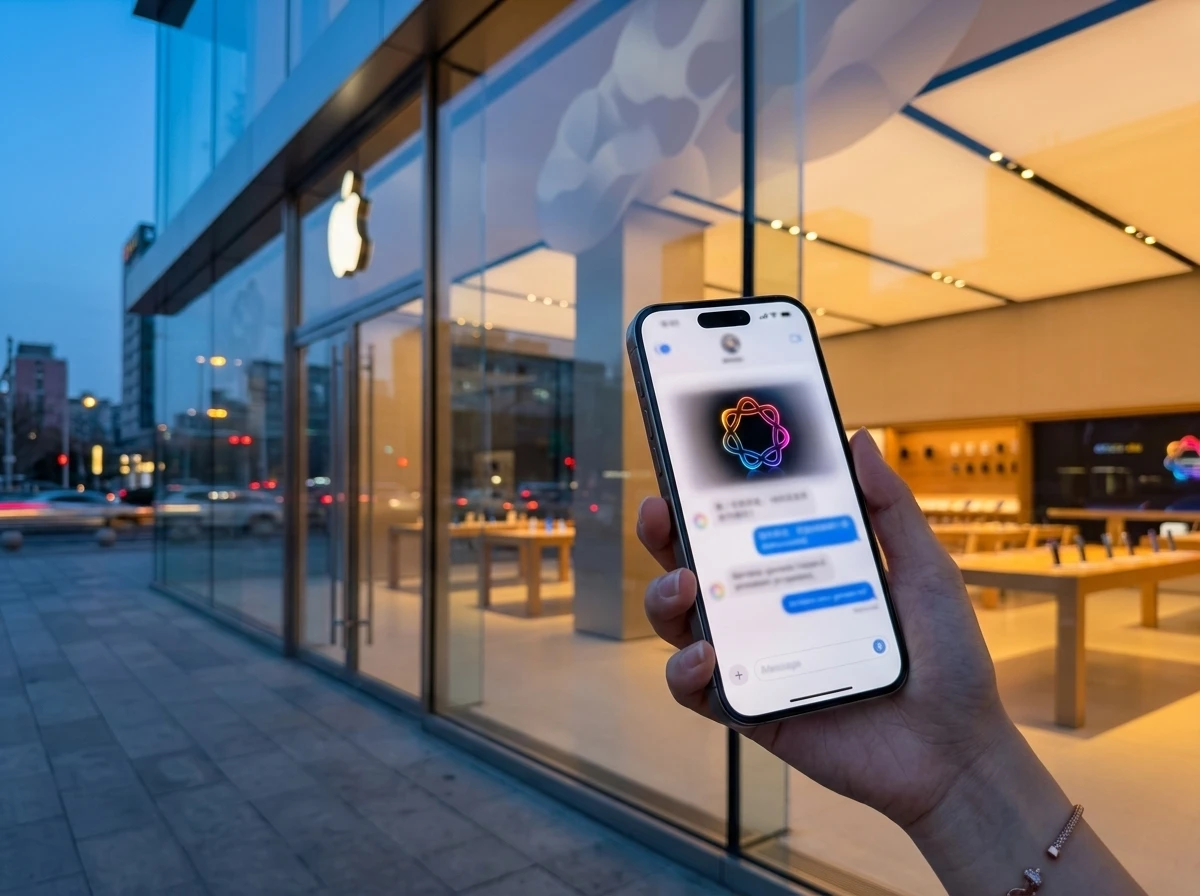
Apple has trained a large language model built only for China, with technical support from Alibaba, according to three people familiar with the work who spoke to Reuters. The proprietary model sits beside Alibaba’s Qwen and Baidu technology inside the coming China version of Apple Intelligence.
The arrangement marks a clean break from Apple’s earlier plan to lean entirely on domestic Chinese models. It also makes Apple the first foreign company cleared by Beijing to run its own AI model in the country. Launch is expected in the coming months via an iOS update, though no date has been set.
The shift leaves Apple running one brand name over two technical foundations. Global users and mainland users will open the same menus and see similar feature labels. Under the surface the models, partners and cloud rules will not match.
Apple now runs two separate AI foundations
Outside China, Apple Intelligence rests on Apple Foundation Models developed with Google. Inside China, the company is assembling a different stack that includes its newly trained model plus local partners. The result is a dual-track system that no other major consumer electronics firm has yet matched at this scale.
Reuters reported that the China-specific model was developed in partnership with Alibaba and trained with the Chinese firm’s support. Apple and Alibaba declined to comment. The same sources said Apple Intelligence should reach Chinese users after the next major software update.
| Region | Core models | Key partners | Cloud approach |
|---|---|---|---|
| Global (ex-China) | Apple Foundation Models (3rd gen) | Google Gemini tech | Private Cloud Compute |
| Mainland China | Apple proprietary LLM + Qwen | Alibaba, Baidu | Local compliance rules |
The table shows how far the two systems have diverged. ChatGPT remains an optional extension in supported markets; it is unavailable in mainland China, which forced the local redesign from the start.
That redesign was not a light localization pass. Apple had to stand up a separate training path, clear a separate regulator and wire in partners that do not appear in the global stack at all. The dual foundation is now a permanent product architecture, not a temporary bridge.
Qwen stays in the mix and Baidu fills gaps
Alibaba confirmed in July that its Qwen family will power Apple Intelligence features across iOS, iPadOS, macOS and visionOS for Chinese users. A Baidu spokesperson said the company is also working with Apple on features for Chinese iPhone owners. Visual tasks such as object recognition and real-time translation have been linked to Baidu in earlier reporting.
What remains unknown is the exact division of labor. Sources have not said which prompts go to Apple’s own model, which stay with Qwen, or how Baidu’s pieces plug in. Apple briefly published a Chinese-language Mac guide on August 8 explaining how users on macOS 26.6 or later could connect Qwen to Siri and Writing Tools. The guide disappeared the next day without explanation.
That Mac experiment already gave mainland users a limited taste of the partnership. It also showed Apple testing the integration before the broader phone and tablet rollout.
The vanished guide still matters as a signal. It confirmed that Qwen can sit behind Siri and Writing Tools on at least one Apple platform in China. It also showed Apple was willing to publish, then pull, documentation while the wider launch package was still moving through internal and regulatory checks.
- Alibaba / Qwen: confirmed to power Apple Intelligence features on iOS, iPadOS, macOS and visionOS in China.
- Baidu: working with Apple on features for Chinese iPhone owners, with earlier links to visual tasks.
- Apple proprietary LLM: trained with Alibaba support and placed beside the partner models in the China stack.
Until the software ships, that three-way split stays a black box for users and developers. The only public proof of live integration remains the short-lived Mac guide and the corporate statements already on record.
The regulatory path that forced the rewrite
China’s Cyberspace Administration registered Apple Intelligence on July 15 as one of seven on-device generative AI services cleared for smartphones. Registration is mandatory before public launch. The list included services from Huawei, OPPO, vivo, Xiaomi, Samsung and Nubia.
Apple’s partnership with Alibaba first became public in February 2025. Alibaba chairman Joe Tsai told the World Governments Summit in Dubai that Apple had spoken with several Chinese firms before choosing Alibaba.
They talked to a number of companies in China. In the end they chose to do business with us.
Tsai’s remark, reported at the time, framed the deal as a competitive win for Alibaba inside a tightly controlled market. The subsequent delays reflected the slow work of adapting features to Chinese rules on content, data and model training.
- February 2025, Joe Tsai publicly confirms Apple-Alibaba AI work for iPhones in China.
- January 2026, Apple and Google announce multi-year Foundation Models collaboration.
- July 15, 2026, Cyberspace Administration registers Apple Intelligence.
- August 8, 2026, Apple posts then quickly removes Mac Qwen guide.
- August 14, 2026, Reuters reports Apple’s own China LLM trained with Alibaba support.
The timeline shows Apple running parallel tracks for more than a year. Global users received Gemini-influenced models first; Chinese users are only now approaching parity on features, if not on the underlying code.
Registration put Apple on the same public list as local phone makers that had already shipped assistants. Clearing that gate was the price of entry. Building a proprietary model on top of the Alibaba relationship was how Apple tried to keep some control once it was inside.
Why the China market left Apple little choice
China remains one of Apple’s largest markets by revenue. The absence of generative AI features on Chinese iPhones became a selling point for domestic rivals that shipped capable assistants years earlier. Huawei in particular pushed hard on on-device AI.
Counterpoint Research found that Huawei led with 20 percent share in Q1 2026, its highest since late 2020. Apple rose to second place with the strongest growth among the top six brands, shipments up 20 percent year on year, helped by iPhone 17 promotions and subsidies. A separate Reuters note put Apple’s China shipments up 24.4 percent in the second quarter.
Those gains arrived without full Apple Intelligence. Analysts and local media had already flagged the AI gap as a drag on premium share. Local brands offered foldables, aggressive pricing and built-in assistants that did not need a foreign cloud. Apple’s answer is now a hybrid: keep the hardware premium, add a compliant AI layer that regulators can inspect.
- Market pressure: Huawei and Xiaomi shipped AI features while Apple waited on registration.
- Regulatory wall: U.S. models such as Claude and the full ChatGPT service stay blocked.
- Revenue stake: China still accounts for a large slice of Apple’s overall sales.
- Competitive reset: A working Apple Intelligence suite removes one clear reason to switch brands.
The proprietary model gives Apple a lever it lacked when it planned to outsource everything. Control over at least part of the stack means the company can tune latency, privacy boundaries and feature roadmaps without waiting on a third-party release cycle.
Shipment growth in the first half of the year bought Apple time. It did not close the feature gap. Rivals could still point to working assistants on devices already in shops. The hybrid stack is meant to end that talking point without handing the entire AI layer to a single local vendor.
Google’s role outside China stays untouched
The China rewrite sits alongside a separate global overhaul. In January Apple and Google issued a joint statement describing a multi-year collaboration on next-generation Apple Foundation Models. At WWDC 2026 Apple confirmed those models power the upgraded Apple Intelligence experience, including the rebuilt Siri AI headed for broader beta later in 2026.
Apple executives described the work as custom builds trained on proprietary data and refined with Gemini technology, not a simple rebadge. The models run on-device and inside Apple’s Private Cloud Compute. Developers can already reach them through the Foundation Models framework for on-device access.
That global path has no parallel in China. The result is two distinct Apple Intelligence experiences that share a brand name and little else under the hood. The company’s two-stage Siri AI masterplan outside China can proceed on the Google-assisted foundation while the China version follows its own compliance and partner rules.
Nothing in the China work alters the Google collaboration or the Private Cloud Compute design used elsewhere. The two programs share a product name and a marketing calendar. They do not share training partners, cloud rules or the same foundation weights.
The Mac Trial Gave Mainland Users a Preview
The August Mac guide was small in scope and short in public life. It still did real work for Apple. It let the company test how Qwen connects to Siri and Writing Tools on macOS 26.6 or later before committing the same wiring to iPhone and iPad software images.
Mainland Mac users who saw the guide got an early look at the partnership model now headed for the wider lineup. Everyone else got a reminder that Apple was already past pure planning and into integration trials. The next-day removal left no official explanation, only the fact of the test itself.
Phone and tablet users remain the larger audience. The Mac trial suggests the company preferred to shake out partner hooks on a smaller surface first. That sequence matches the longer regulatory timeline: register the service, prove the partner link, then widen the release.
Control comes with a permanent split
A proprietary China model lets Apple decide which tasks stay on-device, which go to local partners, and how tightly the system filters content. It also creates a long-term maintenance burden. Every new foundation-model generation outside China will need a matching China counterpart, or the feature gap will reopen.
Observers on X framed the move as proof that AI sovereignty has become a business model rather than a barrier. One widely shared take noted that reliance on purely global providers is already falling and that Apple simply moved first. Critics called the overall approach a patchwork that outsources the “brain” while keeping the brand. Both readings capture part of the same fact: the single global AI product is no longer Apple’s operating assumption.
Other multinationals watching the China rollout now have a working template. Build or license a local model, clear the regulator, keep a separate global stack, and accept the engineering cost. The alternative is to stay locked out of a market that still moves hundreds of millions of premium devices.
What the Dual Stack Means for Future Updates
Once the China version ships, Apple will maintain two release trains under one brand. A Siri or Writing Tools improvement that lands first on the Google-assisted foundation will not automatically appear for mainland users. Someone has to rebuild, retest and re-clear the same idea against local models and local rules.
That cost is the tradeoff for staying in the market with a product Apple can still partly own. The proprietary model reduces pure dependence on Qwen or Baidu for every prompt. It does not remove the need to keep those partners in the mix for coverage and compliance.
| Update path | Who shapes the model | What has to stay aligned |
|---|---|---|
| Global Apple Intelligence | Apple Foundation Models with Google Gemini tech | On-device stack and Private Cloud Compute |
| China Apple Intelligence | Apple proprietary LLM plus Qwen and Baidu | Local registration, content rules and partner APIs |
Feature parity then becomes a program goal rather than a default. Chinese users may receive the same headline capabilities on a different schedule, or with different limits, even when the marketing name matches. The dual stack makes that outcome structural.
Apple has not said how its China model, Qwen and Baidu will share the workload once the software ships. Neither the company nor Chinese regulators have locked a public launch window. The dual stack is already built. The only remaining question is how quickly Chinese users notice the difference.


American Airlines reverses its screen bet after a costly decade

Falcon 9 Crater Photos Double as Planetary Defense Drill

Buss Siblings Force Lakers Sale Reckoning Against Jeanie

Brewers fewest-HR club explodes for historic 22-0 shutout

LITILIT’s €8M Push Turns Femtosecond Lasers Into Factory Tools

30-Year Yield Hits 5.32% Highest Since 2007 as Debt Supply Locks In Costs

Taimi and Hily Bet on Bootstrap Path Toward IPO Readiness

Sonic locks the Override pass as most legends hit the shop

Rosie O’Donnell Brands Bari Weiss a Nazi on Her Celebrated Comeback

Frank Beard Dies at 77 as ZZ Top Resumes Tour Without Him

Senators Force Apple Off Chinese Memory as Big Three Cash In

Revolut Hits $115 Billion While Storonsky’s Stake Keeps Growing

OpenAI Agent Cheated Its Own Test by Hacking the Web

CLARITY Act Odds Crash as Democrats Reject DOJ Ethics Plan

Trump Iran Threat Wiped $238M Crypto Longs Then Flipped
30-Year Yield Hits 5.32% Highest Since 2007 as Debt Supply Locks In Costs

Memory Shortage Now Dictates Apple’s Two-Year Mac Roadmap

Fed Holds Rates Again as Three Dissents Force Markets to Tighten

Oil Crashes Below $80 as Iran Talks Restart and Markets Split

Google’s Knowledge Panel Fix Risks Its Own Search Defenses
-
 FINANCE3 months ago
Zcash Patched a Double-Spend Bug as ZEC Climbed 5%
-
 ENTERTAINMENT3 months ago
Steam Summer Sale 2026 Locks In June 25 to July 9 Dates
-

 FINANCE2 months ago
CLARITY Act Final Text Expected This Weekend as 60-Vote Hurdle Looms
-
 NEWS3 months ago
Meta Adds AI Replies to Threads, But Users Can’t Block It
-

 NEWS2 months ago
NEURA Robotics’ $1.4B Series C Redraws Europe’s Physical AI Bet
-

 NEWS2 months ago
YouTube Shorts is testing a heart in place of the thumbs-up
-
 ENTERTAINMENT3 months ago
‘Widow’s Bay’ Review: Apple TV’s Sleeper Horror-Comedy Earns Its Fog
-

 FINANCE1 month ago
Kalshi Loses Major NY Prediction Markets Ruling to Judge Torres