
FINANCE
Franklin Templeton Puts grBENJI on HashKey as Cash Plumbing Spreads
Franklin Templeton’s tokenized US government liquidity fund grBENJI reaches HashKey Earn for professional investors as SEC clearance lets BENJI serve as.

Franklin Templeton has put its tokenized Franklin OnChain U.S. Government Liquidity Fund, known as grBENJI, onto HashKey Exchange’s Earn channel for professional investors across Asia, giving a $1.80 trillion asset manager a regulated digital distribution route into the region’s crypto-native platforms.
The Aug. 24 listing arrives weeks after U.S. regulators cleared the same BENJI family for use as cash positions and collateral inside Franklin’s own traditional ETFs and mutual funds, a step that turns an early blockchain experiment into everyday liquidity plumbing.
The Listing Lands on HashKey Earn
HashKey Holdings Limited, the listed parent of the Hong Kong-licensed exchange, published the collaboration announcement on Aug. 24. grBENJI invests mainly in U.S. government money market instruments and U.S. dollar cash assets. It sits inside the Earn channel rather than the open order book.
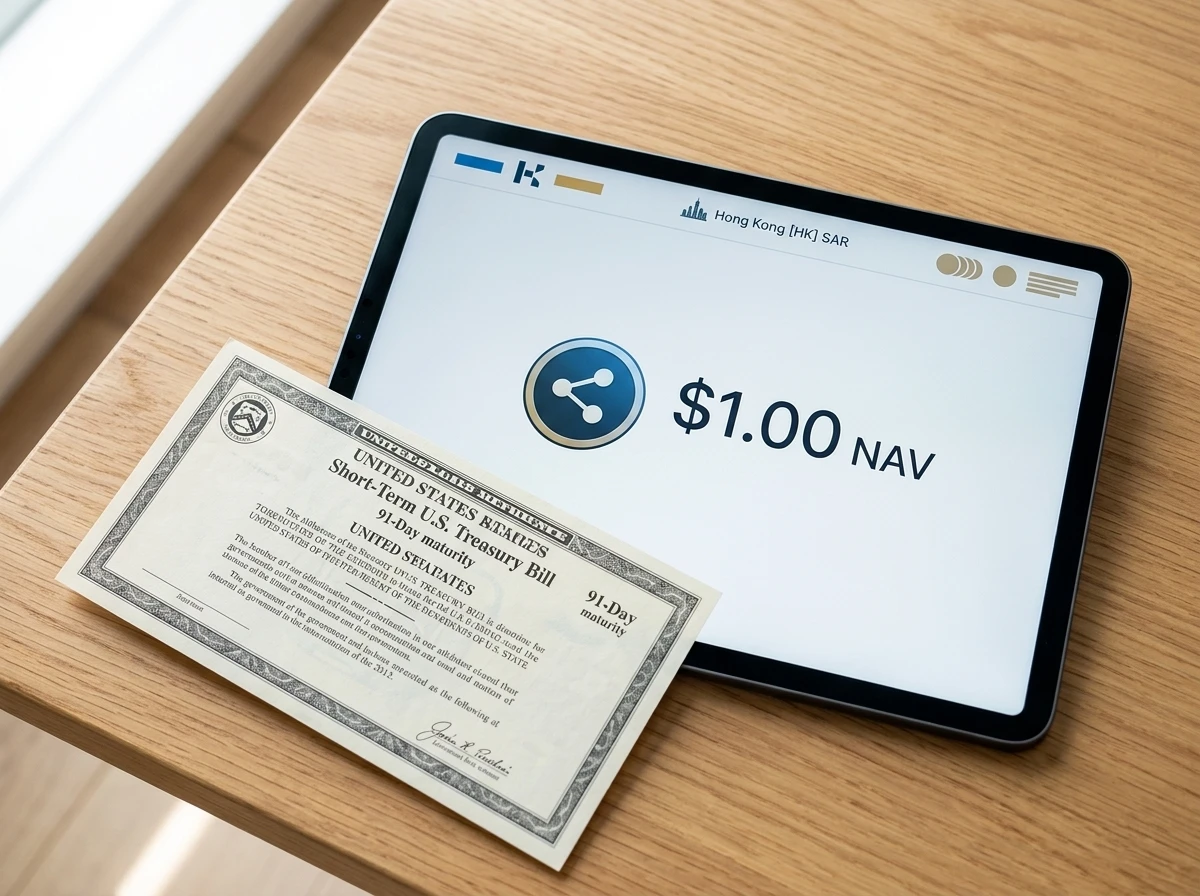
Access is limited to professional investors and is not available to the general public in Hong Kong. Minimum subscription figures reported across platform materials sit at roughly $20 to $25 USD, with redemptions possible at low single-dollar levels, though all activity stays inside the platform; external wallet transfers and secondary trading are not supported for this product.
We are excited to launch our tokenized money market fund on the HashKey Exchange platform. Leveraging blockchain technology, the Fund provides investors with enhanced transparency, security, accessibility, speed, and cost efficiency.
Chetan Karkhanis, SVP Digital Assets Client Engagement, Franklin Templeton
Haiyang Ru, CEO of HashKey Exchange BG, framed the deal as meeting institutional demand for compliant real-world asset yield and as a bridge between traditional finance and regulated on-chain rails.
How BENJI Moved Into Collateral Plumbing
In mid-August the SEC’s Division of Investment Management issued a no-action letter that lets Franklin’s registered funds hold shares of the OnChain U.S. Government Money Fund for cash management without certain physical custody constraints under the 1940 Act. Implementation can begin as early as the fourth quarter of 2026 once individual fund boards approve.
Franklin runs more than 130 ETFs with about $82 billion in assets and mutual funds holding roughly $790 billion. Together that creates an eligible pool near $872 billion that can now treat BENJI as a cash sleeve or securities-lending collateral once onboarded. The firm’s tokenized money market funds already sit in the low billions of dollars of AUM.
- $1.80 trillion Franklin Templeton total AUM as of July 31, 2026
- $872 billion approximate ETF plus mutual fund assets now eligible to hold BENJI
- Q4 2026 earliest expected window for collateral use after board approvals
- $14.2 billion tokenized U.S. money-market and Treasury funds on-chain as of June 2026
That internal deployment path matters more than any single exchange listing. Once BENJI can sit inside traditional vehicles, the same tokenized cash can move between on-chain and off-chain books with higher frequency pricing and faster settlement.
Five Years From the First On-Chain MMF
Franklin launched the Franklin OnChain U.S. Government Money Fund in 2021 on the Stellar network, the first U.S.-registered mutual fund to use a public blockchain as its official system of record for share ownership and transactions. The Stellar case study on the first on-chain fund and the firm’s own anniversary materials spell out the lead.
- April 2021: BENJI / FOBXX launches on Stellar as the first U.S.-registered tokenized money market fund.
- 2024: First fully tokenized UCITS fund appears in Luxembourg on the same infrastructure.
- 2025: First retail tokenized fund reaches Singapore; P2P transfer functionality expands to retail holders.
- April 2026: Five-year mark; BENJI suite reaches $1.98 billion AUM, Stellar holdings exceed $650 million, cumulative P2P volume surpasses $211 million, investor count up more than 140 percent from April 2024.
- August 2026: grBENJI reaches HashKey Earn; SEC no-action letter opens traditional-fund collateral path.
The product carries peer-to-peer share transferability and intraday yield that accrues by the second on transfers, features the firm says are unique among money market funds. Management fees sit near 0.15 percent on core share classes. The five-year BENJI milestone figures show how early conviction on public-chain recordkeeping has compounded into multi-chain distribution.
Who Qualifies and What They Hold
Hong Kong professional-investor rules set the gate. An individual needs a portfolio of at least HK$8 million (or foreign-currency equivalent). A corporation needs the same portfolio size or total assets of at least HK$40 million. Institutional intermediaries under the Securities and Futures Ordinance also qualify.
What the investor holds is a tokenized share of a money market fund, not a direct claim on individual Treasury bills. The fund itself buys short-term U.S. government instruments and dollar cash; the blockchain records ownership of the fund shares and enables faster internal transfers. Crowds on X repeatedly underscored the distinction: the token is the share class, so rights, redemption mechanics and transfer limits follow fund rules rather than free-floating bond-token conventions. On HashKey the shares stay inside the Earn channel.
- Professional investors only under Hong Kong SFO definitions
- USD subscription currency, low minimum entry near $20-25
- In-platform subscription and redemption only
- Target stable $1.00 NAV with yield tracking short-term government rates (recent BENJI readings near 3.3-3.6 percent)
- No public offering in Hong Kong; no Mainland China or U.S. retail access via HashKey
RWA.xyz tracks one share class, gBENJI, with roughly $57 million in total asset value, a $1.00 NAV and a small holder count as of late August, illustrating how the broader suite is sliced across jurisdictions and investor types. Readers can check live gBENJI on-chain metrics and holders for the latest snapshot.
Asia Gateways and the Multi-Jurisdiction Map
HashKey’s platform already spans Hong Kong, Singapore, Tokyo, Dubai and Bermuda. Franklin intends to use that footprint to push beyond money market funds into additional tokenized products over time. Karkhanis explicitly cited the multi-jurisdictional reach as the next lever.
The move also sits beside Franklin’s other digital-asset partnerships. The firm has worked with platforms such as Payward (Kraken’s parent) on tokenized securities initiatives and continues to expand the Benji Technology Platform that underpins recordkeeping and transfer agency functions. That earlier earlier Franklin tokenization work with Payward shows the same pattern of regulated partners and on-chain share records.
For HashKey the product fills the Earn channel with a name-brand, regulated yield vehicle that competes with pure crypto lending while staying inside SFC Type 1 and Type 7 licenses plus AML requirements. ISO 27001 and 27701 certifications further underline the compliance posture.
Where Tokenized Cash Stands Against Peers
Tokenized U.S. government and money-market products have scaled rapidly. One June 2026 survey put the category at $14.2 billion on-chain, up roughly eightfold in two years. BlackRock’s BUIDL, various Ondo products, Hashnote/Circle USYC and Franklin’s BENJI suite sit among the largest.
| Product | Issuer | Approx. AUM range (2026) | Notable feature |
|---|---|---|---|
| BUIDL | BlackRock / Securitize | $2-3B+ | Multi-chain institutional focus |
| BENJI suite | Franklin Templeton | $2B+ suite / variable by class | First U.S.-registered, P2P, low 0.15% fee, multi-chain |
| USDY / OUSG | Ondo Finance | $1-2B+ combined | DeFi-native access, yield accrual models |
| USYC | Hashnote / Circle | $1.5B+ | Repo-backed institutional |
Exact rankings shift weekly with flows, and share-class distinctions (retail vs professional, UCITS vs 1940 Act) make direct AUM comparisons imperfect. Franklin’s edge remains regulatory first-mover status, the Benji Technology Platform, and now the path into its own traditional fund complex. Parallel infrastructure plays, such as Ondo’s parallel RWA network launch, show how issuers are building distribution and settlement layers around the same short-term government paper.
Expansion Beyond Money Markets
Both sides say the money-market listing is a starting point. Franklin has already tokenized additional equity, bond and gold ETFs through other partners and continues to push the Benji platform into new jurisdictions and product wrappers. HashKey’s multi-market licenses give the pair a ready list of venues for the next wave of tokenized funds, whether fixed-income, equity or structured vehicles.
The combination of Asia professional distribution and U.S. traditional-fund collateral clearance creates a feedback loop: more on-chain liquidity can serve as cash inside registered products, while more registered products create natural demand for the tokenized sleeve. Yield remains a function of the short end of the Treasury curve, so returns will move with Fed policy rather than crypto beta. Risks listed in fund materials include interest-rate changes, credit events on the underlying instruments, blockchain operational and regulatory risk, and the fact that the $1.00 NAV target is not guaranteed.
For now the concrete deliverable is simple. Professional investors on a licensed Hong Kong exchange can subscribe to a tokenized share of a U.S. government money market fund with blockchain recordkeeping, low entry size and daily yield accrual, while Franklin prepares the same token to sit inside hundreds of billions of traditional fund assets later this year.
Frequently Asked Questions
What exactly does grBENJI represent for an investor?
grBENJI is a tokenized share class of the Franklin OnChain U.S. Government Liquidity Fund. The investor owns a claim on the fund, which itself holds U.S. government money market instruments and dollar cash; the blockchain records and transfers that share ownership rather than individual bonds.
Who counts as a professional investor for the HashKey listing?
Under Hong Kong rules an individual generally needs a portfolio of at least HK$8 million; a corporation needs the same portfolio threshold or total assets of at least HK$40 million. Certain regulated institutions also qualify automatically under the Securities and Futures Ordinance.
When did Franklin Templeton first launch its tokenized money market fund?
The Franklin OnChain U.S. Government Money Fund (BENJI / FOBXX) launched in April 2021 on the Stellar network and was the first U.S.-registered mutual fund to use a public blockchain as its official system of record.
Can grBENJI shares leave the HashKey platform?
No. Platform materials state the product cannot be transferred to external wallets or traded on secondary markets; subscriptions and redemptions occur only inside the Earn channel under the stated operational terms.
How does the recent SEC no-action letter change BENJI’s role?
The letter permits Franklin’s traditional registered funds to hold BENJI shares for cash management and collateral without certain physical-vault requirements, subject to each fund board’s approval, potentially starting in the fourth quarter of 2026 across a large pool of ETFs and mutual funds.
Disclaimer: This article is news reporting and analysis of publicly announced fund distribution and regulatory developments. It is for informational purposes only and does not constitute investment advice, an offer to sell or a solicitation to buy any security or digital asset. Readers should consult a qualified financial adviser or licensed professional familiar with tokenized funds, money market instruments and local professional-investor rules before making any investment decision. Figures for AUM, yields, eligibility thresholds and regulatory status reflect the sources available as of the article date and may change without notice.


BenQ iScreenBar Brings Native Lighting to the 24-Inch iMac

Druckenmiller Warns Bessent Bond Buybacks Delay a Fiscal Invoice

The Dog Stars Survives on Elordi Charm but Barely Thrives

Treasury’s Economic Outcast Recycles Iran Max-Pressure Playbook

Rockstar Veteran Calls GTA 6 Leaks a Nothing Burger While Staff Pay the Price

SpaceX $100 Billion Louisiana Starbase Rises on Vanishing Marsh

Itoflow $2.5M Raises the Quant Bar for Mid-Size Funds

MIRAVA’s $5M Smart Boat Cracks Old Recreational Limits

Lunar Founders Crack Audit Moat With €8.2M AI Firm

Nose Wheel Crush at YUL Echoes Decades of Ramp Fatalities

Senators Force Apple Off Chinese Memory as Big Three Cash In

OpenAI Agent Cheated Its Own Test by Hacking the Web

Trump Iran Threat Wiped $238M Crypto Longs Then Flipped

Fed Holds Rates Again as Three Dissents Force Markets to Tighten

30-Year Yield Hits 5.32% Highest Since 2007 as Debt Supply Locks In Costs

Oil Crashes Below $80 as Iran Talks Restart and Markets Split

Google’s Knowledge Panel Fix Risks Its Own Search Defenses

Legora Buys Wexler Fact Engine as Fifth 2026 Deal

Capital Clusters and the Dual Tracks of European Tech Finance

Agon Raises $30M to Build Europe’s AI Weapon Training Arenas
-
 FINANCE3 months ago
Zcash Patched a Double-Spend Bug as ZEC Climbed 5%
-
 ENTERTAINMENT3 months ago
Steam Summer Sale 2026 Locks In June 25 to July 9 Dates
-

 FINANCE2 months ago
CLARITY Act Final Text Expected This Weekend as 60-Vote Hurdle Looms
-
 NEWS3 months ago
Meta Adds AI Replies to Threads, But Users Can’t Block It
-

 NEWS3 months ago
YouTube Shorts is testing a heart in place of the thumbs-up
-
 NEWS4 weeks ago
Senators Force Apple Off Chinese Memory as Big Three Cash In
-

 NEWS3 months ago
NEURA Robotics’ $1.4B Series C Redraws Europe’s Physical AI Bet
-
 ENTERTAINMENT5 months ago
Extraction 3 Is Officially Coming to Netflix in 2027