
NEWS
Apple’s ‘All Systems Glow’ WWDC26 Teaser Points at New Siri
Apple’s WWDC26 teaser, ‘All systems glow,’ points to a rebuilt Siri now running on a custom Google model, due at the June 8 keynote. Here’s what to expect.

Apple has posted a short WWDC26 teaser on its YouTube channel carrying one line: “All systems glow for WWDC26.” The phrase, a twist on “all systems go,” landed roughly a week before the keynote and points hard at the rebuilt Siri the company has been promising since 2024. Apple’s developer conference runs June 8 through 12, and the keynote starts at 10 a.m. Pacific.
The glow-up is arriving. The catch is how it gets here: the smarter Siri Apple teased two years ago now leans on a custom model built by Google, and the teaser quietly marks the week that bet goes public.
What ‘All Systems Glow’ Is Pointing At
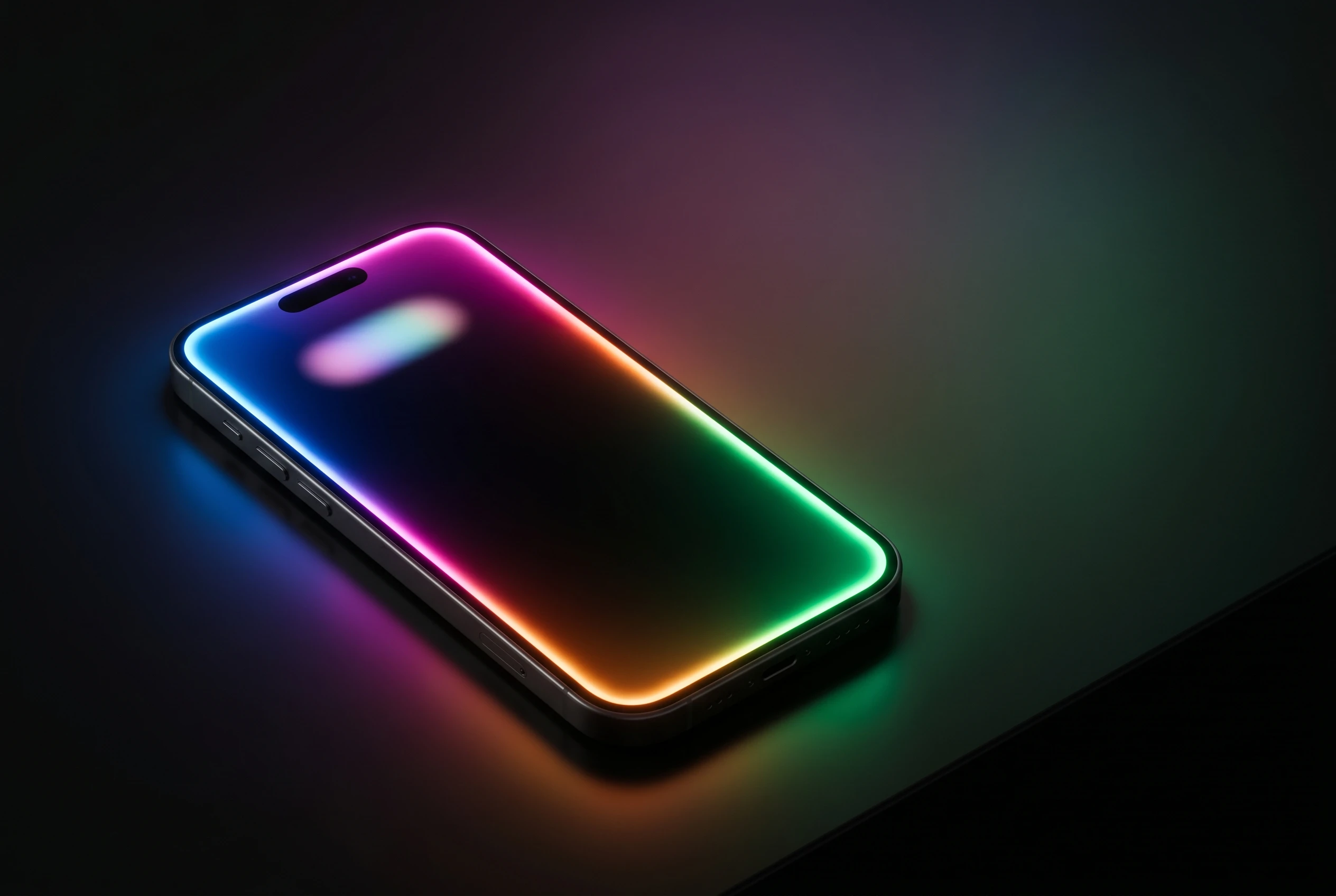
Apple’s marketing lines are rarely random. The company tends to seed its keynote art with hints, and the wordplay here does double duty. “Glow” reads first as a nod to Siri’s visual identity. With iOS 26, Apple swapped the old voice orb for a colorful light that wraps the entire edge of the screen when you summon the assistant. That glowing border is now Siri’s signature look.
The same effect runs through the teaser Apple published on its official YouTube channel, where the WWDC26 lettering pulses in shifting colors against a dark backdrop. Reports describe a redesigned Siri interface in iOS 27 that moves into the iPhone’s Dynamic Island, sitting in a permanent dark theme that blinks in the same palette as the conference artwork, regardless of whether the phone is in light or dark mode.
Read the other way, “glow” is Apple talking about Siri itself. The assistant has spent two years as the weak spot in an otherwise polished platform. A glow-up is exactly the framing a company reaches for when it wants to signal that the embarrassing part is fixed. Both readings land in the same place, and both put Siri at the center of the June 8 stage.
The Siri Apple Promised in 2024 Finally Has a Date
To understand why a single tagline carries this much weight, rewind to the last time Apple stood on this stage with big Siri news. At WWDC in June 2024, the company demonstrated a personalized assistant that could read your screen, track your emails and messages, and take actions across apps on your behalf. Apple then ran iPhone 16 advertising built around those exact features.
Most of it never shipped on schedule. The rollout slipped repeatedly, and the gap between the ads and the software became a genuine credibility problem for the company. The path from promise to delay looked like this:
- June 2024: Apple shows personal-context Siri at WWDC and folds it into Apple Intelligence.
- Late 2024: iPhone 16 marketing leans on Siri features that are not yet live.
- March 2025: Apple publicly delays the personalized Siri features, citing quality issues.
- Mid 2025: Bloomberg’s Mark Gurman reports an internal target of spring 2026.
- Early 2026: The features miss iOS 26.4 and the iOS 26.5 betas, pushing the full revamp toward iOS 27.
Apple’s own explanation was that testing turned up accuracy problems, so it held the work back and rebuilt the underlying architecture. That rebuild is the thread connecting the 2024 demo to next week’s keynote. WWDC26 is where the company has to show the finished version of something it sold to customers two years early.
Why Google’s Gemini Is Now Doing the Thinking
The rebuilt architecture is the part Apple has said the least about in public, and it is the most consequential. The new Siri will be powered by a custom version of Google’s Gemini, the large language model (LLM, the type of system that generates conversational responses) that competes with OpenAI’s ChatGPT. Apple is licensing the brains rather than building its own foundation model from scratch.
According to reporting by Bloomberg’s Mark Gurman, Apple agreed to pay Google around 1 billion dollars a year for access to a Gemini model with roughly 1.2 trillion parameters, the tunable values that shape what a model can do. That is about eight times the size of the cloud model Apple currently runs for Apple Intelligence, which sits near 150 billion parameters. The deal, surfaced by several outlets in January 2026, gives Apple far more capability than its in-house systems could deliver on the same timeline.
The arrangement is a quiet admission. For a company that markets itself on owning the full stack, renting the most important new component from a direct rival is a real shift, and it is the reckoning underneath the celebration. Apple’s answer to the obvious privacy question is its Apple Intelligence privacy framework, called Private Cloud Compute, which runs queries on hardware-isolated servers with encryption and, the company says, shares no user data with Google and retains nothing after a request is handled. Whether that reassurance holds up under scrutiny is one of the things developers will press on once the keynote ends. Our earlier look at how iOS 27’s Siri pairs Liquid Glass design with a Google model goes deeper on the mechanics.
A Standalone Siri App That Talks Back
So what does the user actually get? The most concrete leak is a dedicated Siri app, something the assistant has never had. Today Siri is a system layer you invoke; the rumored version is a destination you can open and hold a conversation in, much like you would with a chatbot.
Reports point to a handful of changes that, taken together, reposition Siri as a genuine ChatGPT competitor rather than a command-and-control voice tool:
- Voice and text input in one place, so you can type a follow-up instead of speaking every request.
- A conversational memory that holds context across a back-and-forth, the thing the old Siri never managed.
- The new dark, glowing interface anchored to the Dynamic Island and a “Search or Ask” entry point.
- Personal-context features, reading your on-screen content, emails and files, finally switched on.
If you have used Gemini, you already have a rough sense of how the assistant will feel, because the response engine is largely Google’s. The Apple layer is the interface, the device integration, and the privacy wrapper. The intelligence underneath comes from somewhere else.
The Rest of the June 8 Software Lineup
Siri will headline, but it shares the stage with Apple’s usual annual software refresh. The version numbers jump to 27 across the board, and the keynote, per Apple’s official WWDC schedule, promises “AI advancements and exciting new software and developer tools.” Here is what each platform is expected to bring.
| Platform | What to expect |
|---|---|
| iOS 27 | The Siri revamp, the new assistant app, and continued Liquid Glass design refinement |
| iPadOS 27 | Siri and Apple Intelligence updates carried over from iOS, plus multitasking tweaks |
| macOS 27 | System-wide Siri changes and developer tooling for Apple Intelligence apps |
| watchOS 27 | Assistant and notification updates tuned for the wrist |
| tvOS 27 | Interface and Siri refinements for Apple TV |
| visionOS 27 | Software updates for the Vision Pro headset |
One thing the lineup will not include is new hardware. Apple saves its devices for the fall, so the iPhone, Apple Watch and Vision Pro updates due in September stay off the June agenda. The full slate of sessions and labs is laid out on the WWDC26 developer page for anyone planning to follow along. For investors weighing the stakes, we covered why Apple’s stock cleared 300 dollars with Apple Intelligence still unfinished heading into this keynote.
Frequently Asked Questions
When Is the WWDC 2026 Keynote and How Can I Watch It?
The keynote is Monday, June 8, 2026, at 10 a.m. Pacific Time, which is 1 p.m. Eastern. Apple will stream it on Apple.com, the Apple TV app, and its YouTube channel. The wider conference runs online through June 12.
What Does ‘All Systems Glow’ Mean?
It is a play on “all systems go” and a hint at Siri. Apple’s iOS 26 wraps the screen edge in a colored glow when you summon the assistant, and the same glowing look appears in the WWDC26 artwork, signaling that a redesigned Siri is the keynote’s centerpiece.
Is Apple’s New Siri Powered by Google?
Yes. The rebuilt Siri runs on a custom version of Google’s Gemini model that Apple is licensing, reportedly for about 1 billion dollars a year. Apple handles the interface and processes requests through its Private Cloud Compute servers rather than building its own foundation model.
Will the New Siri Work on My Current iPhone?
Apple Intelligence currently requires an iPhone 15 Pro or newer, or the iPhone 16 and 17 lines, because of on-device chip demands. The new Siri is expected to follow the same hardware requirements, so older iPhones are unlikely to get the full revamp.
Will Apple Announce New Hardware at WWDC 2026?
No. WWDC is a software event, and Apple typically reserves device launches for its September event. Expect iOS 27, iPadOS 27, macOS 27 and the rest of the platform updates, not new iPhones or Macs.
The teaser does its job in five words. The real test is on June 8, when Apple has to make the assistant it sold in 2024 actually work in front of a live audience.


Veridue Raises $4 Million to Speed Energy Deal Diligence

Healey Adds a £150m Rung for Northern Scale-Ups

Ten Deals Took Most of Europe’s August Tech Money

Holmes Hired Fielder to Film Her Last Days

Molten Bets £100m of Plc Cash on Late-Stage Tech

Garlinghouse Cited Dutch Gold, and London Got the Bars

byFounders Bets $4.3 Million on Fluencify After $2M ARR

Alpha Gang Puts A-List Stars on a Zellner Wager

Angel Bets a Recut PG-13 Chase on Ritchson and Wilson

Flex IT and T1A Combine to Own Corporate Device Supply

Walter’s TWG Insists No Fraud as Insurer Probes Force Cleanup

30-Year Yield Hits 5.32% Highest Since 2007 as Debt Supply Locks In Costs

PCE Stays at 3.7% as Gas and Tariffs Outrun Coming Revisions

Evernorth S-4 Clears Path for Active XRP Treasury on Nasdaq

Astute’s $1.2M bet makes B2B creator deals feed AI discovery

Strategy Parks $1.59B Cash While Bitcoin Stack Stays Flat

Instinct Hits $2.5 Billion as AI Agent Access Sparks Trust Fights

CLARITY Act Cloture Opens a Door Ethics Still Blocks

Oracle’s 2.8 GW Bloom Deal Exposes the AI Power Bypass

Amber’s €7M locks Mittelstand knowledge inside Europe
-
 FINANCE3 months ago
Zcash Patched a Double-Spend Bug as ZEC Climbed 5%
-
 ENTERTAINMENT3 months ago
Steam Summer Sale 2026 Locks In June 25 to July 9 Dates
-

 FINANCE2 months ago
CLARITY Act Final Text Expected This Weekend as 60-Vote Hurdle Looms
-
 NEWS4 months ago
Meta Adds AI Replies to Threads, But Users Can’t Block It
-
 ENTERTAINMENT5 months ago
Extraction 3 Is Officially Coming to Netflix in 2027
-

 NEWS3 months ago
YouTube Shorts is testing a heart in place of the thumbs-up
-

 NEWS1 month ago
Senators Force Apple Off Chinese Memory as Big Three Cash In
-

 NEWS3 months ago
NEURA Robotics’ $1.4B Series C Redraws Europe’s Physical AI Bet