
NEWS
EU Inc. Draws Fire, Upvest Bags $125M, and UK Bets Big on Quantum

The European tech scene just delivered one of its most packed weeks in recent memory. From a landmark corporate policy proposal in Brussels to a mega fintech raise in Berlin and a billion-pound quantum bet in London, the past seven days shaped the future of innovation across the continent. Here is what happened and why it matters.
EU Inc. Promises a Unified Europe but Delivers 27 Flavors
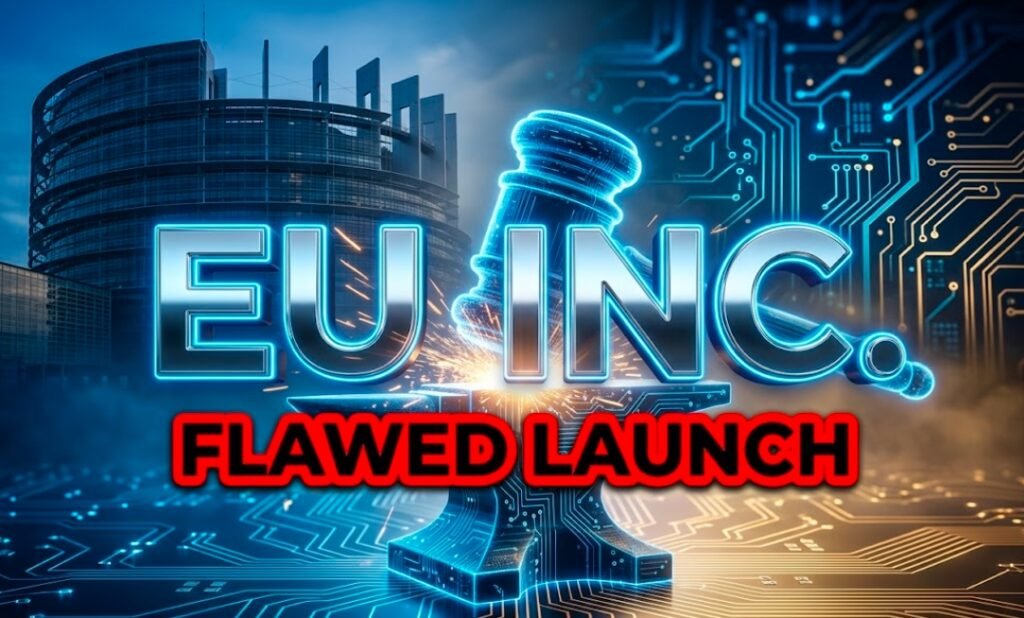
6 The European Commission presented its proposal for EU Inc., a new single set of corporate rules, building the cornerstone and starting point for the EU’s 28th regime. 5 Backed by over 22,000 founders and investors, this is a moment many in the startup world have been waiting years for.
The concept is straightforward. 10Currently, entrepreneurs and innovative companies face a fragmented corporate legal landscape, with 27 national legal systems and more than 60 company legal forms in place. It can take a company weeks or even months to set up, slowing growth and raising costs.
EU Inc. wants to change that. 6Any entrepreneur will be able to create a company within 48 hours, from anywhere in the European Union, and fully online. 46EU Inc. companies will require less than 100 euros and no minimum share capital to get going.
There are other wins too. 5EU Inc. companies will have the flexibility to create different classes of shares with varying economic or voting rights, which can help founders protect their business against hostile takeovers. The proposal also includes EU-wide employee stock option plans and fully digital processes for company management.
But critics say the proposal falls far short of its promise.
41 Critics argue that the proposal does not yet deliver a true 28th regime. By relying on national courts and registries, the risk is that there will be “27 different flavors” of EU Inc., rather than a single, predictable system. 43 Lucien Burm, chair of the Dutch Startup Association, wrote on LinkedIn that the proposal “still relies too much on 27 national systems, 27 legal cultures and, in practice, 27 possible versions.” 48 Advocacy groups called on Brussels to create a central court for dispute resolution. Instead, 10 the Commission calls on EU countries to consider setting up specialised judicial chambers or courts with the authority to handle disputes on EU Inc. company law. The word “consider” is doing a lot of heavy lifting there. 10 Given its key importance for the EU’s competitiveness, the Commission is calling on the European Parliament and the Council to reach an agreement on the EU Inc. proposal by the end of 2026. Whether that deadline holds will depend on how willing member states are to make real concessions.
European tech funding EU Inc Upvest quantum computing 2026
Key takeaway: EU Inc. is a historic step forward for European startups, but the gap between the vision of “one Europe, one market” and the reality of 27 national legal systems remains wide open.
Upvest Raises $125M as Europe’s Fintech Rails Get Stronger
While Brussels debated policy, Berlin was busy closing deals.
11 Upvest announced that it has raised $125M, a round composed of $90M in equity led by Sapphire Ventures and Tencent Holdings, alongside a $35M debt facility still being finalised. 11 The round values the company at €640M, nearly double the €360M valuation it carried when it closed its previous round in December 2024.
That kind of valuation jump turns heads for a reason.
11 Upvest builds the plumbing beneath Europe’s investing apps. Its API-based platform allows banks, neobanks, and fintechs to offer stock trading and investment products to their own customers without building the underlying infrastructure themselves. 11 Revolut, N26, DKB, and Santander’s Openbank all sit on its rails.
The growth numbers speak for themselves:
- 11 In 2025, Upvest processed more than 100 million investment orders on behalf of clients.
- 11 The client roster now exceeds 30 financial institutions.
- 15 CEO Martin Kassing told Bloomberg the company aims to reach more than €100 million in annualized revenue and profitability within the next 24 months.
Where is the money going? 12The new capital will help quickly launch specific pension products, like Germany’s Altersvorsorgedepot and the UK’s SIPPs, as well as AI-driven wealth solutions.
16 There are also plans to roll out “AI-supported investment engines” that would allow AI developers and financial institutions to build autonomous, hyper-personalised advisory services for everyday retail investors at scale. 15 This latest raise is Upvest’s second major funding event in roughly 15 months. The pace signals something bigger. Retail investing across Europe is accelerating fast, and Upvest is positioning itself as the infrastructure layer that every bank and fintech will need.
UK Pledges £1 Billion to Win the Quantum Computing Race
Across the Channel, the UK government made its own bold move.
22 The UK will spend more than £1 billion ($1.3 billion) on quantum computing research over the next four years, as governments boost investment into a technology that’s increasingly considered critical to national security. 25 The announcement is part of a pioneering programme worth up to £2 billion of government investment, announced by the Technology Secretary and the Chancellor.
Here is the scope of the investment:
| Area | Funding |
|---|---|
| Quantum Computing Procurement | Up to £1 billion |
| Quantum Computing R&D | Over £500 million |
| Quantum Sensing and Navigation | £400 million |
| Quantum Networking | £125 million |
| Infrastructure and Skills | £90 million+ |
23 Central to the strategy is a first-of-its-kind procurement program, “ProQure: Scaling UK Quantum Computing,” which will invite companies to develop and test advanced systems, with the most promising candidates selected to build large-scale machines by the early 2030s.
The economic promise is massive. 25Estimates show quantum could boost productivity by 7% in the next two decades, creating more than 100,000 jobs in the process. That would mean £212 billion worth of economic impact, the equivalent of adding the combined annual GDP of Wales and Northern Ireland.
27 Technology Secretary Liz Kendall emphasised that the UK intends to avoid repeating what she described as earlier missteps in artificial intelligence, where domestic talent and companies often migrated abroad. “We need to learn the lessons and make sure we give our brilliant scientists, spinouts and startups the ability to stay here and make it happen.”
The timing is no accident. 28The investment comes as governments worldwide increase spending on quantum technologies. The European Union is raising a €5 billion fund for quantum and other critical technologies, while Japan has also identified quantum computing as a priority area for national investment.
A Record Week for European Tech Funding
Beyond these three headline stories, the numbers across the continent tell a striking tale.
31 Last week alone, more than 85 tech funding deals worth over €4 billion were tracked across Europe, along with over 5 exits and M&A transactions. 31 The top three industries that raised the most were cloud (€1.7 billion), artificial intelligence (€1 billion), and legaltech (€488.9 million). 31 Regionally, the UK took first place (€1.9 billion), followed by France (€1.2 billion) and Sweden (€474.7 million).
Other notable deals from the week include:
- WorkFlex secured €37M to automate cross-border workforce compliance out of the Netherlands.
- Edra, backed by Sequoia, raised $30M in a Series A to turn enterprise data into self-improving AI agents.
- Partech announced a €300M Impact Fund targeting Europe’s next wave of industrial and climate tech leaders.
The M&A space was active too. Amazon acquired Zurich-based Rivr, the company behind stair-climbing delivery robots. Meanwhile, UK-based Nscale snapped up a major US data centre and signed an AI compute deal with Microsoft.
What This Week Tells Us About Europe’s Tech Future
Step back and look at this week as a whole, and a clear picture forms. European tech is growing up, but not without growing pains.
EU Inc. shows political will exists to unify the continent’s startup landscape. But political will without proper execution risks adding yet another layer of confusion. Upvest shows that when the infrastructure is right, capital follows quickly and at serious scale. And the UK’s quantum bet shows that governments are willing to write big checks when they believe a technology can define the next decade.
47 The share of global VC funds raised in the EU is just 5%, compared to 52% in the US and 40% in China. Closing that gap requires more than just policy announcements. It requires real, tangible systems that let founders build without borders.
This was a week that reminded us European tech is no longer a sideshow. It is a force that the world is watching. The question now is whether the systems being built today can match the ambition of the people building tomorrow.
What do you think about the EU Inc. proposal? Will it truly help startups scale across Europe, or is it just another layer of red tape? Drop your thoughts in the comments below.


Majors Fights Campus Caliphate as Daily Wire Ambitions Fray

Uber Bets $10 Billion Cash on Robotaxi Platform Play

Ahbstra ARK Pulls 500 Litres Daily From Dry Mediterranean Air

Nest Thread 1.4 Quietly Unifies Multi-Brand Smart Home Meshes

Cable Gateways Push Wi-Fi 7 Past Early Adopters in the US

Pixel Quick Settings Finally Gets Full Layout Reorder in Canary 2608

WhiteBIT Spot Bots Fill UK Gap Left by Derivatives Ban

Motorola Edge 70 Neo Leak Doubles Down on Bold Pantone Colors

Platter Turns Food Spreadsheets Into Sticky Supply Infrastructure

Circle Puts Native USDC on OKX X Layer for AI Rails

Marker AI Writing Startup Lands $13M Seed Led by Index Ventures

Meta’s Muse Spark 1.1 Beats Rivals on Price, Trails on Coding

CS2 Premier Season 5 Lands With Cache and a C4 Damage Rework

Bessent’s No-CBDC Applause Line Can’t Save the CLARITY Act

Trump Iran Threat Wiped $238M Crypto Longs Then Flipped

CLARITY Act Odds Crash as Democrats Reject DOJ Ethics Plan

Nintendo’s Switch 2 Battery Fix for Europe Comes With a Catch

Audi’s 2026 S5 Bets That Restraint Beats the Horsepower Wars

Quantum Systems’ $1.2 Billion Round Exposes Defense Tech’s Winner Gap

OpenAI Agent Cheated Its Own Test by Hacking the Web
-
 FINANCE2 months ago
Zcash Patched a Double-Spend Bug as ZEC Climbed 5%
-
 ENTERTAINMENT2 months ago
Steam Summer Sale 2026 Locks In June 25 to July 9 Dates
-

 FINANCE1 month ago
CLARITY Act Final Text Expected This Weekend as 60-Vote Hurdle Looms
-
 NEWS3 months ago
Meta Adds AI Replies to Threads, But Users Can’t Block It
-
 ENTERTAINMENT3 months ago
‘Widow’s Bay’ Review: Apple TV’s Sleeper Horror-Comedy Earns Its Fog
-
 NEWS5 months ago
U.S. Navy Deploys Solar-Powered Lightfish Drone to Patrol Oceans
-
 FINANCE2 months ago
CLARITY Act Floor Vote Likely Shifts to August, Lummis Says
-

 FINANCE1 month ago
Kalshi Loses Major NY Prediction Markets Ruling to Judge Torres