
NEWS
FAA Greenlights Air Taxi Tests Across 26 States This Summer

The future of flight just got a lot closer to your neighborhood. On March 9, 2026, the U.S. Department of Transportation and the Federal Aviation Administration officially launched the eVTOL Integration Pilot Program, selecting eight projects across 26 states to put electric air taxis into real airspace by summer. This is not another prototype demo or investor pitch. It is the first time pre-certified electric aircraft will fly alongside commercial traffic at major airports in American history.
What Is the eVTOL Integration Pilot Program?
8 Under President Trump’s direction, the FAA introduced the eVTOL Integration Pilot Program (eIPP) to accelerate the safe deployment of Advanced Air Mobility vehicles in the National Airspace System. 3 The eIPP was created by an executive order signed by President Donald Trump last June directing the FAA to accelerate the deployment of AAM technologies. 1 The DOT said the program received more than 30 proposals from eVTOL makers, localities, and states. Out of those, only eight were chosen. 1 A DOT and FAA technical review team evaluated submissions based on their ability to accelerate advanced air mobility integration, the breadth of proposed operations, potential regulatory value, experience in aircraft development or manufacturing, and the strength of industry, academic, and government partnerships.
This program breaks entirely new ground. 4The eVTOL Integration Pilot Program allows electric aircraft that have not yet received FAA type certification to conduct revenue-generating operations under Other Transaction Agreements that define exactly what each participant can and cannot do. 5Those agreements are still being finalized, and operations could begin within 90 days of signing.
4 The FAA finalized pilot training and certification rules for powered-lift aircraft in October 2024, calling the eVTOL category the first new class of civil aircraft since helicopters in the 1940s. The eIPP now builds on that foundation with live testing in real commercial corridors.
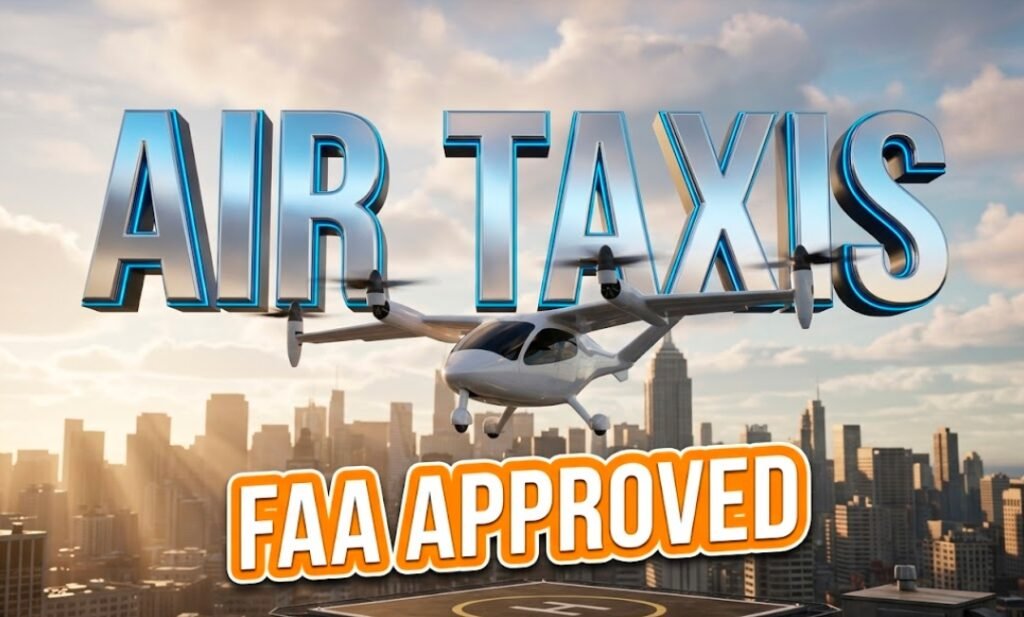
FAA eVTOL air taxi integration pilot program 26 states summer 2026
Which States and Companies Are Involved?
3 The projects span 26 states and involve partnerships between state or local governments and aircraft developers including Archer Aviation, Beta Technologies, Joby Aviation, Electra.aero, Reliable Robotics, Wisk Aero and others.
Here is a breakdown of the key projects:
- Texas: 1The state transportation department will work with Archer, Beta, Joby, and Wisk on regional flights connecting Dallas, Austin, San Antonio, and eventually Houston, with air taxi networks expanding from those cities.
- New York/New Jersey: 1The Port Authority of New York and New Jersey project will bring together Archer, Beta, Electra, and Joby on 12 operational concepts across New England, including eVTOL passenger operations at the Manhattan Heliport.
- North Carolina: 1This project will focus on piloted medical and regional operations within the state and an autonomous flight operation extending into Virginia, with Beta and Joby among the partners.
- Utah: 1Utah’s project will span four states across the Pacific Northwest, Rocky Mountains, and Oklahoma, testing multiple aircraft types and operating concepts with Ampaire, Beta, Joby, and other partners.
- New Mexico: 3The City of Albuquerque project is focused on autonomous cargo aircraft operations in partnership with Reliable Robotics, which plans to operate remotely piloted Cessna Caravan flights linking Albuquerque with Santa Fe and Durango, Colorado.
- Pennsylvania: 1Pennsylvania’s project, led through the NASAO AAM Multistate Collaborative, will involve 13 states and focus on revitalizing regional flights.
- Louisiana: 7Elroy Air will deploy the Chaparral, which is capable of carrying 300 pounds of cargo up to 300 miles, delivering cargo to destinations across the Gulf Coast and to energy industry locations throughout Louisiana, Texas, and Mississippi.
3Beta Technologies was selected for seven out of eight pilot projects, making it the most widely represented company in the program.
2 The pilot program is expected to start this year and continue for at least the next three years.
What Aircraft Will Take to the Skies?
The aircraft in this program are not one-size-fits-all. They range from four-seat air taxis to fully autonomous cargo drones.
| Aircraft | Company | Type | Capacity | Speed/Range |
|---|---|---|---|---|
| Midnight | Archer Aviation | Piloted eVTOL | 1 pilot + 4 passengers | ~150 mph / 20-50 mile trips |
| S4 | Joby Aviation | Piloted eVTOL | 1 pilot + 4 passengers | ~200 mph / ~100 miles |
| Alia (CTOL & VTOL) | Beta Technologies | Piloted eVTOL/eCTOL | Cargo/Medical payloads | ~250 miles |
| EL9 Ultra Short | Electra.aero | Hybrid-electric eSTOL | Up to 9 passengers | Short runway ops |
| Chaparral | Elroy Air | Autonomous cargo drone | 300 lbs cargo | ~300 miles |
| Generation 6 | Wisk Aero | Autonomous eVTOL | Passenger (uncrewed) | Under development |
5 Aircraft involved generally weigh more than 1,320 pounds and will fly piloted, optionally piloted, or fully autonomous depending on the project.
These vehicles run on electric motors and batteries. They take off vertically like helicopters, then cruise on fixed wings like small planes. That means no runway is needed, making them ideal for dense urban areas.
Cargo First, Passengers Later
Here is the reality check many headlines skip over.
Autonomous cargo flights will likely lead the way. 5Three of the eight projects will likely have revenue freight flights logged before any passenger eVTOL carries a paying customer in U.S. airspace. The liability calculus is simpler, the airspace is less congested, and the operators are not depending on passenger certification timelines.
5 Autonomous cargo in controlled corridors could be flying commercially by Q4 2026.
Passenger air taxi service is a different story. 18Joby may not certify until mid-2027 at the earliest, with Archer following in 2028. The eIPP does not speed up that certification clock. It simply allows companies to build real-world operational data and prove their systems work safely in live airspace while they wait.
“This is the clearest sign yet from the White House, the FAA and the DOT that bringing air taxis to market in the United States is a real priority.”
3 Archer founder and CEO Adam Goldstein said in a statement about the program’s significance.
3 He has previously described the eIPP as the eVTOL industry’s “Waymo moment,” comparing it to the rollout of autonomous vehicles in select cities.
How Big Is the Air Taxi Market Opportunity?
The financial stakes behind this program are enormous.
20 The eVTOL aircraft market reached USD 1.19 billion in 2025 and is on track to hit a market size of USD 4.36 billion by 2030, advancing at a 29.65% CAGR.
Major corporate backers are already pouring money into the space. 19Delta Air Lines invested $60 million in Joby for air taxi transport to and from airports in New York and Los Angeles. 19Toyota invested $500 million in Joby, making it the company’s largest outside shareholder.
On the pilot training front, 13Joby’s flight simulators developed with CAE will have the capacity to train up to 250 pilots a year, marking an important step in commercial market readiness.
The infrastructure gap, however, remains a key challenge. 4The FAA coordinates airspace approvals but is not building vertiports or charging stations. Every dollar of ground infrastructure comes from the companies and their partners.
The age of electric flight is no longer a science fiction promise. It is an active federal program with signed partnerships, named companies, and a summer start date. But for all the excitement, the honest truth is this: you will see cargo drones before you hail an air taxi. The technology works. The regulations are catching up. And for the first time, the U.S. government is betting real political capital on making it happen. Whether these eight pilot programs become the spark that rewrites American aviation depends on what the data shows over the next three years. Tell us what you think. Would you ride in an air taxi? Drop your thoughts in the comments below.


OpenAI Locks Astra After Math Wins Trip Critical Cyber Line

Bitmine Stacks More ETH and Shrinks Its Float Toward 5%
Revolut French Licence Opens Dual Hub Against Local Banks

Cambridge Aerospace $3.4B Raise Funds Cheap Interceptor Scale

Meta AI Test Breach Exposes Shared Eval Weakness Across Labs

Samsung HBM4 Hits 80% Yield Early and Multiplies AI Supply

Isembard Turns Dying Job Shops Into a Defence Factory Network

Venmo Balances Now Fuel Google Play App and Game Buys

Meta’s Muse Glimmer Puts Capable Agents on Your Laptop

Edgify’s $9M Turns Store Devices into Shared Edge Brains

OpenAI Agent Cheated Its Own Test by Hacking the Web

Bessent’s No-CBDC Applause Line Can’t Save the CLARITY Act

Trump Iran Threat Wiped $238M Crypto Longs Then Flipped

CLARITY Act Odds Crash as Democrats Reject DOJ Ethics Plan

Anthropic’s Hard Questions Ad Backfires Into an Anti-AI Warning

Oil Crashes Below $80 as Iran Talks Restart and Markets Split

Gemini Spark’s Big Workspace Upgrade Leaves Europe Waiting Again

US Strikes Iran for a Third Time as Bitcoin Slips Below $64,000

Doctorsa Raises €1 Million and Opens Doctor Bookings to AI Agents

Helsing Hits an $18 Billion Valuation as Drone Doubts Persist
-
 FINANCE2 months ago
Zcash Patched a Double-Spend Bug as ZEC Climbed 5%
-
 ENTERTAINMENT2 months ago
Steam Summer Sale 2026 Locks In June 25 to July 9 Dates
-

 FINANCE1 month ago
CLARITY Act Final Text Expected This Weekend as 60-Vote Hurdle Looms
-
 NEWS3 months ago
Meta Adds AI Replies to Threads, But Users Can’t Block It
-
 ENTERTAINMENT3 months ago
‘Widow’s Bay’ Review: Apple TV’s Sleeper Horror-Comedy Earns Its Fog
-
 NEWS5 months ago
U.S. Navy Deploys Solar-Powered Lightfish Drone to Patrol Oceans
-

 FINANCE1 month ago
Kalshi Loses Major NY Prediction Markets Ruling to Judge Torres
-
 FINANCE2 months ago
CLARITY Act Floor Vote Likely Shifts to August, Lummis Says