
BUSINESS
Italian Airports Enforce Jet Fuel Rations Amid Supply Crisis

Several Italian airports are enforcing strict jet fuel rations this week as the ongoing Middle East conflict chokes global supply lines. Authorities have placed caps on fuel for short flights to prevent storage tanks from running dry.
This unexpected squeeze hits right at the peak of the busy spring travel season. Passengers are now bracing for potential delays and schedule adjustments across Europe.
Middle East Conflict Chokes European Energy Lines
The rapid escalation of hostilities in the Middle East has severely disrupted maritime trade. A blockade in the Strait of Hormuz is currently trapping oil shipments that Europe desperately needs.
Jet fuel prices have essentially doubled since the unrest began in late February. The global market price recently surged to nearly 195 dollars per barrel.
Europe relies heavily on the Persian Gulf for its aviation energy needs. Data shows that the region supplies about half of all jet fuel imported into the European Union.
A sudden drop in shipping capacity forces airports to dip into their local reserves much faster than usual.
This supply chain bottleneck is the primary reason why aviation fuel access is suddenly shrinking across Italy. Refineries simply cannot process and deliver alternative crude oil fast enough to meet the heavy spring travel demand.
Suppliers like Air BP Italy have no choice but to limit deliveries to local airports.
[PULL QUOTE] “If the conflict continues, there will be consequences, but for now, diplomacy is at work to keep the situation under control.”
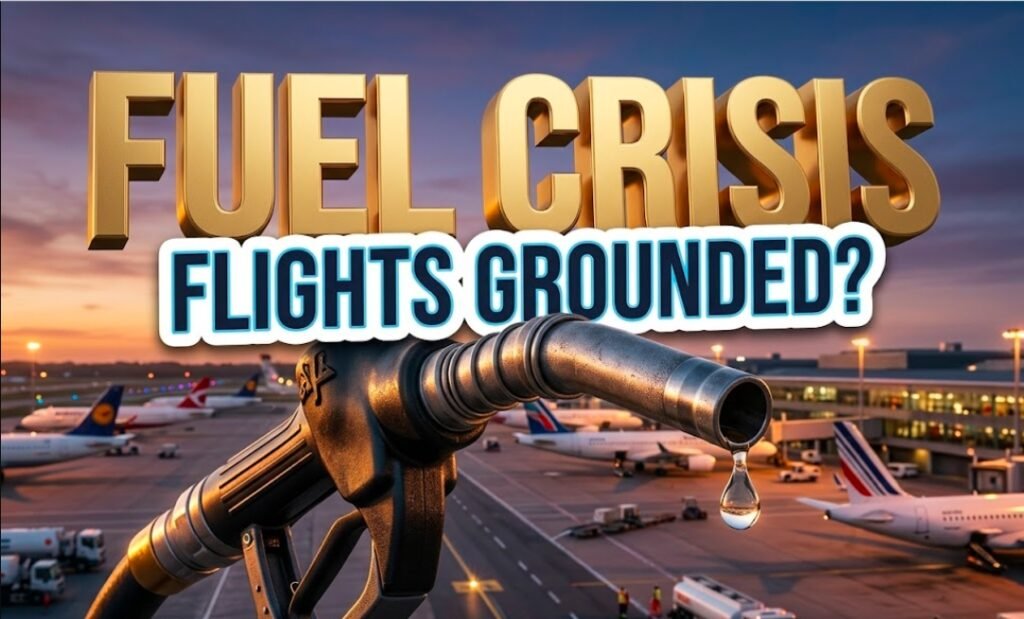
grounded passenger airplane waiting for jet fuel supply truck
Global Oil Markets React To Regional Instability
The root cause of this aviation bottleneck traces directly back to the blockade of the Strait of Hormuz. This narrow waterway is arguably the most critical chokepoint for global oil supply.
Roughly one fifth of the daily global oil demand passes through this specific maritime corridor. Mutual clashes and subsequent retaliations have paralyzed commercial vessel traffic in the region.
Rising war risk premiums and longer transit routes around Africa are driving up base costs. These extended delivery times are severely tightening the supply chain.
The International Energy Agency recently noted that physical shortages of diesel and jet fuel could rapidly spread beyond Italy. April and May are pinpointed as the most vulnerable months for the entire European aviation network.
Regions relying heavily on Gulf of Basra supplies are facing the most severe pressure. European aviation simply does not have enough independent fuel reserves to ignore this geopolitical crisis indefinitely.
Strict Rationing Rules Hit Major Italian Hubs
Airlines flying into Italy received emergency notices over the weekend regarding immediate fuel limits. Priority access to the fuel pumps is now strictly reserved for medical flights, government aircraft and long flights exceeding three hours.
All other commercial operations face strict rationing.
Local aviation authorities have placed a firm ceiling on fuel for standard short domestic and European flights. Aircraft falling into this category can only take on a maximum of 2000 liters per turnaround.
This temporary rationing order remains in effect at least through the first half of April.
Here is a look at the operational status across key Italian aviation hubs:
| Airport Name | Location | Current Fuel Restriction Status |
|---|---|---|
| Venice Marco Polo | Northern Italy | Priority only; 2000 liter cap for short flights |
| Milan Linate | Northern Italy | Strict rationing implemented |
| Bologna Guglielmo Marconi | Central Italy | Strict rationing implemented |
| Brindisi Airport | Southern Italy | Deficit reported; carriers must bring extra fuel |
| Treviso Airport | Northern Italy | Priority only; 2000 liter cap for short flights |
How Airlines Will Handle The Immediate Fuel Squeeze
Carriers are already shifting their operational strategies to keep planes in the sky. When a destination airport lacks adequate fuel, airlines deploy a tactic called tankering.
This involves loading the aircraft with extra fuel at the departure airport to avoid refueling upon arrival.
Tankering solves the immediate fuel shortage but creates new logistical headaches. Extra fuel adds massive weight to the airplane. Heavier planes burn more fuel during the flight and face strict landing weight limits.
Airlines might have to leave cargo or passenger baggage behind to balance the scales.
Major carriers like Deutsche Lufthansa have already readied emergency plans to tackle the fuel shortage. These backup strategies include potentially grounding certain planes if demand drops and fuel prices escalate further.
Low cost airlines are also feeling the immense financial pressure of the current market. Executives from Ryanair have warned that a prolonged price surge would inevitably become a massive issue for the entire industry.
INFOGRAPHIC STYLE LIST: Airline Crisis Response Tactics
- Tactical Tankering: Filling up at origin airports to bypass Italian fuel restrictions.
- Rerouting Flights: Diverting planes to neighboring European hubs for quick refueling stops.
- Aircraft Swaps: Deploying smaller and more fuel efficient planes on Italian routes.
- Schedule Padding: Adding extra time between flights to accommodate slower refueling procedures.
Ticket Prices Set To Soar For Everyday Travelers
The soaring cost of kerosene will eventually trickle down to the average vacationer. Jet fuel is typically the largest operating expense for any commercial airline.
As the cost per barrel approaches record highs, carriers cannot absorb these financial blows indefinitely.
Major airline executives have already signaled that ticket prices will need to rise significantly to cover these unprecedented expenses. Some estimates suggest fares could jump by 20 percent if the Middle East blockade drags on for several months.
Travelers planning summer vacations should expect to see these price hikes very soon.
Passengers are advised to book their tickets as early as possible. Purchasing flights early locks in the current price before upcoming fuel surcharges take effect.
[CALL OUT BOX] TRAVEL INSURANCE WARNING: Flight cancellations caused by global fuel shortages are often classified as extraordinary circumstances. This means airlines might be legally exempt from paying standard passenger compensation. Always purchase comprehensive travel insurance before you fly.
What Passengers Must Know Before Flying This Spring
Aviation officials maintain that there is no need for widespread panic just yet. The current fuel pressure is largely compounded by the massive surge in holiday travel demand.
Airport operators emphasize that other fuel suppliers are still active and working to cover the gaps left by the temporary rationing.
Passengers should take a proactive approach to their upcoming travel plans. Keep a close eye on your airline application for sudden gate changes or last minute schedule adjustments.
Pack essential items in your carry on bag in case checked luggage gets bumped due to aircraft weight limits.
The aviation industry is incredibly resilient and accustomed to navigating geopolitical storms. While the current fuel squeeze presents a genuine challenge, coordinated efforts between suppliers and airlines will keep the global network moving.
We want to hear your thoughts on this escalating situation. Are you worried about your upcoming spring vacation plans being disrupted by these sudden fuel restrictions? Share your thoughts and travel experiences on X using the trending hashtag #ItalyTravelCrisis and join the conversation today.


Immersive Maps Upgrade Erases Traffic Colors on Android Auto

XRPL 3.3.0 Nodes Hit 62 Percent as FixCleanup Nears 80 Percent Bar

L’Atitude 52°N Camera Beats Meta but Exact a Real Price

Strategy Parks $1.59B Cash While Bitcoin Stack Stays Flat

Pixel Watch 5 Battery Unlock Makes Health Guardian Trends Real

JCB Hydromax Hits 406 mph and Proves Digger Hydrogen Engines

Pixel 11 Pro Modem Swap Finally Cools the Daily Drive

OpenAI ChatGPT for Teens Locks In Study Mode After Safety Suits

Bessent’s Bond Buybacks Lift Bitcoin Past 80K More Than Yields

Pixel Camera 11 Dials Bring Convenient Control With a Catch

Senators Force Apple Off Chinese Memory as Big Three Cash In

OpenAI Agent Cheated Its Own Test by Hacking the Web

Trump Iran Threat Wiped $238M Crypto Longs Then Flipped

Fed Holds Rates Again as Three Dissents Force Markets to Tighten

30-Year Yield Hits 5.32% Highest Since 2007 as Debt Supply Locks In Costs

Oil Crashes Below $80 as Iran Talks Restart and Markets Split

Google’s Knowledge Panel Fix Risks Its Own Search Defenses

Legora Buys Wexler Fact Engine as Fifth 2026 Deal

Agon Raises $30M to Build Europe’s AI Weapon Training Arenas

Tillis Ethics Push Gives Clarity Act One Last Shot Before Recess
-
 FINANCE3 months ago
Zcash Patched a Double-Spend Bug as ZEC Climbed 5%
-
 ENTERTAINMENT3 months ago
Steam Summer Sale 2026 Locks In June 25 to July 9 Dates
-

 FINANCE2 months ago
CLARITY Act Final Text Expected This Weekend as 60-Vote Hurdle Looms
-
 NEWS3 months ago
Meta Adds AI Replies to Threads, But Users Can’t Block It
-

 NEWS3 months ago
YouTube Shorts is testing a heart in place of the thumbs-up
-
 NEWS4 weeks ago
Senators Force Apple Off Chinese Memory as Big Three Cash In
-

 NEWS3 months ago
NEURA Robotics’ $1.4B Series C Redraws Europe’s Physical AI Bet
-
 ENTERTAINMENT5 months ago
Extraction 3 Is Officially Coming to Netflix in 2027