
NEWS
Meta’s $18 Billion Teen Deal Bets Rivals Must Match Limits
Meta’s up-to-$18 billion AG settlement locks two-hour teen caps and night blocks, but the extra cash and one-hour rule kick in only if rivals join the same standard.

Meta agreed this week to pay up to $18 billion over ten years and rewrite how teenagers use Facebook and Instagram after a bipartisan group of attorneys general accused the company of designing the apps for compulsive use. The proposed deal, still awaiting court approval, ends a federal trial that began August 18 and resolves 2023 claims that the platforms drove mental-health harms while misleading the public and collecting data from children under 13.
Roughly $12.7 billion is locked in for the states. Another $5.3 billion, plus tighter one-hour daily limits, arrives only if YouTube, TikTok and Snap adopt matching rules and matching payments. That contingency is the mechanism that turns a liability settlement into something larger.
The structure does more than close one case. It sets a price on industry-wide teen rules and leaves Meta free to keep a looser default if peers stay out. Court entry of the consent judgment remains the gate. Until then the product changes sit on paper only.
The Numbers Behind the Up-to-$18 Billion Figure
Participating states and territories total about 52 when Texas’s separate $1 billion deal is counted alongside the main multistate pact covering 47 states, the District of Columbia and several territories. California Attorney General Rob Bonta’s office projects a California share of $1.5 to $2.1 billion, earmarked for youth mental-health work though the Legislature and Governor will decide final spending. Washington will receive $237 million guaranteed and up to nearly $339 million. Massachusetts is in line for up to $516 million.
| Component | Amount | Condition |
|---|---|---|
| Guaranteed payments to settling states | ~$12.7 billion | Paid over 10 years in installments |
| Contingent top-up | ~$5.3 billion | YouTube, TikTok (and Snap in some accounts) match rules and payments |
| Texas separate settlement | Over $1 billion | Independent of main deal |
| Q3 2026 legal charge | About $10 billion | Booked by Meta this quarter |
| Cambridge Analytica-related add-on | ~$459 million total | Resolves older privacy claims for many states |
State shares already disclosed show a wide spread even before final allocation formulas land.
| State | Projected share | Notes |
|---|---|---|
| California | $1.5 to $2.1 billion | Youth mental-health earmark; Legislature and Governor decide spending |
| Massachusetts | Up to $516 million | Part of main multistate pact |
| Washington | $237 million guaranteed, up to nearly $339 million | Ceiling depends on contingent top-up |
| Texas | Over $1 billion | Separate deal, outside main MDL |
Meta expects the $10 billion charge in the third quarter of 2026 and says its full-year guidance for operating income and capital spending of $130 billion to $145 billion remains unchanged. Shares rose about 1 percent on the news after an early 4 percent spike, as investors treated the settlement as removing a $1.4 trillion trial-risk overhang that Meta itself had flagged.
The ten-year installment schedule spreads the guaranteed $12.7 billion rather than forcing a single cash hit. The contingent $5.3 billion stays off the books unless rivals match. That split keeps the near-term charge closer to the $10 billion figure Meta has already signaled for Q3 2026.
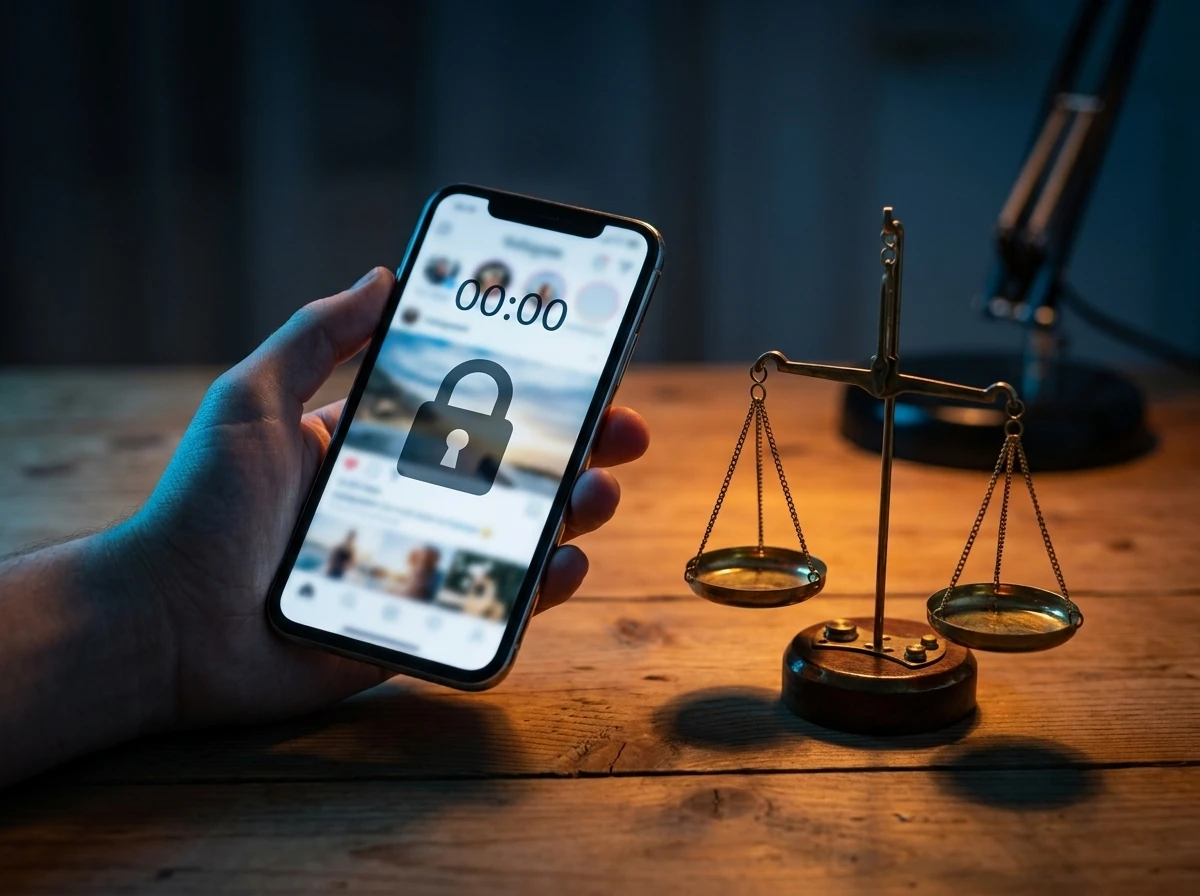
What Changes for Teens on Facebook and Instagram
If a federal judge enters the consent judgment, users under 18 face a default package that parents alone can loosen. The core items are:
- A combined two-hour daily time limit across Facebook and Instagram that only a parent can disable.
- A default block from midnight to 6 a.m.; if rivals match, the window expands to 10 p.m.-7 a.m.
- Most notifications muted from 10 p.m. to 7 a.m. and during school hours (roughly 8 a.m.-3 p.m. on school days).
- Like and reaction counts hidden from teens.
- Cosmetic surgery and plastic-surgery filters blocked.
- An optional non-personalized chronological feed that does not use ranking algorithms to maximize time spent.
- Stronger age-assurance tools to flag under-18 users and remove under-13 accounts, plus improved parental-supervision dashboards.
- Mandatory response to 90 percent of teen harmful-content reports within six hours.
An independent auditor will monitor compliance. Meta is barred from false or misleading claims about its safety features. Most protections run for the ten-year agreement term and compliance date of six months after the effective date. Direct messages and certain safety alerts stay exempt from some mute rules.
Parents hold the only key to the daily cap and the overnight block. Teens cannot self-override. The chronological feed remains optional, so the ranking systems that drive engagement stay available unless a household turns them off. Age-assurance upgrades and the six-hour report clock add operational duties Meta must meet under audit rather than by voluntary policy.
The midnight-to-6 a.m. block is the first overnight rule teens will meet. The longer 10 p.m.-7 a.m. window appears only if YouTube, TikTok and Snap join. School-hour muting of most notifications already narrows the daytime interrupt cycle even before any rival match.
How the Productive Pauses Interrupt Endless Scroll
Beyond the hard daily cap, the settlement requires “productive pauses.” After 15 minutes of continuous use the app must interrupt the user, then again at the 60- and 90-minute marks. Washington Attorney General Nick Brown called the overall package the largest state consumer settlement outside Big Tobacco and noted the pauses are meant to break the compulsive loop that endless scrolling creates. The two-hour combined limit lasts five years unless rivals join, at which point each platform drops to 60 minutes for the full decade.
These features build on Meta’s existing Teen Accounts tools rolled out earlier, but the attorneys general had argued those tools were insufficient and optional. The settlement makes the defaults mandatory and auditable.
The pause ladder works as a sequence of friction points inside a single session:
- 15 minutes: first forced interrupt on continuous use.
- 60 minutes: second interrupt if the session continues.
- 90 minutes: third interrupt before the hard daily cap closes the remaining window.
Together with the two-hour ceiling, the pauses convert open-ended scrolling into timed segments. The five-year duration on the two-hour rule creates a mid-deal checkpoint: either rivals match and every covered app moves to 60 minutes for the full decade, or Meta keeps the higher cap while peers stay unbound by the same consent terms.
Florida Walks Away Calling the Payout Peanuts
Not every attorney general signed on. Florida Attorney General James Uthmeier rejected the deal, writing that the payouts are “peanuts compared to the profound harms Meta’s profit-driven addictive features inflicted on kids, and a slap on the wrist for a trillion-dollar corp that’ll pay more to lawyers than to the states.” He vowed to proceed to trial in Florida, citing the New Mexico jury award of hundreds of millions as a better benchmark for a larger state. Texas, never part of the main MDL, struck its own parallel settlement exceeding $1 billion.
The payouts are peanuts compared to the profound harms Meta’s profit-driven addictive features inflicted on kids, and a slap on the wrist for a trillion-dollar corp that’ll pay more to lawyers than to the states. We’ll see them at trial.
James Uthmeier, Florida Attorney General
New Mexico’s attorney general also stayed outside the main deal, saying it fell short of court-ordered safeguards already won in that state against romantic AI chatbots and adult targeting of minors.
The split leaves two tracks. Settling states take installment cash and the consent-judgment rules. Florida prepares for its own trial and treats the New Mexico award as the yardstick. New Mexico keeps the chatbot and adult-targeting safeguards it already secured and declines to trade them for the multistate package. Texas, by staying outside the MDL from the start, locked in its own sum above $1 billion without joining the main terms.
Where the Billions Go and What Meta Keeps
Most of the money will flow to state treasuries or dedicated youth mental-health and online-safety programs. Meta did not admit liability. Personalized ranking and advertising systems that generate the bulk of its revenue remain untouched. Reuters reporting noted the company’s core money machine is left intact; the settlement costs far less than a lost trial and far less than one year of Meta’s AI-related capital spending. The company said it partnered with the attorneys general “to set a new industry standard” and called on peers to join so teens face consistent rules across apps.
That invitation is not altruism. It is the second-order design.
Because the ad and ranking stack stays in place, the commercial model that funds the apps does not change under the consent terms. The cost comparison investors used is straightforward: maximum settlement exposure versus a single year of AI-related capital spending, and versus the $1.4 trillion trial-risk overhang Meta had flagged. Guidance for operating income and for capital spending of $130 billion to $145 billion is unchanged, which told markets the legal bill fits inside existing plans.
The Industry Lever Meta Built Into the Contract
If YouTube, TikTok and Snap refuse to adopt comparable time limits, night blocks and age-assurance measures and refuse to pay matching amounts, Meta keeps the two-hour default and skips the extra $5.3 billion. If they join, Meta’s own teen limits tighten to one hour and the full $18 billion comes due. The structure creates a built-in rival discount on the time caps: Meta can either force parity or retain a freer teen experience while rivals stay looser. Crowds on X quickly noted the irony that the same company accused of addiction design is now using the settlement to police the rest of the market.
Investors largely shrugged. One market thread observed that Meta’s planned CapEx this year alone is roughly eight times the maximum settlement, so the legal bill is a rounding error next to the AI spend. The settlement removes uncertainty without touching the ad engine. Whether TikTok and YouTube accept the invitation will decide if the teen social-media day shrinks industry-wide or whether Meta simply operates under a new, self-imposed ceiling while competitors do not.
Court approval is still required. Implementation of the new defaults is months away. The extra billions and the one-hour rule remain optional for Meta’s rivals. Until those pieces move, the two-hour clock and the midnight block are the concrete changes teens will feel first.
How the Timeline Runs From Trial to Defaults
The path from filing to product change already has fixed markers drawn from the case record and the proposed judgment.
- 2023: States bring claims over mental-health harms, public statements, and data collection from children under 13.
- August 18: Federal trial opens.
- This week: Parties announce the proposed deal covering up to $18 billion and the teen default package.
- Court entry: A federal judge must still approve the consent judgment before any default binds.
- Six months after the effective date: Compliance date for most protections.
- Q3 2026: Meta books the about $10 billion legal charge.
- Ten-year term: Core protections and payment schedule run across the decade; the two-hour cap holds five years unless rivals match and move everyone to 60 minutes.
Each step gates the next. Without court approval the defaults do not switch on. Without rival matches the contingent $5.3 billion and the one-hour rule never trigger. The auditor’s clock starts only after the effective date, and the six-hour harmful-content response duty rides on that same compliance window.
What Stays Open Until Rivals Answer
The consent package resolves Meta’s exposure to the settling states, yet three variables remain outside Meta’s sole control. Court approval can still reshape timing. Florida’s separate trial track can still produce a different damages picture. Rival platforms can still decline the match.
If peers stay out, teens on Facebook and Instagram meet a two-hour combined cap, a midnight-to-6 a.m. block, productive pauses, hidden like counts, blocked surgery filters, and stronger age assurance, while users on unmatched apps face whatever rules those services already use. If peers join, the night window lengthens to 10 p.m.-7 a.m., daily caps fall to 60 minutes across the group, and the full payment stack comes due.
State spending choices will decide how much of the $12.7 billion guaranteed pool reaches youth mental-health programs versus general treasuries. California’s $1.5 to $2.1 billion range is explicitly earmarked for that work, subject to the Legislature and Governor. Other states have not all published final uses. The Cambridge Analytica-related add-on of about $459 million closes older privacy claims for many states without altering the teen-product terms.
For households the near-term list is short: the two-hour clock, the overnight block, the pause interrupts, and the parent-only override. Everything else, from the one-hour rule to the extra billions, waits on decisions Meta does not make alone.


Dolly Parton’s $450 Million Fortune Keeps Working After Her Death

SpaceX’s $60B Cursor Buy Immediately Costs It OpenAI Models

Rays Forever Home Wins County Vote as College and Taxpayers Carry the Load

Apple TV Hits $14.99 as Sports and Hits Bill Comes Due

Swift Telescopes Restart as Orbit Drop Accelerates

Oracle’s 2.8 GW Bloom Deal Exposes the AI Power Bypass

Galaxy S26 Beta 7 Ports Fold 8 AI as Stable Nears

Walmart Pays $50 Million to Close Federal Opioid Pharmacy Case

Space Mirror Demo Revives 1993 Russian Night-Light Test

Measles Death Dispute Deepens Distrust in Pennsylvania Outbreak

Senators Force Apple Off Chinese Memory as Big Three Cash In

Trump Iran Threat Wiped $238M Crypto Longs Then Flipped

30-Year Yield Hits 5.32% Highest Since 2007 as Debt Supply Locks In Costs

Oil Crashes Below $80 as Iran Talks Restart and Markets Split

Strategy Parks $1.59B Cash While Bitcoin Stack Stays Flat

Astute’s $1.2M bet makes B2B creator deals feed AI discovery

Capital Clusters and the Dual Tracks of European Tech Finance

SpaceX Stock Rebound Tests Real Demand Before Huge Unlock

BlackRock Turns Cash Empire Into Stablecoin Reserve Rails

The 20% Savings Ideal Meets a 2.7% Reality Check
-
 FINANCE3 months ago
Zcash Patched a Double-Spend Bug as ZEC Climbed 5%
-
 ENTERTAINMENT3 months ago
Steam Summer Sale 2026 Locks In June 25 to July 9 Dates
-

 FINANCE2 months ago
CLARITY Act Final Text Expected This Weekend as 60-Vote Hurdle Looms
-
 NEWS4 months ago
Meta Adds AI Replies to Threads, But Users Can’t Block It
-

 NEWS3 months ago
YouTube Shorts is testing a heart in place of the thumbs-up
-
 NEWS4 weeks ago
Senators Force Apple Off Chinese Memory as Big Three Cash In
-

 NEWS3 months ago
NEURA Robotics’ $1.4B Series C Redraws Europe’s Physical AI Bet
-
 ENTERTAINMENT5 months ago
Extraction 3 Is Officially Coming to Netflix in 2027