
FINANCE
Refund Delays Are the Price of a 233% Chargeback Fraud Spike
Retail chargeback fraud jumped 233% in 2025, pushing merchants and card networks to tighten reviews and slow refunds for honest shoppers too.

Retail e-commerce chargebacks jumped 233% in 2025, the steepest increase of any sector, and the bill for that surge is landing on shoppers who did nothing wrong. Banks and merchants are running more transactions through fraud review before releasing money, adding days or weeks to routine refund requests.
Card networks are part of the squeeze too. Visa has lowered the dispute threshold that triggers penalties against merchants twice in four months, right as social media tutorials taught a new generation of shoppers how to dispute a legitimate charge instead of simply asking for a refund. A system built to catch bad actors is now slowing down everyone standing in line behind them.
TikTok Tutorials Fuel a Surge in ‘Friendly Fraud’
Most of that spike has a name in the payments industry: friendly fraud. It happens when a shopper disputes a legitimate charge with their bank instead of asking the merchant for a refund, often for an item they already received and kept. Sift’s fraud-prevention research found that 16% of shoppers admit to filing a false fraud claim despite being satisfied with their purchase, and first-party fraud now accounts for 36% of all reported fraud, up from 15% a year earlier.
Social media accelerated the trend. TikTok (34%) and Facebook (29%) are the two platforms shoppers cite most often for tutorials on the maneuver, and one in five surveyed said they would be more likely to try it during financial hardship. Card-not-present transactions, where the card never gets physically swiped, now make up 63% of all merchant transactions, giving fraud far more surface area to work with.
Clothing, accessories and cosmetics draw the largest share of chargebacks overall, at 20%, with digital subscriptions (18%) and home goods (16%) close behind. Within disputes merchants can prove were deliberate misuse, groceries edge ahead at 26%. Shoppers rationalize the move in specific ways: 18% blame a late delivery, 17% say the merchant behaved unethically, and 12% simply trust their bank to side with them regardless.
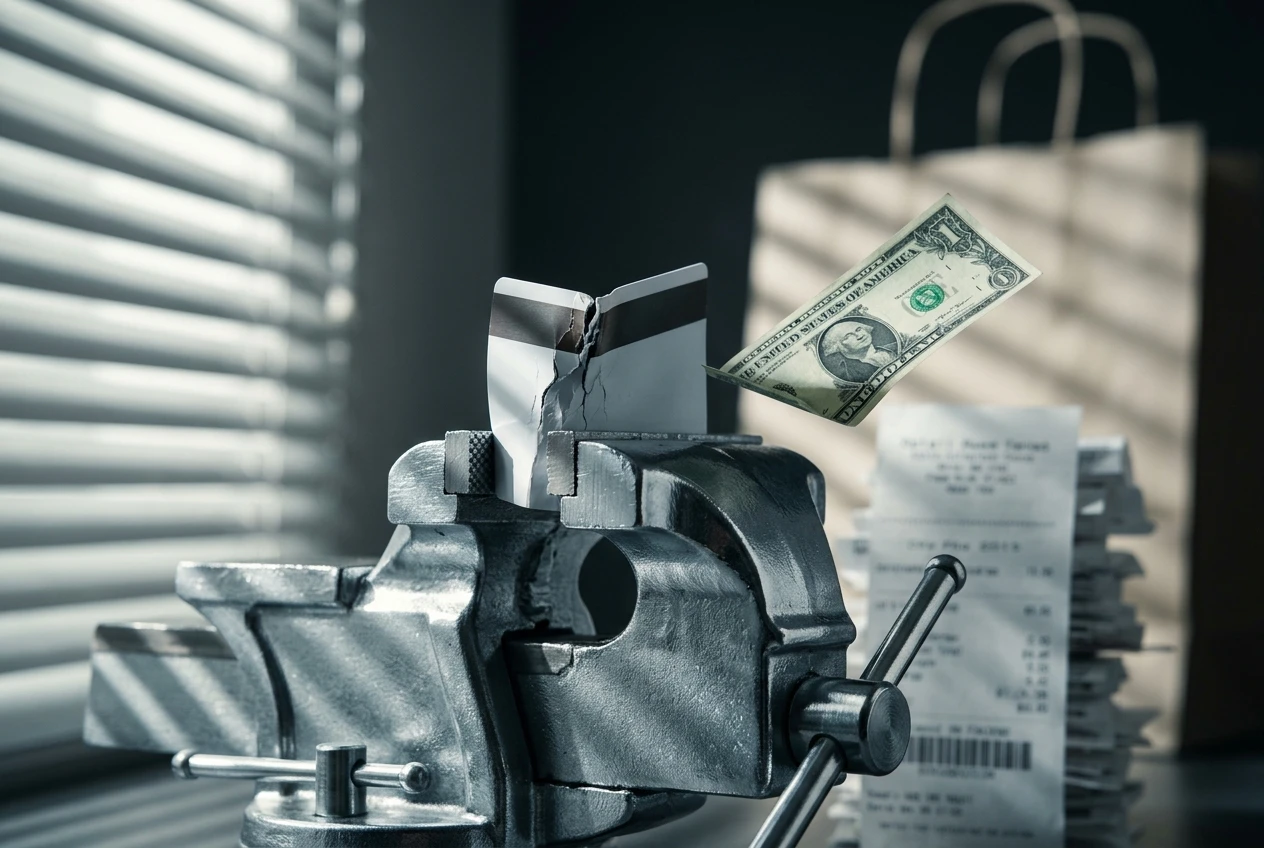
The Chargeback Math Behind the Slowdown
The dollar figures explain why merchants stopped giving shoppers the benefit of the doubt by default. Global chargeback losses reached $33.79 billion in 2025 across 261 million disputed transactions, and are projected to climb toward $41.69 billion by 2028.
| Metric | Figure |
|---|---|
| Global chargeback losses, 2025 | $33.79 billion across 261 million disputes |
| Projected global losses, 2028 | $41.69 billion |
| Retail e-commerce chargeback growth, 2025 | Up 233% year over year |
| Overall chargeback rate, Q3 2025 | 0.26%, up 53% from Q1’s 0.17% |
| Merchant win rate on contested cases | Roughly 45% |
| Net recovery after costs | Roughly 18% |
Chargeback rates vary enormously by category. Sports betting and gambling sit at 3.5%, more than five times the all-industry average, while business software running on recurring invoices stays as low as 0.15%. Even when merchants win a dispute, they rarely recover the full amount. A win still means absorbing the cost of proving it.
Visa and Mastercard Quietly Raise the Bar for Merchants
Card networks added pressure of their own. Visa’s dispute-monitoring program flags merchants once their chargeback ratio crosses a set line, and that line keeps dropping: 1.5% starting in October 2025, then 0.9% since January 1, 2026, with a $10 fee attached to every disputed transaction once a merchant is over it. Mastercard runs a similar Excessive Chargeback Program, and both carry fines and mandatory corrective action for repeat offenders.
Merchants who land in either program face higher processing costs and closer scrutiny from their own banks, so the incentive now runs toward reviewing every claim rather than approving fast. That caution does not distinguish between a fraudster running a script and a shopper with a legitimate return.
The Squeeze on Honest Shoppers
Retailers responded with friction most shoppers never asked for: shorter return windows, fees on mailed-back items, and multi-step verification before a credit posts. Some now issue a partial credit first and complete the refund only once the item scans back into a warehouse. Returns overall hit an estimated 15.8% of US retail sales in 2025, worth $849.9 billion, nearly double the share retailers reported in 2019, according to the National Retail Federation and Happy Returns.
- 71% of shoppers say they would rather keep an unwanted item than deal with a return, per Radial’s 2026 research.
- 62% say they would stop shopping with a brand after a dispute tied to fraud.
- 49% will walk away for good if a retailer wrongly flags a legitimate return as fraudulent.
- 80% would tell friends and family about a bad return experience.
Consumers notice, and they punish it, which puts merchants in a bind: tighten too much and lose good customers, tighten too little and absorb the fraud. More than half of Gen Z shoppers (57%) say they regularly or occasionally buy multiple sizes or colors with plans to return most of them, a habit retailers call bracketing, versus 50% of millennials.
Buy Now, Pay Later Adds a Third Party to Every Dispute
A growing share of purchases now route through a third party before a refund can happen at all. In 2024, the Consumer Financial Protection Bureau (CFPB) ruled that BNPL lenders must investigate disputes and credit refunds the same way credit card issuers do, after the agency’s own market review found more than 13% of buy now, pay later (BNPL) transactions involved a return or a dispute.
Even with that rule in place, the mechanics stay awkward. A shopper still needs the merchant to confirm a return before the lender releases them from payment, and CBS News has reported that borrowers can keep owing installments on an item they already sent back while that confirmation sits pending. Consumer Reports documented one case where a Sezzle customer got no refund until the outlet contacted the company directly; Sezzle’s chief executive, Charlie Youakim, said afterward that the customer should have filed a formal dispute through the app rather than waiting.
The market has grown large enough to matter. The top five BNPL lenders alone issued $24.2 billion in BNPL loans in 2021, up from $2 billion two years earlier, according to a Richmond Fed research brief.
It’s a growing area of concern and one we should all be paying attention to.
Michael Barr, a Federal Reserve governor, said that in remarks at a Fed conference on financial inclusion, pointing to BNPL delinquency rates that have climbed toward 25%.
What Can Shoppers Do While They Wait for a Refund?
Shoppers get refunds faster when they document a purchase immediately, contact the seller in writing, and escalate only after giving the merchant a real chance to fix the problem. Filing a dispute with the bank before that happens removes the merchant’s ability to resolve it directly, which is usually the quickest path back to the money.
- Save the order confirmation, receipt and shipping notice the moment you buy, before any problem comes up.
- Contact the seller first, in writing, and note the date and the name of whoever responds.
- Ask for a supervisor if the first answer is no; frontline reps often cannot approve refunds on their own.
- File a dispute with the card issuer or payment app only after the merchant has had a fair chance to fix it.
- For big purchases, ask about mediation before escalating to a formal chargeback.
The FTC’s sample complaint letter for stalled refunds recommends listing the order number, the purchase date and exactly what resolution you want. The dispute window on most cards still runs as long as 120 days, but the merchant with the cleanest paper trail usually gets there first.
Frequently Asked Questions
What Is the Difference Between a Refund and a Chargeback?
A refund is money a merchant sends back voluntarily once it agrees a return or cancellation is valid, and it typically posts within days. A chargeback is a forced reversal a bank issues after a cardholder disputes a charge directly with the card issuer rather than the seller, a process that payment platform Checkout.com says can stretch from a few days to several months depending on the amount and whether the merchant contests it.
Does Buy Now, Pay Later Change How Fast I Get Refunded?
Yes, and often not for the better. Refunds on BNPL purchases have to clear the retailer first before the lender applies the credit, and CBS News has reported that some borrowers keep owing installment payments on an item they already returned while that confirmation is pending.
What Counts as ‘Friendly Fraud’?
Friendly fraud means disputing a charge for something you actually received, instead of asking the seller for a refund. In a 2025 Sift survey of 1,075 adults, 16% admitted doing exactly that despite being satisfied with the purchase, and the tactic is spreading fastest through tutorials shared on TikTok and Facebook.
Can a Store Restrict My Account for Filing Too Many Chargebacks?
Yes. Merchants who cross a card network’s dispute threshold face fines and added processor fees themselves, so many pass that caution on to shoppers by limiting refunds, flagging accounts or banning repeat disputers from future purchases. One merchant told researchers that customers could dispute a charge up to six months after delivery, longer than most merchants’ own return windows.
What Is a ‘Returnless Refund’?
A returnless refund credits a shopper’s money back without requiring the item to be shipped back at all, usually because return shipping would cost the retailer more than the product is worth. Amazon expanded the practice in 2026, letting sellers refund buyers without requiring the item back for purchases under $75 in certain categories.


Space Cargo Buys Into France’s Zero-G Flight Company

The $399 Omni Walks Away, Then Asks for a Dock

TECNO’s 0mm Bezelless Phone Still Needs a Rim

The Ryobi Tools That Unblocked a Garage Workbench

Ripple’s 700 Million XRP Re-Lock Repeats a Yearlong Pattern

The 2026 Kawasaki Ninja ZX-10R Matches Honda’s Price

Chainlink Puts Official US Inflation and GDP Onchain

Google Pushes Gemini Daily Brief off the Chat Screen

The Crosshair A16 HX Outruns Its Own Power Brick

Cloover Turns a $350 Million Installer Book Into a Utility

30-Year Yield Hits 5.32% Highest Since 2007 as Debt Supply Locks In Costs

Walter’s TWG Insists No Fraud as Insurer Probes Force Cleanup

Astute’s $1.2M bet makes B2B creator deals feed AI discovery

Strategy Parks $1.59B Cash While Bitcoin Stack Stays Flat

BlackRock Turns Cash Empire Into Stablecoin Reserve Rails

The 20% Savings Ideal Meets a 2.7% Reality Check

SpaceX Stock Rebound Tests Real Demand Before Huge Unlock

Amber’s €7M locks Mittelstand knowledge inside Europe

Monzo chair Gary Hoffman exits after board revolt fallout

PCE Stays at 3.7% as Gas and Tariffs Outrun Coming Revisions
-
 FINANCE3 months ago
Zcash Patched a Double-Spend Bug as ZEC Climbed 5%
-
 ENTERTAINMENT3 months ago
Steam Summer Sale 2026 Locks In June 25 to July 9 Dates
-

 FINANCE2 months ago
CLARITY Act Final Text Expected This Weekend as 60-Vote Hurdle Looms
-
 NEWS4 months ago
Meta Adds AI Replies to Threads, But Users Can’t Block It
-

 NEWS3 months ago
YouTube Shorts is testing a heart in place of the thumbs-up
-

 NEWS1 month ago
Senators Force Apple Off Chinese Memory as Big Three Cash In
-

 NEWS3 months ago
NEURA Robotics’ $1.4B Series C Redraws Europe’s Physical AI Bet
-
 ENTERTAINMENT5 months ago
Extraction 3 Is Officially Coming to Netflix in 2027