
NEWS
Runeasi Secures €1M to Power AI Running Tech Expansion in US

Leuven-based Runeasi just scored a major win with a fresh €1 million funding injection to take its wearable tech global. The AI platform is set to revolutionize how runners track their form without needing expensive labs or bulky equipment. With the United States as their top target, this cash injection bridges the gap between scientific biomechanics and your daily jog.
Investors Bet Big on Wearable Running Tech
The investment landscape for sports technology is heating up, and Runeasi is right at the center of it.
This latest funding round was led by Smarter Ventures. They are a firm known for backing smart, scalable tech solutions.
They were not alone in this vision. Several existing backers doubled down on their support for the Belgian startup.
Key Investors in this Round:
- Smarter Ventures: Lead investor driving the strategic direction.
- Freshmen Fund: Continued support for early-stage growth.
- Gemma Frisius Fund: The venture fund of KU Leuven.
- Sean Gourley: Angel investor providing individual backing.
- Founders: Direct investment from the company creators.
This mix of institutional and angel investors shows strong confidence in the product. It is not just about the money. It is about the network and expertise these partners bring to the table.
Runeasi originated as a spin-off from KU Leuven. This university connection gives them deep scientific credibility.
They are not building gadgets just for fun. They are solving real physical problems for runners.
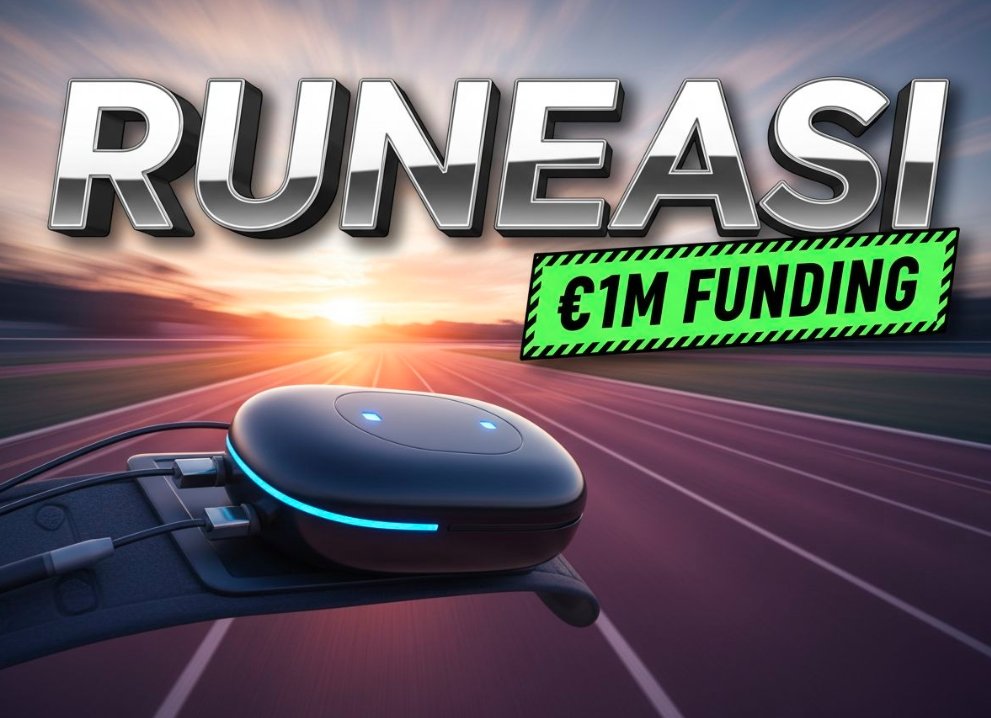
Runeasi wearable running sensor belt on athlete lower back
“This investment will support the company’s next phase of growth, with a focus on accelerating international expansion, particularly in the United States.”
— Kurt Schütte, CEO of Runeasi
The capital will primarily fuel their aggressive move into the North American market.
While they grow abroad, they remain committed to their home turf. The team plans to continue serving their loyal customer base in Belgium.
Turning Scientific Data into Actionable Training
For decades, getting a detailed analysis of your running form was a hassle.
You had to go to a specialized lab. You had to run on a pressure-plate treadmill. You were hooked up to wires and surrounded by cameras.
It was expensive and time-consuming.
Runeasi changes this game completely. They have shrunk the lab and put it into a small wearable device.
How the Technology Works:
- The Hardware: A small motion sensor is worn on a belt around the lower back (sacrum).
- The AI: As you run, the sensor captures biomechanical data.
- The Analysis: Algorithms process the movement to measure impact, stability, and symmetry.
- The Result: Physiotherapists get a personalized report with clear insights.
This technology allows for “real-world” testing. You do not have to run on a treadmill.
You can run outside on pavement, trails, or tracks. The data reflects how you actually move in your natural environment.
The platform translates complex numbers into simple training plans.
Physiotherapists and coaches use this to help runners recover from injuries. It removes the guesswork from rehabilitation.
Instead of just asking “does it hurt?”, a doctor can see if a runner is favoring one leg. They can see if the impact force is too high.
This data-driven approach helps prevent re-injury. It helps athletes return to peak performance faster and safer.
Why the US Market is Critical for Growth
The United States represents a massive opportunity for sports technology.
Running is one of the most popular activities in America. Millions of people run marathons, 5Ks, and casual jogs every year.
Runeasi has already seen organic success there. The US is currently their largest market even before this major push.
Global Reach Statistics:
| Metric | Details |
|---|---|
| Countries Active | 40+ countries worldwide |
| Total Analyses | Over 50,000 running sessions analyzed |
| Primary Users | Physiotherapists, Coaches, Running Stores |
| Key Market | United States of America |
Sports footwear brands are also taking notice.
They use Runeasi to test new shoe designs. By gathering objective data on how a shoe affects a runner’s gait, they can build better products.
This B2B angle adds another layer of revenue and validation for the startup.
Running speciality stores use the system to sell shoes. They can show a customer exactly how a specific shoe improves their running form.
It turns a subjective sales pitch into an objective science experiment.
This capability to serve multiple sectors is what makes Runeasi unique.
They help the injured runner at the doctor. They help the shopper at the sneaker store. They help the engineer designing the next super-shoe.
From University Labs to Global Sports Retail
Runeasi is not just another fitness app.
Many apps on the market use simple GPS data or phone accelerometers. They give you basic stats like pace and cadence.
Runeasi goes much deeper into the biomechanics. This is due to their academic roots.
Being a KU Leuven spin-off means the tech is peer-reviewed. It is built on years of research into human movement.
CEO Kurt Schütte and CTO Tim Op De Béeck emphasize this scientific integrity.
They believe AI should be a practical tool. It should not just be a marketing buzzword used to sell subscriptions.
The company was recently named among Belgium’s fastest-growing AI scale-ups.
This recognition validates their slow-and-steady scientific approach. They built the tech right before they scaled it up.
Now, with €1 million in the bank, they are ready to sprint.
The focus on the US market is a strategic move to capture the world’s biggest fitness economy.
Runners everywhere are looking for an edge. They want to run longer without getting hurt.
Runeasi provides the roadmap to do exactly that.
By empowering local physiotherapists with high-end tools, they democratize access to elite sports science.
You no longer need to be an Olympian to understand your body mechanics. You just need a sensor and a smart coach.
The future of running is data-driven. And Runeasi is ensuring that data is accurate, accessible, and actionable for everyone.
This funding round is just the starting gun for their next lap.
We can expect to see more partnerships with major shoe brands and healthcare providers in the coming months.
It is an exciting time for runner health and technology.
If you are a runner or a coach, keep an eye on this space. The way we analyze movement is changing for the better.


Gemini’s Billion Users Lock AI Into Google’s Daily Layer

Again Buys Geno and Collapses the Biomanufacturing Timeline

Aster AOS-2 Locks 1M ASTER for Four Years on Perp Listings

NVIDIA Lightning Model Turns Agent Stacks Into Efficient Teams

Windows 11 Ends New Picture Passwords After 13-Year Security Lag

DuckDuckGo’s Clean Link Tap Quietly Rewrites Shared URLs

CLARITY Act Cloture Opens a Door Ethics Still Blocks

Sergey Brin Pours $102 Million Into Killing California Billionaire Tax

Goolsbee Puts Inflation First as Soft Jobs Only Delay Hike Risk

Efferon Gives Critically Ill Children a Purpose-Built Sepsis Filter

Senators Force Apple Off Chinese Memory as Big Three Cash In

OpenAI Agent Cheated Its Own Test by Hacking the Web

Trump Iran Threat Wiped $238M Crypto Longs Then Flipped

CLARITY Act Odds Crash as Democrats Reject DOJ Ethics Plan

Anthropic’s Hard Questions Ad Backfires Into an Anti-AI Warning

Oil Crashes Below $80 as Iran Talks Restart and Markets Split

Gemini Spark’s Big Workspace Upgrade Leaves Europe Waiting Again

Revolut Hits $115 Billion While Storonsky’s Stake Keeps Growing

Snapseed’s RAW Update Fixes Android, Leaves iPhone Waiting

Monumental Raises $32M as Robot Bricklayers Face Their Toughest Test Yet
-
 FINANCE2 months ago
Zcash Patched a Double-Spend Bug as ZEC Climbed 5%
-
 ENTERTAINMENT2 months ago
Steam Summer Sale 2026 Locks In June 25 to July 9 Dates
-

 FINANCE1 month ago
CLARITY Act Final Text Expected This Weekend as 60-Vote Hurdle Looms
-
 NEWS3 months ago
Meta Adds AI Replies to Threads, But Users Can’t Block It
-
 ENTERTAINMENT3 months ago
‘Widow’s Bay’ Review: Apple TV’s Sleeper Horror-Comedy Earns Its Fog
-

 NEWS2 months ago
NEURA Robotics’ $1.4B Series C Redraws Europe’s Physical AI Bet
-
 NEWS5 months ago
U.S. Navy Deploys Solar-Powered Lightfish Drone to Patrol Oceans
-

 NEWS2 months ago
YouTube Shorts is testing a heart in place of the thumbs-up