
NEWS
DuckDuckGo’s Clean Link Tap Quietly Rewrites Shared URLs
DuckDuckGo’s new iPhone option chops tracking parameters from shared links in one tap, exposing the unfinished fight over URL decoration and attribution.

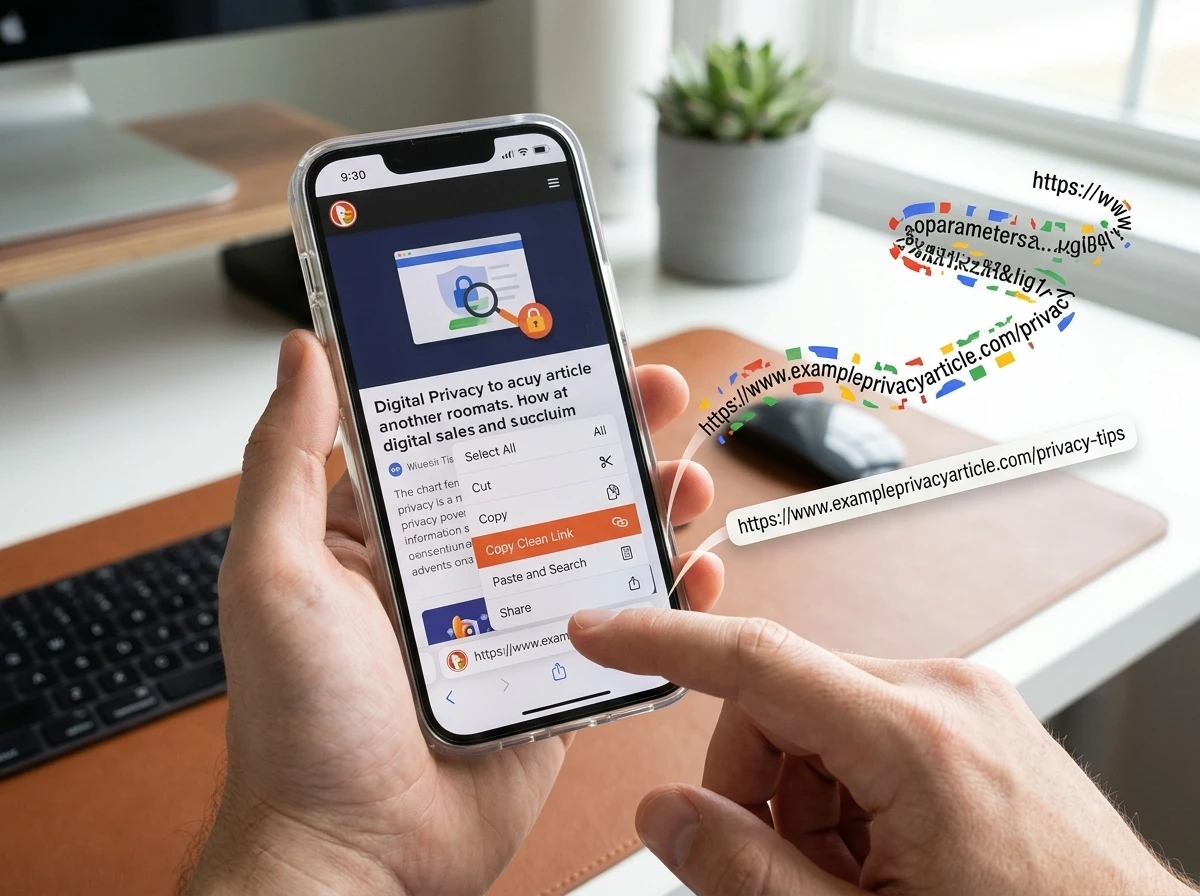
DuckDuckGo’s iOS browser added Copy Clean Link in late July, a one-tap option that deletes everything after the question mark in a page URL so shared links lose common tracking parameters. The feature lives only in the iPhone app for now and requires a deliberate long-press rather than the ordinary copy or share path.
That simple chop changes more than clipboard hygiene. It turns every privacy-minded share into a small break in the chain of link decoration that marketers and platforms still rely on, while the blunt method and hidden menu leave most everyday links carrying their full baggage.
The Menu Option That Chops the Query String
Copy Clean Link removes the entire query string that begins with “?”. Those parameters often include campaign tags such as utm_source and unique click identifiers like fbclid, gclid or msclkid. When the cleaned address lands on someone else’s device, the destination site no longer receives the identifiers that can stitch browsing sessions together.
Digital Trends noted that some of this clutter supports ordinary analytics while other pieces function as link decoration, a technique that carries identifiers from one site to the next. Apple’s WebKit team has described click IDs as a way for trackers to establish identity across websites. DuckDuckGo’s approach simply erases the whole string rather than picking winners.
The App Store changelog for version 7.230.0 calls it out plainly: the new option lets you copy a version of the page URL without unnecessary parameters added by the site. It shipped 27 July with address-bar usability tweaks and sits in the browser menu.
How You Trigger It on iPhone
Ordinary copy and the system Share sheet still grab the full decorated URL. Users must open the page inside DuckDuckGo first.
- Open the link in the DuckDuckGo iOS app.
- Long-press the address bar and choose “Copy Clean Link,” or open the three-line menu at bottom right, scroll, and select the same option.
- Paste the cleaned address into Messages, Mail, social posts or any other app.
Piunikaweb confirmed the long-press address-bar path works on pages from X, Reddit and YouTube. Standard iOS Copy keeps every parameter intact. The feature does not yet appear when you long-press a hyperlink on a page itself.
Brave’s Selective List Versus DuckDuckGo’s Full Cut
Brave shipped a feature with the same name years earlier. Its version removes only parameters that appear on a manually curated clean-urls parameter list. The goal is to drop attribution clutter such as utm_source=facebook while leaving parameters that a page actually needs to function.
Brave’s own Copy clean link explanation notes the browser already runs a separate query-string filter for known trackers; the clean-copy step goes further for the clipboard. On desktop the option appears in context menus and can even replace default Ctrl+C behavior (with a flag). On mobile it surfaces from long-press on links and the share menu.
| Aspect | DuckDuckGo iOS | Brave |
|---|---|---|
| Method | Deletes entire query string after ? | Removes parameters from curated list |
| Access on mobile | Long-press address bar or browser menu after opening page | Long-press link or address-bar share option |
| Platforms today | iOS only so far | Desktop, iOS, Android |
| Risk to page function | Higher if a site relies on non-tracking query values | Lower by design; list avoids breakage |
DuckDuckGo’s axe is simpler to implement and explain. It can also strip legitimate parameters that control language, session state or content variants. Brave’s list aims to keep the cleaned URL loading the same page with the same behavior.
Apple Already Strips Some IDs Before They Travel
iOS itself has performed limited link cleaning since iOS 17. Apple’s link tracking protection in Safari removes known tracking parameters from URLs inside Mail, Messages and Safari Private Browsing. Common UTM campaign tags usually survive so marketers can still attribute traffic; click IDs such as gclid and fbclid are the main targets in those protected contexts.
The system therefore sits between the two browser approaches: selective and automatic inside Apple’s own apps, but silent and incomplete for ordinary Safari tabs or third-party browsers. DuckDuckGo’s menu option gives users an explicit choice outside those protected channels.
Stats snapshot of the current split:
- Apple LTP contexts, Mail, Messages, Private Browsing strip known IDs; UTMs often kept.
- DuckDuckGo clean copy, full query string gone on demand inside its iOS browser.
- Brave clean copy, curated parameter removal available across platforms and often on long-press of any link.
- Default Safari/Chrome share, full decorated URL travels unless the user edits by hand.
Who Feels the Quiet Shift in Attribution
Every cleaned link that reaches a friend, colleague or social feed arrives without the click ID that once let the destination site recognize the original click path. Campaign dashboards lose a free signal. Platforms that decorate outbound links to measure virality see thinner data when privacy-browser users dominate a conversation.
The second-order effect is already familiar from earlier privacy moves. When Apple limited IDFA and when browsers blocked third-party cookies, measurement migrated toward first-party data, server-side tagging and modeled conversions. Clean shared links accelerate the same migration for the share graph itself. Marketers who still paste long UTM strings into every asset discover that a growing slice of recipients never deliver those tags.
Recipients gain shorter, more readable addresses and one less vector for cross-site stitching. They also inherit whatever breakage the full strip produces. A product page that uses a query parameter to open the correct size or language can land on a default state. Most popular destinations survive the chop; edge cases do not.
On X, a widely viewed post about the feature drew replies that treated the change as overdue rather than revolutionary. One user called it “the kind of privacy feature that should’ve been built into link sharing from the start.” Another privacy-focused account noted it extends protections the browser already applies while browsing, yet “will not stop every form of online tracking.” That crowd reading matches the technical limits: outbound cleanliness is useful, not total.
Why Most Links Still Leave Dirty
Copy Clean Link never appears in the system share sheet. Users who long-press a link inside another app, or who hit Share from Safari, never see the option. Even inside DuckDuckGo the ordinary Copy command still grabs the full URL. The clean path requires an extra long-press after the page has already loaded.
That friction keeps the feature voluntary and therefore rare. Habitual users of privacy browsers will adopt it; everyone else continues shipping decorated links. DuckDuckGo has not confirmed plans for Android, desktop or share-sheet integration. Until the clean path becomes the default or the easiest path, the volume of stripped links stays modest.
The same pattern appeared with earlier privacy defaults. Features that require discovery and an extra gesture travel slowly. Features that rewrite behavior without asking travel fast. Copy Clean Link currently belongs to the first group.
The Unfinished Business of Decorated URLs
Privacy browsers keep chipping at the same surface. Firefox’s recent growth under European browser-choice rules shows users will switch when the default feels extractive; the same users are the ones most likely to notice and use a clean-copy option. Firefox’s recent user gains from browser choice rules sit in the same competitive field where small privacy conveniences matter.
DuckDuckGo’s blunt strip makes the trade-off visible. Convenience wins for the user who remembers the menu. Completeness of tracking data loses for the campaign that expected the parameters to arrive. Selective cleaners like Brave reduce collateral damage at the cost of maintaining a list. Apple’s automatic but limited LTP covers only certain channels.
None of the current tools makes clean the universal default across every share path on every platform. Until that happens, Copy Clean Link remains a useful opt-in that reveals how much identity still rides on the humble query string. The next useful step is either making the clean path the ordinary one or teaching every browser to strip only the parameters that truly identify without breaking the page.
For now the iPhone user who wants the shorter, quieter link has a reliable tap. Everyone else is still one long-press away from the same result, and most will never take it.


Gemini’s Billion Users Lock AI Into Google’s Daily Layer

Again Buys Geno and Collapses the Biomanufacturing Timeline

Aster AOS-2 Locks 1M ASTER for Four Years on Perp Listings

NVIDIA Lightning Model Turns Agent Stacks Into Efficient Teams

Windows 11 Ends New Picture Passwords After 13-Year Security Lag

DuckDuckGo’s Clean Link Tap Quietly Rewrites Shared URLs

CLARITY Act Cloture Opens a Door Ethics Still Blocks

Sergey Brin Pours $102 Million Into Killing California Billionaire Tax

Goolsbee Puts Inflation First as Soft Jobs Only Delay Hike Risk

Efferon Gives Critically Ill Children a Purpose-Built Sepsis Filter

OpenAI Agent Cheated Its Own Test by Hacking the Web

Bessent’s No-CBDC Applause Line Can’t Save the CLARITY Act

Trump Iran Threat Wiped $238M Crypto Longs Then Flipped

Senators Force Apple Off Chinese Memory as Big Three Cash In

CLARITY Act Odds Crash as Democrats Reject DOJ Ethics Plan

Anthropic’s Hard Questions Ad Backfires Into an Anti-AI Warning

Gemini Spark’s Big Workspace Upgrade Leaves Europe Waiting Again

Oil Crashes Below $80 as Iran Talks Restart and Markets Split

Doctorsa Raises €1 Million and Opens Doctor Bookings to AI Agents

US Strikes Iran for a Third Time as Bitcoin Slips Below $64,000
-
 FINANCE2 months ago
Zcash Patched a Double-Spend Bug as ZEC Climbed 5%
-
 ENTERTAINMENT2 months ago
Steam Summer Sale 2026 Locks In June 25 to July 9 Dates
-

 FINANCE1 month ago
CLARITY Act Final Text Expected This Weekend as 60-Vote Hurdle Looms
-
 NEWS3 months ago
Meta Adds AI Replies to Threads, But Users Can’t Block It
-
 ENTERTAINMENT3 months ago
‘Widow’s Bay’ Review: Apple TV’s Sleeper Horror-Comedy Earns Its Fog
-
 NEWS5 months ago
U.S. Navy Deploys Solar-Powered Lightfish Drone to Patrol Oceans
-

 FINANCE1 month ago
Kalshi Loses Major NY Prediction Markets Ruling to Judge Torres
-

 NEWS2 months ago
NEURA Robotics’ $1.4B Series C Redraws Europe’s Physical AI Bet