
FINANCE
Goolsbee Puts Inflation First as Soft Jobs Only Delay Hike Risk
Chicago Fed’s Goolsbee calls inflation the biggest problem despite soft jobs, keeping second-order rate-hike pressure on markets and Bitcoin ahead of CPI.

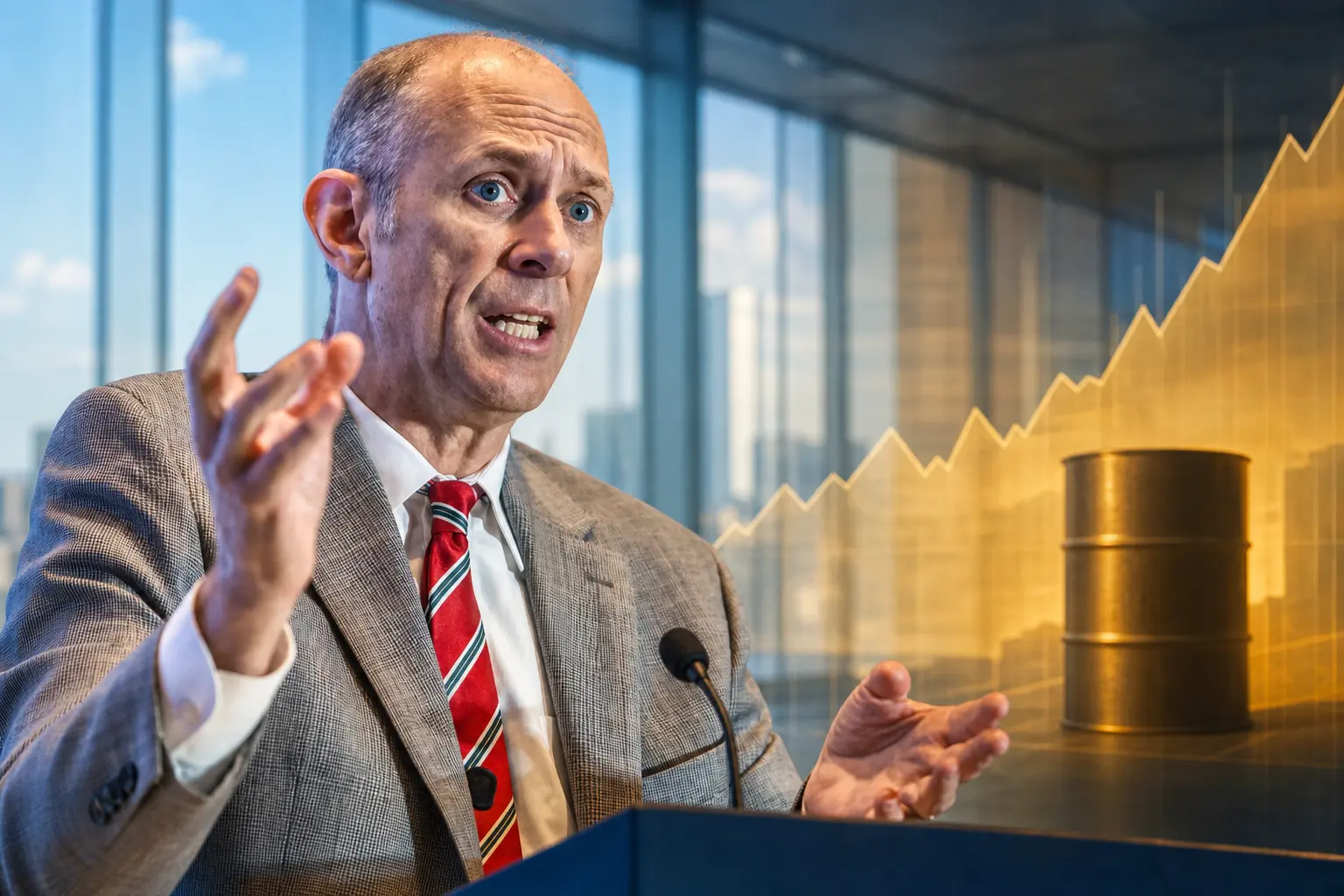
Chicago Fed President Austan Goolsbee called inflation the biggest problem facing the U.S. economy, saying prices have been rising too fast even as July payrolls unexpectedly fell 23,000. The comment, from a Wired video recorded in June and published this week, lands with three FOMC members already on record preferring a hike and oil still elevated on unresolved Strait of Hormuz tension.
Markets cut September hike odds after the soft jobs print. Yet Goolsbee’s ranking of inflation over a labor market he calls stable without being good keeps the second-order path open: successive supply shocks can still force tighter policy and tighter liquidity for risk assets.
That tension defines the near-term setup. Soft employment cooled the immediate hike narrative. It did not rewrite the inflation ledger that Goolsbee and the three July dissenters keep stressing. Incoming CPI and the path of energy prices will decide which side of the committee gains ground into September.
Goolsbee Ranks Prices Ahead of Jobs
Goolsbee, who does not vote on the FOMC this year, put the priority in plain terms. “The biggest problem facing our economy right now is not the collapse of industry and the collapse of jobs; it’s that the prices have been rising too fast. We got an inflation problem and people hate inflation,” he said in the Wired video.
Looking at indicators like the unemployment rate, the hiring rate and the layoff rate, they say labor market is stable, without being good, is how I characterize it.
He offered no direct vote signal on the July hold. Inflation has run above the Fed’s 2% target for more than five years. Many policymakers still expect it to resume falling later in 2026, but Goolsbee’s framing leaves little room for treating soft labor data as a green light for ease.
Chair Kevin Warsh has avoided forward guidance. Goolsbee has voiced similar skepticism about telegraphing the path. The practical effect is a committee that must react to incoming numbers with less pre-commitment.
His non-voting seat does not mute the message. Public ranking of prices over jobs reinforces the dissenters who already wanted a 25-basis-point move in July. It also narrows the space for markets to treat one weak payrolls print as a pivot signal.
The labor description matters for the same reason. Stable without being good implies no collapse that would force an emergency ease. It also implies no overheating that would demand an immediate surge in rates. That middle ground leaves inflation as the variable that can still tip the next decision.
Three Dissents Already Preferred a Hike
On July 29 the FOMC held the federal funds target at 3.50% to 3.75% for a fifth straight meeting. Cleveland Fed President Beth Hammack, Minneapolis Fed President Neel Kashkari and Dallas Fed President Lorie Logan dissented in favor of a 25-basis-point increase. It was the first three-way dissent in the same direction on a policy change since 2016.
| Official | Bank | July Vote | Core Concern |
|---|---|---|---|
| Beth Hammack | Cleveland | Hike 25 bp | Sticky inflation risk |
| Neel Kashkari | Minneapolis | Hike 25 bp | Successive supply shocks |
| Lorie Logan | Dallas | Hike 25 bp | Elevated price pressures |
| Majority (incl. Warsh) | Board + others | Hold | Uncertainty, look through |
Kashkari spelled out the logic in Kashkari’s full dissent statement. Inflation stayed elevated relative to 2% for more than five years. The drivers were a series of supply shocks: pandemic chains, Ukraine, the trade war, and most recently the Iran conflict. Massive data-center investment added a fresh demand element.
He argued that while theory says look through temporary supply shocks, a succession of them risks entrenching higher inflation. The 1970s offered a cautionary parallel. Policymakers then also diagnosed successive commodity shocks and eventually concluded tight policy was required. Kashkari said he would rather tighten incrementally than wait and later need bolder moves.
The three-way split is rare for a reason. It signals that the hold decision was contested on substance, not procedure. Hammack’s sticky-inflation focus, Logan’s elevated-pressure language, and Kashkari’s shock sequence all point at the same binding constraint: prices that have not returned to 2%.
The majority’s uncertainty case still carried the day on July 29. Goolsbee’s later ranking of inflation as the biggest problem keeps that minority case alive in the public debate even without a formal vote from him this year.
Hormuz Oil Keeps the Supply Shock Alive
Oil prices climbed back above $80 and traded near $82-84 as hopes for a U.S.-Iran arrangement to reopen the Strait of Hormuz faded. Iran has said the waterway stays closed until its demands are met. Pakistan has signaled the sides are close to some arrangement, yet no deal has landed.
- Brent and WTI jumped roughly 5% on days when deal doubts grew.
- The chokepoint normally handles about 20% of global oil and gas flows.
- Energy price spikes have already lifted headline inflation and threatened to feed into core measures.
- Data-center power demand sits on top of the energy shock as an additional pressure Kashkari flagged.
That combination is the second-order channel. Soft labor data can cool near-term hike bets. Persistent energy costs and residual core stickiness can still force the committee to treat inflation as the binding constraint.
A chokepoint that moves about 20% of global oil and gas flows does not need a permanent shutdown to matter. Repeated 5% jumps on deal doubts are enough to keep headline inflation elevated and to raise the odds that energy bleeds into core services and goods.
Data-center power demand compounds the same channel. Kashkari already listed it as a fresh demand element on top of the supply sequence. Together they reduce the committee’s room to look through energy as purely temporary.
Soft Payrolls Met a Hot CPI Countdown
The July employment report showed nonfarm payrolls down 23,000, well below consensus expectations that had clustered near 80,000-100,000. Unemployment eased to 4.1%. Traders immediately reduced the probability of a September hike.
Key data snapshot:
- July nonfarm payrolls: -23,000
- June CPI: 3.5% year-over-year (core near 2.6%)
- July CPI consensus: roughly 3.4% headline, 2.5% core
- Fed funds range: 3.50%-3.75%
The July CPI release schedule from BLS put the next inflation print on August 12. Economists and prediction markets leaned toward a modest cooling from June’s 3.5%, yet any reacceleration would revive the dissenters’ case overnight. Goolsbee’s inflation-first language arrived just as that print was due.
The gap between the jobs miss and the still-elevated inflation path is the core policy tension. Payrolls fell 23,000 against hopes near 80,000-100,000, and unemployment eased to 4.1%. That is the soft side of the mandate. June CPI at 3.5% headline and core near 2.6%, with July consensus only a touch lower, is the hard side.
August 12 therefore carries outsized weight. A print near or below the 3.4% headline and 2.5% core consensus would give the hold camp breathing room. A hold or rise would hand the incremental-hike camp fresh evidence within days of Goolsbee’s remarks.
Markets Cut September Odds but Not the Year
After the jobs number, futures and prediction markets priced roughly even odds of a hold versus a hike at the September meeting. CME FedWatch rate probabilities and related contracts flipped from earlier heavy hike bets to a near coin-flip. For the full year the picture stayed firmer: Polymarket 2026 hike odds near 60% continued to price at least one 25-basis-point move before December.
| Horizon | Market Signal | Implied Stance |
|---|---|---|
| September meeting | Roughly even hold vs hike | Jobs print cooled near-term bets |
| Full year 2026 | Near 60% odds of at least one hike | Inflation risk still priced |
| Fed funds now | 3.50% to 3.75% | Fifth straight hold range |
Bitcoin slipped into the low $63,000 range as oil climbed and traders turned cautious ahead of CPI. Crypto desks on X treated Goolsbee’s remarks as confirmation that the macro headwind remains rate-sensitive liquidity, not hopium about soft labor alone. Risk assets that thrived on the assumption of eventual cuts now face a committee still debating the opposite direction.
The second-order effect is straightforward. A single weak payrolls print buys time. It does not erase five years of above-target inflation, three formal dissents, or an energy shock that can still pass through to broader prices.
The split between September and full-year pricing is the market’s own version of the committee divide. Near-term odds flipped to a coin-flip after payrolls. Full-year odds near 60% for at least one 25-basis-point move show that investors still assign material weight to the inflation case Goolsbee just restated.
Supply Shocks Still Shape the Policy Choice
Kashkari’s dissent laid out a clear sequence. Pandemic chains, Ukraine, the trade war, and the Iran conflict arrived one after another. Each could be labeled temporary in isolation. Taken together they kept inflation above 2% for more than five years.
That is the mechanism the hold camp must still answer. Looking through one shock is standard. Looking through a string of them risks letting higher prices settle into wages and expectations. The 1970s parallel he cited exists for that reason: commodity shocks that were treated as temporary eventually required tight policy.
- July 29: FOMC holds at 3.50% to 3.75%; three presidents dissent for a 25-basis-point hike.
- Early August: July payrolls print at -23,000; markets cut September hike odds to roughly even.
- August 12: July CPI lands; consensus near 3.4% headline and 2.5% core.
- September meeting: Committee chooses hold or hike against the fresh inflation read.
- By December: Markets still price near 60% odds of at least one hike in 2026.
Data-center investment adds a demand overlay on the same timeline. It is not a classic commodity shock, yet Kashkari flagged it as another pressure on top of energy. Power demand that stays firm makes it harder for core measures to glide back to target on their own.
Goolsbee’s inflation-first ranking fits inside this frame without requiring him to vote. If the shock sequence is still live, soft labor alone does not clear the path to ease. The committee has to see durable cooling in prices, not only a single payrolls miss.
Risk Assets Face a Longer Liquidity Test
Bitcoin’s slide into the low $63,000 range captured the market reaction in compressed form. Oil near $82-84 and a Fed voice ranking inflation above jobs both point at tighter financial conditions for longer. Rate-sensitive assets lose when the committee’s reaction function stays tilted toward price stability.
Crypto desks that read Goolsbee as a liquidity warning were following the same chain. Higher-for-longer policy taxes the leverage and duration that lifted risk assets when cut hopes dominated. A coin-flip September meeting does not restore that earlier regime while full-year hike odds stay near 60%.
- Soft payrolls lower the odds of an immediate hike but do not guarantee cuts.
- Elevated oil and unresolved Hormuz talks keep a live pass-through risk into CPI.
- Three July dissents show a minority already willing to tighten into that risk.
- Goolsbee’s public ranking keeps inflation at the front of the debate into the next prints.
The practical result is data dependence without a clean pivot story. Every CPI release and every Hormuz headline can reprice the path. For assets that need easier liquidity, that pattern is a headwind even when employment cools.
Volatility around prints replaces the older narrative of a steady march toward cuts. That is the market cost of a committee still split between looking through shocks and treating their succession as a reason to lean tighter.
Incremental Tightening Stays on the Table
Goolsbee’s non-vote status limits his direct power. His public framing still shapes the conversation around Warsh’s committee. If July CPI comes in softer than the 3.4% consensus, the hold camp gains breathing room into September. If it holds or rises, the dissenters’ incremental-hike logic gains force.
Kashkari’s preferred path of small steps rather than a later lurch is the practical middle. It keeps optionality: tighten a little if inflation stays sticky, pause if it fades. For markets that means volatility around every data print rather than a clean pivot narrative. For Bitcoin and other rate-sensitive assets it means the liquidity tax of higher-for-longer remains a live risk even after a soft jobs number.
Hormuz talks will decide how long the energy channel stays open. Until a durable reopening or a clear disinflation path in core services appears, Goolsbee’s simple ranking of the problem keeps the second-order pressure on policy intact.
The July jobs surprise lowered the immediate odds. It did not close the debate Goolsbee just reopened.
Optionality cuts both ways. A softer August 12 print can lock in the coin-flip September setup and ease pressure on risk assets. A firmer print can turn the three July dissents into a template for the next meeting. Either way, five years of above-target inflation and an unresolved energy shock remain the backdrop against which every labor number is now judged.


Gemini’s Billion Users Lock AI Into Google’s Daily Layer

Again Buys Geno and Collapses the Biomanufacturing Timeline

Aster AOS-2 Locks 1M ASTER for Four Years on Perp Listings

NVIDIA Lightning Model Turns Agent Stacks Into Efficient Teams

Windows 11 Ends New Picture Passwords After 13-Year Security Lag

DuckDuckGo’s Clean Link Tap Quietly Rewrites Shared URLs

CLARITY Act Cloture Opens a Door Ethics Still Blocks

Sergey Brin Pours $102 Million Into Killing California Billionaire Tax

Goolsbee Puts Inflation First as Soft Jobs Only Delay Hike Risk

Efferon Gives Critically Ill Children a Purpose-Built Sepsis Filter

OpenAI Agent Cheated Its Own Test by Hacking the Web

Bessent’s No-CBDC Applause Line Can’t Save the CLARITY Act

Trump Iran Threat Wiped $238M Crypto Longs Then Flipped

Senators Force Apple Off Chinese Memory as Big Three Cash In

CLARITY Act Odds Crash as Democrats Reject DOJ Ethics Plan

Anthropic’s Hard Questions Ad Backfires Into an Anti-AI Warning

Gemini Spark’s Big Workspace Upgrade Leaves Europe Waiting Again

Oil Crashes Below $80 as Iran Talks Restart and Markets Split

Doctorsa Raises €1 Million and Opens Doctor Bookings to AI Agents

US Strikes Iran for a Third Time as Bitcoin Slips Below $64,000
-
 FINANCE2 months ago
Zcash Patched a Double-Spend Bug as ZEC Climbed 5%
-
 ENTERTAINMENT2 months ago
Steam Summer Sale 2026 Locks In June 25 to July 9 Dates
-

 FINANCE1 month ago
CLARITY Act Final Text Expected This Weekend as 60-Vote Hurdle Looms
-
 NEWS3 months ago
Meta Adds AI Replies to Threads, But Users Can’t Block It
-
 ENTERTAINMENT3 months ago
‘Widow’s Bay’ Review: Apple TV’s Sleeper Horror-Comedy Earns Its Fog
-
 NEWS5 months ago
U.S. Navy Deploys Solar-Powered Lightfish Drone to Patrol Oceans
-

 FINANCE1 month ago
Kalshi Loses Major NY Prediction Markets Ruling to Judge Torres
-

 NEWS2 months ago
NEURA Robotics’ $1.4B Series C Redraws Europe’s Physical AI Bet