
BUSINESS
Tribal Gas Stations Win the Gallon, Nearby Pumps Lose It
Tribal gas stations sell 50 to 75 cents cheaper as state fuel taxes stop at the reservation, shifting gallons from nearby pumps.

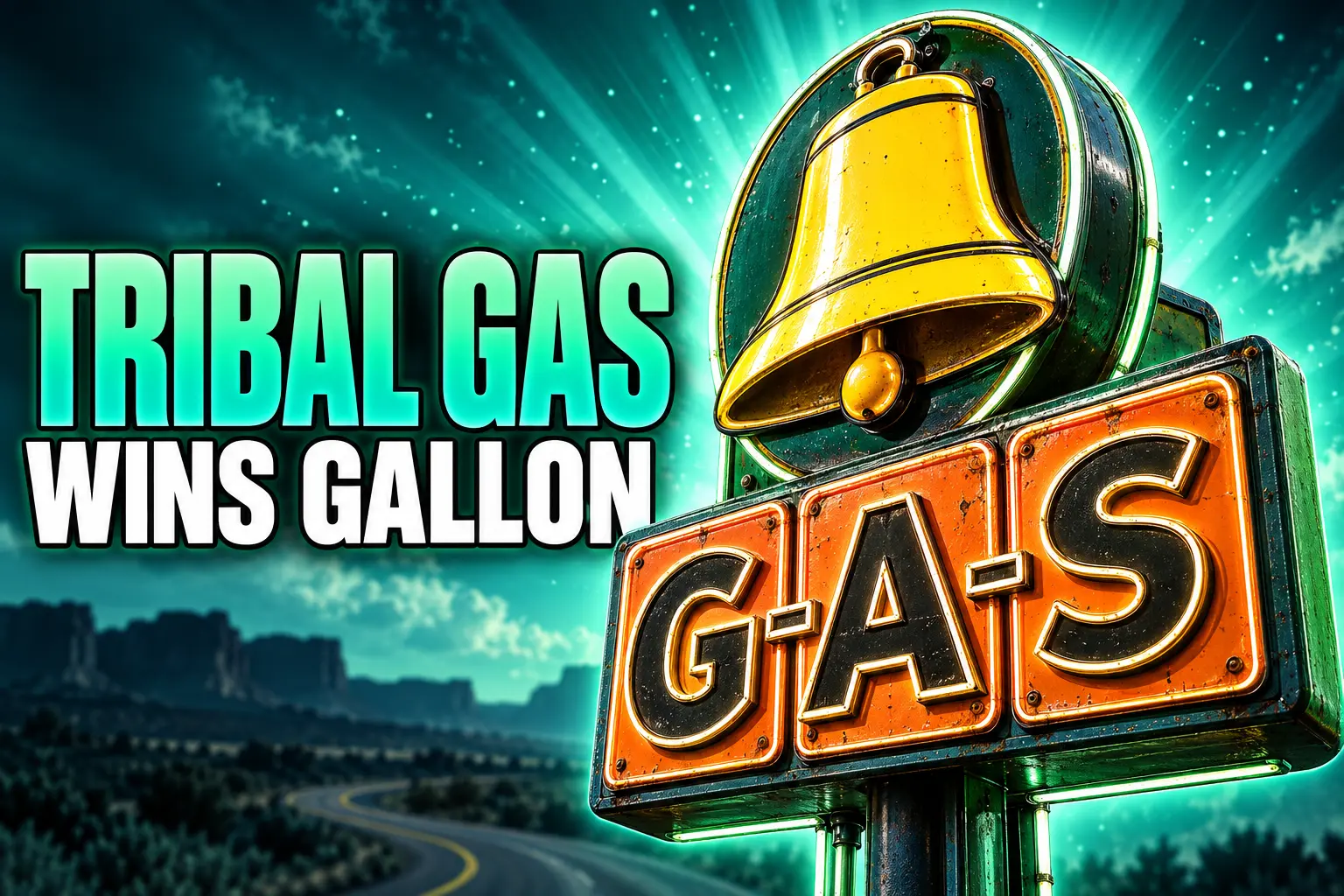
Tribal gas stations still sell for 50 to 75 cents less than nearby pumps, a gap that has held as U.S. gasoline averaged $4.48 in late September. The cut is not a wartime special. It is the old rule that a state often cannot tax fuel sold by a tribe on its own land, made obvious once crude and pump prices jumped after fighting with Iran began on Feb. 28, 2026.
Drivers pocket the difference. Tribal governments keep a large share of the tax that never hits the state ledger. The independent station across the reservation line loses the gallon, or cuts its own price to keep it.
Tribal Pumps Still Undercut Neighbors by Half a Dollar
On Sept. 24, 2026, AAA put the U.S. average for regular at $4.48 a gallon, up 33 cents from the $4.15 average it printed in April, and the highest the national average has ever been for this time of year. The club said lingering trouble in the Strait of Hormuz and expensive crude were pushing prices up in a season when they usually ease. The month-to-date average sat at $4.30, 47 cents above the prior September record of $3.83 set in 2023.
The reservation spread did not close with that second spike. In April, Junelle Lewis drove about 30 minutes from her Seattle-area home to the Tulalip Market and paid $4.84 a gallon, about 75 cents under pumps near home. “I purposely drove here just for the gas,” she said, filling a Chevrolet Suburban. “Gas is ridiculous. But I have found, honestly, over the years, this gas station specifically is cheaper than a lot around here.”
The same week, the Chukchansi Crossing Fuel Station and Travel Center between Fresno and Yosemite National Park posted $5.09, 60 cents under nearby stations. On the Mescalero Apache Reservation in New Mexico, regular ran as low as $3.79, 50 cents under surrounding towns. In eastern New York, on Cattaraugus Indian Territory between Buffalo and Erie, Pennsylvania, the cheapest fuel was about $3.65 at more than half a dozen stations, 50 cents under nearby towns.
APRIL 2026 PRICE GAPS AT TRIBAL PUMPS
| Station | Location | Regular posted | Gap vs nearby |
|---|---|---|---|
| Tulalip Market | Tulalip, Wash. | $4.84 | about 75 cents |
| Chukchansi Crossing | Madera County, Calif. | $5.09 | 60 cents |
| Mescalero Apache pumps | New Mexico | $3.79 | 50 cents |
| Cattaraugus Territory stations | eastern New York | about $3.65 | 50 cents |
The Tulalip Market site later listed regular at $4.89 a gallon, with plus at $5.15, super at $5.35, and diesel at $7.19. The store runs 16 stalls off Interstate 5 in Quil Ceda Village. Chukchansi Crossing, downhill from the tribe’s casino on State Route 41, has 18 pumps and two diesel islands for rigs and motorhomes.
Diesel followed the same pattern. Todd Hall of Paden, Oklahoma, spent about $90 to fill a tow truck at a Citizen Potawatomi Nation station about 30 miles west of Oklahoma City, paying $4.57 a gallon when many nearby pumps were over $5. “They’re cheaper here than anywhere else,” he said.
Why the State Tax Stops at the Reservation Line?
Tribes still pay the federal fuel tax of 18.4 cents a gallon on gasoline and 24.4 cents on diesel, a levy unchanged since October 1993, and they pass that cost through. State fuel taxes are the wedge. As of Jan. 1, 2026, the U.S. Energy Information Administration put state gasoline taxes and fees from 9.0 cents in Alaska to 70.9 cents in California. Twenty-six states changed those rates between the first day of 2025 and the first day of 2026, 19 of them up, including a 6.2 cent rise in Washington and a 5.2 cent rise in Michigan.
Federally recognized tribes sit in 35 states. For well over a century, U.S. courts have held that states lack authority to collect taxes from Native Americans on their land, said Dan Lewerenz, a University of North Dakota assistant law professor who specializes in Native American law.
The Supreme Court consistently held to this view and it’s one of the most enduring principles in federal Indian law.
Dan Lewerenz, assistant professor of law, University of North Dakota
The bright-line case on fuel is Oklahoma Tax Commission v. Chickasaw Nation, decided June 14, 1995. The Court held that a state excise tax is unenforceable if its legal incidence falls on a tribe or its members for sales made in Indian country, unless Congress clearly says otherwise. Oklahoma had tried to tax fuel at Chickasaw convenience stores on trust land. Because the statute taxed the retailer, the tribe won.
That is why the posted gap is often close to, but not a copy of, the state tax. California’s 70.9 cent levy is larger than Chukchansi’s 60 cent April spread. Lewis’s 75 cent Seattle-area spread is not a Washington tax figure in disguise. It is what the tribe chose to put on the board after buying fuel, paying the federal tax, and deciding how much of the state-tax room to hand to the driver.
Where the tax is collected also matters. If a state puts the levy on an off-reservation distributor, the Court said in Wagnon v. Prairie Band Potawatomi Nation in 2005 that Kansas could keep that tax, because the legal hit fell on a non-Indian sale outside the reservation. Tribes and states have spent the years since writing compacts so someone still reports the gallons and someone still gets paid.
Washington Refunds 75 Percent and Keeps the Rest
Washington is the cleanest cash picture of who wins the gallon. After years of lawsuits, the Department of Licensing now runs motor-fuel compact agreements with tribes that own retail stations on reservation or trust land. Under the standard deal, the tribe buys fuel from a state-licensed distributor with the state tax already in the wholesale price, then the state sends 75 percent of the state fuel tax as a refund and keeps 25 percent.
WASHINGTON’S 2023 FUEL-TAX SPLIT
- Compact count: The state is party to 23 of those 75/25 agreements, and two older per-capita deals, including one with the Makah Tribe.
- Tribal refunds: For 2023, refunds under both kinds of agreements totaled $68.4 million.
- State share: Washington retained $22.8 million on fuel bought under the 75/25 agreements that year, exactly one quarter of the $91.2 million those compact gallons produced.
- Spend rules: Compact proceeds are limited to roads, bridges, boat ramps, transit, transportation planning, public safety, and other highway-related uses, with third-party audits.
The Tulalip Tribes are on that 75/25 list, alongside the Puyallup, Muckleshoot, Lummi, Colville, Squaxin Island, Swinomish, and others. The 75/25 model dates to a 2006 federal ruling that the Squaxin Island Tribe and the Swinomish Indian Tribal Community were exempt under Washington’s old statute, then to a 2007 law that moved the tax onto the fuel licensee, often called tax at the rack, and rebuilt the refund around that ruling.
The Older Per Capita Formula
Two tribes still sit on a pre-2007 formula. It multiplies enrolled members living on or near the reservation by statewide per-person gasoline use and by the state tax rate. That check is an estimate of what members would have paid, not a count of every gallon a nonmember bought on the way to a casino. The 75/25 deals capture the extra traffic. The per-capita deals do not.
Yakama Trucks Still Move Fuel Under an 1855 Treaty
One Washington tribe sits partly outside that compact math. Cougar Den, a Yakama-owned fuel importer, trucks fuel from Oregon over public highways for sale at Yakama stations. In 2013 the Department of Licensing assessed the company $3.6 million in taxes, penalties, and fees. The fight ended at the U.S. Supreme Court on March 19, 2019, in Washington State Department of Licensing v. Cougar Den, Inc.
Five justices held that the 1855 treaty’s promise of “the right, in common with citizens of the United States, to travel upon all public highways” blocked the state’s fuel tax when a Yakama importer moved fuel by road onto the reservation. In June 2019 the department dismissed prior assessments that had grown to $46 million. The agency’s later report to the legislature said the highway right is specific to the Yakama Nation and its members. Other Washington tribal retailers still buy inside the compact system.
HOW THE FUEL-TAX CASES STACKED UP
- June 14, 1995: The Supreme Court holds that Oklahoma cannot levy its motor-fuels tax on fuel the Chickasaw Nation sells in Indian country when the tax falls on the retailer.
- 2005: The Court allows Kansas to tax off-reservation distributors who later ship fuel to a tribal station, because that tax hits a non-Indian sale outside the reservation.
- January 5, 2006: A federal judge holds that Washington cannot enforce its then-written fuel tax on Squaxin Island and Swinomish station deliveries.
- 2007: Washington moves the legal incidence to the fuel licensee and builds the 75/25 refund that now covers 23 tribes.
- March 19, 2019: The Court holds that the 1855 Yakama treaty preempts Washington’s fuel tax on Cougar Den’s highway imports; the $46 million in assessments is dismissed that June.
Lewerenz noted the Yakama result is a treaty holding, not a rewrite of the general rule that Indians are not taxed inside Indian country. The practical effect is the same at the pump. Some Yakama gallons never pick up the Washington tax at all.
The Independent Station Across the Reservation Line
Every gallon that crosses onto trust land is a gallon an off-reservation dealer does not sell at full posted price. A Federal Highway Administration review of tribal motor-fuel reporting found that counties next to reservations with busy tribal outlets tended to post lower fuel sales than those counties’ other traits predicted, and that nonmembers were buying on the reservation when the price gap was large.
That pressure does not stop at the boundary fence. In high-tax states, some stations just off the line now price as if the tribal pump were their real competitor, shaving margin to keep the morning commute. The independent still owes the full state tax. The tribal retailer, depending on the compact, does not.
WHO LOSES THE GALLON
- Independent dealers: They either watch traffic leave for the reservation or cut the street price and live with a thinner margin on every taxed gallon.
- State road accounts: Where there is no compact, the state tax on those gallons never arrives. Where there is a 75/25 deal, the state keeps a quarter and the tribe takes three.
- Tribes without pumps: Per-capita refunds follow membership, not retail volume, so a nation that never built a travel center captures far less of the wartime detour than a neighbor with 16 or 18 stalls on a highway.
Kansas-style taxes at the distributor can close part of that hole before the fuel ever reaches the reservation. Washington’s 2007 rewrite tried the same move, then handed 75 percent back so tribes would keep selling inside the state’s reporting system. New Mexico lets tribes levy their own fuel tax and lets distributors deduct those gallons from the state tax. Oklahoma’s statute offers compacting tribes a share of statewide motor-fuel collections if they put the state tax in the pump price and drop their court fight. The posted discount is largest where those deals leave the most of the state tax in tribal hands, or never attach it at all.
496 Tribal Stores Fund Roads, Clinics, and Housing
Matthew Klas, who consults for tribal businesses at Minneapolis-based Klas Robinson Q.E.D., counted 496 convenience stores with gas stations run by 245 tribes as of 2025. Oklahoma, California, Washington, Arizona, New Mexico, Wisconsin, Michigan, and New York have the most. Fifty-five of the stations are in California. Two hundred five sit at or near casinos. Some tribes, including the Choctaw Nation in Oklahoma and the Oneida Indian Nation in New York, run their own store chains.
Fuel is the draw. The money is often inside the store. Klas said the stations are, in many places, the closest source of food and household goods. “Sometimes these gas stations and convenience stores are the nearest, best place to purchase affordable food or household supplies,” he said. Smoke shops, car washes, and truck-stop bays sit on the same pads. A few sites are small-stakes “gasinos” with a handful of machines. Others are full casino resorts with a travel center on the access road, which is the Chukchansi layout.
Raymond Bacon, executive director of the Yurok Economic Development Corporation, which runs the Pem-Mey Fuel Mart in Klamath, California, put the pricing in one line: “We’re exempt from the California state fuel tax, and we pass those savings along.” The station’s take is distributed quarterly to Yurok members. The tribe has been designing a second, larger stop in Orick with charging, a rest area, and laundry, aimed at traffic for the Yurok Reservation and Redwood National Park.
On the Tulalip Reservation, Tanya Burns, CEO of the Tulalip Tribes Federal Corporation, said rising gas sales were being put back into roads, police, health care, education, housing, and other needs.
Like any government, we provide critical services to our people.
Tanya Burns, CEO, Tulalip Tribes Federal Corporation
Mark Foster, who buys at a tribally owned Oklahoma station, said he saves about $5 a week and stays because of how the tribe works with the town. “I like the way the tribe operates,” he said. “And the price is good too.” At Tulalip, Jared Blankenship was there because his electric car had been totaled. “It’s either Costco or looking wherever’s cheap, like the rez. So here we are.”
The Hormuz-driven average on Sept. 24 was still climbing. The 496 tribal stores will keep posting below the taxed street price for as long as state fuel taxes stop, in whole or in three-quarter part, at the reservation line, and nearby dealers will keep paying the full levy on the gallons they hold onto.

UPI MDR Delay Hands Traders the Calendar After Paytm Falls

Google Messages Builds Nine In-Chat Games After Samsung’s Exit

Anthropic’s $100 Million Academy Trains the Firms That Bill Both Sides

Toyota’s Electric C-HR Leaves the Cheap Twin to Subaru

Markets Bet the Fed Skips October After Hawkish Minutes

The Orchard Bug Forced Zcash to Open an Empty Pool

The $5.99 Game That Won Steam’s 2026 Summer Sale

Don Lee Joins Hemsworth as Extraction 3 Starts Shooting

YouTube Shorts Retires Dislikes and Swaps Likes for Hearts

NEURA Robotics Is Spending Its $1.4B on a Machine Stack
-
 NEWS4 months ago
The Orchard Bug Forced Zcash to Open an Empty Pool
-
 GAMING4 months ago
The $5.99 Game That Won Steam’s 2026 Summer Sale
-
 ENTERTAINMENT6 months ago
Don Lee Joins Hemsworth as Extraction 3 Starts Shooting
-
 NEWS4 months ago
YouTube Shorts Retires Dislikes and Swaps Likes for Hearts
-
 NEWS4 months ago
NEURA Robotics Is Spending Its $1.4B on a Machine Stack
-

 AUTO6 months ago
Kawasaki Bets the New Z1100 Against Its Own Supercharger
-
 BUSINESS5 months ago
Norway’s Export Bank Backs Nscale’s $790 Million Narvik Loan
-

 GAMING4 months ago
Game of Thrones Dragonfire Follows Boston’s Conquest Playbook