
HEALTH
Surgical AI Startup Uncovr Raises $7M to Read the Operating Room
Index Ventures led a $7M seed in Uncovr, a startup turning OR video into operative notes and coding, with deployments in 400+ ORs across the US and Europe.

Uncovr, a year-old surgical AI startup, has raised $7 million in seed funding to convert operating room video into operative notes and procedural coding, Index Ventures said. The round, also joined by Seedcamp, Frst, No Label Ventures, and Entrepreneurs First, is the first institutional capital the New York and Paris company has raised publicly.
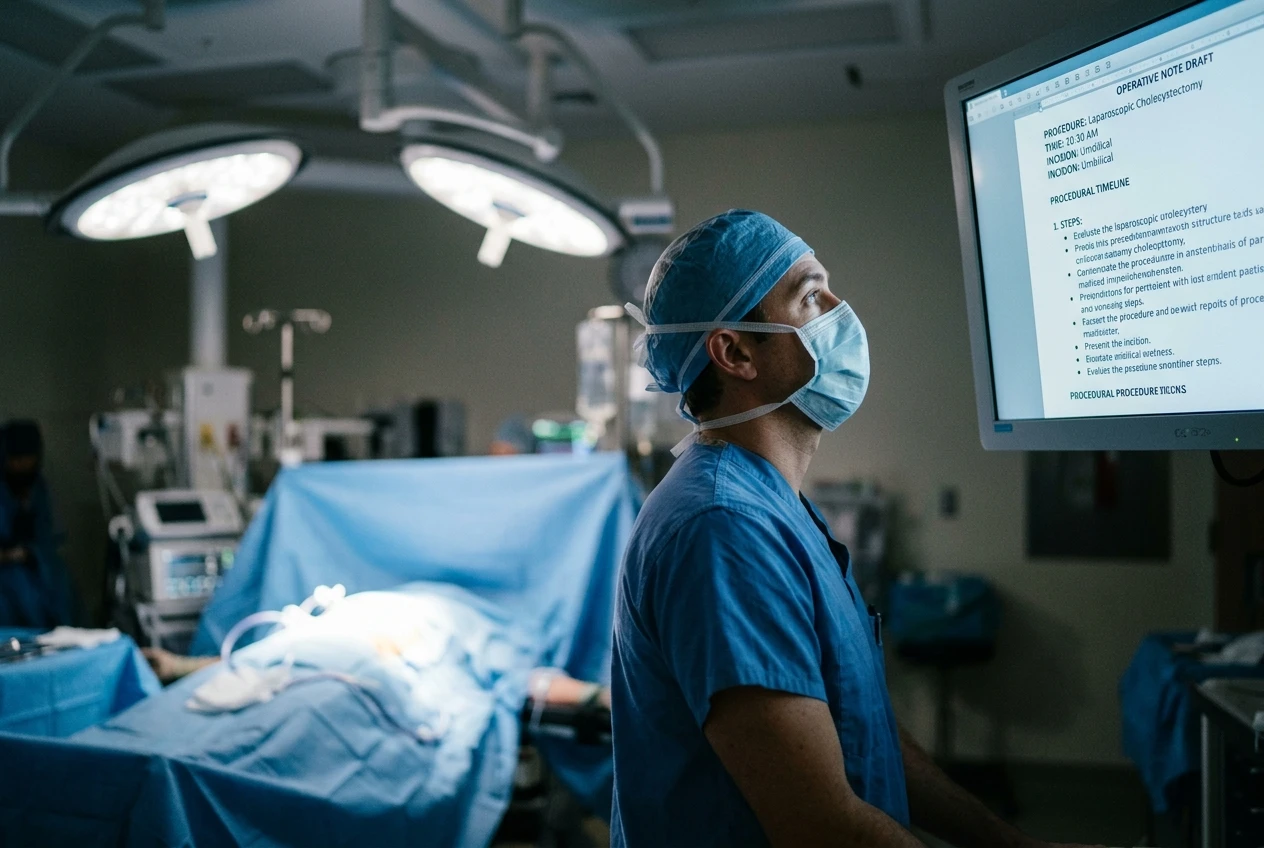
The funding reflects a specific bet on what Uncovr is already doing inside US and European hospitals: turning the camera feed that has recorded most robotic and minimally invasive surgery for years into the operative record itself.
What $7 Million Buys in Surgical AI
Uncovr builds AI software that watches surgical and endoscopic video in real time and drafts the operative report and clinical codes before the surgeon leaves the room. Uncovr’s $7M seed round led by Index Ventures included Seedcamp, Frst, No Label Ventures, and Entrepreneurs First, alongside angels Jean Nehme, founder of Digital Surgery (acquired by Medtronic), Othman Laraki, CEO of Color Health, and Charlie Songhurst, a Meta board member.
Founded in 2025 by chief executive Ines Iraki, chief technology officer Johann Diep, and Prof. Eric Vibert as medical co-founder, Uncovr runs a deployment pipeline of more than 400 operating rooms across the United States and Europe. The company has analysed thousands of hours of surgical video to date and runs live integrations with leading health systems in both regions.
- $7 million seed round, led by Index Ventures, closed in 2025
- 400+ operating rooms in the deployment pipeline across the US and Europe
- Thousands of hours of surgical video analysed on the platform to date
- 400 million+ surgeries performed globally each year
- 16% of procedures in Uncovr’s early data showed missed billable steps
A 70% Gap That Built the Product
More than 400 million surgeries are performed globally each year, and the majority, particularly the minimally invasive and robotic cases, are now captured on high-definition video in real time. That footage is the most complete record of what happened inside the patient. The operative report, the document that follows the case, is still largely written from memory. The numbers on those reports are stark.
the Uncovr round and the 70% documentation gap noted that most operative reports fail to include at least 70% of recommended clinical information, a gap it links directly to higher rates of infection, readmission, and reoperation. Uncovr’s own early analysis of deployed cases found missed billable steps in 16% of procedures, with a roughly 10% reimbursement gap that human review had not caught. The documentation problem is both clinical and financial.
The Camera Was the Record All Along
The pitch is built on a single observation: the camera has been the record of every robotic and minimally invasive surgery for years, and the traditional operative report is the lossy derivative, reconstructed by the surgeon hours after the operation, often from memory.
Uncovr’s platform ingests surgical and endoscopic video, runs computer vision models on it in real time, identifies every instrument interaction, anatomical step, and procedural decision, and maps each to the relevant clinical and billing codes. The output is a draft operative report and a procedural coding suggestion, ready for surgeon review and approval before submission.
The platform also generates searchable procedural records that can flow into quality assurance, compliance, research, and operational workflows. Uncovr’s product and platform overview says the system can reduce op-note drafting time by 80%.
CEO Ines Iraki has framed the documentation work as the first application, not the endpoint. “Operating report and coding is the first application to show that our AI understands what is happening inside the procedure. But you can work on surgical decisions. You can help surgeons inside the surgery in real time,” she told Tech Funding News.
Three Founders, 90 Years of Operating Room Between Them
Iraki was the first hire at the healthtech startup Theremia, where she helped scale the company from zero and ran strategy as Chief of Staff. She later worked in venture capital, investing in healthtech and insurtech, before spending time inside operating rooms that convinced her the documentation gap was the wrong shape.
Diep built computer vision systems for the UK Ministry of Defence, space situational awareness infrastructure for the Swiss Armed Forces, and autonomous rover technologies at the European Space Agency. The technical work in each setting, extracting meaning from high-stakes video in real time, maps directly onto the surgical operating room.
Vibert is an academic surgeon and one of Europe’s senior hepatobiliary specialists, the head of Liver Surgery at Paul Brousse Hospital and Chief of Digestive Surgery Innovation at AP-HP, Europe’s largest academic hospital system. He has spent years watching the clinical consequences of incomplete operative reporting.
“We built on top of the eye: everything the surgeon is doing, every decision, is documented by our AI that analyses the surgical video. That is one thing that is very different. The second thing is our team: we have 90 years of combined experience in surgery,” Iraki told Tech Funding News.
Why Index Ventures Led the Round
Index partner Martin Mignot tied the bet to adoption speed and the dataset the platform would accumulate inside the OR. The 400-room pipeline was already running before the round closed. Mignot described the round as a bet on a highly valuable dataset for surgical AI, built by the founders inside one of healthcare’s hardest environments.
Ines, Eric and Johann have done something rare: earned adoption inside one of healthcare’s hardest environments and moved incredibly fast once inside. By structuring what happens in the OR, Uncovr is building a highly valuable dataset for surgical AI.
Seedcamp principal Felix Martinez framed the bet the same way. “Surgical video is the most complete record of what happens inside a patient, and it’s been systematically ignored until now. Ines and Johann are a rare founding team with the technical depth, clinical credibility and relentless pace to change that. Uncovr is laying the foundational layer for how surgery gets understood, and we’re proud to be with them from the start,” he said.
The Field Uncovr Is Walking Into
The surgical AI documentation market is small but already well funded. Theator, founded a decade ago, has raised $54 million and applies AI to surgical video for quality analysis and outcomes data, with a focus on performance review rather than real-time coding. Caresyntax, the largest in the field, has raised more than $180 million for a broader surgical intelligence platform covering data capture, analytics, and workflow across the operating room. Proprio has raised $33 million for AI-guided surgical navigation.
What differentiates Uncovr, per Iraki, is the combination of real-time operative documentation, immediate reimbursement application, and a founding team with direct experience in surgery and high-stakes video intelligence. None of the larger competitors focuses on real-time operative documentation and coding as the primary product.
| Company | Primary focus | Reported funding |
|---|---|---|
| Uncovr | Real-time operative note and procedural coding from operating room video | $7M (seed, 2025) |
| Theator | Surgical video quality analytics, performance review, and outcomes data | $54M |
| Caresyntax | Operating room data capture, analytics, and workflow platform | $180M+ |
| Proprio | AI-guided surgical navigation | $33M |
Each operating room integrated into the platform is a recurring stream of surgical video, and each minute of footage is structured data the company captures first. For a parallel seed bet in a different clinical setting, ReVision Implant’s €4M bionic eye round offers a useful comparison.
Where the Seed Capital Funds the Rollout
The fresh capital is going to two priorities: hiring at the frontier of surgical AI talent and accelerating deployment in operating rooms already in the pipeline. The company is recruiting software and AI research engineers internationally for its office in Paris.
Seedcamp has been an outstanding partner and believer since day one. Their incredible support, unwavering trust, and constant willingness to help have been invaluable. We’re truly grateful to have them with us on this journey.
Per Iraki, the bigger bet is the dataset. “Every robotic and minimally invasive procedure already generates a rich record of expert decision-making, technique, and judgment. We believe this will become one of the foundational datasets of modern medicine,” she said. Per Iraki, the first application is the operative note. The next is helping the surgeon, in real time, during the case.
Frequently Asked Questions
What does Uncovr do?
Uncovr builds AI software that analyses surgical and endoscopic video in real time and drafts the operative report and procedural coding before the surgeon leaves the operating room. The platform is live in hospitals in the United States and Europe, with a pipeline of more than 400 operating rooms.
Who led Uncovr’s $7M seed round?
Index Ventures led the round. Seedcamp, Frst, No Label Ventures, and Entrepreneurs First participated. Angels included Jean Nehme, founder of Digital Surgery (acquired by Medtronic), Othman Laraki, CEO of Color Health, and Charlie Songhurst, a Meta board member.
How does the platform generate operative notes?
The platform ingests surgical or endoscopic video and runs computer vision models on it in real time. Every instrument interaction, anatomical step, and procedural decision is identified and mapped to clinical and billing codes, producing a draft operative report the surgeon reviews and approves before submission.
Who else is in surgical AI documentation?
Theator (reportedly $54M raised) applies AI to surgical video for quality analysis and outcomes. Caresyntax (reportedly $180M+ raised) builds a broader operating room data and analytics platform. Proprio (reportedly $33M raised) builds AI-guided surgical navigation. Uncovr is the smallest by funding and is the only one of the four pitching real-time operative documentation and coding as its primary product.


Replit Opens Its London Office Inside an AI Crowd

Straight Circle Trailer Lands Without a U.S. Date

Anemo Labs Bets £700,000 on an AI Sense of Smell

Nintendo Prices the Zelda 40th Switch 2 at $519

Copilot Capital Buys the Autopilot Already Running 90 GW

Ground A Raises €9.1 Million for a Pallet Laser

Gibney’s Musk Film Opens in Venice Without Its Subject

Torvalds Blames AI for a Full-Fat Linux 7.3-rc2

Dexter Returns Sharper, Older, and Stuck Between Killers

Meta’s Muse Agent Can Spend Before the Privacy Lock

Walter’s TWG Insists No Fraud as Insurer Probes Force Cleanup

30-Year Yield Hits 5.32% Highest Since 2007 as Debt Supply Locks In Costs

PCE Stays at 3.7% as Gas and Tariffs Outrun Coming Revisions

Evernorth S-4 Clears Path for Active XRP Treasury on Nasdaq

Astute’s $1.2M bet makes B2B creator deals feed AI discovery

Strategy Parks $1.59B Cash While Bitcoin Stack Stays Flat

CLARITY Act Cloture Opens a Door Ethics Still Blocks

Instinct Hits $2.5 Billion as AI Agent Access Sparks Trust Fights

Oracle’s 2.8 GW Bloom Deal Exposes the AI Power Bypass

AI data centers win as RAM kits jump nearly 500 percent
-
 FINANCE3 months ago
Zcash Patched a Double-Spend Bug as ZEC Climbed 5%
-
 ENTERTAINMENT3 months ago
Steam Summer Sale 2026 Locks In June 25 to July 9 Dates
-

 FINANCE2 months ago
CLARITY Act Final Text Expected This Weekend as 60-Vote Hurdle Looms
-
 NEWS4 months ago
Meta Adds AI Replies to Threads, But Users Can’t Block It
-
 ENTERTAINMENT5 months ago
Extraction 3 Is Officially Coming to Netflix in 2027
-

 NEWS3 months ago
YouTube Shorts is testing a heart in place of the thumbs-up
-

 NEWS1 month ago
Senators Force Apple Off Chinese Memory as Big Three Cash In
-

 NEWS3 months ago
NEURA Robotics’ $1.4B Series C Redraws Europe’s Physical AI Bet