
FINANCE
Grayscale HYPE ETF Undercuts Rivals, Omits the Bigger Fee

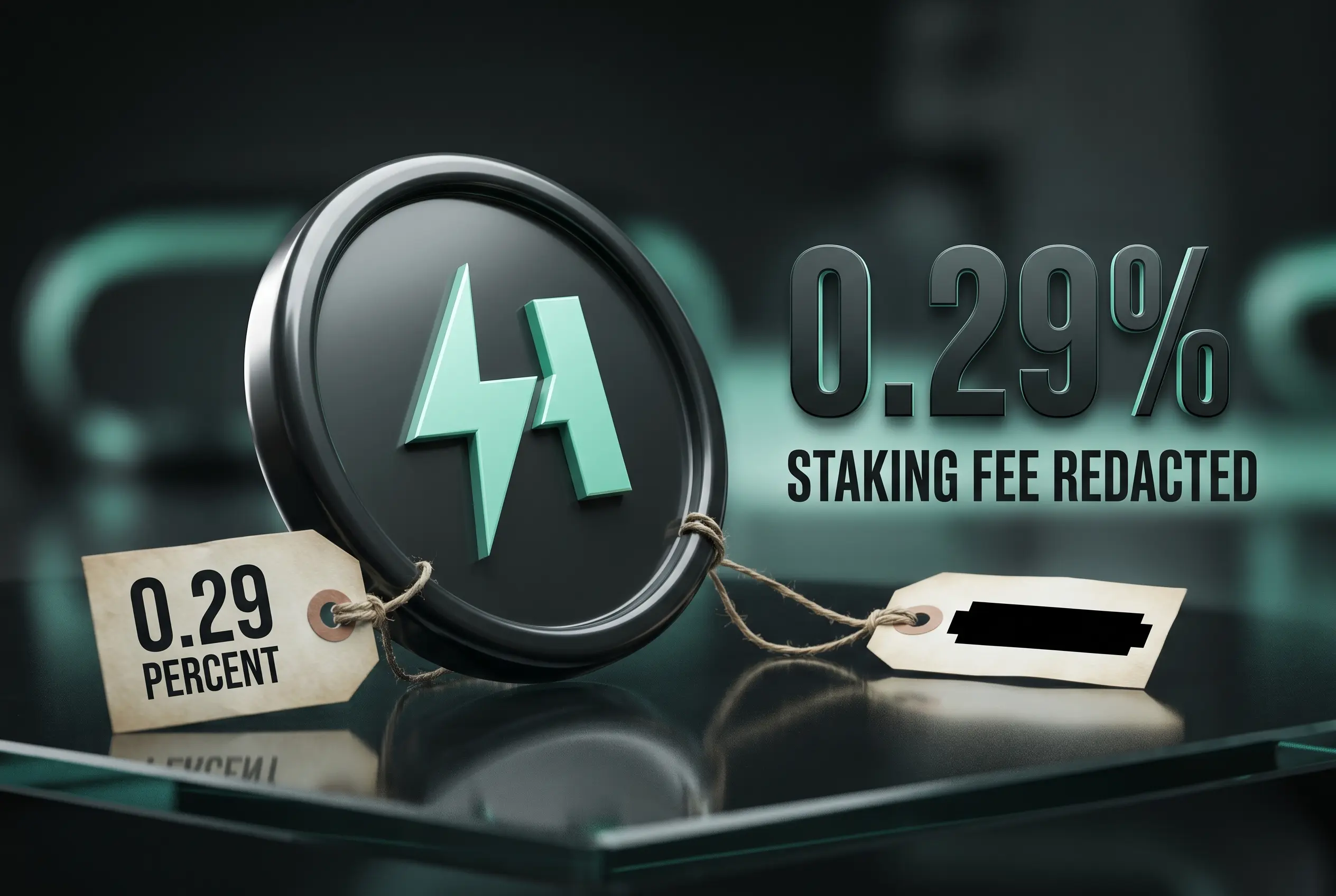
Grayscale Investments has set the sponsor fee for its Hyperliquid staking exchange-traded fund (ETF) at 0.29%, the lowest of three competing products racing to list, and the disclosure was enough for analysts to flag a launch as early as this week under the ticker HYPG. The number landed in a fresh filing with the U.S. Securities and Exchange Commission (SEC) on June 1.
The cheapest headline fee, though, is not the cost that decides what shareholders pocket. Grayscale left the staking fee blank in its paperwork, and on a token that pays stakers only about 2.3% a year, that missing line can swamp the entire management-fee gap the firm just won.
Grayscale’s Sixth Amendment Names the Fee and the Ticker
The document was Grayscale’s sixth amendment to its registration statement with the SEC. It pinned down the two things the market had been waiting on: the management fee at 0.29% and the trading symbol, HYPG.
Bloomberg Intelligence ETF analyst James Seyffart said the product looks ready to trade. “Launch likely imminent for Grayscale’s Hyperliquid ETF,” he wrote on X, clarifying that by imminent he meant this week. He also confirmed the HYPG ticker.
That timeline matters because Grayscale is arriving third. Grayscale’s earlier HYPG staking-fund filing had left the fee out entirely, and each revision since has read like routine back-and-forth with the regulator rather than a substantive rewrite. Seyffart called the late-May fifth amendment “nothing substantial,” the kind of minor tweak issuers make to clear staff comments. What changed with the sixth version is pricing, and naming a fee is usually one of the last boxes an issuer ticks before a fund goes live.
How the 0.29% Stacks Against Bitwise and 21Shares
Against its rivals, Grayscale’s price tag is cheaper by a sliver. Bitwise launched the first U.S. spot Hyperliquid fund, BHYP, on the New York Stock Exchange (NYSE) on May 15, according to Bitwise’s BHYP launch announcement. Its standard sponsor fee is 0.34%, waived to 0% for the first month on the fund’s first $500 million in assets. 21Shares followed with THYP at 0.30%.
| Fund | Issuer | Ticker | Management fee | Staking | Status |
|---|---|---|---|---|---|
| BHYP | Bitwise | BHYP | 0.34% (0% first month, first $500M) | In-house, via Bitwise Onchain Solutions | Live on NYSE since May 15 |
| THYP | 21Shares | THYP | 0.30% | Yes | Trading |
| HYPG | Grayscale | HYPG | 0.29% | Yes, fee undisclosed | Launch expected this week |
So Grayscale undercuts 21Shares by one basis point and Bitwise by five once the waiver lapses. A basis point is a hundredth of a percentage point, which means the edge is worth roughly $1 to $5 a year on a $10,000 holding. That is the prize the headlines celebrated. Bitwise, for its part, says it is the only Hyperliquid ETF sponsor staking the tokens through its own infrastructure rather than a third party.
The Number Grayscale Did Not Disclose
The line investors should hunt for is not in the coverage, because Grayscale never printed it. The filing fixed the management fee but said nothing about the staking fee, the cut a fund takes from the rewards its tokens earn while locked on the network.
Farside Investors, which runs a widely cited crypto ETF fee and flow tracker, put the question bluntly under Seyffart’s post:
What is the staking fee? That is often more significant than the management fee.
Seyffart agreed the figure was absent. “Undisclosed as far as I could tell,” he wrote, noting he had only spent a few minutes looking. Some observers now expect another amendment to spell it out. Others think Grayscale could leave it off the books for now and disclose closer to launch, or after.
Why would a fee on rewards outweigh a fee on assets? Because the two are charged on different bases. The management fee skims a slice of the entire pile of tokens. The staking fee skims only the yield those tokens throw off, but funds tend to set it as a far larger percentage. On a low-yield asset, that small slice of a bigger rate can still land on the wrong side of the comparison.
Why HYPE’s Thin Staking Yield Makes the Cut Bite
The math turns on how little HYPE actually pays the people who stake it.
What HYPE Pays Its Stakers
On Hyperliquid’s proof-of-stake network, holders delegate HYPE to validators and earn rewards that compound automatically. The catch is the rate. Per Hyperliquid’s staking documentation, the reward rate falls as more tokens are staked, scaling inversely with the square root of the total staked, a design borrowed from Ethereum. At current participation that works out to roughly 2.3% a year, and data trackers such as the Hyperliquid staking rewards dashboard show figures in a similar low band.
Compare that with Solana, where staking funds built their pitch on yields of 7% to 8%. HYPE’s reward is about a third of that. Every basis point a fund skims off the top therefore eats a larger share of a smaller pie.
What Solana’s Funds Charged for Staking
The Solana staking products that launched ahead of HYPG show how steep these cuts can run:
- BSOL (Bitwise) set a 6% fee on staking rewards alongside a 0.20% management fee.
- FSOL (Fidelity) disclosed a 15% staking-reward fee with a 0.25% expense ratio.
- GSOL (Grayscale) took the steepest cut, a 23% fee on staking rewards on top of a 0.35% expense ratio.
Apply Grayscale’s own Solana template to HYPG. A 23% cut of a 2.3% yield is about 0.53% a year in forgone rewards, nearly double the full 0.29% management fee and many times the one-basis-point edge over 21Shares. Funds vary in whether they distribute rewards or reinvest them; the REX-Osprey Solana staking ETF pays rewards to holders after fees, while some peers compound them into the share price. Either way the cut comes first. Grayscale’s recent Sui staking fund on NYSE Arca shows the firm is comfortable layering both fees on the same product. None of this means HYPG is a bad deal; it means the deal cannot be judged on the number everyone quoted.
The $144 Million Seed and a Token at Record Highs
Behind the fee fight sits real money and a token on a tear. Grayscale’s filing still lists about 2 million HYPE tokens as seed capital, worth roughly $144 million at recent prices. The firm has been stocking up, buying millions of dollars of HYPE to fund the launch.
The timing rides a rally. HYPE traded around $71 in early June after setting records in late May, and the token recently passed Dogecoin in market value, a marker of how fast Hyperliquid’s perpetuals exchange has pulled in capital and revenue. Some traders have gone further, placing a bet that HYPE could flip Solana before this cycle ends.
If Grayscale files the staking fee before HYPG opens, investors can run the full comparison and the 0.29% headline will carry the weight it claims. If the firm lets the fund launch with that line still blank, the cheapest management fee on the board ships without the one disclosure that tells a buyer what the yield is really worth.
Frequently Asked Questions
What is the ticker for Grayscale’s Hyperliquid staking ETF?
The fund trades under the symbol HYPG. Bloomberg Intelligence analyst James Seyffart said he expects the launch this week after Grayscale’s sixth amendment confirmed both the ticker and the fee.
How much does the Grayscale Hyperliquid ETF charge?
HYPG carries a 0.29% management fee. That is the only fee Grayscale has disclosed so far; the staking fee, which applies to rewards the fund earns, was left blank in the latest filing.
How does HYPG’s fee compare to Bitwise and 21Shares?
Grayscale’s 0.29% undercuts 21Shares’ THYP at 0.30% and Bitwise’s BHYP at 0.34%. Bitwise waives its fee to 0% for the first month on the first $500 million in assets, so the edge narrows during that window.
What is the staking fee on the Grayscale HYPE ETF?
It has not been disclosed as of the sixth amendment. For comparison, Grayscale’s Solana staking fund, GSOL, has been cited as charging 23% of staking rewards, a far larger cut than its management fee.
How much does HYPE staking actually yield?
Hyperliquid’s documentation points to a reward rate near 2.3% a year at current staking levels, with the rate falling as more tokens are staked. That is well below the 7% to 8% range seen on Solana staking products.
Disclaimer: This article is for informational purposes only and is not investment advice. Crypto exchange-traded funds and the tokens they hold are volatile and can lose value quickly; staking rewards are not guaranteed and can change. Consult a qualified financial professional before investing. Figures and fee details are accurate as of publication.


Galaxy Ring’s FDA Sleep Apnea Clearance Faces a Familiar Wait

kausable’s €12 Million Seed Joins a Quiet Bet Against AI Scaling

Bitcoin ETFs Shed $225 Million as Treasury’s Biggest Buyers Retreat

telli Raises $15 Million Seed to Rival Billion-Dollar AI Giants

PageMind Raises €1.2 Million to Crack AI Shopping Search

Hackers Hijack Robinhood CEO’s X to Push Fake Memecoin

Apple’s Trade Secrets Suit Against OpenAI Is Europe’s Problem Too

Adobe’s Patch Leaves WhatsApp’s Own Security Gap Untouched

Reddit and Publishers Weigh Blocking Google Over AI Traffic Losses

CuspAI’s $2.6 Billion Bet Echoes AI Drug Discovery’s Playbook

CLARITY Act Final Text Expected This Weekend as 60-Vote Hurdle Looms

Fed Minutes Cite AI Demand as Inflation Risk, Put a 2026 Hike Back on the Map

Kalshi Loses Major NY Prediction Markets Ruling to Judge Torres

Marker AI Writing Startup Lands $13M Seed Led by Index Ventures

Dota 2 Esports World Cup 2026: Spirit Defends $2M Title In Paris

Meta’s Muse Spark 1.1 Beats Rivals on Price, Trails on Coding

CS2 Premier Season 5 Lands With Cache and a C4 Damage Rework

Trump Calls Iran ‘Islamic Republic of Japan’ as Ceasefire Ends

ARC Intelligence Closes €4M Seed Round in Roughly a Week

Finto Picks Munich Over Silicon Valley After YC, Raises $3.4M
-
 FINANCE2 months ago
Zcash Patched a Double-Spend Bug as ZEC Climbed 5%
-
 ENTERTAINMENT2 months ago
Steam Summer Sale 2026 Locks In June 25 to July 9 Dates
-
 NEWS2 months ago
Meta Adds AI Replies to Threads, But Users Can’t Block It
-
 FINANCE3 weeks ago
CLARITY Act Final Text Expected This Weekend as 60-Vote Hurdle Looms
-
 ENTERTAINMENT2 months ago
‘Widow’s Bay’ Review: Apple TV’s Sleeper Horror-Comedy Earns Its Fog
-
 NEWS7 months ago
FolderFresh Review: This Free Tool Automates Windows File Organizing
-
 NEWS4 months ago
U.S. Navy Deploys Solar-Powered Lightfish Drone to Patrol Oceans
-
 FINANCE2 weeks ago
Fed Minutes Cite AI Demand as Inflation Risk, Put a 2026 Hike Back on the Map