
NEWS
Alphabet Raises $80 Billion to Bankroll Google’s AI Compute
Alphabet will raise about $80 billion in equity to fund Google’s AI infrastructure, with $10 billion from Berkshire Hathaway and a $40 billion share program from Q3.

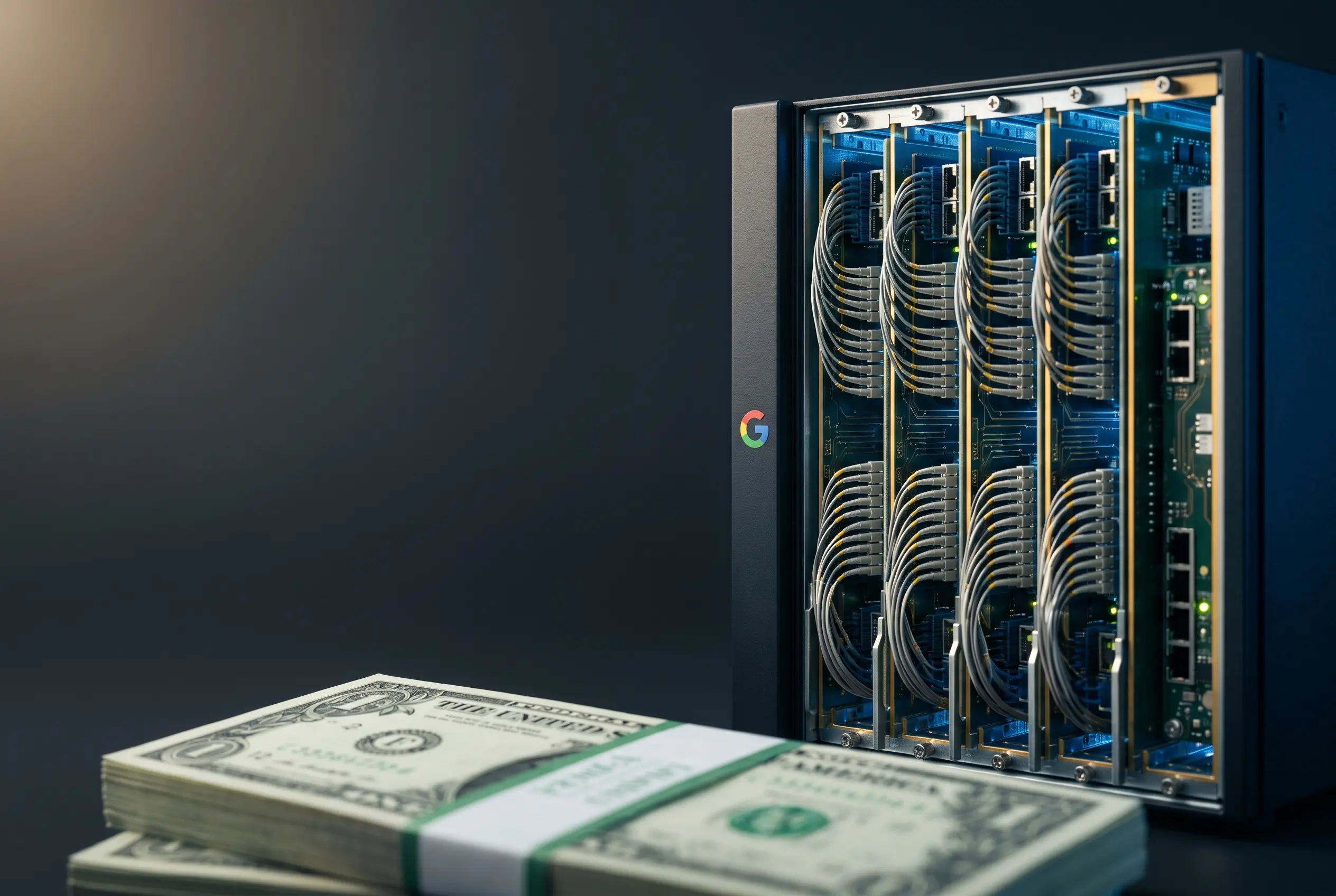
Alphabet said Monday it will raise about $80 billion in equity to fund Google’s AI infrastructure, the largest stock sale in the company’s history. The package pairs a $10 billion private placement to Warren Buffett’s Berkshire Hathaway, the Omaha-based holding company, with $30 billion in underwritten public offerings and a $40 billion at-the-market program set to begin in the third quarter.
Alphabet spent years buying back its own shares. Now it is selling them, on top of more than $100 billion in debt raised over the past year. The AI buildout has outgrown even the cash flow of one of the most profitable businesses in technology, and that shift, more than the headline number, is what investors are weighing.
What Alphabet Is Selling, and to Whom
The raise is not one offering but four, stacked to spread the dilution and the timing. The structure was laid out in the Class A and Class C share offering prospectus filed with the U.S. Securities and Exchange Commission (SEC, the federal markets regulator). The proceeds are earmarked for general corporate purposes, with the filing naming capital expenditures to scale AI infrastructure and global compute first in line.
| Component | Amount | Form |
|---|---|---|
| Berkshire Hathaway private placement | $10 billion | $5B Class A, $5B Class C common stock |
| Underwritten offering, preferred | $15 billion | Mandatory convertible preferred stock |
| Underwritten offering, common | $15 billion | Class A and Class C shares |
| At-the-market program | $40 billion | Class A and Class C, from Q3 |
The biggest single piece is the at-the-market program, which lets Alphabet drip shares into the open market over time rather than dumping them in one block. That gives the company flexibility on price and pace, and it is why the full amount will not hit the float at once.
Why a Cash Machine Is Suddenly Selling Stock
Alphabet does not need cash the way a startup needs cash. It throws off tens of billions in free cash flow a year and has historically been a net buyer of its own equity. So an equity raise of this size from this company reads as a statement about scale, not solvency.
The statement is that demand has run past what Google can currently build. In its filing the company said it is seeing strong demand for its AI products from enterprises and consumers at levels its supply cannot meet.
The company is experiencing strong demand for its AI solutions and services from enterprises and consumers, at levels that are exceeding the company’s available supply.
That line is the justification for spending now and worrying about returns later. It also fits the pivot CEO Sundar Pichai set in motion two years ago, when he recast Google from a search company into an AI company. Search and ads still pay the bills, but the capital is flowing toward compute, and the stock rally that has tracked Alphabet’s AI bet gave the company an expensive currency to spend. Issuing shares near a record price dilutes less per dollar raised than issuing them in a slump.
The Berkshire Signal Under Greg Abel
The most-watched piece is the smallest. Berkshire is buying $5 billion of Class A stock at $351.81 a share and $5 billion of Class C stock at $348.20, prices set out in Alphabet’s free-writing prospectus. This is not a first date. The conglomerate has been building a Google position since the third quarter of last year, and its stake was worth roughly $20 billion before Monday’s deal.
What gives the placement weight is the timing of the handover at the top. Greg Abel, who took over as Berkshire’s chief executive at year-end after Buffett stepped back, is signing off on a $10 billion check into a capital-intensive AI bet. For a firm built on a reputation for buying cash generators cheap and avoiding heavy reinvestment cycles, putting fresh money into the most reinvestment-hungry trade in the market is a tell about where Abel thinks the durable franchises now sit.
For Alphabet, the value of the anchor is partly optics. A Berkshire endorsement at a fixed price gives the underwritten and at-the-market tranches a credibility floor, and it puts a long-horizon holder on the register at a moment when the company is asking the market to fund a build whose payback is years out.
The Capex Bill Behind the Raise
The $80 billion does not stand alone. It sits on top of a spending plan that has roughly doubled in a year and a debt stack that was already large before this week.
- $180 billion to $190 billion in capital expenditure guided for 2026, up from a prior range of $175 billion to $185 billion.
- Around $91.4 billion spent on capex in 2025, meaning this year’s plan is close to double.
- More than $85 billion in debt raised across six currencies over the past year, pushing the total debt load past $100 billion.
Stack those together and the strain is clear. A capital-intensity cycle on this scale compresses near-term free cash flow, which is the engine that used to fund everything Google did without asking anyone for money. Pichai has been candid about the squeeze, telling investors the company is compute constrained in the near term and acknowledging that the pace of spending is the thing that keeps him up at night.
The bear read is straightforward. Equity dilution layered on rising debt, against a return that no one can yet size, is a lot of capital committed on faith. The counterweight is that Alphabet is funding the build from three sources at once, equity, debt and cash flow, which is what the company means when it talks about a balanced approach that keeps a healthy balance sheet.
What Alphabet Just Did to the Hyperscaler Race
The wider consequence lands on Microsoft, Amazon and Meta. When the cash-richest name in the group decides its own cash flow is not enough and taps the equity market, it resets the bar for what counts as adequate AI spending. Every rival now answers to a peer that just told the world supply is the constraint, not capital.
The numbers behind that pressure are enormous. The big hyperscalers are on track to spend over $700 billion on AI infrastructure in 2026, with Wall Street estimates putting total AI capex above $1 trillion in 2027. Alphabet’s move pulls the sector’s spending floor higher and gives skeptics a fresh worry about overbuild, the old pattern where capacity gets laid down faster than demand can absorb it.
Alphabet’s defense is its order book. Cloud revenue grew 63% year over year in the first quarter of 2026, and the Google Cloud backlog of more than $460 billion in committed business is the data point the bulls point to when asked whether the spending will pay. The same demand is showing up in unusual places: Apple is preparing to pay Google billions a year to power Siri, part of Apple’s plan to put a Gemini-style assistant inside the iPhone. Analysts have stayed with the story; the consensus across 54 of them is a moderate buy at a price target of $413.33, near 10% above where the stock trades. The market gave a quieter verdict on the day, marking the shares down on dilution fears before the bigger argument took over.
Frequently Asked Questions
How much is Alphabet raising and what is it for?
Alphabet plans to raise about $80 billion in equity, with the proceeds going to general corporate purposes and, first among them, capital expenditures to scale AI infrastructure and global compute. The funds support a 2026 capex plan guided at $180 billion to $190 billion.
Will the stock sale dilute existing Alphabet shareholders?
Yes, but modestly by the company’s scale. The new equity is roughly 1.8% against Alphabet’s market value of about $4.5 trillion, which Wells Fargo analysts described as very modest. The mandatory convertible piece and the phased at-the-market sales are designed to soften the near-term impact.
What is mandatory convertible preferred stock?
It is a hybrid security that pays a fixed dividend for a set period, three years in this case, then automatically converts into common shares on a predetermined formula. Companies use it to raise capital now while deferring the dilution into the future, and you can read more on how mandatory convertible preferred stock works.
When does the at-the-market offering begin?
The $40 billion at-the-market program, the largest single component of the raise, is expected to start in the third quarter. It lets Alphabet sell Class A and Class C shares gradually into the open market rather than in one block, giving it control over price and timing.
Disclaimer: This article is for informational purposes only and is not investment advice. Securities such as equity offerings and convertible preferred stock carry risk, including loss of capital, and dilution can affect existing holders. Consult a qualified financial professional before making investment decisions. Figures are accurate as of publication.


Bandcamp Boots Boy George Over AI Song, Not Just the Lyrics

Olix Triples to $3.3bn on Optical Bet Against Nvidia

Four Teens Died After Platforms Vowed Fixes and Suits Began

Google Health Now Writes Fitbit Data Into Apple Health

Pixel 11 Pre-Orders Open Eight Hours Before the Event

Aflabox Seed Funds Field Mycotoxin Tests That Beat Lab Delays

2026 Lexus RZ Gains Power and Range Yet Still Falls Short

Ankr Nodes Clear Path for XRPL Institutional Features

Xbox Disc Licenses Turn Physical Games Into Portable Rights

BlackRock Turns Cash Empire Into Stablecoin Reserve Rails

Kalshi Loses Major NY Prediction Markets Ruling to Judge Torres

Fed Minutes Cite AI Demand as Inflation Risk, Put a 2026 Hike Back on the Map

Marker AI Writing Startup Lands $13M Seed Led by Index Ventures

Dota 2 Esports World Cup 2026: Spirit Defends $2M Title In Paris

Meta’s Muse Spark 1.1 Beats Rivals on Price, Trails on Coding

Finto Picks Munich Over Silicon Valley After YC, Raises $3.4M

ARC Intelligence Closes €4M Seed Round in Roughly a Week

CS2 Premier Season 5 Lands With Cache and a C4 Damage Rework

Backrooms Returns to Theaters as the Everything Must Go Edition

Magnificent Seven Shed $2 Trillion in June as the Rally Broadens
-
 FINANCE2 months ago
Zcash Patched a Double-Spend Bug as ZEC Climbed 5%
-
 ENTERTAINMENT2 months ago
Steam Summer Sale 2026 Locks In June 25 to July 9 Dates
-

 FINANCE1 month ago
CLARITY Act Final Text Expected This Weekend as 60-Vote Hurdle Looms
-
 NEWS3 months ago
Meta Adds AI Replies to Threads, But Users Can’t Block It
-
 ENTERTAINMENT3 months ago
‘Widow’s Bay’ Review: Apple TV’s Sleeper Horror-Comedy Earns Its Fog
-
 NEWS5 months ago
U.S. Navy Deploys Solar-Powered Lightfish Drone to Patrol Oceans
-
 FINANCE4 weeks ago
Kalshi Loses Major NY Prediction Markets Ruling to Judge Torres
-
 NEWS8 months ago
FolderFresh Review: This Free Tool Automates Windows File Organizing