
NEWS
MacBook Neo Pressure Forces Windows 11 Into an 8GB Efficiency Race
IDC ties Microsoft’s Windows 11 memory optimizations for 8GB PCs to MacBook Neo pressure and the RAM shortage reshaping budget laptops into 2027.

Microsoft will reduce Windows 11’s memory footprint on PCs with 8GB of RAM and above by the end of 2026, Windows chief Pavan Davuluri confirmed in a late-July update. An IDC analyst says Apple’s MacBook Neo helped force the entire PC stack to respond.
The move sits inside a larger reset. Rising DRAM costs and a cheap Apple silicon laptop have made the old “just add more RAM” playbook too expensive for budget machines. Software efficiency is now a margin tool as much as a performance goal.
What Microsoft Put on the Calendar
On July 31 Davuluri published a progress note on the quality push that began in March. Among four new focus areas for the rest of the year he listed memory optimization for 8GB and above. The goal is a faster, more responsive experience on the machines most people actually buy.
The company has already shipped pieces of the work to Insiders. It points to a more efficient memory allocator that cuts overhead across apps and components, continued tuning of WinUI 3 so shell and inbox apps use less RAM by design, and efficiencies in Chromium and WebView2 components that appear throughout the OS.
- Onboarding and setup, faster out-of-box experience
- Memory optimization, smaller footprint on 8GB+ systems
- Family, quicker parental-control access
- Voice, more natural interaction across apps
Broader rollout of earlier quality work begins this fall. The explicit 8GB memory target is scheduled for completion by year-end. That timeline matches the moment when memory prices and competitive pressure both peak.
The four focus areas share a single constraint. Each one has to land on hardware that OEMs can still afford to build. Memory optimization is the item that most directly answers the cost shock; the other three improve first-run and daily feel once the machine is already light enough to stay responsive.
Shipping allocator and WinUI changes through Insider channels first lets Microsoft measure working-set reductions before the wider fall release wave. Cumulative updates, not a single feature drop, are the delivery path.
The Laptop That Reset the Price Floor
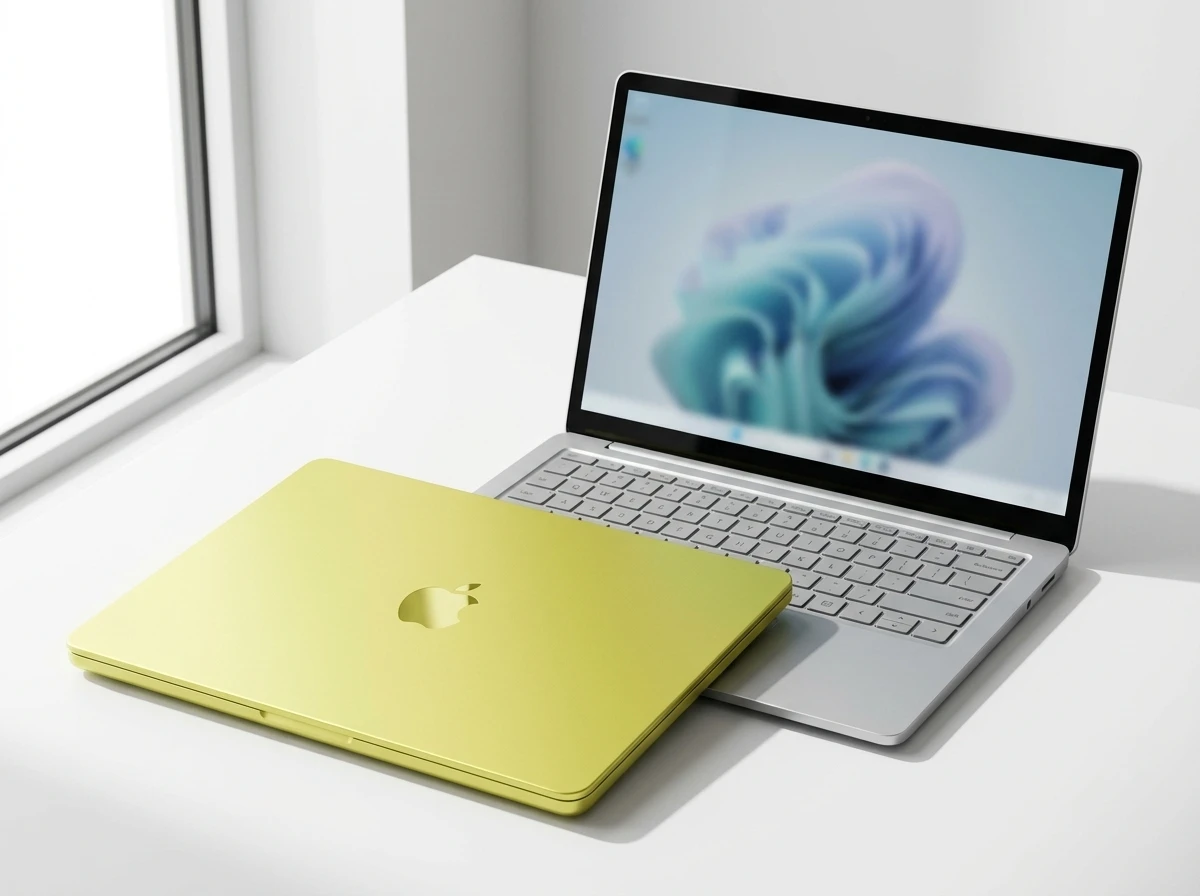
Apple unveiled the MacBook Neo starting at $599 (education $499) on March 4. It uses an A18 Pro chip, 8GB of unified memory, a 256GB SSD option, a 13-inch Liquid Retina display, and claims up to 16 hours of battery life. Fanless and aluminum, it arrived as the company’s cheapest MacBook ever.
By late June the same machine listed at $699 after Apple passed on memory-cost increases. Even after the hike it still undercuts many Windows configurations that ship more storage and ports but heavier software. Independent tests and OEM counter-claims have argued about absolute speed; the price-performance signal was unambiguous.
| Attribute | MacBook Neo (launch) | Typical budget Windows 13-inch |
|---|---|---|
| Starting price | $599 ($499 education) | $599-$849 range |
| Memory | 8GB unified | 8GB or 16GB discrete |
| Storage base | 256GB SSD | 256GB-512GB |
| Chip | A18 Pro | Intel Core Ultra / Ryzen / Snapdragon |
| Claimed battery | Up to 16 hours | Varies, often lower |
The Neo’s budget laptop impact was immediate. It pulled demand into Apple’s column and left Windows OEMs explaining why their 8GB or 16GB machines cost the same or more while feeling heavier.
Unified memory on the A18 Pro lets the same 8GB pool serve CPU, GPU, and media engines without the copy overhead common on discrete layouts. That architecture choice is why a low sticker price still produced a usable everyday machine. Windows OEMs facing the same DRAM bill cannot copy the packaging; they can only answer on price, ports, and software weight.
IDC Spelled Out the Pressure
In a June 2 market note IDC cut its full-year 2026 PC shipment forecast to a decline of 11.3 percent, with a sharper 20 percent drop expected in the fourth quarter. The firm blamed a memory shortage that it sees lasting into late 2027. Average selling prices are projected to rise 17 percent this year.
The introduction of the MacBook Neo is putting real pressure on the entire PC ecosystem. We expect vendors to respond with a combination of new silicon, a more efficient OS from Microsoft, and aggressive promotional pricing.
Jitesh Ubrani, research manager for IDC’s Consumer Devices Trackers, made the statement. He added that the Neo provides a partial offset to broader price increases by keeping some low-cost notebook options alive, yet the overall ASP trajectory remains upward. The same note links to global PC shipments declining 11.3 percent under the memory constraint.
That language landed weeks before Davuluri’s July update. Microsoft never named Apple in its quality post. The analyst connection is external, and it fits the sequence: cheap efficient hardware appears, OEMs panic over margins, the platform vendor starts talking about lighter software.
IDC’s three-part response list maps cleanly onto what followed. Promotional pricing and education SKUs appeared first because they need no new silicon. OS efficiency work is the lever Microsoft alone can pull on a fixed calendar. New chips remain the slowest piece and the most exposed to the same memory shortage.
Why Memory Suddenly Costs Too Much
AI data-center demand has absorbed large shares of DRAM and NAND output. Laptop and phone vendors now compete with hyperscalers for the same silicon. The result is higher bill-of-materials costs and thinner product lineups.
Apple raised Neo and Air prices in late June citing exactly that shortage. Other OEMs have done the same or quietly dropped higher-memory SKUs. Microsoft itself has shifted public language: Surface pages now call 8GB “great for everyday use,” and older 32GB recommendation pages have been cleaned up.
- Shipment hit: IDC sees -11.3% full-year 2026, -20% in Q4
- Price climb: +17% ASP forecast for 2026
- Relief horizon: no meaningful memory recovery before end of 2027
- Buyer behavior: early-year pull-forward demand already spent
The broader AI memory crunch delays have already shown up in higher-end Apple schedules. Budget Windows machines feel the same squeeze harder because their margins were thinner to begin with.
When hyperscalers clear available DRAM wafers, the residual supply reaches consumer OEMs at prices that break old entry-level BOMs. Dropping 16GB SKUs at the low end is then a margin defense, not a product preference. Calling 8GB sufficient is the public face of that math.
OEMs Now Race on Price and Silicon
Dell answered with an XPS 13 that starts near the Neo’s original price for students. Microsoft’s own Surface Laptop 13 and Pro 12 offer 8GB configurations, though at higher street prices and without Copilot+ branding (that still wants 16GB). ASUS executives publicly noted that Microsoft, Intel and AMD were discussing responses within weeks of the Neo launch.
Hardware parity on paper is achievable. Many Windows machines already ship more ports, expandable storage options, or discrete graphics. The gap that remains is software efficiency and silicon-level performance per watt. Apple’s vertical stack lets 8GB of unified memory behave like more. Windows has historically counted on larger pools of discrete RAM.
- New silicon generations (Panther Lake, next Snapdragon, possible Nvidia PC parts) still months away and themselves memory-constrained
- Aggressive promotions and education pricing already in market
- Portfolio cuts: fewer high-RAM SKUs at the low end to protect margins
- Software as the only lever Microsoft fully controls on its own schedule
That last point is why the OS work matters more than another press-cycle announcement. Chip roadmaps slip; a memory-allocator change and WinUI migration can ship in cumulative updates.
Education pricing is the fastest counter because it reuses existing chassis and simply narrows the gap to the Neo’s $499 student tag. It does not fix idle RAM use. Only the OS work and the next silicon wave can do that, and only one of those two is fully under Microsoft’s calendar.
How the Footprint Shrinks
Microsoft’s description is concrete even if the final numbers are not yet public. A more efficient allocator reduces base overhead. WinUI 3 tuning means new shell surfaces and inbox apps start lighter. Chromium and WebView2 components, which power large parts of modern Windows UI and many third-party apps, receive their own memory passes.
Earlier quality work already targeted Start, Search, File Explorer and boot times. Those gains compound with a smaller working set. The official 4 GB minimum RAM requirement has never changed, yet real-world idle usage on many 8GB systems left little headroom for browsers and productivity apps. Making 8GB feel usable again is the stated target.
| Technique | Target | Status note |
|---|---|---|
| Efficient memory allocator | Lower overhead across apps and OS | Already introducing |
| WinUI 3 tuning | Shell and inbox apps lighter by design | Ongoing modernization |
| Chromium / WebView2 work | Web-based UI components | Driving efficiencies |
| Scheduler and launch paths | Start, Explorer, Search, boot | Previewed earlier in 2026 |
Microsoft’s own push to shrink the footprint is the controllable piece of a larger market correction. Hardware partners still need competitive silicon and aggressive pricing; the OS no longer assumes those partners can keep shipping 16GB at 8GB prices.
Allocator gains help every process. WinUI and WebView2 gains hit the surfaces users see first. Together they aim to restore headroom on machines that once spent most of 8GB before a browser tab opened. The 4 GB minimum stays on paper; the practical bar is whether 8GB feels like a full daily driver again.
How the Dates Line Up Against the Shortage
The public record forms a tight chain from hardware shock to software promise. Each step narrowed the options left for Windows vendors.
- March: Microsoft’s wider quality push begins; Apple unveils the MacBook Neo at $599 on March 4
- June 2: IDC cuts the 2026 shipment outlook and names the Neo as ecosystem pressure
- Late June: Apple lifts Neo and Air prices on memory costs; Neo lists at $699
- July 31: Davuluri lists memory optimization for 8GB and above among four focus areas
- Fall 2026: broader rollout of earlier quality work
- End of 2026: explicit 8GB footprint target scheduled for completion
- Late 2027: IDC’s horizon for meaningful memory-supply recovery
The gap between year-end OS work and late-2027 supply relief is the period that matters for buyers. Promotions and lighter software have to carry demand while DRAM stays expensive. Silicon refreshes land inside that same window and face the same constraint.
What the Reset Still Leaves Open
Delivery risk remains real. Insiders see pieces of the work; general availability of the full memory package is promised for the end of the year, not demonstrated in today’s retail builds. Crowd conversation on X repeatedly flags high idle usage even on 16GB and 32GB machines and treats the 8GB promise as “someday” until Task Manager numbers move.
Performance comparisons will stay contested. Some labs still show macOS opening common apps faster on the same 8GB class of hardware. New Windows silicon will close parts of that gap; software efficiency has to close the rest. Buyers who need the machine today still face higher prices and thinner choices.
- Full memory package still ahead of retail measurement
- Idle-usage complaints persist on larger RAM configs
- Lab comparisons on app launch remain mixed across platforms
- Street prices and SKU depth stay constrained into 2027
The second-order effect is already visible. Microsoft is treating memory as a first-class quality metric again. OEMs are pricing 8GB systems as legitimate everyday machines instead of entry-level afterthoughts. Apple forced the conversation with a single SKU; the Windows response will determine how many of those buyers stay or switch when the next buying cycle arrives in a still-expensive memory market.
Whether the end-of-year updates make an 8GB Windows laptop feel as fluid as the Neo’s marketing claims is the test that matters. The pressure that produced the promise is not going away before 2027. Until Task Manager and battery life move in retail units, the calendar date alone will not settle the argument.


Majors Fights Campus Caliphate as Daily Wire Ambitions Fray

Uber Bets $10 Billion Cash on Robotaxi Platform Play

Ahbstra ARK Pulls 500 Litres Daily From Dry Mediterranean Air

Nest Thread 1.4 Quietly Unifies Multi-Brand Smart Home Meshes

Cable Gateways Push Wi-Fi 7 Past Early Adopters in the US

Pixel Quick Settings Finally Gets Full Layout Reorder in Canary 2608

WhiteBIT Spot Bots Fill UK Gap Left by Derivatives Ban

Motorola Edge 70 Neo Leak Doubles Down on Bold Pantone Colors

Platter Turns Food Spreadsheets Into Sticky Supply Infrastructure

Circle Puts Native USDC on OKX X Layer for AI Rails

Marker AI Writing Startup Lands $13M Seed Led by Index Ventures

Meta’s Muse Spark 1.1 Beats Rivals on Price, Trails on Coding

CS2 Premier Season 5 Lands With Cache and a C4 Damage Rework

Bessent’s No-CBDC Applause Line Can’t Save the CLARITY Act

Trump Iran Threat Wiped $238M Crypto Longs Then Flipped

CLARITY Act Odds Crash as Democrats Reject DOJ Ethics Plan

Nintendo’s Switch 2 Battery Fix for Europe Comes With a Catch

Audi’s 2026 S5 Bets That Restraint Beats the Horsepower Wars

Quantum Systems’ $1.2 Billion Round Exposes Defense Tech’s Winner Gap

OpenAI Agent Cheated Its Own Test by Hacking the Web
-
 FINANCE2 months ago
Zcash Patched a Double-Spend Bug as ZEC Climbed 5%
-
 ENTERTAINMENT2 months ago
Steam Summer Sale 2026 Locks In June 25 to July 9 Dates
-

 FINANCE1 month ago
CLARITY Act Final Text Expected This Weekend as 60-Vote Hurdle Looms
-
 NEWS3 months ago
Meta Adds AI Replies to Threads, But Users Can’t Block It
-
 NEWS5 months ago
U.S. Navy Deploys Solar-Powered Lightfish Drone to Patrol Oceans
-
 ENTERTAINMENT3 months ago
‘Widow’s Bay’ Review: Apple TV’s Sleeper Horror-Comedy Earns Its Fog
-
 FINANCE2 months ago
CLARITY Act Floor Vote Likely Shifts to August, Lummis Says
-

 FINANCE1 month ago
Kalshi Loses Major NY Prediction Markets Ruling to Judge Torres