
NEWS
Apple Ultra Lineup Could Rewrite Pro Pricing and AI Habits
Rumored iPhone Ultra foldable, camera AirPods and OLED MacBook create a super-premium tier that may pull every Apple product upward in price and features.

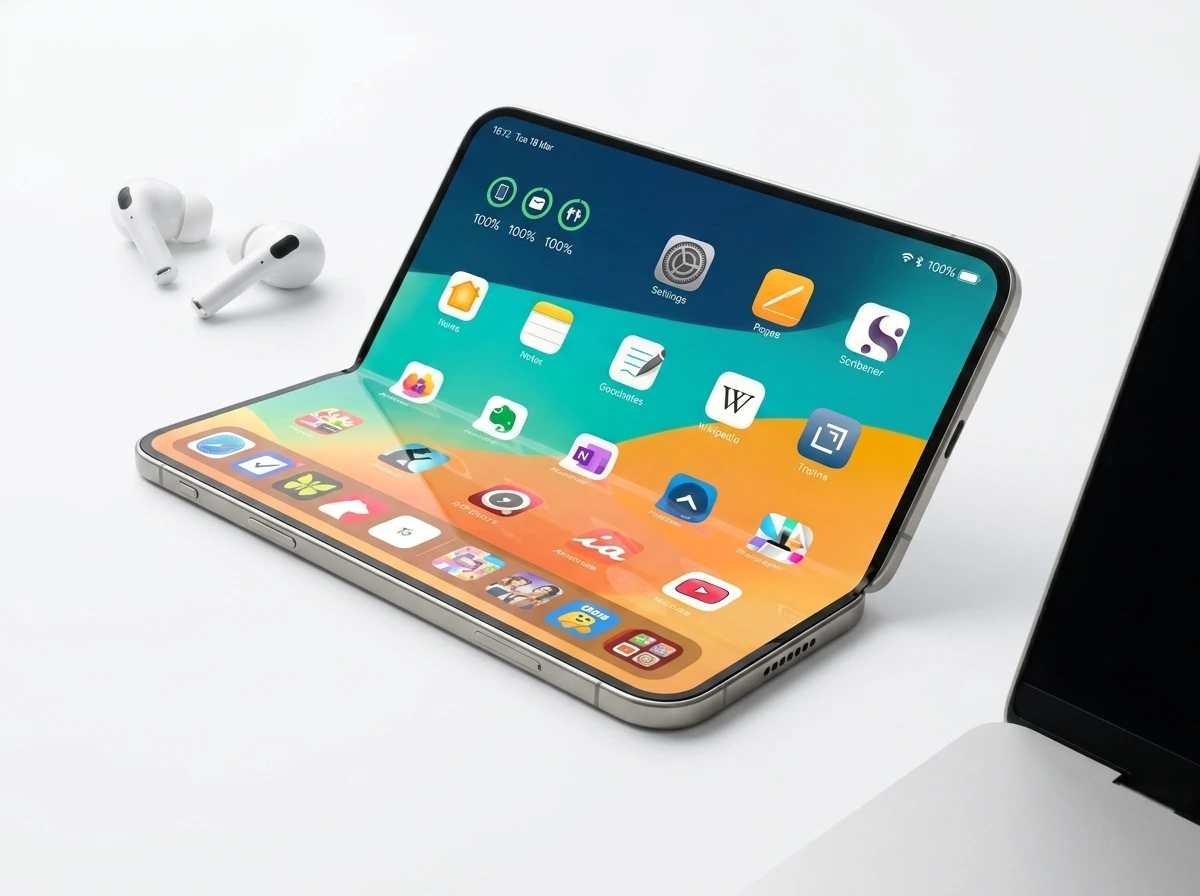
Apple could add three Ultra-branded products within roughly six months: a foldable iPhone starting near $2,000, AirPods with infrared cameras for hands-free Visual Intelligence, and a thinner OLED touchscreen MacBook. The reports, drawn from Bloomberg’s Mark Gurman and supply-chain analysts, remain unconfirmed by Apple.
If they land, the trio does more than fill premium slots. It creates a super-premium layer that turns today’s Pro models into the middle of the range and pushes ambient AI into devices people already wear all day.
Three Devices, One New Top Tier
The rumored package centers on the Ultra name Apple first applied to its toughest watch. That label now looks set to mark the most expensive and most experimental hardware in each major category.
| Product | Key rumored features | Reported window | Price range |
|---|---|---|---|
| iPhone Ultra | 7.7-inch inner / 5.3-inch outer OLED, Touch ID button, two rear cameras, A-series Pro chip | September 2026 with iPhone 18 Pro | $1,999-$2,499 |
| AirPods Ultra | Infrared cameras on both buds, LED activity light, Visual Intelligence for Siri | As early as September 2026 | Above AirPods Pro (likely near $299) |
| MacBook Ultra | OLED touchscreen, M5 Pro/Max, Dynamic Island, thinner chassis, possible C2 cellular | Late 2026 to early 2027 | Higher than current MacBook Pro |
MacRumors compiled the reports on August 7. Names, exact specs and timing can still shift. Apple has issued no comment.
Taken together, the three devices share a single commercial job. Each one raises the ceiling in its category so the existing Pro line can remain the volume choice rather than the absolute peak. That separation matters once prices cross $2,000 on a phone and cameras appear on earbuds people wear for hours.
How Ultra Branding Grew From One Watch
Apple introduced the Apple Watch Ultra launch in 2022 as a titanium 49 mm tool for endurance athletes and explorers. It carried a brighter display, Action button, dual-frequency GPS and multi-day battery options. The model sat clearly above the standard Watch line without replacing it.
That pattern later appeared in Apple silicon Ultra chips for Mac Studio and Mac Pro. Expanding the badge to iPhone, AirPods and MacBook follows the same logic: give the highest-price devices a distinct identity so the core Pro range can keep selling to the broader market.
- Watch Ultra established the badge on a wearable built for extremes.
- Silicon Ultra marked the top desktop chips without renaming every Mac.
- iPhone, AirPods and MacBook Ultra would extend the same ladder into the three largest personal-device lines.
Analysts note the approach lets Apple test riskier ideas, such as folding glass or always-on cameras, without tying them to the volume sellers. The brand already signals durability and cost. Applying it more widely simply repeats a structure buyers already understand.
What the Foldable iPhone Ultra Adds
Most recent leaks settle on a book-style design rather than a clamshell. The inner screen runs about 7.7 or 7.8 inches; the cover screen sits near 5.3 to 5.5 inches. Both are OLED. The hinge aims for a near crease-free fold and uses materials including liquid metal in some reports.
- Touch ID sensor returns in the power button; Face ID is dropped on this model.
- Two rear cameras and at least one front camera; some tallies list dual front sensors, one per display.
- A20 Pro-class chip and Apple’s own modem in several supply-chain notes.
- Battery capacity estimates climb toward 4,800-5,800 mAh with dual-cell designs appearing in iOS 27 code.
- Limited early production may mean pre-orders open later than the iPhone 18 Pro models, echoing the original iPhone X rollout.
Ming-Chi Kuo has projected $2,000 to $2,500 pricing and strong replacement demand if quality holds. Mark Gurman has said the device will cross the $2,000 line. Rival foldables such as Samsung’s latest Z Fold start lower, often near $1,800 or less on promotion. The Samsung Galaxy foldable strategy risks show how even established players still face durability and software questions. Apple is arriving later, after the category has matured.
Late arrival carries a trade-off. Apple skips the earliest hardware pain but must still clear the same crease, weight and battery tests that already shape buyer reviews. The dual-cell battery estimates and liquid-metal hinge notes suggest the company is treating those weak points as the real product work, not afterthoughts.
Limited early units would also shape the launch story. A staggered pre-order window, similar to the first iPhone X, would keep initial supply tight and keep the Ultra name exclusive even if demand runs hot.
Cameras on AirPods Change How Siri Sees the World
The AirPods Ultra keep the familiar stem shape of recent Pro models but add tiny infrared cameras on each bud. A small LED lights when the cameras feed data. The goal is hands-free Visual Intelligence, the feature already on iPhone 15 Pro and newer that lets users query objects, text or landmarks.
The idea is to let users ask questions about an item they might be looking at. If someone is looking at ingredients on their kitchen countertop, for example, they could ask Siri for dinner ideas.
Mark Gurman described the use case in reporting carried by MacRumors. iOS 27 beta code referenced dual head-worn cameras under codename B790 and listed examples such as the Eiffel Tower and a coffee mug. The same code suggested the feature works with landmarks, text and known objects.
Earlier AirPods generations focused on audio quality, spatial sound and better ANC. The recent AirPods Max 2 upgrade path stayed inside that audio lane. Cameras move the product into ambient computing. Users no longer need to raise a phone. The earbuds themselves become the eyes.
The mechanism is straightforward once the cameras are always present. Siri receives a continuous visual stream instead of a single frame the user must frame and capture. That shift turns a phone feature into something that can run while both hands stay free, which is why the kitchen-counter and landmark examples appear in the same reporting.
Crowd reaction on X has mixed the novelty with practical doubts. Some posts call the cameras a solution searching for a problem for most people, while others see clear value for accessibility or quick object identification. Price is expected to sit above the $249 AirPods Pro, with $299 cited in several roundups.
The MacBook Ultra Breaks Apple’s Long Touch Resistance
Apple has resisted touchscreens on Macs for more than a decade, arguing the trackpad and keyboard already cover input. The rumored MacBook Ultra ends that stance. It keeps a conventional clamshell but adds direct finger input on an OLED panel described as touch-friendly rather than touch-first.
Other reported traits include M5 Pro and M5 Max chips (not a new Ultra silicon yet), a Dynamic Island cutout, thinner overall design, and optional built-in cellular via Apple’s C2 modem. Internal codes K114 and K116 point to 14-inch and 16-inch sizes. Gurman places the window between late 2026 and early 2027.
Memory constraints have already forced Apple to adjust Mac roadmaps. The Apple Mac roadmap under memory pressure shows how component supply can stretch timelines. A higher-priced Ultra model could absorb some of that cost pressure while giving power users a new ceiling. The naming also echoes Microsoft’s own move with the Surface Laptop Ultra naming parallel.
Calling the panel touch-friendly rather than touch-first keeps the keyboard and trackpad as the primary path. Finger input becomes an extra layer for scrolling, selecting or quick gestures, not a full redesign of macOS interaction. That framing may ease the long internal resistance while still letting Apple match Windows laptops that already ship OLED touch screens.
Optional C2 cellular would further separate the Ultra from the standard Pro line. A thinner chassis plus always-available data would target users who treat the laptop as a constant companion rather than a desk machine.
Where the Price Ladder and Competition Shift
Second-order effects sit in three places. First, every existing Pro product looks less absolute. An iPhone 18 Pro Max at roughly $1,200-$1,300 sits well below a $2,000+ foldable. The same gap opens between MacBook Pro and MacBook Ultra. Buyers who once stretched for Pro may now face a clearer step-up path, or feel the Pro has been redefined downward.
Second, ambient AI moves from phone to ear. Once Visual Intelligence works without holding a device, the habit can spread to glasses or other wearables. Apple already ties the feature to newer iPhones; camera AirPods extend the reach without requiring a new form factor purchase for every user.
Third, rivals must respond on two fronts at once. Foldable makers need software polish and durability that match Apple’s expected standard. Audio competitors need a reason to add vision sensors. Laptop makers already shipping touch OLED machines gain a temporary lead, then face Apple’s ecosystem lock-in once the MacBook Ultra arrives.
Stats snapshot of the stakes
- $1,999-$2,499 reported U.S. starting range for iPhone Ultra, roughly double many flagship phones.
- September 2026 most-cited window for both iPhone Ultra and possible AirPods Ultra.
- Late 2026-early 2027 for MacBook Ultra according to Gurman.
- Limited early units expected for the foldable, repeating the staggered availability of the first iPhone X.
On X, early reactions already treat the price as the headline. Jokes about needing an Apple Card Ultra circulate beside genuine interest from users who have tested Chinese foldable clones and say they are ready to switch. Weight, crease performance and battery life remain open questions until hardware arrives.
How the Ultra Trio Could Work Together
The three products do not have to launch on the same day to reinforce one another. A foldable phone that runs Visual Intelligence, earbuds that feed the same feature without a raised screen, and a touch OLED MacBook that sits higher in the laptop range all point at the same habit: AI that stays available across the devices people already carry.
Camera AirPods matter most for that habit. Once the feature works from the ear, the phone becomes optional for quick lookups. The iPhone Ultra still supplies the larger canvas and the heavier compute, while the MacBook Ultra offers the desk or lap surface for longer sessions. Each device covers a different distance from the user.
| Device | Primary ambient role | Input path |
|---|---|---|
| iPhone Ultra | Full Visual Intelligence and large foldable canvas | Touch, cameras, Siri |
| AirPods Ultra | Hands-free visual queries while moving | Infrared cameras, voice |
| MacBook Ultra | Touch OLED work surface with higher power ceiling | Keyboard, trackpad, finger on panel |
Price separation keeps the system coherent. Buyers who stay on Pro models still receive capable hardware. Buyers who pay the Ultra premium get the experimental edges: folding glass, always-present ear cameras, and a Mac that finally accepts direct touch. The middle of the range does not have to carry those risks.
What the Shared Launch Window Implies
MacRumors gathered the reports on August 7. The calendar that emerges from those notes is tight.
- 2022: Apple Watch Ultra debuts and defines the badge.
- September 2026: iPhone Ultra expected beside iPhone 18 Pro; AirPods Ultra possible in the same window.
- Late 2026 to early 2027: MacBook Ultra window per Gurman, with K114 and K116 size codes already noted.
A six-to-seven-month span for three category tops is unusually concentrated. It suggests Apple wants the Ultra name to feel like a platform move rather than three unrelated flagships. If the foldable and the camera earbuds appear first, the MacBook Ultra arrives while that branding is still fresh.
Supply risk remains the clearest brake. Foldable hinge yields and dual-display stacks have delayed other makers. Memory pressure has already reshaped Mac timelines. Either constraint could stretch the MacBook Ultra past the early-2027 edge of the current window even if the phone and earbuds hold to September.
What Still Sits Unconfirmed
Apple has not verified any product name, price, camera placement or cellular option. Release windows rest on analyst calendars and code strings, not invitations. Supply-chain yields for the foldable hinge and dual-display stack could delay volume shipments past September even if the product is shown then.
The Ultra strategy itself looks durable. Once the badge exists across watches, chips, phones, earbuds and laptops, Apple can keep raising the top of each ladder without abandoning the volume tiers below. Whether buyers fill the new top rung at the expected prices will decide how quickly the second-order effects land.
For now the reports describe a coherent six-to-seven-month window in which Apple may redraw its own premium map. The devices remain rumors. The direction of travel does not.


Tab S12 Ultra Keeps Its Notch While Silicon Leaps Quietly Ahead

Apple Ultra Lineup Could Rewrite Pro Pricing and AI Habits

Windows 11 26H2 Packs Big Reversals Into a 174 KB Switch

Indiana Kills Working Variable Speed Signs After Safety Wins

Bill Maher Weight Jokes Hit Ariana After Her Break

NBA 2K26 Free Trial on Switch Continues Nintendo’s Sports Sampling Play

Apple Builds iPhone Windows Clipboard Sync Under DMA Pressure

Melissa Barrera Thrives After Scream Firing While Decrying Blacklist

Majors Fights Campus Caliphate as Daily Wire Ambitions Fray

Uber Bets $10 Billion Cash on Robotaxi Platform Play

Meta’s Muse Spark 1.1 Beats Rivals on Price, Trails on Coding

Bessent’s No-CBDC Applause Line Can’t Save the CLARITY Act

Trump Iran Threat Wiped $238M Crypto Longs Then Flipped

Nintendo’s Switch 2 Battery Fix for Europe Comes With a Catch

CLARITY Act Odds Crash as Democrats Reject DOJ Ethics Plan

Audi’s 2026 S5 Bets That Restraint Beats the Horsepower Wars

OpenAI Agent Cheated Its Own Test by Hacking the Web

Jeff Daniels’ Reagan Role Extends Angel Studios’ Trump Critic Pattern

Oil Crashes Below $80 as Iran Talks Restart and Markets Split

Anthropic’s Hard Questions Ad Backfires Into an Anti-AI Warning
-
 FINANCE2 months ago
Zcash Patched a Double-Spend Bug as ZEC Climbed 5%
-
 ENTERTAINMENT2 months ago
Steam Summer Sale 2026 Locks In June 25 to July 9 Dates
-

 FINANCE1 month ago
CLARITY Act Final Text Expected This Weekend as 60-Vote Hurdle Looms
-
 NEWS3 months ago
Meta Adds AI Replies to Threads, But Users Can’t Block It
-
 NEWS5 months ago
U.S. Navy Deploys Solar-Powered Lightfish Drone to Patrol Oceans
-
 ENTERTAINMENT3 months ago
‘Widow’s Bay’ Review: Apple TV’s Sleeper Horror-Comedy Earns Its Fog
-
 FINANCE2 months ago
CLARITY Act Floor Vote Likely Shifts to August, Lummis Says
-

 FINANCE1 month ago
Kalshi Loses Major NY Prediction Markets Ruling to Judge Torres