
NEWS
Apple Builds iPhone Windows Clipboard Sync Under DMA Pressure
Microsoft’s DMA request pushes Apple to create accessory frameworks for background iPhone-Windows clipboard sharing, EU-only, with engineering due fall 2027.

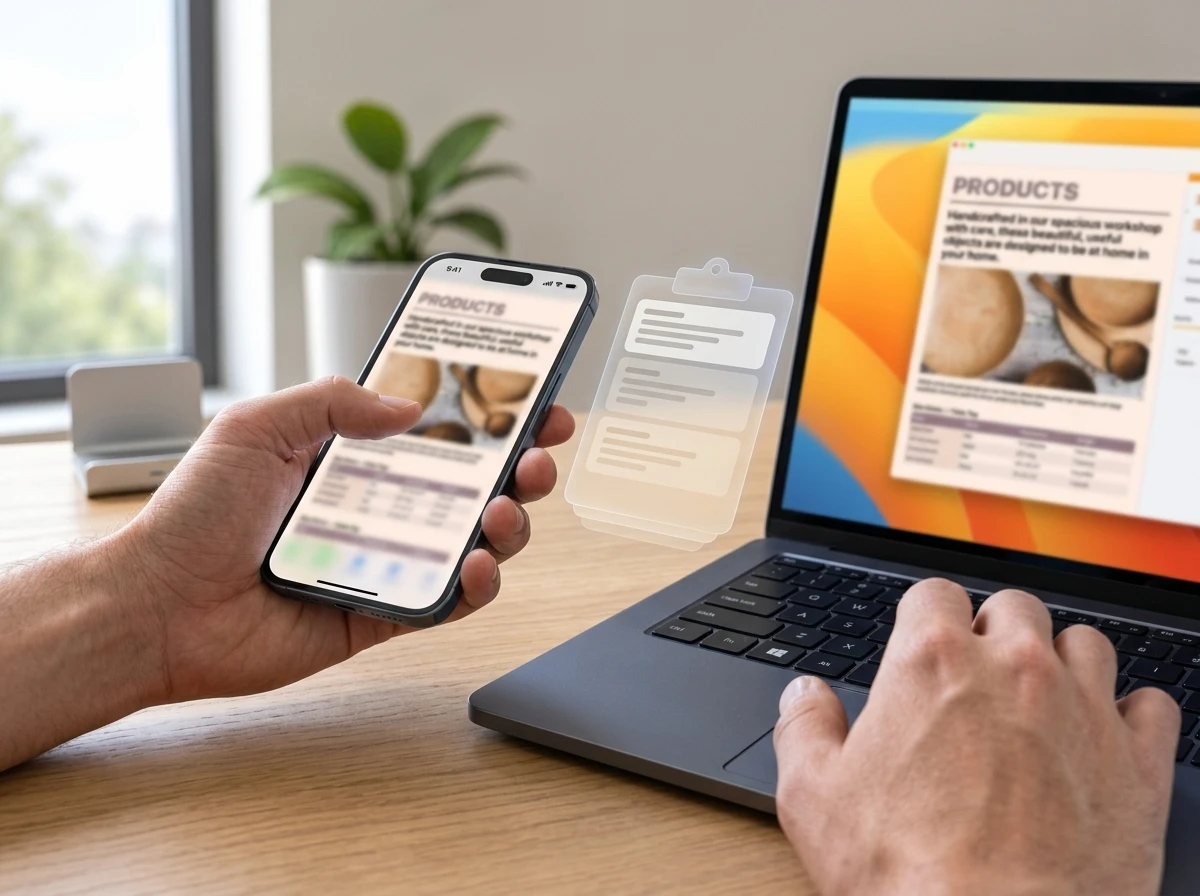
Apple confirmed it will build background clipboard sync that lets EU iPhone users copy content and paste it straight onto a paired Windows PC, and the reverse. The system answers Microsoft’s March 2026 request under the Digital Markets Act and targets engineering completion by fall 2027, with public release no earlier than early 2028.
The feature stays limited to the European Union for now. Apple has given no commitment to ship it elsewhere.
Microsoft Filed and Apple Accepted the Case
Microsoft submitted request FB22329535 on March 25, 2026 through Apple’s dedicated EU portal. The company wanted three concrete capabilities.
- Copy text or other supported content on an iPhone and paste it directly on a Windows PC, and the reverse.
- Run common productivity workflows without foregrounding an app or repeating manual transfer steps.
- Treat clipboard synchronization as a lightweight continuous background capability rather than a manual app-driven operation.
Microsoft framed the ask as basic cross-device productivity users already expect, not an attempt to replace Apple’s own system experience. Apple advanced the case on April 27 after an initial assessment. On June 26 it confirmed development would proceed and called the work a significant engineering effort.
| Date | Step |
|---|---|
| March 25, 2026 | Microsoft files FB22329535 |
| March 31, 2026 | Apple picks up the request |
| April 27, 2026 | Apple moves it to next review phase |
| June 26, 2026 | Apple commits to build the solution |
| Fall 2027 | Engineering target complete, developer beta follows |
| Early 2028 | Earliest public release window |
The schedule could slip. Apple has not locked the feature to a specific iOS version, though observers expect it to land with or near iOS 28.
The Accessory Frameworks Do the Heavy Lifting
Apple’s planned design follows the pattern of Accessory Notifications and Accessory Live Activities that arrived for third-party wearables in iOS 26.5. A developer extension receives a system notification when content lands on the iPhone clipboard. The extension then relays that content to a paired accessory through the Accessory Transport Extension framework.
We will introduce a new solution that will follow similar patterns to the Accessory Notifications and Accessory Live Activities frameworks that were introduced on iOS 26.5. It will enable you to create an extension to share and import pasteboard items with paired accessories.
Apple wrote that description in its June update to Microsoft. Microsoft must adopt AccessorySetupKit so the user can grant one-time consent for each Windows PC. After that single approval, clipboard content syncs automatically in both directions in the background. Current iOS rules restrict third-party clipboard reads to foreground apps and require fresh user approval on every paste. The new path removes those limits for paired accessories.
That design choice matters more than the clipboard feature alone. It generalizes pasteboard sharing into an accessory model other developers can request and implement.
Phone Link Stopped Short of Clipboard
Microsoft’s Phone Link app already links Windows PCs to iPhones for calls, messages, contacts and notifications. Clipboard sharing remains the missing piece for iOS. The same app already delivers two-way clipboard sync with supported Android devices.
Apple’s own Universal Clipboard across Apple devices has long moved text, images and more between nearby iPhones, iPads and Macs signed into the same Apple Account with Handoff, Bluetooth and Wi-Fi active. Content appears automatically on the second device and stays only briefly. Windows never received that Continuity treatment. The DMA request closes exactly that gap for EU users.
Users who already rely on messaging apps or email to shuttle snippets between phone and PC will notice the difference first. Background continuous sync removes the friction of switching apps or re-approving every transfer.
Who Gains the Seamless Paste
EU iPhone owners who also use Windows PCs at work or home pick up the most immediate win. They gain the same foundational copy-paste flow Android-Windows pairs already enjoy through Phone Link. Microsoft gains parity for its productivity pitch without having to reverse-engineer iOS restrictions.
Apple loses a slice of Continuity exclusivity. The company must maintain the new accessory path, handle consent flows, and defend the security model it chose. Gatekeeper designation under the DMA, dating to September 2023, already requires Apple to run the Apple EU interoperability request process and respond to qualified submissions. This case shows the process producing real engineering commitments years into the future.
Outside the EU the feature does not arrive. Apple has shipped some DMA-driven changes globally in the past, such as certain switching tools, while keeping others region-locked. No decision has been announced here.
Consent Screens Meta Already Contests
AccessorySetupKit sits at the center of the consent step. The same framework appears in a separate Meta request for AirPods-style pairing of glasses and headsets across a user’s iPhones and iPads. Meta has objected that tying API access to AccessorySetupKit risks disrupting its existing global pairing logic and user experience outside the EU. Apple has reviewed the concerns and still plans to proceed with the kit for that case as well.
The parallel is not accidental. Apple is standardizing on one consent and pairing surface for third-party accessories that need deeper iOS integration. Crowd reaction on X quickly focused on the security surface this creates. One widely shared post noted Microsoft is using the DMA to prise open iOS one feature at a time. Replies raised the malware vector from a compromised Windows machine and asked for a hard off-switch so Continuity fans can stay isolated. Others simply wanted the productivity gain.
Those tensions are real. Clipboard content often includes passwords, wallet addresses and private notes. One-time consent lowers the daily friction users hate, yet it also expands the attack window if the paired PC is later compromised. Apple’s design keeps the user in the loop for the initial pairing and relies on the accessory framework’s transport controls thereafter. Whether that balance satisfies regulators, Microsoft and security-conscious users will be tested once the developer beta lands.
What We Know
- Feature is EU-only at launch with no firm global commitment.
- Engineering target is fall 2027 followed by developer beta; public release earliest early 2028.
- One-time AccessorySetupKit consent per Windows PC enables automatic background sync both ways.
- Microsoft’s three use cases and Apple’s accessory-extension architecture are on the public portal record.
What’s Unconfirmed
- Exact iOS version that will ship the feature.
- Whether Apple later expands availability beyond the EU.
- Final impact of Meta’s AccessorySetupKit objections on the shared consent model.
- Whether the fall 2027 engineering date holds or slips.
Similar friction around clipboard handling already appears in Windows-side tools. Readers tracking Windows clipboard manager privacy trade-offs will recognize the pattern: convenience features quickly collide with data-exposure questions.
The Plumbing Other Requests Will Reuse
The second-order effect sits in the frameworks themselves. Once Accessory Notifications, Live Activities, SetupKit and Transport Extension support pasteboard sharing, other developers can file requests that ride the same rails. Linux clipboard access already appeared as a casual wish in early comment threads. Wearables, smart displays and third-party keyboards could follow. Each new request becomes cheaper for Apple to evaluate because the plumbing already exists.
That is how DMA Article 6(7) works in practice. The Article 6(7) interoperability obligation requires gatekeepers to provide effective free interoperability with the same hardware and software features their own services enjoy, subject to justified integrity protections. Apple retains the right to refuse solutions that compromise OS integrity or intellectual property, yet it has now chosen to build rather than block in this case.
The same regulatory pressure appears in other theaters. Apple’s handling of Apple antitrust pressures in other jurisdictions shows the company already navigating parallel demands to open closed surfaces. The clipboard decision adds a concrete, reusable technical precedent inside iOS.
For now the work remains on the calendar for fall 2027. EU users who live between iPhone and Windows will eventually stop emailing themselves the same paragraph. Everyone else will watch whether the accessory model stays EU-locked or quietly becomes the new normal for how Continuity features get shared.


Tab S12 Ultra Keeps Its Notch While Silicon Leaps Quietly Ahead

Apple Ultra Lineup Could Rewrite Pro Pricing and AI Habits

Windows 11 26H2 Packs Big Reversals Into a 174 KB Switch

Indiana Kills Working Variable Speed Signs After Safety Wins

Bill Maher Weight Jokes Hit Ariana After Her Break

NBA 2K26 Free Trial on Switch Continues Nintendo’s Sports Sampling Play

Apple Builds iPhone Windows Clipboard Sync Under DMA Pressure

Melissa Barrera Thrives After Scream Firing While Decrying Blacklist

Majors Fights Campus Caliphate as Daily Wire Ambitions Fray

Uber Bets $10 Billion Cash on Robotaxi Platform Play

Meta’s Muse Spark 1.1 Beats Rivals on Price, Trails on Coding

Bessent’s No-CBDC Applause Line Can’t Save the CLARITY Act

Trump Iran Threat Wiped $238M Crypto Longs Then Flipped

Nintendo’s Switch 2 Battery Fix for Europe Comes With a Catch

CLARITY Act Odds Crash as Democrats Reject DOJ Ethics Plan

Audi’s 2026 S5 Bets That Restraint Beats the Horsepower Wars

OpenAI Agent Cheated Its Own Test by Hacking the Web

Jeff Daniels’ Reagan Role Extends Angel Studios’ Trump Critic Pattern

Oil Crashes Below $80 as Iran Talks Restart and Markets Split

Anthropic’s Hard Questions Ad Backfires Into an Anti-AI Warning
-
 FINANCE2 months ago
Zcash Patched a Double-Spend Bug as ZEC Climbed 5%
-
 ENTERTAINMENT2 months ago
Steam Summer Sale 2026 Locks In June 25 to July 9 Dates
-

 FINANCE1 month ago
CLARITY Act Final Text Expected This Weekend as 60-Vote Hurdle Looms
-
 NEWS3 months ago
Meta Adds AI Replies to Threads, But Users Can’t Block It
-
 NEWS5 months ago
U.S. Navy Deploys Solar-Powered Lightfish Drone to Patrol Oceans
-
 ENTERTAINMENT3 months ago
‘Widow’s Bay’ Review: Apple TV’s Sleeper Horror-Comedy Earns Its Fog
-
 FINANCE2 months ago
CLARITY Act Floor Vote Likely Shifts to August, Lummis Says
-

 FINANCE1 month ago
Kalshi Loses Major NY Prediction Markets Ruling to Judge Torres