
NEWS
Indiana Kills Working Variable Speed Signs After Safety Wins
A new law forces INDOT to deactivate signs that cut hard braking 61 percent, exposing the clash between adaptive tech and fixed legislative speed hikes.

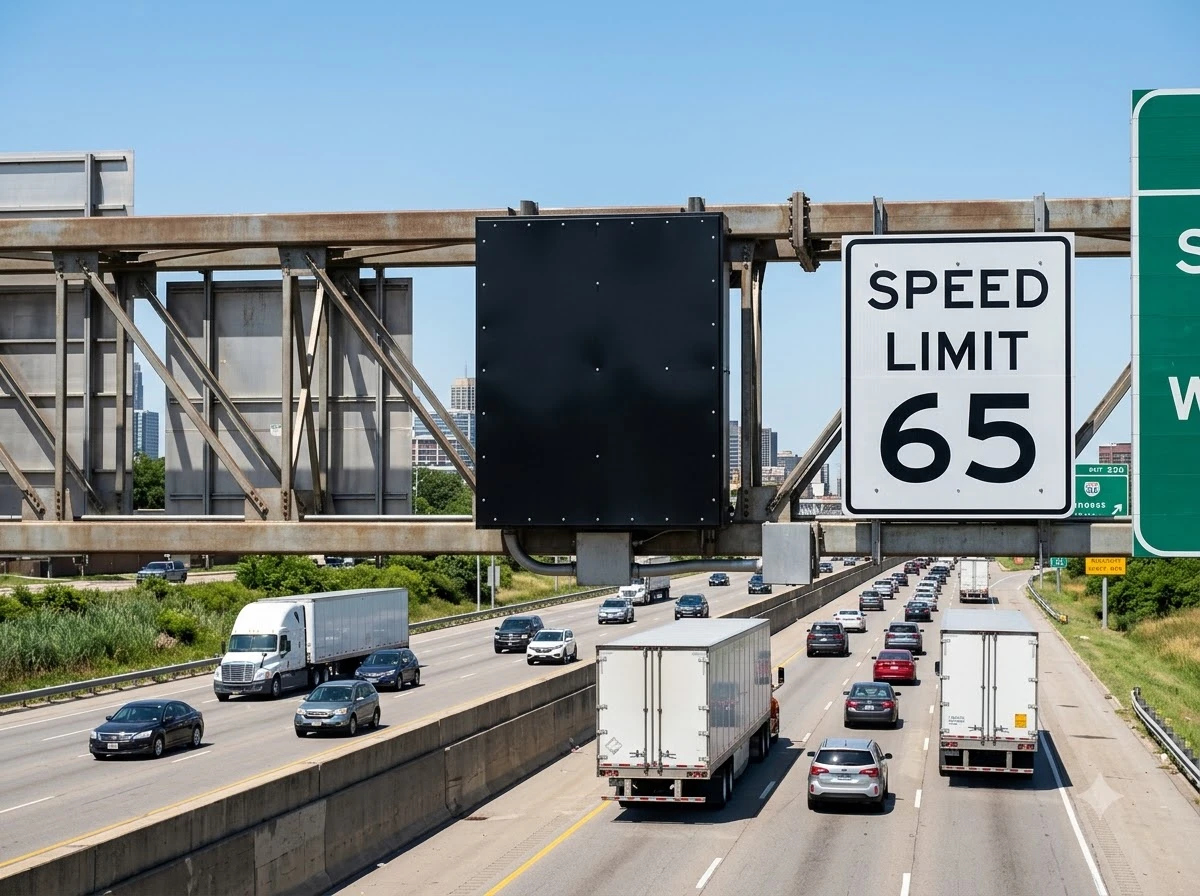
Indiana deactivated its variable speed limit signs on I-465 on July 1, 2026, after a Purdue study found they cut hard-braking events by 61 percent in the busiest merge zones. The move followed House Enrolled Act 1200, which barred the Indiana Department of Transportation from using electronic variable speed limit signs or imposing variable limits at all.
The system had run only about two years. Lawmakers said it undercut a separate 2025 law that raised most of the loop from 55 mph to 65 mph. Static 65 mph signs now stand while the digital panels sit covered.
The Authority Clash on Southeast I-465
INDOT installed the signs as part of a broader traffic management project on the southeast leg of I-465 between I-65 and I-70. Variable limits could drop in 5 mph steps when congestion, weather or incidents warranted it. Drivers sometimes saw postings as low as 35 mph.
That flexibility collided with the legislature’s fixed 65 mph floor. State Senator Aaron Freeman added language to the transportation package that became HEA 1200.
All I did was do an amendment into a transportation bill that said you’re not following the law that the legislature enacted, so I’ll do an amendment, happy to do it, that says you can’t do variable speed limits.
Freeman said the agency needed to follow the speed the General Assembly set. He later signaled interest in examining ramp metering next and preferred spending on potholes over what he called pet projects.
An House Bill 1200 legislative page confirms the prohibition on INDOT implementing variable speed limits or using the electronic signs. The same act carried other motor vehicle rules, including commercial driver license language requirements.
What the Purdue Numbers Showed
Researchers from Purdue University partnered with INDOT to evaluate both the variable speed limits and nearby ramp meters. The Purdue Joint Transportation Research Program report used high-frequency connected vehicle data at three-second intervals rather than waiting years for crash tallies.
Variable speed limits went live September 10, 2024, at 25 locations along the corridor. A before-after look at the 4-5 p.m. peak found roughly a 61 percent drop in hard-braking events on mainline merge areas next to the metered ramps on the inner loop.
| Hard-Braking Severity | Median Reduction per 0.1-Mile Segment |
|---|---|
| Mild | 70% |
| Moderate | 41% |
| Severe | 33% |
Those medians covered the full 7.5-mile mainline stretch next to the ramps. Hard braking serves as a near-miss proxy; fewer events track with lower crash risk, especially rear-end collisions in stop-and-go traffic.
- Data came from connected vehicles, not traditional crash reports.
- Analysis windows included peak and midday hours.
- Speed impacts from the variable limits alone stayed modest in some off-peak windows.
- The framework scales for future ramp-meter or VSL pilots elsewhere.
The safety gains reached beyond the heaviest merge points. Drivers and local observers still noticed the covered panels and questioned the sudden stop after measurable improvement.
Sixty-Two Signs and a $446,000 Outlay
INDOT placed 62 signs every half mile in both directions on that southeast segment. Each unit cost a little more than $7,000. Purchase total reached $446,400.
$446,400 total for the electronic panels.
62 signs installed.
~$7,200 average per sign.
Two years of active use before the ban.
The agency turned the displays off and covered many with metal sheets or black plastic. Static 65 mph signs went up in their place. INDOT has no current plan to recover the money and has left the hardware in position in case rules change later. An INDOT construction memorandum on the change directed crews to stop piloting electronic speed limit signs in work zones as well and to avoid simply locking the variable units at a fixed number.
Local drivers interviewed after the blackout split. Some appreciated the earlier slowdowns that kept traffic from slamming into backups. Others preferred a consistent limit and saw the whole effort as money better spent on pavement.
Lawmakers Prefer Fixed Numbers Over Adaptive Ones
The 2025 speed hike on most of I-465 came via HEA 1461 and took effect around July 1 that year. INDOT’s variable system continued operating under its prior authority. Freeman and colleagues viewed any drop below 65 as defiance of the new statute.
The resulting ban is absolute for variable limits statewide under the new language. Other electronic displays that simply show a vehicle’s actual speed or flash work-zone warnings remain allowed. The episode sits alongside other recent Indiana driver rules, including Indiana rules for reporting car color changes.
Crowds on X and local forums quickly labeled the outcome a sunk-cost lesson. Commenters asked why the panels could not simply stay lit at a locked 65. Others pointed out that neighboring states still run digital variable signs in construction zones without the same legal fight.
Adaptive Speeds Work Elsewhere but Face the Same Friction
Variable speed limits have operated for decades on European freeways and in at least a dozen U.S. states. An NHTSA overview of variable speed limits rates them two stars for effectiveness, notes medium use, and cites crash reductions (especially rear-ends) plus smoother flow in congestion or weather when systems are properly enforced and signed over all lanes.
Capital costs elsewhere have ranged from under $50,000 to multi-million-dollar corridors. Some deployments were later removed when benefits fell short of hopes or when enforcement proved difficult because officers could not instantly know the current posted limit. Indiana’s short pilot produced clearer near-miss reductions than several earlier U.S. trials, yet still ended in deactivation.
The same corridor has hosted other technology trials, among them an Indiana highway wireless charging test for trucks that kept vehicles moving at highway speeds. Those experiments face the same question the VSL pilot just answered: how far can agencies innovate before the legislature reasserts control over posted numbers.
Covered Panels and Open Questions on the Loop
- September 10, 2024, Variable speed limits activate at 25 locations on southeast I-465.
- July 1, 2025, Most of I-465 rises from 55 mph to 65 mph under HEA 1461.
- May 27, 2026, INDOT issues construction memo preparing for the July cutoff.
- July 1, 2026, HEA 1200 takes effect; variable signs powered down and covered.
- Mid-July 2026, Local crews confirm static 65 mph signs in place; no removal timeline announced.
The hardware remains mounted. INDOT has said the units can stay for possible future use if statutes change. For now the irony is complete: a tool that measurably calmed hard braking sits dark because it could drop the very limit lawmakers raised to improve flow.
Drivers on the southeast loop now face a fixed 65 mph number regardless of backups, weather or incidents. Whether that produces more hard stops or simply clearer enforcement will show up in the next round of connected-vehicle data and crash reports.
Frequently Asked Questions
What does House Enrolled Act 1200 prohibit regarding speed limits?
HEA 1200 explicitly bars the Indiana Department of Transportation from implementing variable speed limits or using electronic variable speed limit signs anywhere in the state, a provision that took effect July 1, 2026, and also covers work-zone pilots.
How much did Indiana spend on the I-465 variable speed signs?
INDOT spent $446,400 to buy 62 signs at a little more than $7,000 each for the southeast corridor between I-65 and I-70; the agency has no plans to recover that outlay after deactivation.
What safety results did the Purdue study report for the system?
Using connected-vehicle data, researchers recorded a 61 percent reduction in hard-braking events in mainline merge areas during the afternoon peak and median drops of 70 percent mild, 41 percent moderate and 33 percent severe hard-braking events across the 7.5-mile analysis segment.
Why did lawmakers ban a system that showed safety gains?
Sponsors argued the variable drops below 65 mph contradicted the 2025 legislative decision to raise most of I-465 to a fixed 65 mph limit, so the amendment removed INDOT’s authority to post any speed other than the statutory number.
Will the physical signs be removed from I-465?
INDOT has covered or powered down the panels and installed static 65 mph signs but has left the hardware in place with no announced removal schedule, citing the possibility of future statutory changes that could allow reuse.


Tab S12 Ultra Keeps Its Notch While Silicon Leaps Quietly Ahead

Apple Ultra Lineup Could Rewrite Pro Pricing and AI Habits

Windows 11 26H2 Packs Big Reversals Into a 174 KB Switch

Indiana Kills Working Variable Speed Signs After Safety Wins

Bill Maher Weight Jokes Hit Ariana After Her Break

NBA 2K26 Free Trial on Switch Continues Nintendo’s Sports Sampling Play

Apple Builds iPhone Windows Clipboard Sync Under DMA Pressure

Melissa Barrera Thrives After Scream Firing While Decrying Blacklist

Majors Fights Campus Caliphate as Daily Wire Ambitions Fray

Uber Bets $10 Billion Cash on Robotaxi Platform Play

Meta’s Muse Spark 1.1 Beats Rivals on Price, Trails on Coding

Bessent’s No-CBDC Applause Line Can’t Save the CLARITY Act

Trump Iran Threat Wiped $238M Crypto Longs Then Flipped

Nintendo’s Switch 2 Battery Fix for Europe Comes With a Catch

CLARITY Act Odds Crash as Democrats Reject DOJ Ethics Plan

Audi’s 2026 S5 Bets That Restraint Beats the Horsepower Wars

OpenAI Agent Cheated Its Own Test by Hacking the Web

Jeff Daniels’ Reagan Role Extends Angel Studios’ Trump Critic Pattern

Oil Crashes Below $80 as Iran Talks Restart and Markets Split

Anthropic’s Hard Questions Ad Backfires Into an Anti-AI Warning
-
 FINANCE2 months ago
Zcash Patched a Double-Spend Bug as ZEC Climbed 5%
-
 ENTERTAINMENT2 months ago
Steam Summer Sale 2026 Locks In June 25 to July 9 Dates
-

 FINANCE1 month ago
CLARITY Act Final Text Expected This Weekend as 60-Vote Hurdle Looms
-
 NEWS3 months ago
Meta Adds AI Replies to Threads, But Users Can’t Block It
-
 NEWS5 months ago
U.S. Navy Deploys Solar-Powered Lightfish Drone to Patrol Oceans
-
 ENTERTAINMENT3 months ago
‘Widow’s Bay’ Review: Apple TV’s Sleeper Horror-Comedy Earns Its Fog
-
 FINANCE2 months ago
CLARITY Act Floor Vote Likely Shifts to August, Lummis Says
-

 FINANCE1 month ago
Kalshi Loses Major NY Prediction Markets Ruling to Judge Torres